
I took a moment to look back.
Fifteen years ago, in my early 20s, I was living through a storm, drifting along without a second thought. My biggest worry back then was, "What am I going to do to make a living?" Honestly, looking back, I'm not sure how it is now, but the education we received then didn't really guide us through life. It was more like, "We don't know what you'll become, so just do everything for now." Since I ended up at a university based solely on my grades, it was perhaps inevitable that I would eventually feel lost.
Thrown into the world with no idea what I was doing, I stumbled through the gale like a leaf in the wind, yet somehow managed to keep moving forward until I became a game journalist with 13 years of experience. Still, I would never want to go back to those days. The 'uncertainty about the future' that countless job seekers are likely feeling right now is a truly unbearable form of mental anguish and agony. I suspect many will relate to that.
That is why I never dared to imagine I would end up in a position where I would be the one reviewing resumes and deciding who gets hired and who doesn't—even if it is just in a game.
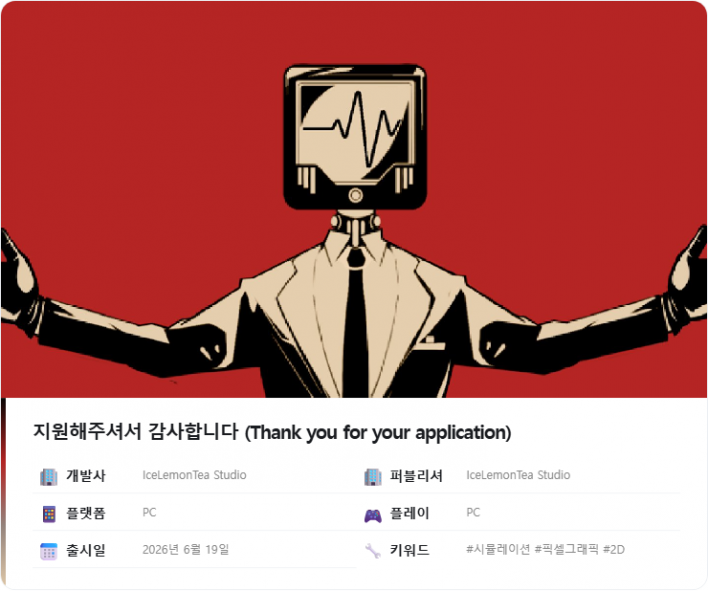
Thank you for your application. And I am sorry.
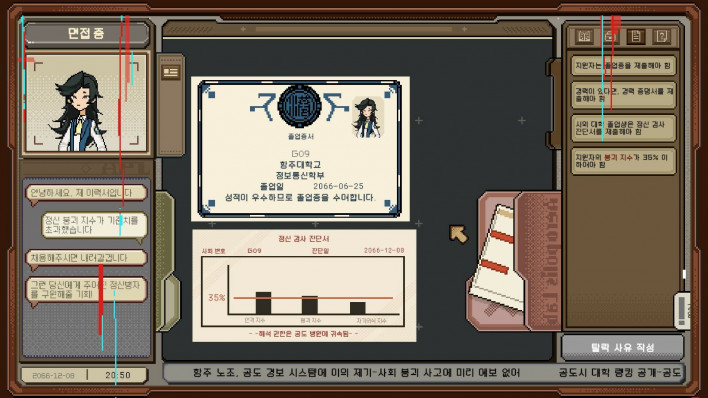
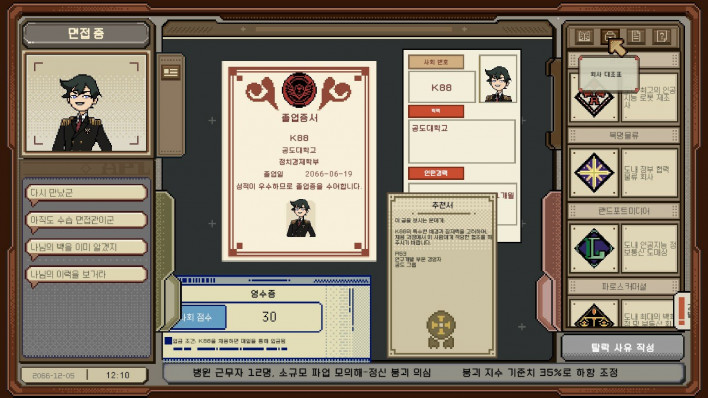
'Thank You for Applying' is an interviewer simulator. Much like 'Papers, Please' or 'Quarantine Zone,' you review a steady stream of incoming resumes, identifying grounds for disqualification. If everything is in order, you approve the candidate; if there is an issue, you must explain the reason for rejection and send them on their way.
The protagonist, an interviewer named 'C89', meticulously examines every document to make these calls. Having barely become a junior interviewer after failing 15 job interviews himself, he now dissects the pasts of other applicants to get ahead. He checks which university they attended, where they interned, what their major was, whether they have any mental health issues, and whether their diplomas or certificates of employment are forged.

There are many reasons for rejection. It could be a lack of academic credentials or insufficient internship experience. Forgetting to bring a diploma is an automatic fail, as is forging a certificate. And because mental health issues are also grounds for rejection, applicants must sometimes submit a psychiatric evaluation.
Fundamentally, 'Gongdo', the company where the protagonist works, is the group that rules the independent 'Gongdo City'—a textbook example of a cyberpunk working dystopia.
The interview process is incredibly blatant and discriminatory, and the criteria change daily. Some days, they won't hire graduates from two-year colleges; other days, they reject anyone with a 'mental collapse' index over 40%, a threshold that might drop to 35% the next day. Sometimes, internships are mandatory for those from out-of-town universities.
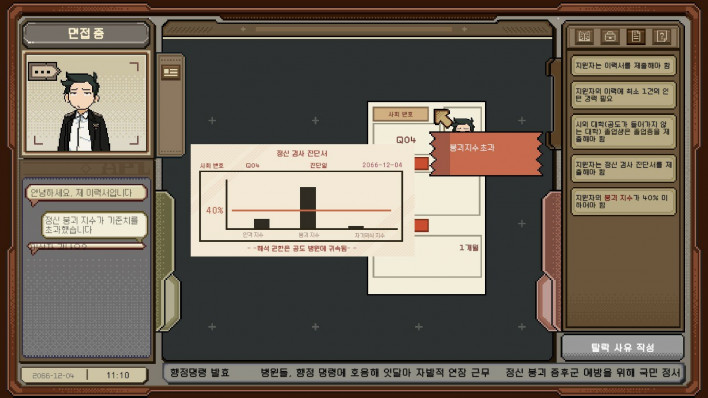
Naturally, applicants also contort themselves to squeeze through the narrow door of employment. Some present bundles of unverified letters of recommendation or private certifications, while others attempt to interview with cleverly forged medical reports, diplomas, or certificates of employment. If you have a sharp eye and catch them, you get a bonus; if you miss them, your pay is docked.
On top of that, the protagonist is struggling to make ends meet. Between the monthly rent and utility bills, and the subtle pressure from family back home, he has to tell an applicant who has proven their past but is still just a little bit short.
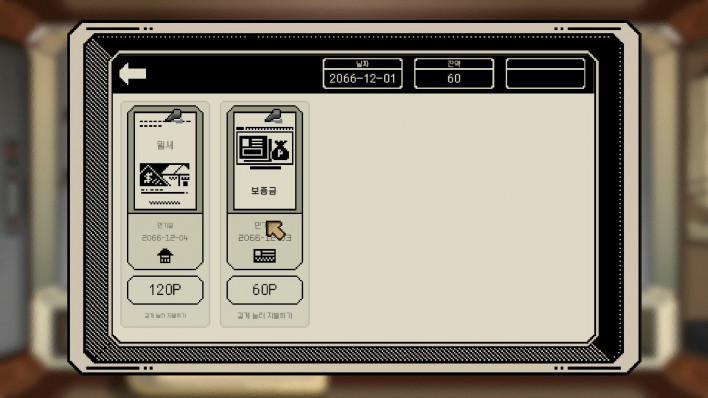
"I am sorry."
The cold city of Gongdo, and the stories behind it
Of course, the 'interview' is merely the logic used to progress through the game, not the game itself. The core narrative of 'Thank You for Applying' revolves around the setting of 'Gongdo City' and the stories of the people living there—people identified only by combinations of letters and numbers.
'Gongdo City' is an independent free city ruled by the 'Gongdo Group'. After a global catastrophe caused by rising sea levels, the Gongdo Group took charge of everything in the city, gained extraterritorial status, and eventually led the city to secede from the nation.
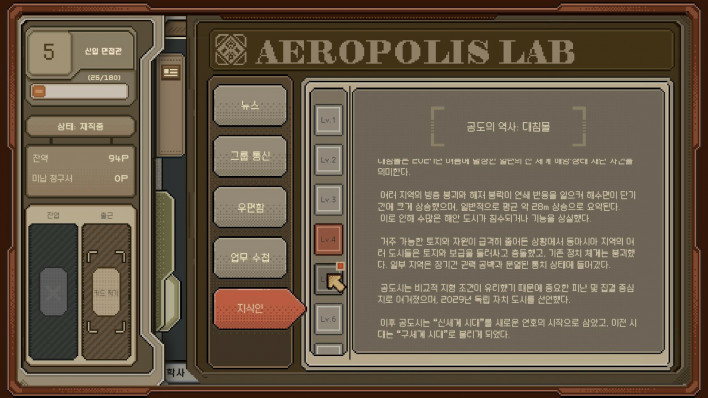
Since then, society has been stratified into 'Insiders' living in Gongdo and 'Outsiders' living outside the city. These outsiders face significant discrimination in every aspect of life, a reality that is subtly portrayed throughout the game. Naturally, the insiders living in Gongdo receive significant privileges, and these privileges bleed into the interview process. As the player, you act as the interviewer filtering out unsuitable candidates, but even your own standards are easily bypassed by those receiving preferential treatment.
The inclusion of a 'mental evaluation' element is another reflection of life in Gongdo City. Applicants must submit a medical certificate with a valid date, and those with a high 'collapse index' may be rejected. This index applies to you, the interviewer, as well; after a day's work, you must spend your meager wages on sedatives or coffee to maintain your stability. Even the interviewer is not immune to the disadvantages that come with a high collapse index.
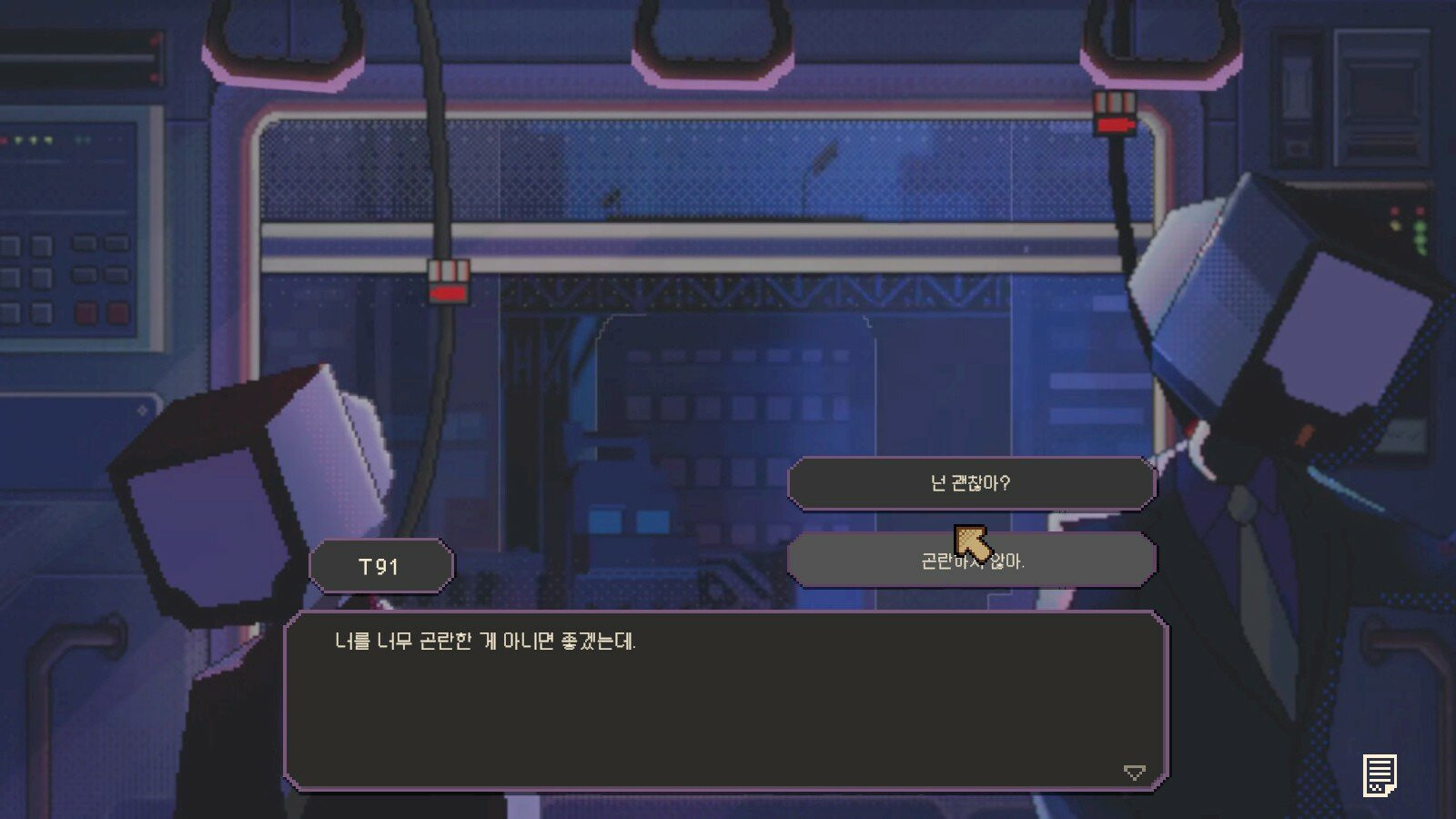
Amidst all this, the story of 'T91', who is from the same hometown as the protagonist, unfolds. It is up to the player to decide whether to build a sense of solidarity with fellow outsiders or to conform to the 'Gongdo City' system and maintain the cold-bloodedness required for success. Naturally, the story of the protagonist and Gongdo City branches out based on these choices.
A portrait of the modern era through the eyes of an interviewer
Looking at the game from a slightly detached perspective, it uses exaggeration and satire to tell a story about reality. As anyone who has navigated the professional world knows, every society is fundamentally stratified. While laws and ideals may deny it, that is the reality. Expressions like 'just living in Seoul is a privilege' or the existence of the 'N-po generation'—who sacrifice many values just to make ends meet—are proof of this. The silver lining, perhaps, is that our country is not one where social mobility is impossible, provided one puts in the effort.
Of course, the process is incredibly difficult and demands immense effort. Unless you are truly exceptional, rising from rags to riches is no easy feat. Inherent differences in education and environment are, unfortunately, inevitable.
The protagonist is one of the few who managed to grab that rare opportunity and join the Gongdo Group. Now, at the end of the lifeline he barely managed to grab, he must decide whether to climb it alone and faster, or to reach out and pull others up while he struggles to hold on. No matter which path you take, you will reach an ending, but the content of that ending will change.
A major emotion felt while playing the game is bitterness. The uncertainty of standing at the threshold of employment, the fear of failure, and the frustration of actually failing—that strange, dark cocktail of emotions left a deep trauma on my past self, as I mentioned earlier. This game gently prods at that trauma while showing the exact opposite perspective.
Nevertheless, the story is compelling. It is somewhat dramatic and exaggerated, but it depicts events that could very well happen in reality, leaving the player with plenty to ponder.
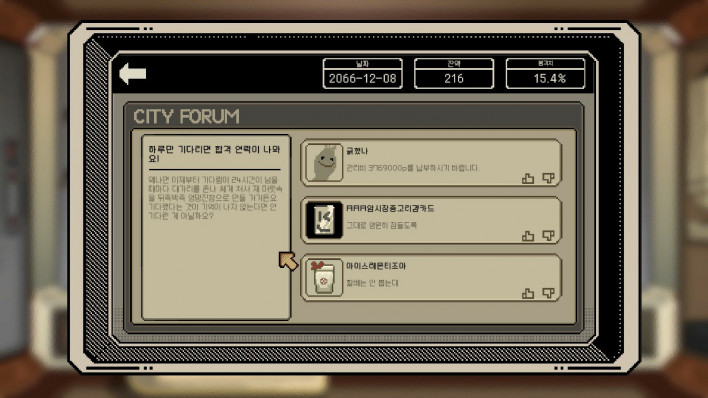
'Thank You for Applying' is not a massive game. You can finish it in a day, even at a leisurely pace. But its impact lasts a little longer than that. That is the kind of game it is.

- Well-crafted world-building and atmosphere
- A dystopia reflected through appropriate real-world parallels
- Excellent translation that incorporates all sorts of memes
- Interview methods that become unnecessarily complex
- Lack of gameplay outside of the narrative and interviews
Review Platform: PC (1.14)

Sort by:
Comments :0