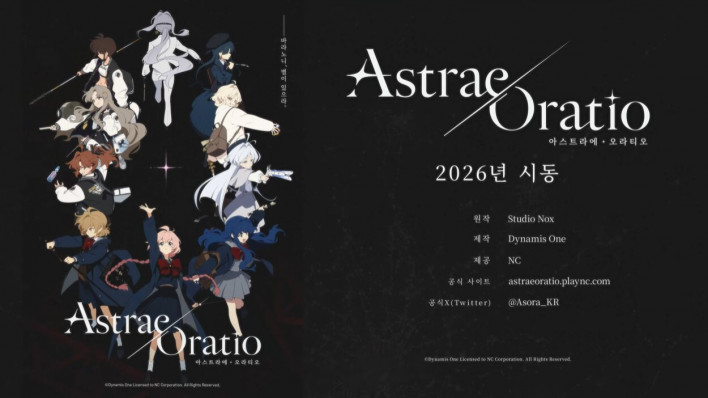
The promotional video (PV) for 'Astrae Oratio,' a new subculture game developed by Dynamis One and published by NC, was released on the 23rd. Following the trademark filing in April and the teaser in May, the release of this PV marks the game's official launch into the spotlight.
While 'Astrae Oratio' has previously focused on explaining key terminology within its world-building, the newly released two-minute PV offers a glimpse into its in-game play and character modeling. Now that the project has moved beyond the initial sketching phase and into the coloring stage, we take a look at the themes and gameplay experience 'Astrae Oratio' might offer, based on the videos and materials released so far.
A Flavor of the 90s and Early 2000s in Every Genre
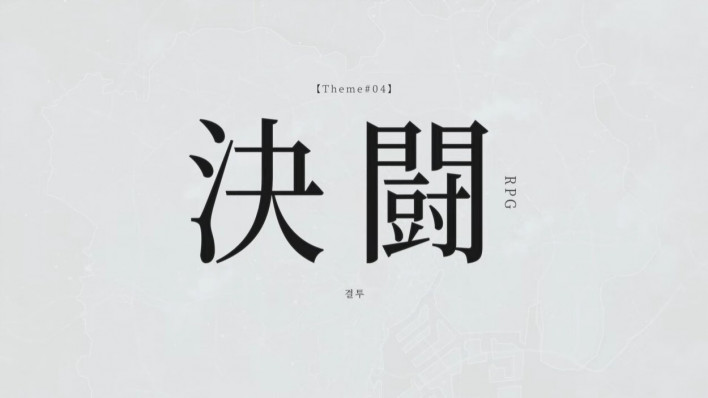
Although I introduced it as a new subculture game, the genre officially pushed by 'Astrae Oratio' is a 'New Legend (Shin-denki)' RPG. While it clearly falls under the broad category of subculture games centered on pretty girls, the term 'New Legend' is a crucial hint that reveals the game's direction.
New Legend' is a genre that spread from the Japanese light novel scene in the early 90s. It typically deals with stories where supernatural, non-daily elements intrude upon the mundane life of modern society. While it varies, these supernatural elements are often kept secret from the general public. Consequently, the protagonist usually lives an ordinary life, only to be suddenly swept into events and gradually delve into the core of the mystery surrounding these supernatural forces.
This term is somewhat unfamiliar in Korea, and even in Japan, it is rarely used these days, making it obscure unless you are a long-time fan or have studied older works. Since that era, the term 'Urban Fantasy' has become more common to encompass the diverse types of genre literature and fantasy works set in modern society.
Despite this, there are two main reasons why they are stubbornly sticking to the 'New Legend' label. First, they want to evoke the sentiment of the early 90s to early 2000s, when the term was in its prime. Second, they want to emphasize that the supernatural elements are separated from and kept secret from general society.
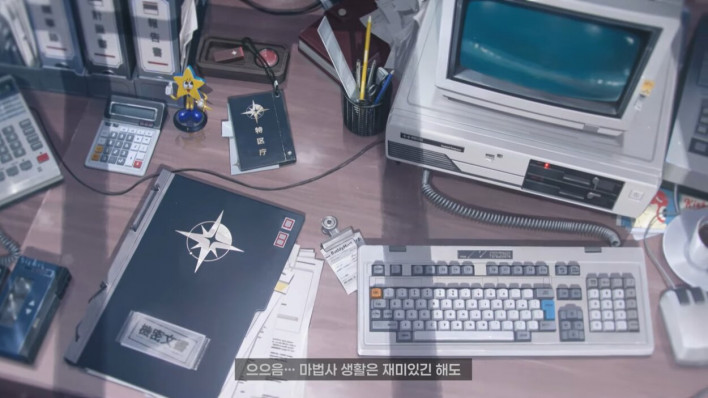
The first point is made clear the moment the PV starts, with the appearance of a computer, a Walkman, and a telephone. The computer tower, reminiscent of the Pentium era when we used floppy disks, the angular ball mouse, and the clunky keyboard connected by a coiled cable, evoke a page from an old newspaper advertisement. The cassette tape—now almost discontinued—the Walkman, and the design of the extension phone, which reminds one of old government offices or hotels, all support this retro aesthetic. The feature phones used by the characters and the UI design based on them go without saying.
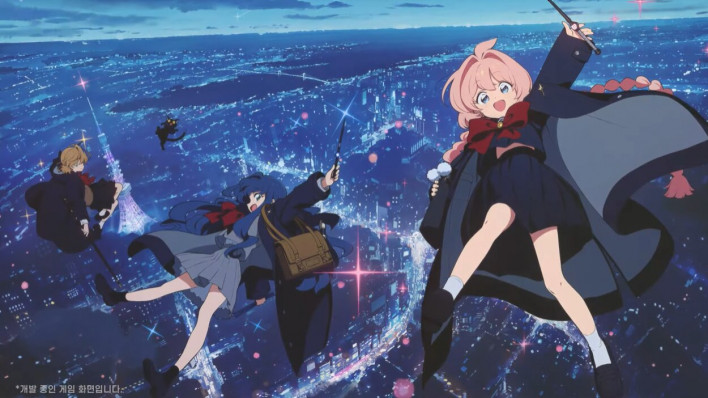
Furthermore, the design and modeling of some characters strongly reflect the style seen in 90s anime. A prime example is the mages from 'Minato-ku Girls' Magic Activities,' including Eirínn Tanaka. The large, sparkling eyes with simple eyelashes and highlights are a hallmark of Japanese animation from the 90s. While it may still be in development and awaiting final polishing, the very simple highlights and shadows are reminiscent of the era when Japanese animation studios were struggling to cut costs after the bubble burst.
The second point—that magic is kept secret from the public—has been mentioned throughout the teasers and was clearly revealed in this PV. Eirínn Tanaka mentions that she is a novice mage who doesn't know the common sense of the mage world, and she complains about the hassle of hiding her identity. The structure that appears in the PV also brings to mind the 'Clock Tower' from TYPE-MOON, a world where the existence of mages is a top-secret matter to the public. Of course, they are called 'magicians' there, but since they are called 'mages' here, I will leave it at that.
In the current landscape of collectible RPGs, this dual structure is quite rare. Post-apocalyptic games usually feature supernatural powers that are already known to everyone because the world is on the brink of collapse. Even in other settings, developers rarely choose such complex structures because they prioritize helping the user naturally immerse themselves in the world. However, if a dense world-building is constructed well, it has the advantage of securing a loyal fan base. It remains to be seen how 'Astrae Oratio' will leverage this strength.
A Two-Track Approach: Retro Design with Modern Gameplay Trends
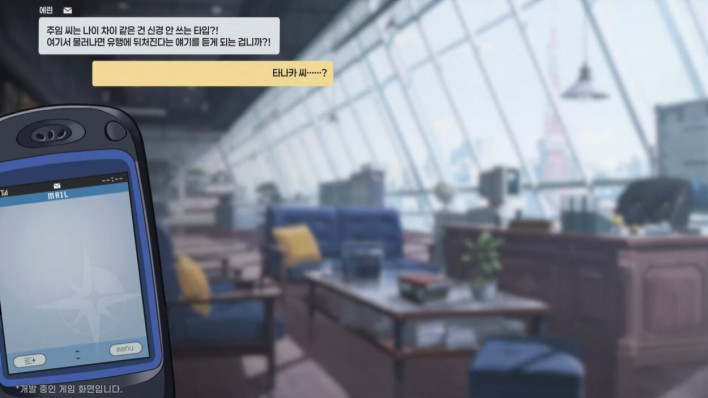
As much as it emphasizes the style of the early 90s to early 2000s, the in-game elements of 'Astrae Oratio' are focused on capturing that atmosphere. This is evident from the messenger function screen, an essential feature in modern subculture games. Not only is the feature phone a key point, but the fact that it says 'Mail' is also significant.
Those who have watched Japanese works from before 2011 will understand the context. Before LINE became popular in Japan after the Great East Japan Earthquake, people used carrier-based email. Because different carriers couldn't send text messages to each other, people sent messages via carrier-specific email addresses. This is why the line "Give me your email address" appeared so frequently in works from that era.
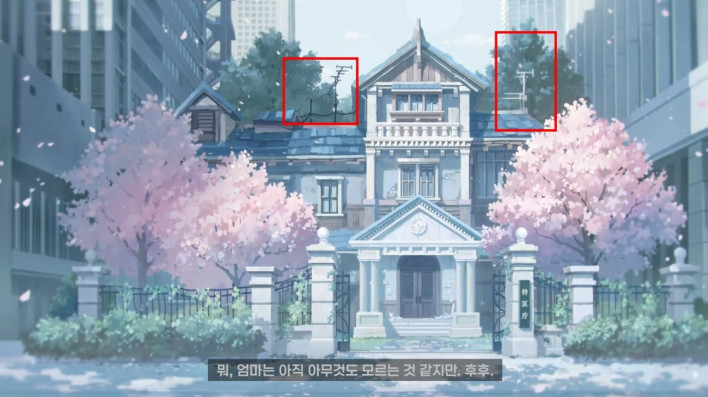
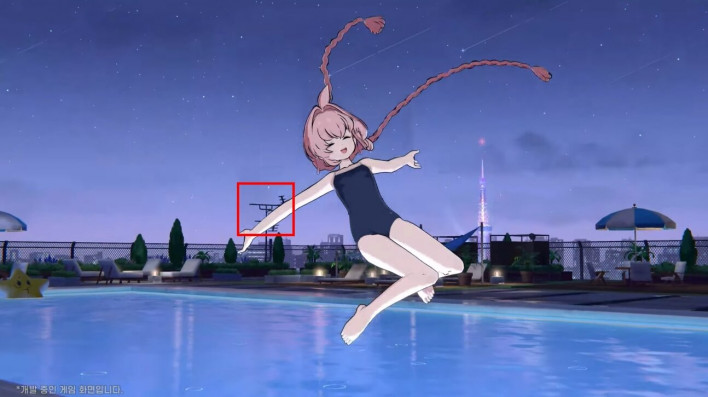
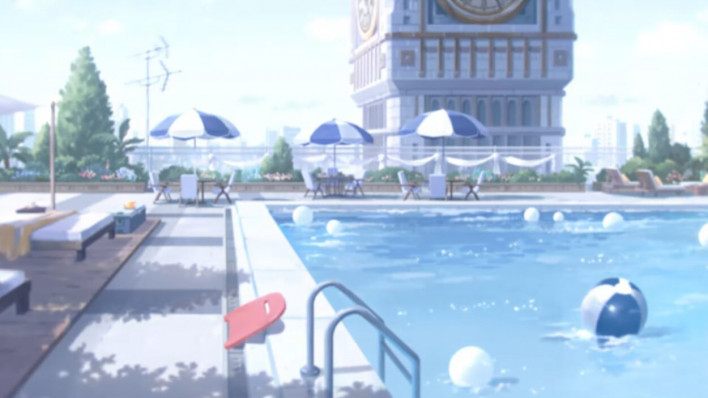
There are other 90s-2000s touches hidden in the props and backgrounds. Examples include the old-fashioned antennas on the roofs of buildings, the swimming pool, and the one-piece swimsuits that are no longer adopted by most schools. The contrast with Anna M. Battenberg's old-fashioned competitive swimsuit, which shows the origin of that school swimsuit design, is also worth noting.

Another reason to pay attention to that scene is that it offers a glimpse into character interaction and costumes, which are essential in subculture games. When Eirínn changes into her swimsuit, the motion of her standing in front of a mirror in a room with a wardrobe is implemented in great detail. While its importance has diminished slightly, school uniforms and swimsuits are staples of daily school life, and it feels like they are using these two to showcase the costume system. Given that separate motions were created for when she is in her uniform versus her swimsuit, it is likely that other costumes will be handled similarly to showcase the characters' personalities.
Another point to note at the pool is that multiple characters appear simultaneously, and they are shown playing naturally rather than just reacting to touch. Most games that are lobby-based rather than field-based focus on a 1:1 relationship with a specific character. This is a core strategy to foster attachment to the game through deep interaction with a favorite character.
In contrast, while 'Astrae Oratio' centers on Eirínn, Lilia and Anna also have significant presence, and Eirínn interacts with them while naturally looking toward the user. This direction feels aligned with recent 3D subculture games that aim to capture the feeling of being with characters in a natural, everyday setting, rather than just building a 1:1 connection. Of course, those games also have 1:1 interaction points, so I expect 'Astrae Oratio' will show this as well.
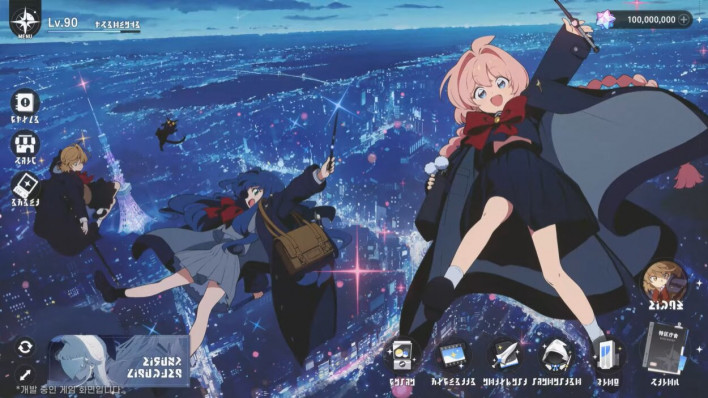
Having confirmed the character-related trends, the next focus is combat and gameplay. While the lobby screen hasn't been fully revealed, we can see familiar elements like gacha, event banners, and icons presumed to be for character growth. The gacha section passed by quickly, but it was clear there are two types: character and artifact gacha. While it's still in development, the current video suggests these two are separate.
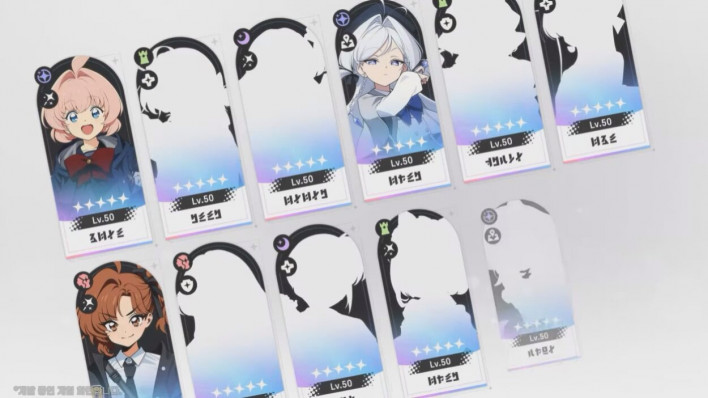
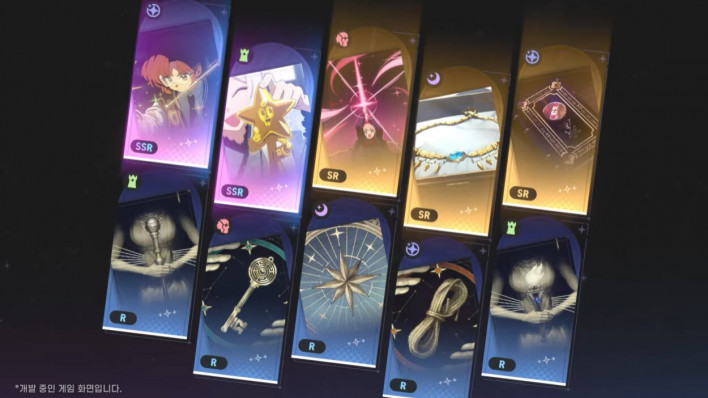

The combat screen, shown several times, features an interface very similar to typical turn-based RPGs, including icons for skills, basic attacks, and what appears to be a ultimate skill. The difference is that instead of exchanging skills once per turn, you can attack multiple times by consuming AP at the bottom.
While ultimate skills require a gauge and special skills have a cooldown, preventing constant consecutive attacks, one can imagine strategies involving setting up 'burst' timing to land combos. There were also scenes where specific attacks reduced the 'break' gauge more, suggesting that players can look forward to triggering breaks during the turns of characters who can exploit enemy weaknesses.


Another impressive feature is the defense icon, which is absent in typical collectible turn-based RPGs. Although briefly shown in the previous teaser, 'Astrae Oratio' allows players to deflect enemy attacks by pressing a key at the right time. This was demonstrated again in the PV when Eirínn deflects an enemy's attack during their turn. However, comparing the teaser to this PV, it seems that in most actual combat, players will respond to enemy motions without a separate gauge.
'Astrae Oratio' Has a Clear Identity, But Needs a Killer Move to Overwhelm the Audience
As such, there is still little revealed about 'Astrae Oratio.' However, even from this limited information, one can clearly feel the direction: to increase accessibility by adding modern gameplay to materials and styles that many subculture game developers have used as a foundation but have recently moved away from.
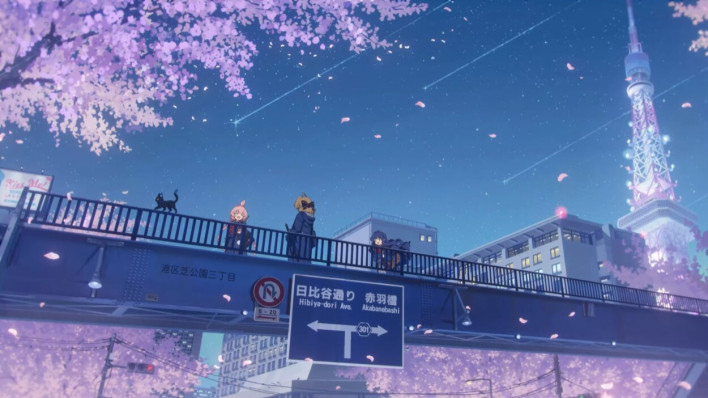
However, 'Astrae Oratio' still has many uncertainties to clear up. In particular, the setting of '1889 Tokyo, Japan' is likely to remain a point of contention unless it is clearly defined. Although they have accelerated development by 100 years through magic to capture the 1980s-2000s vibe, it is a historically sensitive and difficult period to handle.
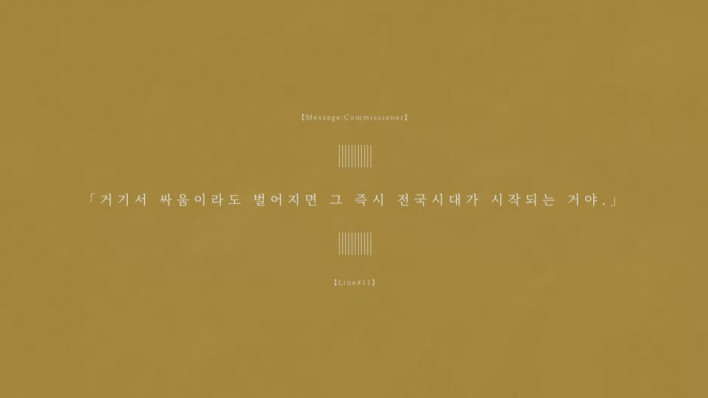
The PV attempts to provide context by mentioning that while development has leaped forward, conflict could lead to chaos similar to the Sengoku period. The conflicts between Japanese factions and regions at the time did not end with the Meiji Restoration or the enactment of the constitution. For example, during WWII, the Army, established around the Choshu domain (now Yamaguchi Prefecture), and the Navy, established around the Satsuma domain (now Kagoshima Prefecture), were so suspicious of each other that they didn't even share intelligence. The rivalry between Kansai and Kanto is another classic trope that continues to be depicted in mass media.
The rivalry between Kyoto, the center of Japan since the Heian period, and Tokyo, which only developed into a center during the Edo period, is a theme that appears not only in creative works but also in real-life events like the Koshien tournament. Perhaps conscious of this, the game highlights Tokyo being selected as the host for the World Expo over Kyoto, and the impressive appearance of a character presumed to be from Kyoto.
There are other issues, but these are likely to become barriers to enjoying the game. Players might wonder, 'I want to travel the world with pretty girl characters and enjoy the story, but do I really need to dig into all that context?' While some enjoy uncovering hidden elements, others just want to start their journey with their favorite character. Furthermore, if there is something that bothers them in the lore, it becomes difficult to take that first step. As 'Astrae Oratio' adopts a genre and style representing the 90s-2000s, it may feel unfamiliar to users who did not experience that era or watch works from that time.
Despite the buzz surrounding 'Astrae Oratio' due to these issues, in a way, the game has been given an opportunity. Many works are buried in indifference. Since it is receiving attention, it needs a definitive 'one hit'—something overwhelming or heart-fluttering—to turn that attention into support. So far, 'Astrae Oratio' has felt like its firepower was dispersed while doing preparatory work to instill its world-building.
Of course, this is an inevitable process when trying to differentiate oneself in the 'blood ocean' of the subculture game market. However, since all these processes are ultimately a means to implement the sentiment that will make users fall in love with the game, I think it would be better to show that dream more directly with something intuitive. The direction is clear, and I am curious to see how 'Astrae Oratio,' which has come this far despite various challenges, will complete and present its dream.

Sort by:
Comments :0