There's a funny silence that happens when you try to explain Dave the Diver to someone who hasn't played it. At least, that's the experience I had whenever my wife saw me playing the game on my Steam Deck.
You start strong. "It's a fishing game." True, and useless. "Okay, it's a sushi restaurant sim." Now they're picturing one of those phone games where you tap a salmon for ninety seconds and then watch an ad for a different phone game. So you push on, and this is where it collapses: it's a game where a chubby guy in board shorts dives into a bottomless ocean rift to harpoon fish all day, runs a sushi bar at night, occasionally fights a boss, and gradually unearths a lost underwater civilization and a slow-motion ecological catastrophe. It's also one of the most joyful games in years.
Somewhere in there, my partner has quietly decided I need a rest.
I love that Dave does this to people. The pitch sounds like a fever. The game is a masterpiece of pacing. And that gap between how ridiculous it is to describe and how complete it feels to play is exactly the kind of thing this series exists to crawl inside. Which is what I'm going for: this series is about going 1,000 percent on a game, and wringing out everything it has to give on the screen and off it.
With Dave the Diver, what stands out most to me isn't a feeling of fun or excitement, but joy. Plain, uncynical, slightly goofy joy. The kind that's gone rare enough in big releases that when it shows up, you almost don't trust it. So this isn't a teardown. It's an attempt to find where that joy actually lives. I had help from people who'd know (including Jaeho Hwang, who directs Dave the Diver and heads up MINTROCKET, and who was generous enough to sit down with me), but they're here as expert witnesses to a feeling, not as a behind-the-scenes featurette.

Start with the loop, because everything good radiates out from it. You dive. You gather. You surface. You cook. You serve. You sleep. You dive again. It sounds like a chore chart. It plays like breathing.
People call Dave the Diver a "cozy game," which has always struck me as not quite right. It's a game with oxygen meters, stealth, predators, and boss fights. When I raised that contradiction with Hwang, he gave me the line that reorganized how I think about the whole thing. The coziness people feel, he suspects, "isn't an overall sense of calm, but the moment of stability between bursts of tension."
That's the joy at the center of Dave the Diver: not the absence of stakes, but the exhale you've earned after them. It's a concept explained by video game auteur Masahiro Sakurai. You survive the dark water, you climb back into the light, and the reward isn't a loot drop: it's the quiet, productive pleasure of turning what you caught into dinner for people who are happy to see it.
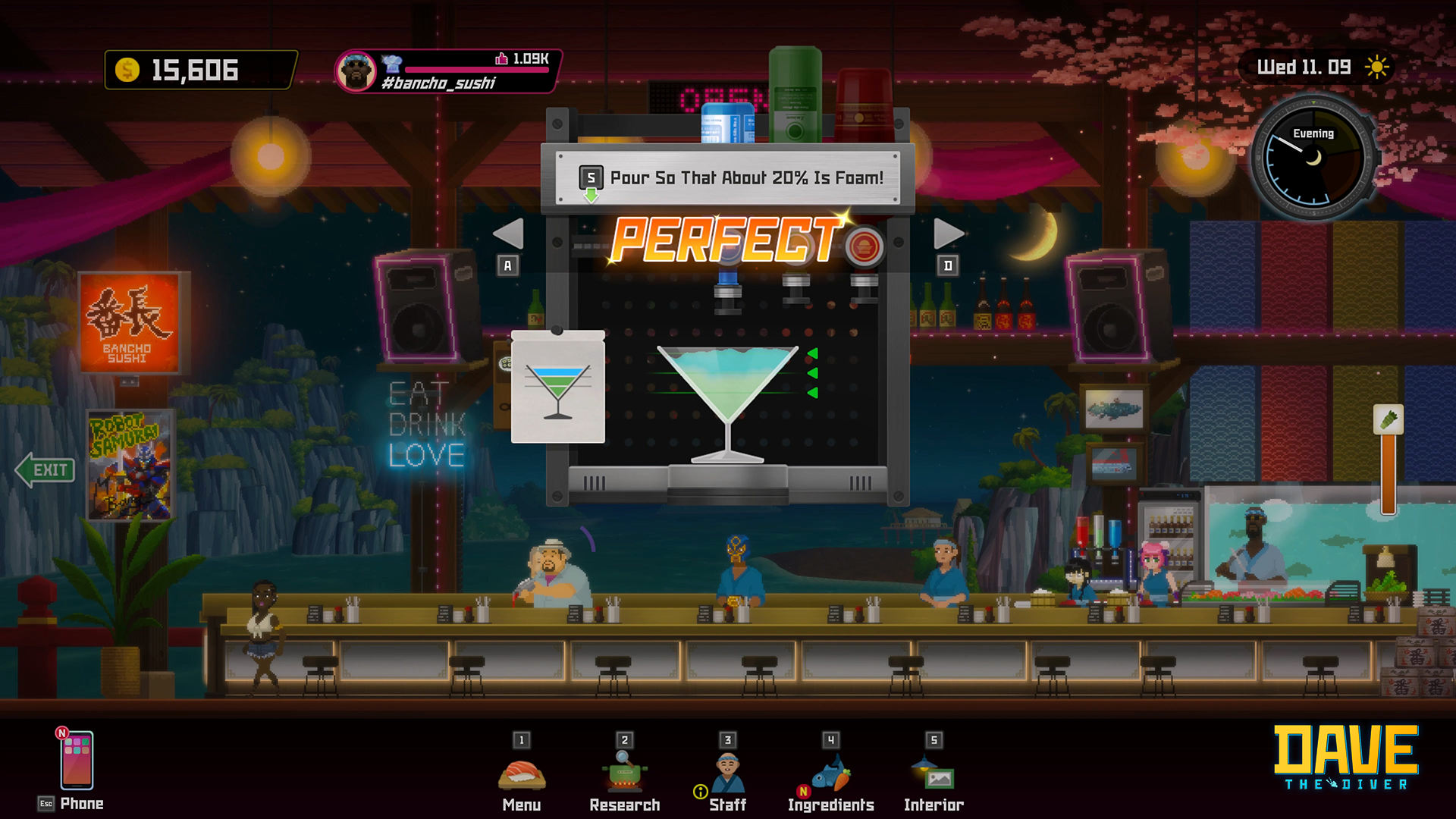
Hwang told me that fish, unlike normal game loot, "can be ingredients themselves," and that the catch-to-sushi pipeline works precisely because "it's also something everyone has already experienced in real life, so it's quite intuitive." You already know, somewhere below thought, that the thing you caught becomes the thing you feed people. The game just hands you the rod and the knife and steps back. The joy is in completing a circle you understand in your bones.
I want to defend the comedy, because I think it gets undersold as "charm" when it's doing real work.
Dave the Diver is genuinely, reliably funny, and, crucially, never mean about it. It's not winking meme humor or grim-dark irony. It's the comedy of a story that obviously likes its own characters: Cobra's schemes, Bancho's terrifying intensity over a knife, the pop-eyed reaction shots lifted straight from manga. I have laughed out loud, alone, more times in this game than in most things I've put on a screen on purpose.
What's wild is how hard that is to sustain in a game built on repetition. In a separate Inven Global interview, Hwang put his finger on exactly why most games can't pull it off: a joke "is closer to a joke," he said (funny once, less funny the second time, dead by the third), and yet "our game has repetition." Holding humor and routine in the same hand without one killing the other is, he admits, mostly a matter of feel, leaning heavily on a single cutscene director's instincts. That it works as often as it does is its own small miracle.
Here's the trait I keep coming back to: Dave the Diver does not stop giving.
You think you've mapped it, and then it hands you a fish farm. Then a sea-people village. Then a photography gig, a weapons-upgrade tree, a boss with a real moveset, a minigame you didn't ask for and now can't stop playing. A lesser game would buckle under all that, becoming a junk drawer of half-baked systems. Dave somehow makes the overflow feel like generosity.
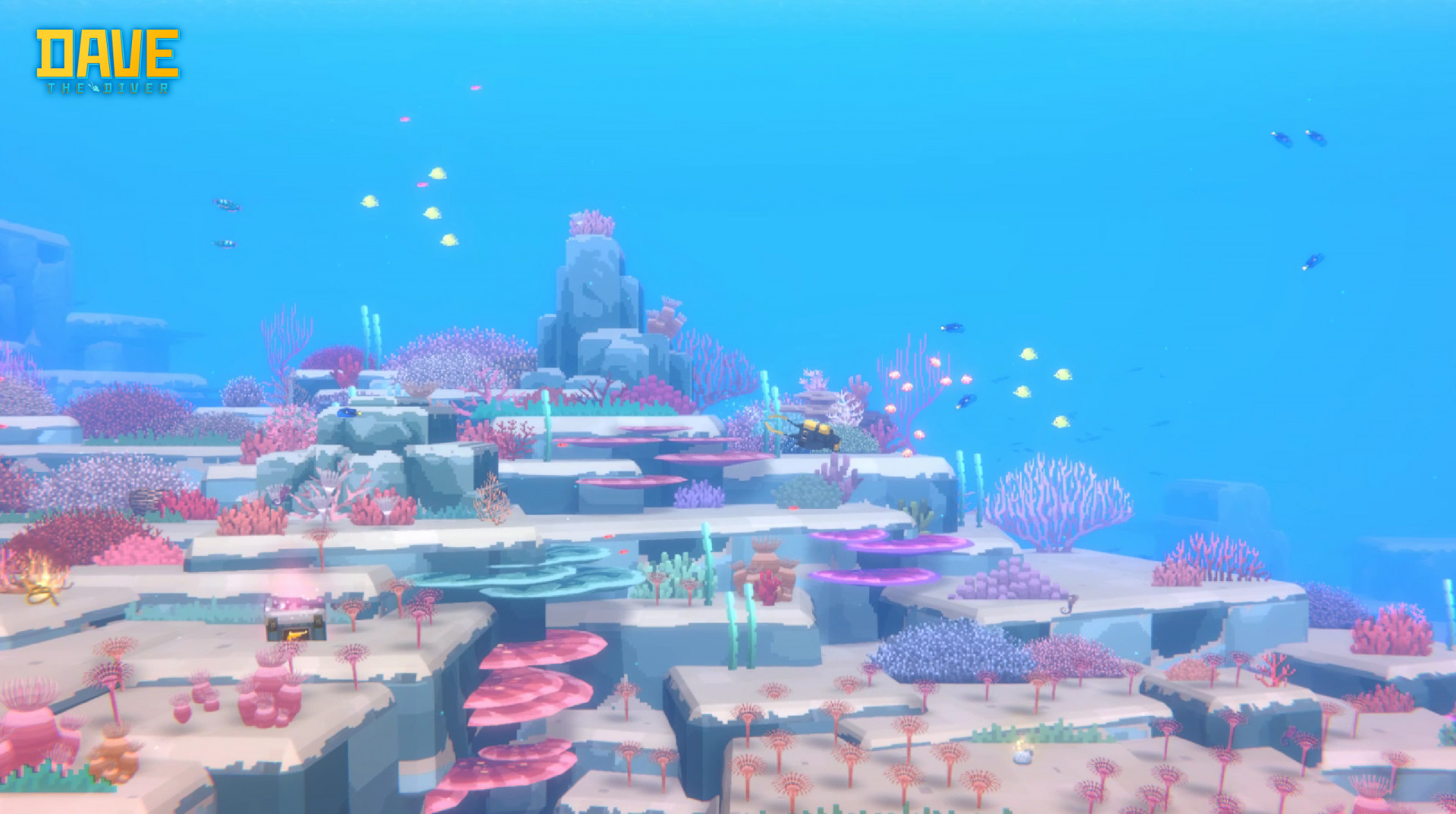
That's not luck; it's the team's actual specialty. As Hwang told Inven Global, MINTROCKET doesn't think of itself as a studio that digs one mechanic to the bottom. They're not Subnautica's crafting or a Soulslike's combat. Their gift is pacing: weaving a wide variety of elements together so that "when the fun starts to drop," a fresh one arrives "as a refresh." It's improv logic applied to game design. Whatever you're doing, the answer is "yes, and..." And here's a new thing before you got bored of the last one.
The joy in that is a kind of being-cared-for. The game respects your attention enough to keep surprising you, and it almost never punishes you for engaging. Dave doesn't slap your wrist when you fail; it just lets you climb back in. Generosity without a catch is rarer than it should be, and it feels wonderful.
And then there's the simplest pleasure of all: looking down into water and not knowing what's there.
The Blue Hole is one of gaming's great moods, and it earns it honestly. The team couldn't visit a real one, so they built the version we all picture from folklore and from the famous hole in Belize "a beautiful ocean as you enter," as Hwang described the goal to me, "but it darkens quickly, and you don't know what's living further down or where it connects to." Descent as suspense. Every layer down is a small-held breath.
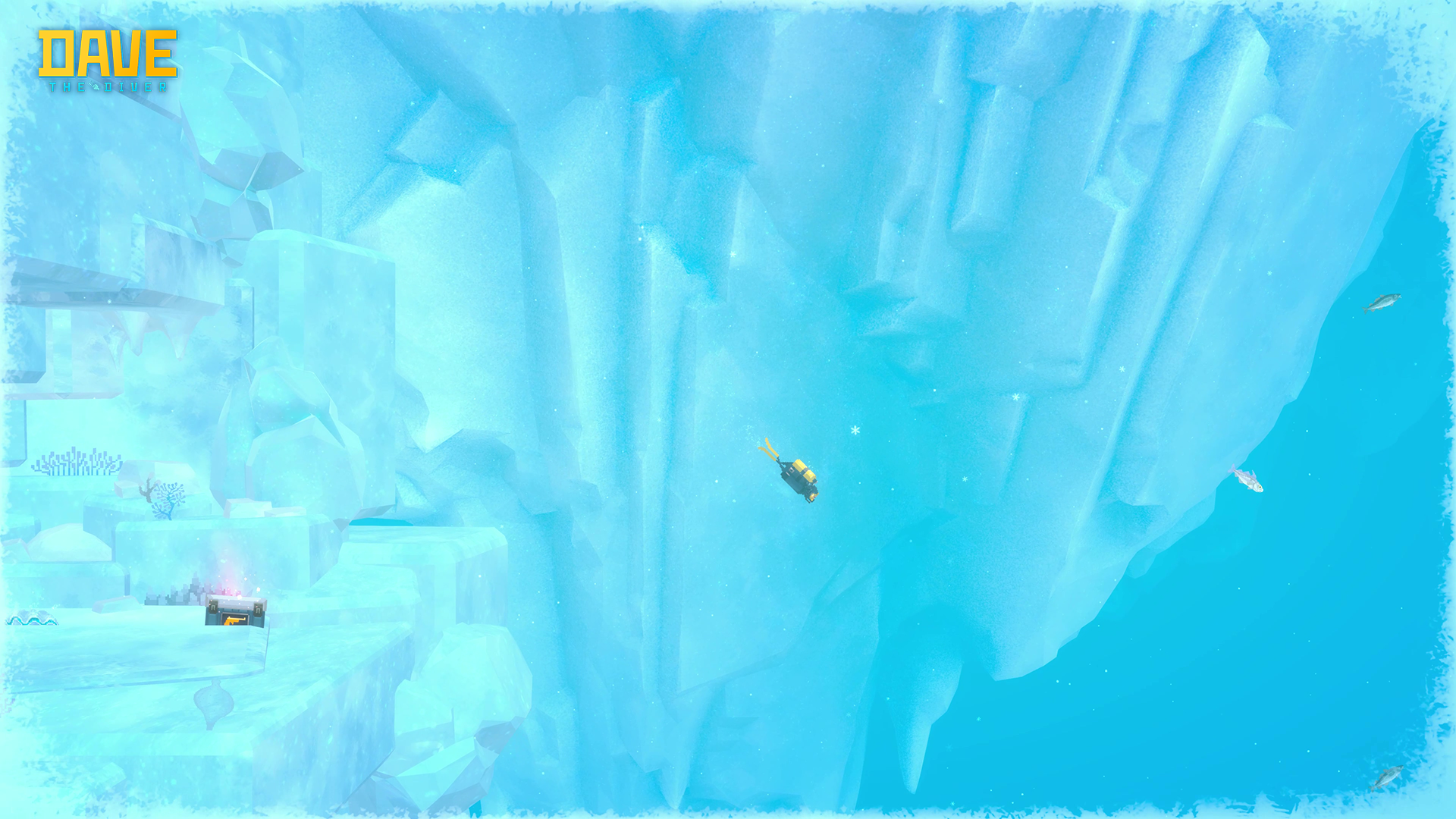
My favorite proof that this wonder is real and not faked is the manta ray. There's a mission built around one, and Hwang told me it came straight from an artist who went on an actual night dive and brought the memory home, after which the team "kept reworking it over and over to recreate the atmosphere and the feeling of a manta ray appearing from the night sea." If you've hit that moment, you remember it: the dark, the scale, the way your stomach drops. It lands because someone refused to let the game ship until it felt the way the ocean had felt to them.
A practical aside, since how you play is part of the joy, too. Dave is the platonic ideal of a curl-up game: a cup of tea or a glass of soju, the couch or the bed, a Steam Deck ticking along while the day winds down. But give it at least one session on a big monitor. The art is the whole reason the Blue Hole feels like somewhere, and on a large screen the shifting light and the impossible parade of sea life stop being a backdrop and become the point. Play it small to live with it. Play it big at least once to see it properly.
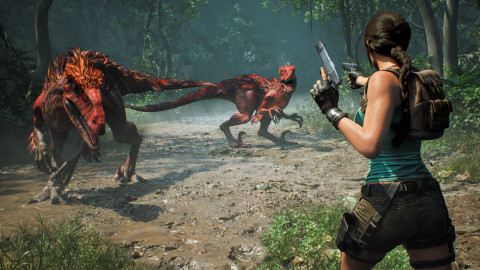
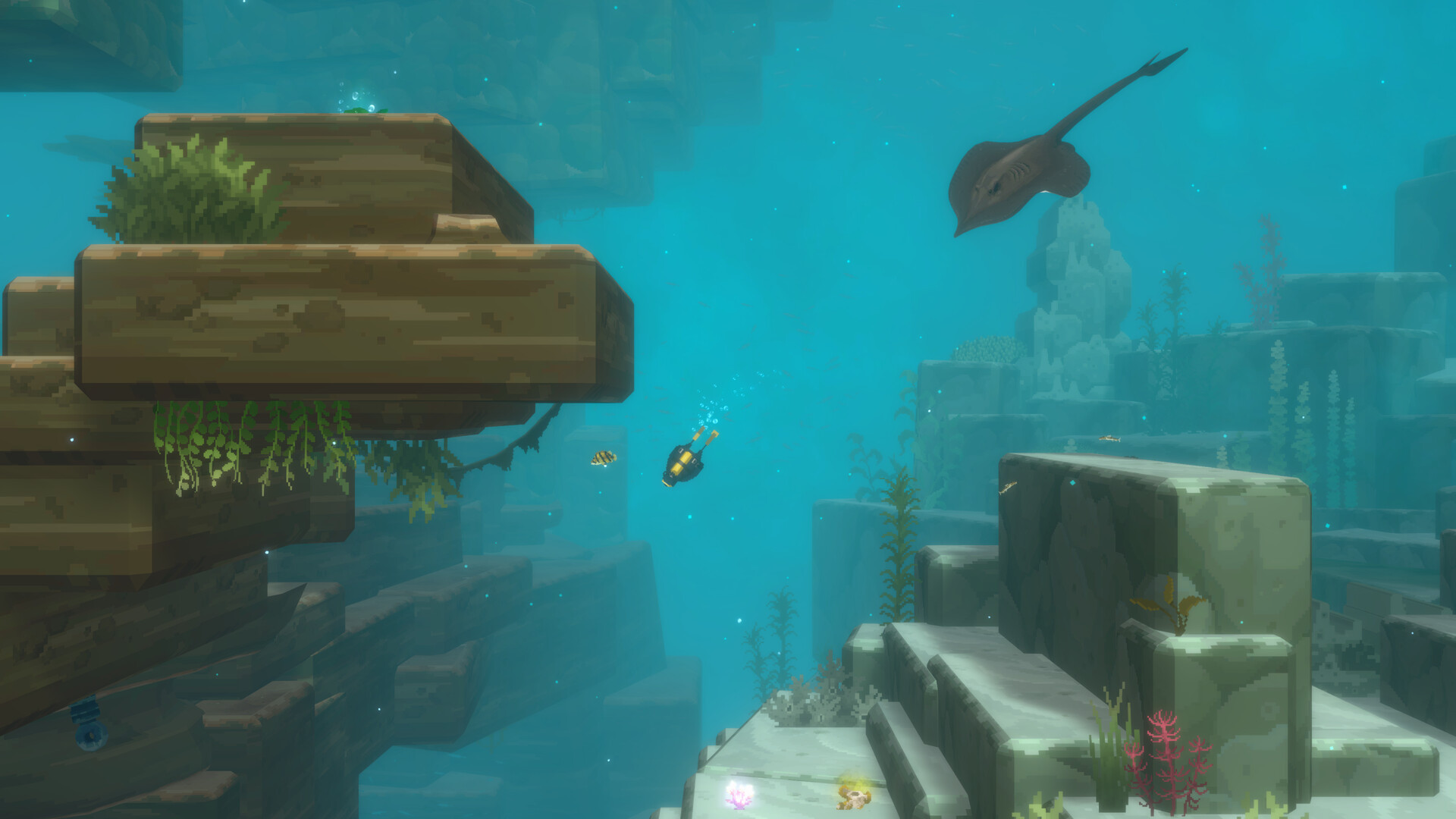
Which makes today's release the most Dave the Diver move imaginable. As of this writing, MINTROCKET has put out Dave the Diver: In the Jungle, the team's largest content pack yet, and a gleefully contrary one. It trades the blue for green: Dave, Cobra, and Bancho follow an archaeologist to the freshwater lake village of Utara after a giant sea dragon washes ashore, and in place of the ocean and the sushi bar you get a jungle lake full of piranhas, electric eels, and crocodiles, a new restaurant called Bancho Grill, real-time village life, and even turn-based combat on land.
Refusing to simply give people more of what they loved is a choice, and a confident one. As Hwang told Inven Global, the studio has "a tendency not to repeat what people like or are already familiar with", he'd rather risk a side story that feels new than ship a sequel that feels safe. When I asked him about the swerve to freshwater, he said it came from players themselves asking for it, and from a real place: "Once we came across Weekuri Lake in Indonesia, we knew that was it."
Even Bancho's whole deal travels intact. He "isn't strictly a sushi chef," Hwang reminded me, "he's a culinary mind who explores the inherent flavor of every ingredient," chasing the idea that an ingredient called inedible just means the right recipe hasn't been found yet. Underneath the crocodiles, the thesis is the same one that ran through the original: "I really believe food has the power to bring people closer together."
A completely different game that is, somehow, unmistakably Dave. Which is the whole joy of the thing: it keeps changing the water, and the delight stays exactly where it was.
-

I write. I rap. I run. That’s pretty much it.

Sort by:
Comments :0