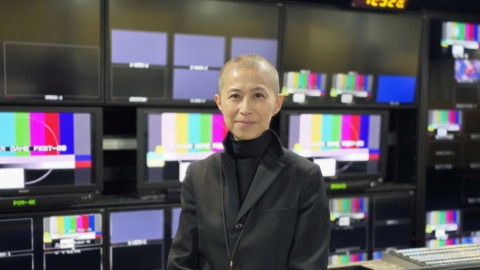
Lee Kang-wook, CAIO at KRAFTON, has shared the development story behind 'PUBG Ally,' the AI teammate introduced to PlayerUnknown's Battlegrounds. He detailed the process of renting out Internet cafes to collect data from tens of thousands of matches played with real users, the technical challenges of synchronizing speech and action without latency, and the use of the government-backed sovereign AI model 'A.X K1' for the Korean language version.

A notable aspect is the use of A.X K1 to train the Korean version of Ally. Lee stated, "A.X K1 is one of the sovereign AI models supported by the Korean government," and described it as "very encouraging" that this model is now reaching tens of millions of people through PUBG.
A.X K1 is Korea's first 500B-parameter (519 billion) ultra-large model, unveiled by an elite SKT team as part of the Ministry of Science and ICT's 'Independent AI Foundation Model Project.' KRAFTON participated in this elite team alongside SKT, 42dot, Rebellions, Liner, SelectStar, Seoul National University, and KAIST, taking charge of global multimodal R&D capabilities. When A.X K1 was first unveiled, 'real-time character dialogue and autonomous behavior implementation via KRAFTON's game AI' was highlighted as a key use case.
In essence, a sovereign AI nurtured by the government has been directly applied to enhance the Korean user experience in a global game, through the hands of the company that helped develop it. This is significant as an early example of realizing the achievements of the 'K-AI' ecosystem in a tangible product.
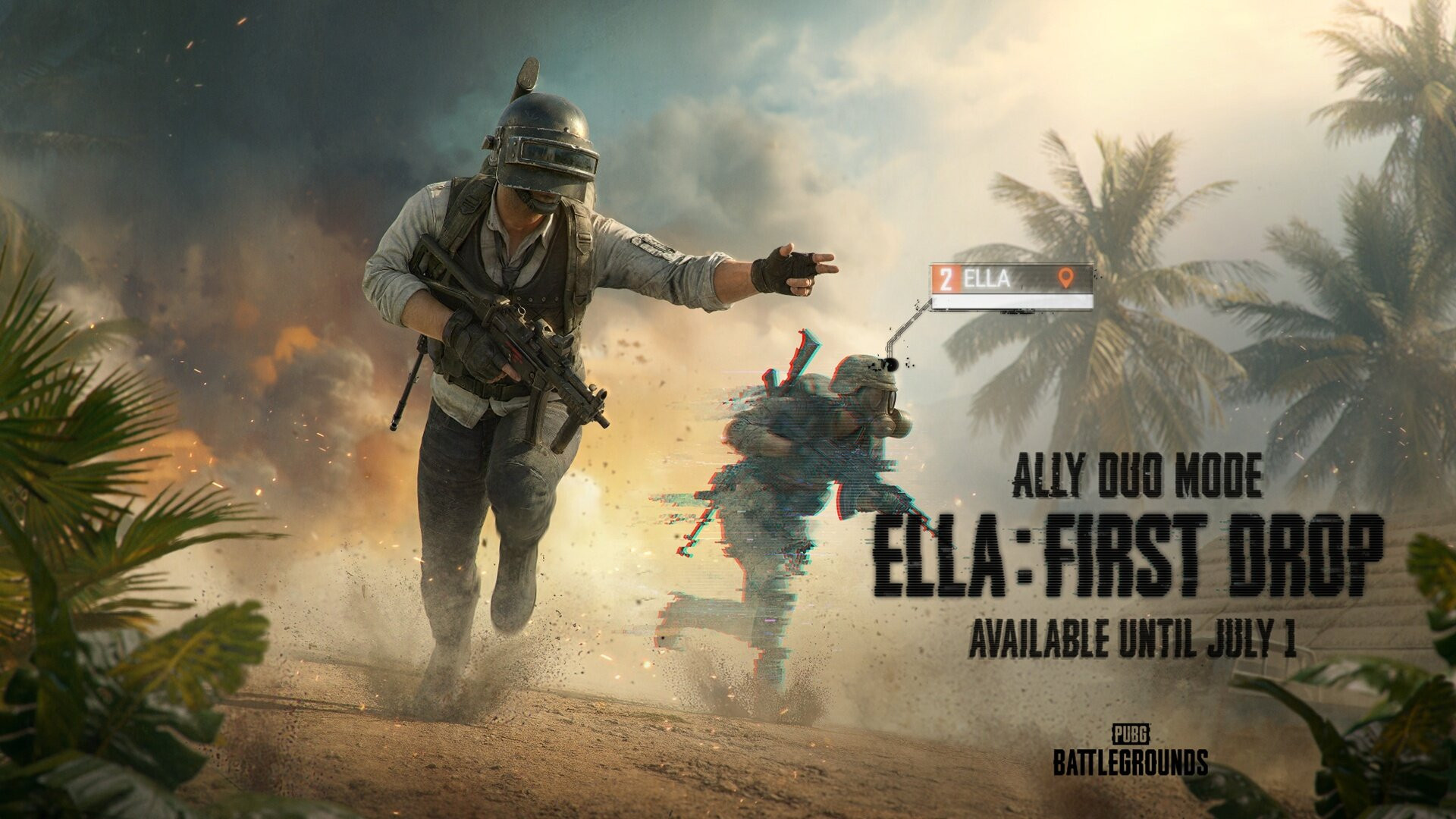
On the 17th, KRAFTON introduced a new mode, 'Ally Duo,' to the PUBG Arcade. In this mode, players form a two-person team with the AI character 'Ally' to navigate the Sanhok map, moving, looting, fighting, and executing tactics while communicating via microphone.
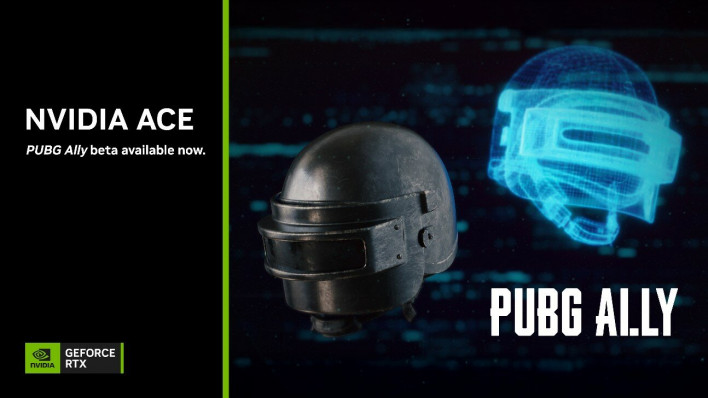
Equipped with an on-device Small Language Model (SLM) based on NVIDIA ACE, the AI communicates through speech-to-text (STT) and text-to-speech (TTS), and autonomously determines its actions by understanding both the battlefield situation and voice commands. Unlike traditional NPCs that repeat fixed lines, this AI reasons and acts on its own. The CAIO introduced it as "the world's first in-game AI agent that joins players as a teammate, reasoning, acting autonomously, and communicating via voice." The beta is available globally via Steam until July 1, with support for Korean, English, and Chinese voice.
This 'conversational teammate' was raised in Internet cafes. According to the CAIO, KRAFTON rented out entire Internet cafes, recruited over 1k PUBG players, and had them play about 40k matches with the development version of Ally. The goal was to obtain data capturing the actual flow of play, including how users interact with the companion character and how they cooperate. Throughout the collection period, the company continuously deployed improved versions, creating a structure where testers played with an increasingly intelligent teammate while the company secured data tailored to the latest version. The CAIO described this as "a mutually beneficial experience for us, who needed data, and for players who wanted to try out a new AI teammate before its public release."
The most technically challenging aspect was controlling 'dialogue' and 'action' simultaneously without them becoming misaligned. The CAIO explained that while action control—which requires immediate response to a rapidly changing battlefield—and voice dialogue—which requires natural, real-time interaction—are difficult problems on their own, Ally had to solve both at once without the speech and actions conflicting. To achieve this, KRAFTON designed a new structure that combines a real-time voice dialogue interface with 'System 1' for rapid response and 'System 2' for contextual judgment.
Evaluating what makes a 'good teammate' was also difficult. Initially, the team created a proprietary metric based on weighted sums of quantitative indicators like dialogue and action, but the rankings provided by testers differed significantly from the company's predictions. Ultimately, they released multiple versions with each update to gather feedback, iteratively adjusting the weights of the evaluation criteria to match the values users actually prioritized. Because low latency is critical, the model was lightweighted to run on-device. The CAIO revealed that they devised proprietary compression techniques—such as fine-tuning, distillation, and keeping the KV cache small—and meticulously scheduled 3D rendering and the AI agent to operate together on a single GPU.
KRAFTON also provided safety guidelines. The company clarified that Ally is merely a helper for the game and does not learn or evolve autonomously in real-time, and required users to agree to a separate notice before use. They also explained that safety was the primary standard across all stages, from training to inspection and improvement. "We have introduced a new form of gameplay that users and Ally create together," said CAIO Lee Kang-wook. "We will continue to innovate the gaming experience using AI technology based on the diverse feedback from our users."
However, challenges remain for it to become a commercialized feature. Whether the AI partner reacts naturally to combat situations in a battle royale, where split-second judgment and teamwork are key, and whether voice recognition latency or malfunctions disrupt the flow of play, are issues that this beta must address. KRAFTON plans to refine the technology using the data and feedback collected during the beta period.

Sort by:
Comments :0