Monster-collecting games have become an increasingly common genre. The loop of roaming fields, encountering new creatures, capturing them, filling out a compendium, and fighting alongside them has become the standard grammar of the genre. But what if, instead of fighting 'alongside' these monsters, you could actually 'become' one.
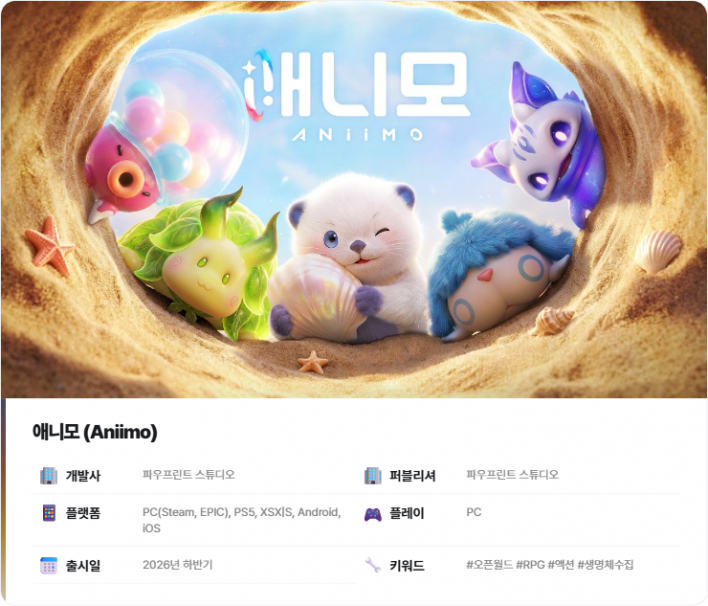
'Aniimo,' an open-world monster-capturing RPG currently in development by Pawprint Studio, boldly twists the fundamental mechanics of the genre. With over 15 million pre-registrations, the game is already generating significant buzz. What does it actually look like?

The 'Twine' System: Players Become Aniimo
Players take on the role of an adventurer exploring the vast Aidel continent. Mysterious creatures called 'Aniimo' inhabit every corner of the land, and the process of capturing and raising them is not significantly different from other games in the genre.


However, the true differentiator for Aniimo is the 'Twine' system. Twine literally means the player and the Aniimo intertwine to become one. In this state, the player is no longer just giving orders to the Aniimo; they directly become that creature to engage in combat and exploration.

In the Twine state, you can utilize the unique abilities of the Aniimo. You can fly through the sky with a winged Aniimo, swim rapidly through water with an aquatic one, or burn trees and grass with a fire-type Aniimo, allowing for much freer exploration of the fields.
When you Twine with an Aniimo, you can understand the speech of the same species in the field and even receive quests from them. Aniimo that would normally run away in surprise when approached by your player character will react differently—smiling or following you—when you approach them in a familiar form. Thanks to this convenience and unpredictable interactions, you will find yourself spending much more time transformed into an Aniimo than as your player character.




The presence of the Twine system is also distinct in combat. While combat usually proceeds with the player giving orders or wielding a weapon to fight alongside the Aniimo, activating Twine allows you to fight directly in the creature's body.
The flow involves using basic attacks to recover a skill gauge, using skills to fill a ultimate skill gauge, and then unleashing a powerful blow with a ultimate skill accompanied by a short cinematic.
Each Aniimo has different attributes, and elemental affinities significantly impact combat, making the decision of which Aniimo to Twine with a key strategic element of battle.
Blurring the Lines Between Combat and Capture
Seamless Real-Time Capture

The capture method is also noteworthy. Aniimo does not separate combat and capture into distinct phases; it uses a structure where you can capture creatures directly on the field. A tool called an 'Anipod' is used for capture, with different conditions and methods applied to each type of Anipod.
The most impressive part was the variation in capture probability. In most monster-collecting games, the capture system follows a similar structure: you assume a capture attempt will fail unless you weaken the monster to the brink of defeat. While there are slight variations based on grade or rarity, the probability is usually tied to the remaining HP.
However, in Aniimo, the capture probability changes not only based on HP percentage but also on the situation between the player and the creature. Sleeping or distracted Aniimo have higher capture rates, and your position relative to the creature also matters. However, if you approach clumsily and the Aniimo notices you, it will flee, so simply rushing in is not always the best strategy.

The unique identity of Aniimo was clearly felt during the capture process. In other games, capture systems often felt like an extension of combat, as you were forced to fight to capture. In Aniimo, however, capture and combat feel like distinct actions that require different decision-making.
The Aidel Continent: A Massive Playground
My first impression of the Aidel continent was the coexistence of 'vastness' and 'depth.' Rather than walking on flat fields, the terrain is layered with hills, cliffs, and valleys, giving the feeling that paths are open in every direction.
The reason you can fully enjoy this three-dimensional terrain is, again, the Twine system. Whether jumping off a cliff with a gliding Aniimo or digging under obstacles with a burrowing one, the field experience changes completely depending on which Aniimo you are Twined with. It goes beyond simple movement; hidden locations and rewards are designed around specific Aniimo abilities, creating an interactive loop between collection and exploration.
Weather and time of day also make the world feel alive. The types of Aniimo that appear change based on these factors, meaning you can have different encounters even when visiting the same area at different times.
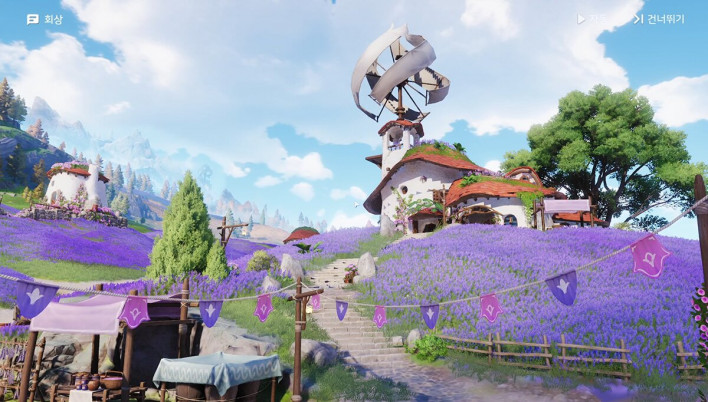
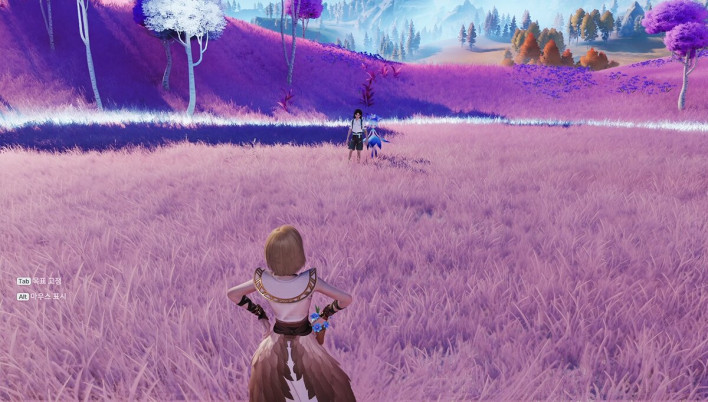
As you wander aimlessly, you may encounter quests called 'Journeys' that pop up without warning. When a notification suddenly appears on the screen while you are walking without a specific destination, it is strangely heart-pounding—as if you have stumbled into someone else's story by chance.
Following a Journey allows you to experience the stories of specific characters or Aniimo. While these aren't world-shaking events like a grand main story, they possess a special charm in their simplicity. Some Journeys show that even a passing Aniimo has its own circumstances, while others offer a glimpse into the minor worries of a character living quietly in a corner of the continent.
These short stories encountered through Journeys make you feel that Aniimo are not just targets for capture, but beings with their own narratives. The experience of a chance encounter making an entire region look different provides a level of immersion that is distinct from following a planned quest path.
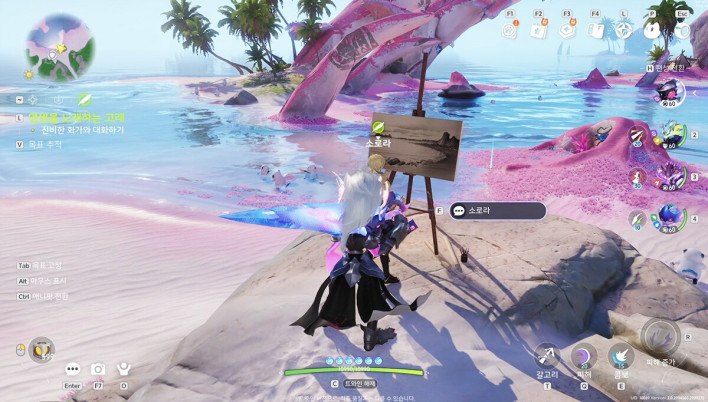

Beyond the Fun of Filling a Compendium
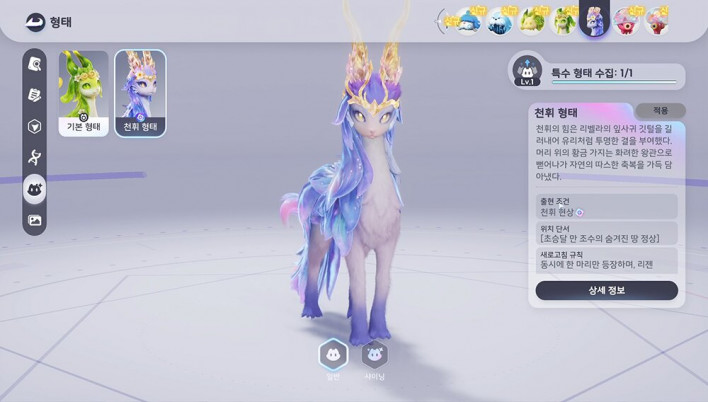
Ultimately, the quality of a monster-collecting game depends on what it makes you collect. Aniimo clearly put effort into this. In the test build, there are 219 species to fill in the compendium, and this number may increase by the official launch.

The evolution structure is also interesting. Most games follow a fixed, linear path from initial to final form. In Aniimo, however, the same initial form can branch into different final forms depending on how you raise it or the conditions met. Some evolutions are unlocked simply by catching the creature, while others require specific quests.
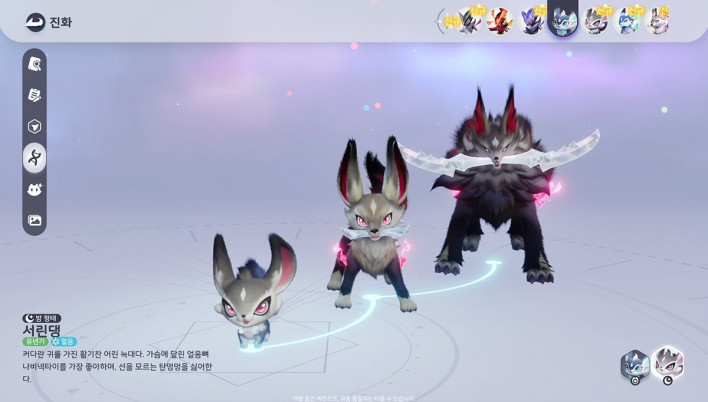
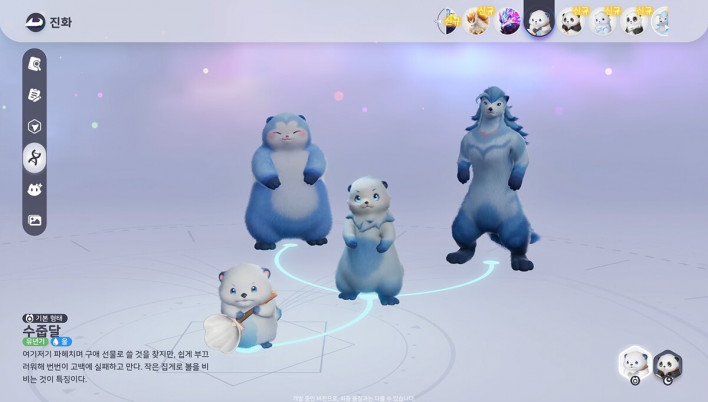
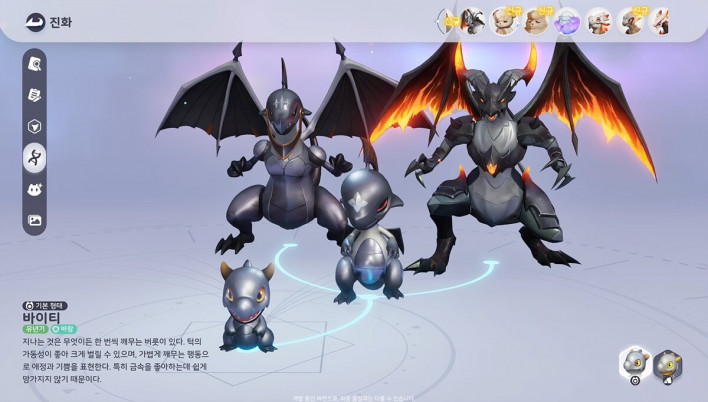
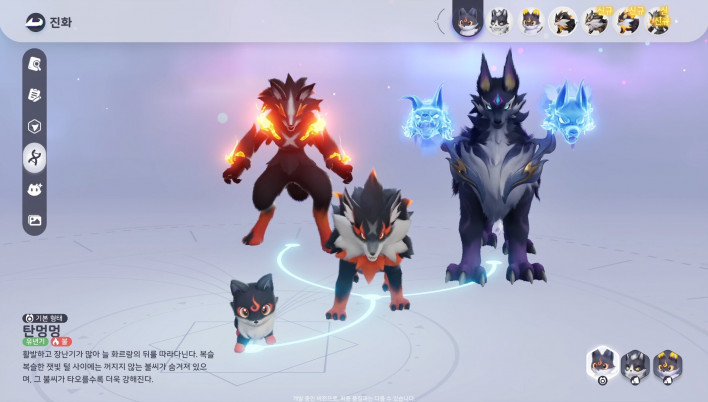
It is also notable that the same species can have different forms based on their habitat. Depending on where they were raised, the individuals are designed differently. While it might look like a simple color swap at a glance, closer inspection reveals subtle differences in detail. Since some individuals even have different behaviors or attributes, collecting these variants never felt boring.
There are also rare Aniimo that only appear under specific conditions. Discovering and capturing these individuals seems likely to provide a different level of motivation for collection beyond just filling the compendium.
Vast Content That Needs Refinement
Of course, there are some shortcomings. Bugs, lack of optimization, and complex menu layouts are not major concerns given that this is a test build. These are typical technical issues that can be resolved with time. Setting those aside, what I found more noteworthy was a different kind of disappointment regarding the game's structure. After finishing the initial tutorial, there are sections where it is difficult to judge what to do next, leading to a sense of being lost.

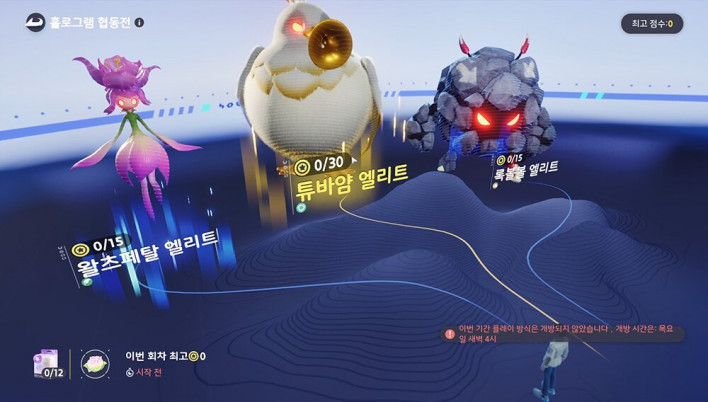
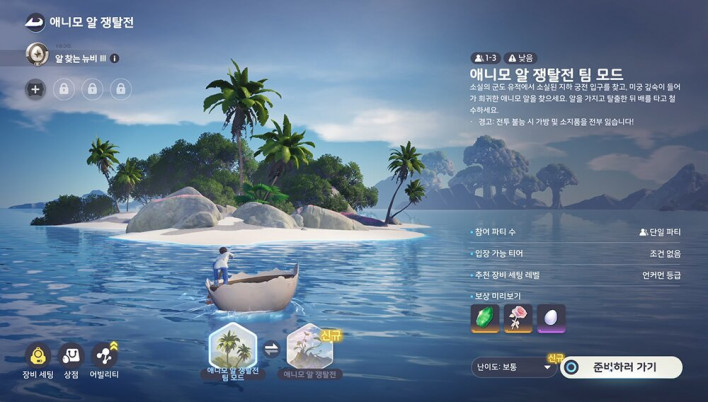
The game is packed with content. Beyond the exploration, combat, and collection on the Aidel continent, there is roguelike content, challenge-based multiplayer boss monster eliminations, extraction-style content with other users, and even housing centered around a camper van. It is a game that tries to include everything regardless of genre.
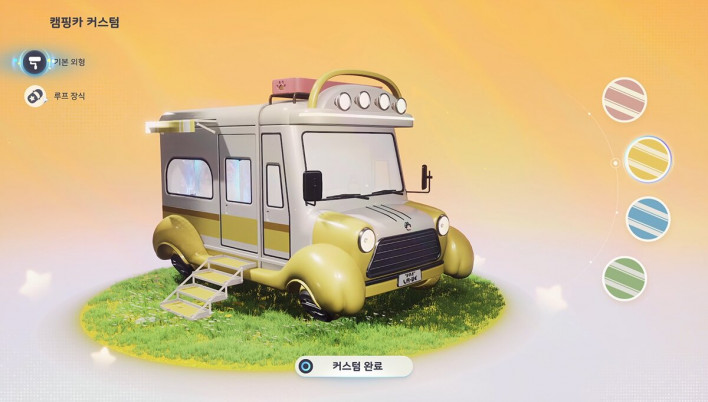
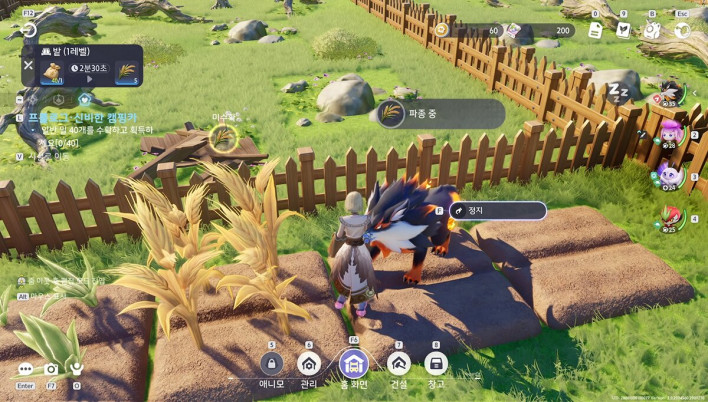
However, playing the game, you get the feeling that this massive amount of content is scattered sporadically. While each piece of content is well-made, they feel like a list of features rather than being organically connected within a big picture. The sense of being lost mentioned earlier largely stems from this; it's not that there isn't enough to do, but that there is so much that you don't know where to start.
Paradoxically, this is a positive sign. It is not a situation where you have to worry about a lack of content, but rather a question of how to organize and arrange what is already there. This seems more like an issue of onboarding or UX design rather than a structural flaw, and I believe it can be resolved before the official launch.
The developers seem to have given this deep thought. Feedback provided to the studio revealed that they are aware that too much content can be overwhelming, and they are prioritizing helping users quickly find their preferred playstyle and enjoy the fun they want.
Pawprint Studio also shared their direction of aiming for a popular game that anyone can easily access. Particularly notable is their philosophy of 'Shudonggui' (殊途同歸)—all paths lead to the same destination. Whether a user prefers simulation, combat, or collection, they are designed to reach the same level of rewards, ensuring no user feels alienated regardless of their chosen content.
Everything is Ready; Now It Just Needs Polishing
In summary, the biggest impression left by Aniimo is how it completely reinterpreted the familiar formula of collection games with the single idea of 'Twine.' The difference between catching, raising, and watching versus actually becoming the Aniimo to fly, swim, and fight is much greater in practice than in theory.
From the capture method to the ecology of Aniimo designed differently for each habitat, I constantly felt that this game was being built with its own direction rather than just following a popular genre. While there are parts that need polishing as it is still in the beta stage, the fact that most of the issues are about 'how to organize what is already well-made' is a positive sign.
Ultimately, the key will be how smoothly they can refine this vast amount of content and systems before the official launch. For those who love monster-collecting games and are looking for new fun in a familiar genre, Aniimo is definitely a game to keep an eye on.
Meanwhile, 'Aniimo,' which aims for an official launch in the second half of this year, is currently accepting pre-registrations through its official website and major platforms. With the CBT for domestic users opening today (the 9th), it is gathering intense interest from users who have been waiting for its release. More detailed information about the game can be found on the official community.

Sort by:
Comments :0