On August 7, 2026, a developer interview was held regarding 'Curse of Ulatek,' the second season of World of Warcraft: Midnight.
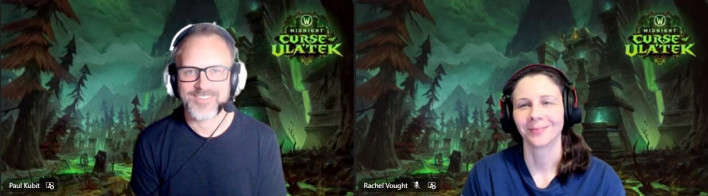
This interview was conducted in two separate sessions. Associate Game Director Paul Kubit and Lead Quest Designer Rachel Bott discussed the game's overall concept and design, while Lead Combat Designers Taylor Sanders and Andrew de Sousa addressed questions regarding major content and combat balance.
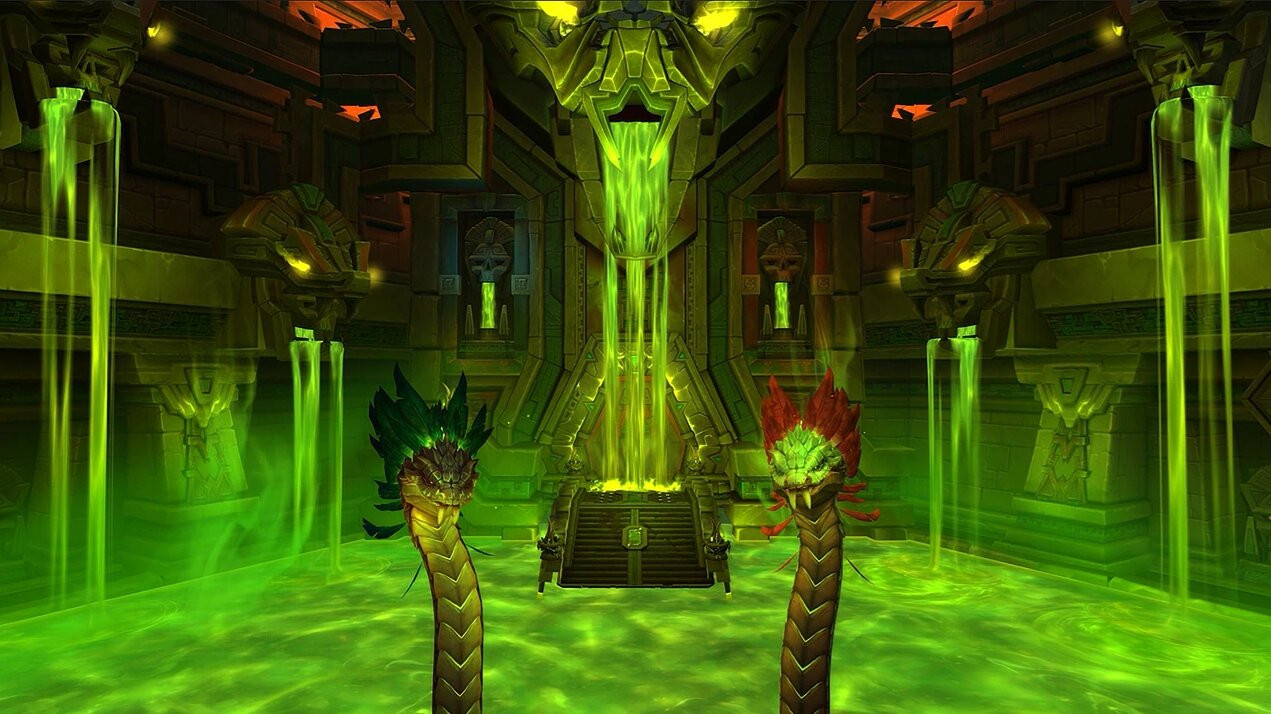
Over the course of an hour, they explained the ongoing Midnight epic that continues in 'Curse of Ulatek,' the new outdoor zone 'Coiled Isle,' the raid dungeon 'Venomous Abyss,' and the new 'Lair' content featuring outdoor boss raids. They also addressed updates to existing systems, including housing and the new Mythic+ dungeon rotation.
The following is the full transcript of the interview with the four Blizzard Entertainment developers.
Narrative and Field Content: The Midnight Story Continues on 'Coiled Isle'
'The Curse of Zul'Aman' brings the story of Zul'Aman and the Amani trolls back to the forefront. Rather than simply recycling past content, what aspects were reinterpreted to connect it with the current narrative of World of Warcraft?
Rachel Bott: We are currently in the middle of the three-part Worldsoul Saga. 'Midnight' is not just a story about the Void and Xal'atath; it is a much larger tale.
With the launch of 'Midnight,' we reintroduced Zul'Aman, updated existing zones, and introduced new Amani characters. Our goal with this story is to honor the past while fully exploring the breadth and depth of the Amani race. The Amani are not just a simple group, and there are many stories left to tell.
12.1 'Curse of Ulatek' builds on this foundation to advance the stories of Zul'jara and Zul'zan. The two have very different ideas about the best way to protect their people, and this difference is at the heart of the story unfolding on Coiled Isle. You won't just be adventuring with the Amani; you will also quest alongside Liadrin and Orwena. Orwena has her own connection to the Worldsoul, and that link leads us to hidden truths, uncovering history buried on Coiled Isle.
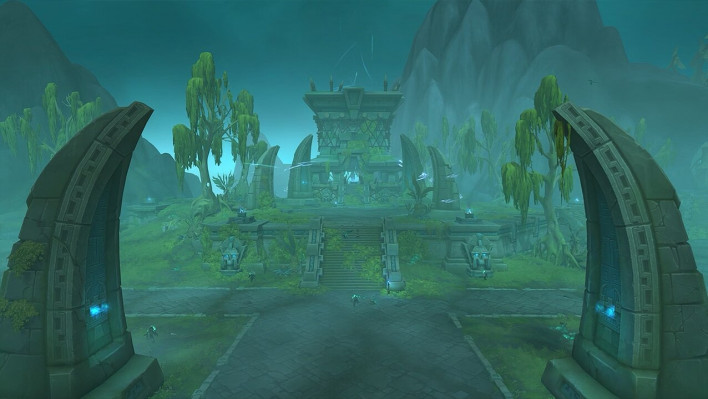
In the current story flow, Ulatek's appearance feels somewhat sudden. There are community jokes that Ulatek might just be a final boss without any dialogue. I am curious about Ulatek's position in this Midnight story, which is filled with conflict against the Void forces.
Rachel Bott: Ulatek is connected to the main story of 'Midnight.' One reason is that Zul'zan is trying to control Ulatek as a weapon to protect the Amani.
Why do the Amani need protection now? Because the Twilight Blade, serving Xal'atath, is plotting something. Also, the Amani's historical enemies, the Blood Elves, are right nearby. The Blood Elves have just fought a massive battle to protect the Sunwell and are ready to fight again.
Before chasing Xal'atath in 12.1, players will face Ulatek directly in the 'Venomous Abyss' raid. After facing Ulatek, the question remains: 'What happens next?' Once Season 2 begins, you will join forces with Arator to continue the pursuit of Xal'atath. In that process, you will learn what we set in motion by confronting Ulatek.
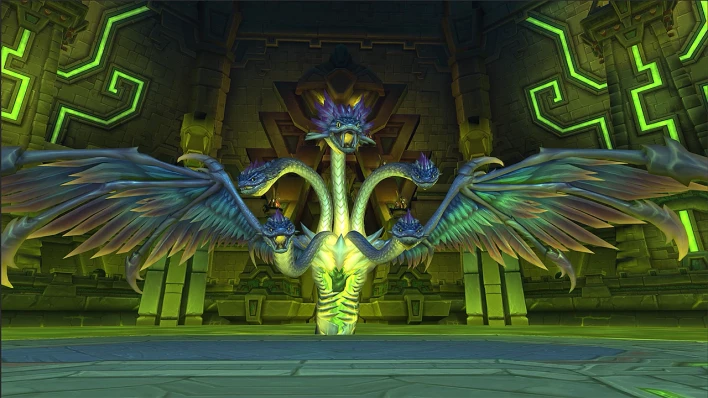
Many users have expressed disappointment that 'Zul'zan' is being used as a villain in this story arc. It feels like characters with heroic status in the game are being retired too quickly. Is the story team aware of these concerns, and what are your plans.
Rachel Bott: First, I am very happy that so many people resonate with the new characters Zul'zan and Zul'jara in 'Midnight.' For a long time in World of Warcraft, the Amani appeared only in limited ways and were often depicted as villains. In 'Midnight,' we had the opportunity to show the heroic side of the Amani.
Zul'zan has always walked a different path than his sister, Zul'jara. Zul'zan believes the Amani must be able to stand on their own without the Loa. Zul'jara, as a prophet, has a different perspective. However, both are the grandchildren of Zul'jin and feel the weight of his legacy. In the 'Curse of Ulatek' story, we want to show how these complex individuals respond when faced with a serious new threat and how differently each approaches it.
But at the core, there is a deep affection for each other and their people. Both make important decisions that will have a major impact on the future story. I can't go into detail as it might be a spoiler, but there are parts yet to be revealed. I look forward to players discovering this for themselves in the full context as they progress through the story.
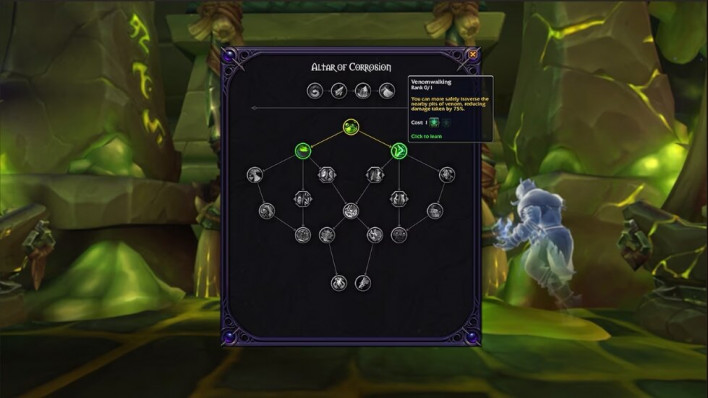
On Coiled Isle, a dedicated growth system is introduced where you collect 'Corroded Souls' to unlock abilities at the Altar of Corruption and choose the effects you want. Why was this designed as an account-wide unlock with character-specific selection, and what kind of growth experience did you want to provide?
Paul Kubit = That's a good question. Generally, when we add a new growth system, we approach it differently if it provides new functionality rather than just making the character stronger. By functionality, I mean opening up new ways to interact with the world or the game. Unlocking new dungeons is one such example.
We prefer to unlock these features account-wide. For players who play multiple characters or level many alts, it can be quite frustrating to feel like they have to re-unlock benefits they already earned on another character.
The Altar of Corruption has many interesting effects. Looking at the abilities and passive effects you can unlock in the talent tree, you can significantly reduce damage taken when swimming in toxic waters, whether intentionally or by accident. You can also enhance combat abilities when fighting dangerous enemies in the Atal'Utek Vault. There are also effects that mark hidden treasures in caves or throughout the zone to make them easier to find. We thought it was better for these types of bonuses to be unlocked once per account and shared by all characters. That is why we designed it this way.
Coiled Isle has a dense weekly repetitive structure, including the Surge of Curses, cycle public events, cursed fishing, and a zone-specific talent tree. Korean users are particularly sensitive to 'to-do lists,' or 'homework.' Where did you draw the line between fun content and 'homework' when designing this zone.
Paul Kubit = That's a good question. This sentiment is not unique to Korean players. We hear similar feedback from North America, Europe, and around the world.
We want players to play the game because it is fun, not because they feel they must do something to get a reward. We think about this a lot in gameplay and reward design. I can give a few examples of how we approached this in 'Curse of Ulatek.'
First, when structuring the content, we prepared a strong and interesting story to follow on Coiled Isle. This helps players understand what kind of place this is, what motivates Zul'zan, and who Ulatek is and what history they have. As you follow the story, we naturally guide you past various content you can explore, allowing you to experience each a little bit.
When designing rewards, we try to make them reinforce the content itself in most cases. Cursed fishing is a good example. If you like fishing, you can invest time in it, and most of the rewards you get make you better at fishing. In fact, one of the best rewards from this content is an epic-grade fishing rod with various interesting effects that increase fishing efficiency.
Conversely, if you don't like fishing, you can check out what the content is and decide if it's for you. If it's not, you don't have to do it. This philosophy applies to the various content we keep adding to the game. You can participate if you want, and you can choose to enjoy only the content you want based on what type of player you are.
Patch 12.5 was in such a poor state at launch that housing was disabled for a day. It is known that the fix for the Orgrimmar Siege elevator triggered a chain reaction by affecting the object attachment code for housing. In a codebase built over 20 years, structural issues where fixing one thing breaks another seem inevitable. Despite this, what did you practically change in your internal processes while preparing for 'Curse of Ulatek'.
Paul Kubit = That's correct. We actually implemented several changes throughout the process. These changes are intended to identify potential issues that can arise in a game with such a long history and vast scale as World of Warcraft, and to catch them earlier at the appropriate time.
I can give a relatively simple example. We have established several stages of gates during the development process. After a certain point, we no longer allow very large changes. After the next point, we block large-scale changes, and subsequently, even medium-scale changes are restricted.
Changes made after development reaches a certain stage must be reviewed by multiple people. Even now, with less than a week until the update launch, some small changes are being made here and there. However, many people are involved in the changes applied at this point. We ensure that everyone can verify whether it is safe to apply those changes.
We have made several changes to our development process, and I am confident that these changes will help ensure a successful launch. I hope many players have a great time on Coiled Isle.
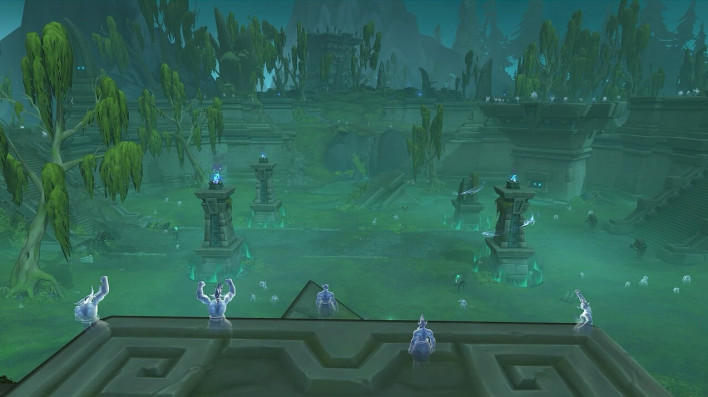
There was major confusion in Season 1 due to significant changes regarding add-ons. Now that one season has passed, how do you view the measures taken so far, and what are your future plans? Also, are there any add-on or feature updates planned for this 12.1 update.
Paul Kubit = Our goal with add-ons in 'Midnight' was to place certain restrictions on combat add-ons. We wanted to eliminate situations where players feel that a specific add-on is absolutely necessary to properly perform their class or specialization or to clear a specific encounter.
In particular, there were cases where add-ons performed tasks for the player or handled calculations, making gameplay easier. As a result, situations arose where those add-ons felt virtually mandatory. Our goal is to ensure players have plenty of add-on choices while not feeling that any single one is required.
In addition to changing how the API works, we have added many features to the game itself. Looking back after finishing Season 1 of 'Midnight,' I think we have achieved significant results, especially in the process of communicating with the community to identify what worked and what didn't. In recent seasons, we have seen that in most cases, players don't feel add-ons are mandatory to clear encounters or play their class.
You can use the default in-game UI or newly added UI features like the cooldown manager. We are also making some additional updates in 12.1. We are adding trinkets and consumables to the cooldown manager, so you will be able to track those cooldowns as well. We are also updating the ping system.
We plan to continue improving the game UI so that players can adjust their experience in the way they want. We don't want to create a situation where you feel you must find an add-on to improve your character's performance. Of course, add-ons still play a great role in areas like accessibility, collection activities, and changing how the game presents information. We have no plans to change those parts.
Lastly, a word for the Korean players, please.
Paul Kubit = I want to express my continued gratitude to the Korean community for being such passionate fans of this game for so long. It is a real pleasure to meet and talk like this at a time that is late at night or early in the morning for you. On behalf of the entire development team, I want to thank you for continuing to play the game. Thank you very much.
Rachel Bott: I want to thank the wonderful Korean community. I am sincerely grateful for the affection you show for the game. We also really love making this game for you. I hope you enjoy playing the next update as well.
Lair, Raids, and Mythic+ Dungeons: End-Game Content Changes in Season 2
One of the core systems of this update is the 'Lair,' a reinterpretation of outdoor bosses as instanced content. It looks like a hybrid between a world boss and a raid. What gap in the player experience were you trying to fill with this design?
Taylor Sanders = One of the things we wanted to solve with the Lair is to reinterpret existing outdoor bosses to provide a better experience for players. We see two major problems with current outdoor bosses.
The first is related to game performance. When adventuring outdoors and passing near an outdoor boss, you often experience a significant drop in performance as hundreds of players attack a single enemy.
The second is that the process of finding other players to fight the outdoor boss can sometimes be difficult. It's common to join a group only to find it's disbanding, or to join a group that is too small to handle the boss. These are the two problems we want to solve with the Lair.
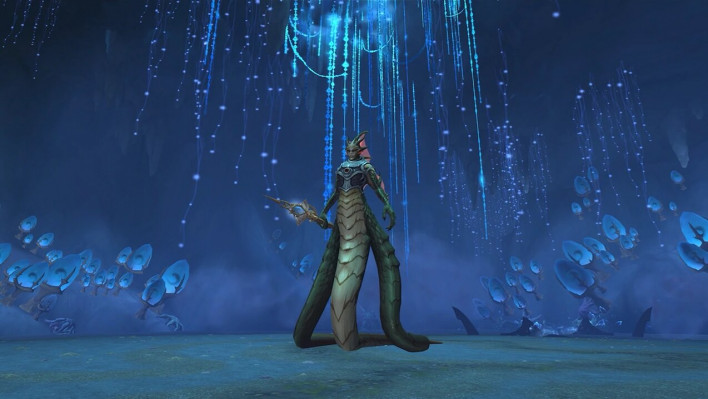
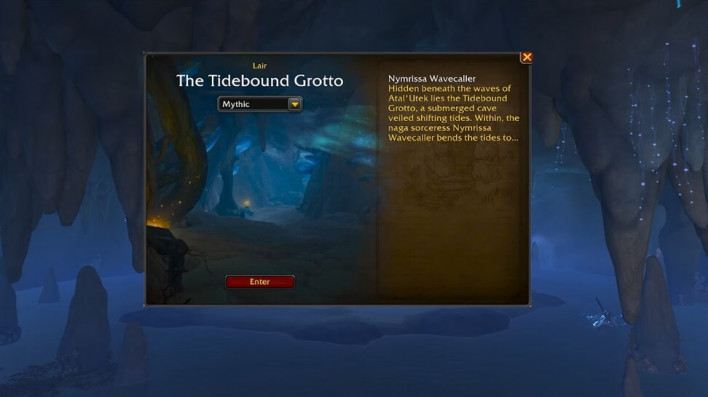
The new Lair added in 'Curse of Ulatek' is the 'Tidebound Grotto.' It is an instance where you face a single boss, and it is introduced with a new difficulty level called 'World Difficulty.'
Players can swim to the entrance of Tidebound Grotto and enter immediately. Selecting World Difficulty quickly moves you into the instance, and the system automatically places other nearby players into a raid group with you. In other words, we want to save players the trouble of finding a raid group themselves and reduce the friction that occurs in that process, allowing them to jump into combat faster and earn heroic-level loot.
Elastic Mythic difficulty is also being introduced in the new Lair. This method was first introduced in the Sporefall raid in the 'Revelation' update, and we applied it to 'Curse of Ulatek' because we judged it could serve as a bridge between Heroic difficulty and the more competitive and serious Mythic difficulty. Even players who find it difficult to organize exactly 20 people every day can participate in Elastic Mythic Lairs and challenge themselves for the highest-level loot available in Season 2.
It seems like another axis is being created between Delves and raids. Are you concerned about the player pool being diluted or the participation rate in Normal and Heroic raids being cannibalized? Also, do you have plans to develop this into a new axis of end-game content in the future.
Taylor Sanders = We are not worried that the Lair will significantly cannibalize participation in Normal or Heroic raids. World Difficulty is basically designed to replace content that players interested in existing outdoor bosses would enjoy.
In particular, with World Difficulty, we prioritize accessibility and an easy-to-join experience. If you have an organized raid group and prefer to enjoy raids with guild members or friends, Normal, Heroic, and in some cases Mythic raids will still be the most suitable choice in Season 2.
On the other hand, if you are playing an alt or prefer to enjoy the game more casually and alone, you are more likely to prefer World Difficulty. Therefore, we see the two as content for different player bases or characters with different priorities.
Regarding the issue of developing the Lair into a new axis of end-game content, we are always listening to community feedback. If players enjoy the Lair, and especially if they like the new options of World Difficulty or Elastic Mythic difficulty, we are open to creating more such content in the future. We look forward to checking player feedback after the 'Curse of Ulatek' update and adapting to those demands.
How do you plan to differentiate the clear mechanics and rewards of the Lair by difficulty compared to world bosses and raids?
Taylor Sanders = Let's start with the rewards. The rewards players can expect in World Difficulty are quite similar to the Raid Finder experience. Those rewards are not Warbound, and like Raid Finder, it uses a group loot system.
Normal, Heroic, and Elastic Mythic difficulties can also expect rewards at a similar level to other raid content of the same difficulty in the game. They are provided in the form of Champion, Hero, and Mythic track gear, respectively.
In terms of mechanics and difficulty, we prioritized the accessibility and ease of participation of the newly created World Difficulty. The goal is to make players feel like they can get into a raid and jump into combat as quickly as possible. That is why we made the difficulty scale according to the number of people, from 5 to 40. You can challenge it with a group of any size.
We also allowed flexibility in role composition. When you enter Tidebound Grotto, you don't necessarily need to have a tank or healer to proceed with the combat.
During testing, it was confirmed that Lair rewards were provided as 'Warbound' like typical field boss item drops. Will this be applied as is on the live server, and I'd like to hear the intention behind this design.
Taylor Sanders = Loot in World Difficulty is not Warbound. You can think of it as a method similar to the rewards obtained from Raid Finder in Season 1.
Our goal is to get players into the content as quickly as possible while providing useful loot for the character actually playing in that instance. For now, we believe this is the most appropriate way to provide loot effectively to players who are actually participating in the boss fight.
The Season 2 Mythic+ rotation includes not only new dungeons but also dungeons from past expansions. What criteria does the development team consider most important when selecting Mythic+ dungeons, and are you considering redesigning old dungeons to meet modern standards in the future.
Andrew de Sousa: When selecting the dungeon list for a Mythic+ season, we look at criteria such as relevance to the story we are currently telling.
In the case of Season 2, 'Kings' Rest' is a dungeon connected to the troll races you will encounter in the 'Curse of Ulatek' update. 'Temple of Sethraliss' is also connected to the snake theme seen throughout this update.
Sometimes we select specific dungeons to provide visual variety. 'Ruby Life Pools' is one such example. It has a very different atmosphere from what you experience in other dungeons this season. We want to provide players with the opportunity to experience various locations and different types of enemies throughout the update.
As for updating existing content, you can now consider this the standard approach. Whenever we bring back all past dungeons in the future, we review the entire content, update the design and visual elements, and refine the play flow. We look forward to players checking out the boss fights in the newly changed 'Kings' Rest' and 'Temple of Sethraliss' for themselves. 'Ruby Life Pools' also has new changes applied for a smoother play experience.
Passing through Midnight Season 1, there was criticism that the content composition was repetitive. Maintaining a system that works is stable but becomes predictable, and changing it carries unverified risks, so it seems neither is easy. Within this dilemma, you decided to overhaul the raid ecosystem this time. I am curious why you chose raids first among several candidates.
Taylor Sanders = That's a good question. Where to focus development resources is always one of the issues we consider most important. When deciding what to focus on improving for the next season, we try to follow player feedback.
Especially in the case of raids, looking back at Season 1, we judged that sufficient rewards might not have been provided relative to the difficulty of the raid. Players invest a lot of time, effort, and skill into raids. Therefore, we wanted to make sure that the time they invested could be properly respected through rewards.
In Season 2, we are also introducing several changes to the weekly vault system related to raids. For the first time, if a user playing Heroic raids meets the vault requirements through Heroic raid bosses, they can actually receive loot from the Mythic track, which is one level higher. The same principle applies to Normal and Raid Finder.
Players who meet the vault requirements by defeating Mythic bosses will be provided with Mythic track loot that has been upgraded to the highest upgrade level. We hope these changes more accurately reflect the time and effort players invest in raids. We know that gathering people to play with and coordinating schedules with friends or raid members to set raid times itself requires significant effort. We want to provide rewards worthy of that effort.
In the case of raid content that appeared in Season 1, the raid mechanics became intuitive and better as the development team intended, but the result was high fatigue for general heroic users, and for core users enjoying Mythic, the feedback was extreme, saying the depth of combat was too low. In other words, the combat design itself was well-received, but the opinion that it failed in the difficulty curve was dominant. I am curious what differences the raid content appearing in Season 2 has compared to Season 1.
Taylor Sanders = In raids for a new season, the goal is always to create a smooth difficulty curve that encompasses all difficulties. We want to create a structure that naturally leads from Raid Finder or World Difficulty to the highest level of Mythic raiding.
In Season 2, we especially worked to make this difficulty curve smoother. If a raid group enjoying Heroic difficulty or challenging for the 'Ahead of the Curve' achievement has finished Heroic difficulty, we want them to be able to move on to Mythic raids relatively quickly, assuming they can organize 20 people. For players enjoying Heroic difficulty, we hope the newly changed raid rewards will help them overcome some of the hurdles they were stuck on in Season 1.
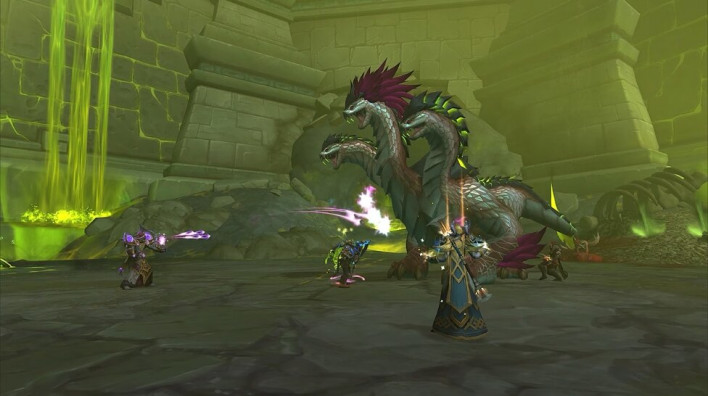
For Mythic players, we intend to continue providing new ways to challenge themselves. The new 8-boss raid, 'Venomous Abyss,' contains several new mechanics that even the highest-level competitive raid groups will find challenging. In particular, in some mechanics, you will encounter challenges in the form of dealing with hidden information or communicating with each other in real-time.
Lastly, a word for the Korean players, please.
Andrew de Sousa: First, I thank the Korean community for their passion and continued support for the game.
I had the opportunity to visit Korea at the time of the 'Midnight' launch and meet Korean fans in person. I don't think I will ever forget how warmly everyone welcomed me at that time. It is an honor to be able to talk like this today, and I look forward to you experiencing the content we have prepared in the next update for yourselves.
Taylor Sanders = I completely agree with Andrew. I know well that there are really passionate fans in Korea who love the game.
I visited Korea two years ago at the time of the 'The War Within' launch. At that time, many Korean fans approached me and told me that they had been playing the game since the original Classic days or even the beta days.
I was deeply impressed by the passion and dedication shown by the Korean community. I think Blizzard and the Korean community have maintained a relationship for a long time through various games. I am very happy that there is such a wonderful player base in Korea even now.

Sort by:
Comments :0