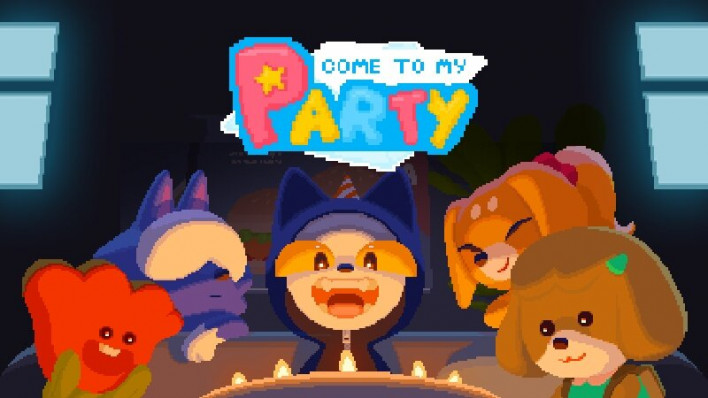
'Come to My Party!' is a visual novel set in a Korean elementary school in 1999, following the story of Jimin, a ten-year-old girl attempting to host her very first birthday party.
Games that evoke childhood innocence are often bright and hopeful, but this one is anything but. While it taps into nostalgia, it also captures the era with startling accuracy, and the narrative is cold-bloodedly realistic. It perfectly portrays the perspective, behaviors, and psychological warfare unique to children.
Since children grow by making mistakes, you feel their pain right along with them. This creates a strong sense of coexistence between the cruel and the beautiful, the moving and the heartbreaking. That is why I find the term 'black comedy' quite fitting.

The children, rendered in pixel art as animals and plants, wear their emotions on their sleeves through their expressions and gestures, with clear effort put into these details. The direction and background music are also exceptionally well-placed. This allows for a smooth immersion into the narrative, and the transitions between story segments and mini-games feel natural rather than abrupt.
Players view the world through the eyes of third-grader Lee Ji-min, navigating class president elections, friendships, and various events inside and outside the classroom. As a visual novel, the gameplay is low-pressure, focusing on reading text and watching the scenes unfold. Mini-games like washing up, organizing the cleaning closet, or dusting off chalkboard erasers are interspersed throughout; they are simple but effectively trigger nostalgia.
Overall, the game is well-balanced, and the characters' psychology is clearly conveyed through dialogue and expressions, making it highly immersive. While the pacing is quite fast, it boldly cuts what isn't necessary while focusing on the essential moments. While some may find aspects to critique based on personal preference, the demo version clearly shows that the game maintains a strong grasp of its core narrative and structure.
'Come to My Party!' captures the unique atmosphere of the late 90s perfectly. I couldn't help but chuckle at the mention of Nostradamus' doomsday prophecy, and the shift in the curriculum—when the term 'elementary school' was officially adopted—is woven in naturally.
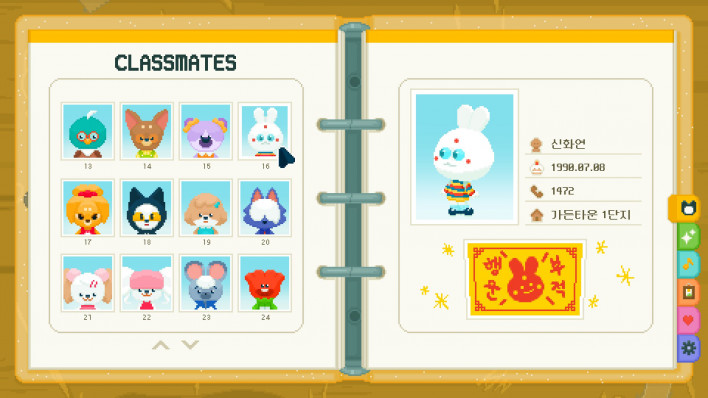
Windows 98, a blast from the past... ©INVEN You can even check your friends' attendance records. ©INVEN Jimin's heartfelt words. Anyone who has had to wear hand-me-downs will likely relate. ©INVEN The game uses indirect storytelling effectively rather than showing everything explicitly. ©INVEN Results and relationships change depending on your choices. ©INVEN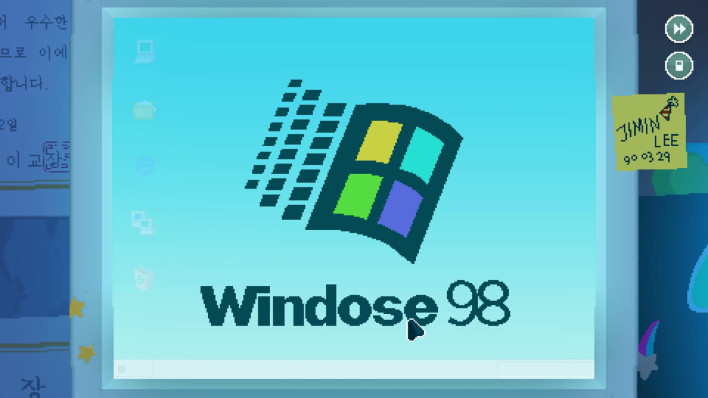
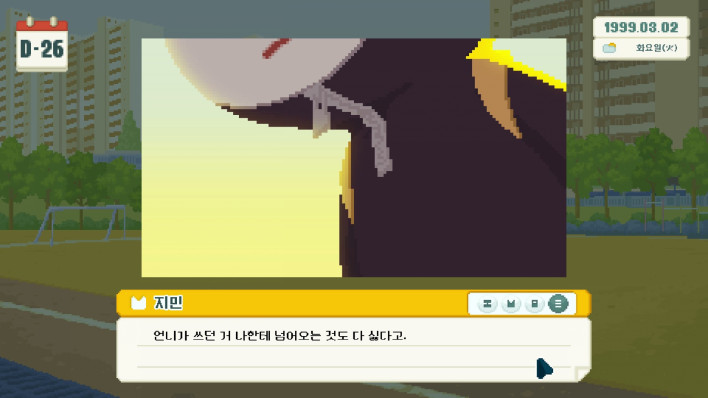

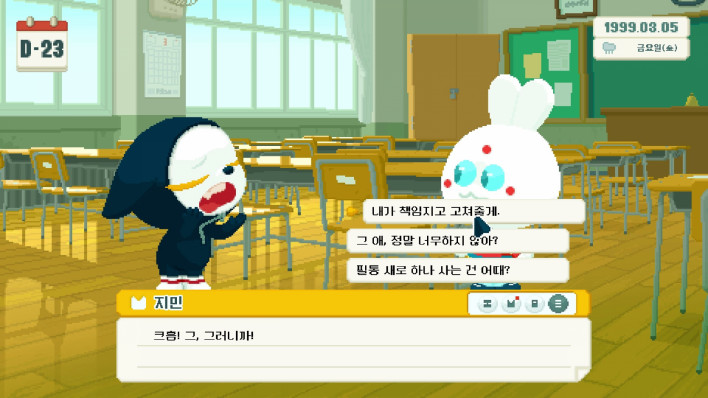
It was a short demo, but it left a deep impression. There is a strange sensation in looking back at childhood through the eyes of an adult—someone who has accumulated experience and formed values—that blends pity, discomfort, and understanding. While some anecdotes are heartwarming, others are unavoidably uncomfortable, making you wonder, "Why would they do that."
Jimin's desire to be loved more, caught between a smart older sister and a younger sibling in a family that isn't wealthy, is laid bare. Her efforts to achieve what she wants, her mistakes, and her moments of immaturity—as well as the moments where she succeeds in ways that make you proud—all intersect. The process of friendships improving, growing awkward, or turning hostile is captured in full.
Crucially, the game doesn't paint Jimin as the only one with problems. Teachers, parents, and friends all have their own flaws. This makes the story feel more realistic and sharpens its edge as a black comedy.
The Steam page even includes warnings for domestic violence, corporal punishment by teachers, bullying, and suicide. This game does not use these elements for cheap humor or satire. As a result, there are scenes in the demo that suddenly force you to stop and take them seriously, even amidst the natural flow of the story. It was an experience that started lightheartedly but left a hollow ache in my chest. It wasn't a 'bad' experience, but it left a bitter aftertaste.
Of course, since this is just a demo, we will have to wait for the full version to see how the narrative unfolds. Personally, however, I think this is a game that parents raising children should play at least once. It captures the subtle psychology of elementary school peer groups and family conflicts in a way that is both humorous and strikingly realistic.
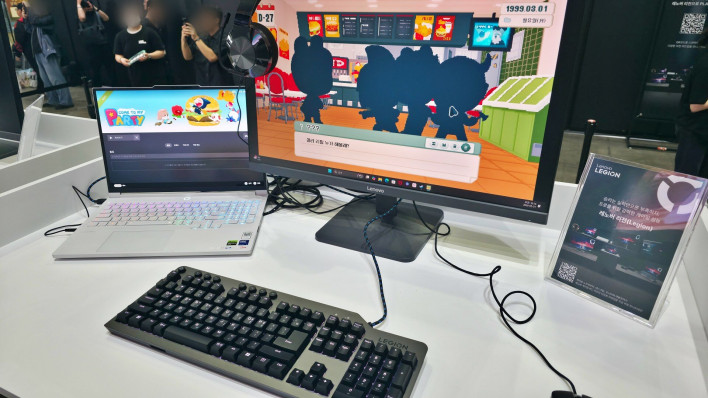
'Come to My Party!' is available for demo at PlayX4 2026, so if you are visiting, I highly recommend checking it out. If you cannot visit in person, the demo is available on Steam, and I strongly encourage those interested to give it a try.

Sort by:
Comments :0