
Back in February, Blizzard dropped a literal mountain of news. Our team leader, who was away on a business trip, returned half-fainted, and the reporters who witnessed the chaos all said the same thing.
"If they reveal everything now, what are they going to do at BlizzCon...?"
Anyway, what's out is out, so it's time to grab your 3D glasses and popcorn and enjoy the ride. Among the storm of announcements from Blizzard, the one that caught the most eyes was the new class appearing across three titles in the Diablo series: the 'Demonologist.'
The Diablo II Demonologist looked strong from the get-go. A nice, savory, spicy flavor. I thought, 'Is this OP?' and it turned out it really was. Then came the Diablo IV Demonologist. At first, it looked strong, but then came the testimonies that it tasted like garbage—until the 'Doomsday' build, which dropped nukes everywhere, emerged and showed some serious potential.
And now, it's 'Immortal's' turn. The version in the second game was like a dark scholar hiding unspeakable secrets, and in the fourth, it was a tragic figure muttering, "I am a sinner," viewing itself as a necessary evil. But the 'Immortal' Demonologist is different. It has an air of high self-esteem. It’s got that 'insider' smile that looks like it would grab introverts hiding at home by the collar and drag them to a party.
An MZ-generation kid who looks like they only use the latest iPhone with a cracked screen has arrived.

Like a true social butterfly, it has a friend. A friend who stays on my side even when I hit them...
I can't help it. I feel bad for our MZ Demonologist, but I've already played the class twice. I only dabbled with the middle-aged one in the second game, but I played the Diablo IV Demonologist quite diligently. Since I was also reviewing the 'Lord of Hatred,' I did everything from testing builds to trying out all sorts of things.
With all that, another Demonologist? Honestly, I wasn't that drawn to it. I've already summoned demons, used demonic skills, and even become a demon myself. I've been there, done that.

Of course, it's different. While the Diablo II Demonologist summons demons to serve as stationary units and the Diablo IV version pulls out various demons—from imps to greater demons—like skills, the Immortal Demonologist has a soulmate that stays by its side through thick and thin. It's our friend, the 'Soulgorger,' a quadruped that turns demons into pancakes.
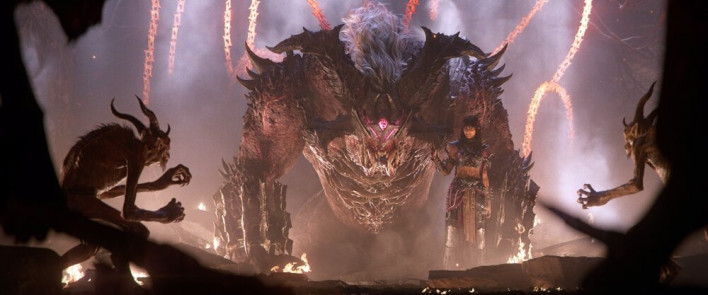
You meet the Soulgorger through the Demonologist's early story added in the 5 build, where you can see the process of infiltrating the Vizjerei tower, learning demonology, and bonding with the player's Demonologist. In-game, the Soulgorger is more than just a friend; it's the true protagonist, handling both offense and defense—perhaps even more so than the Demonologist itself.
The 'Soulgorger' is an irreplaceable, permanent summon. It goes everywhere the Demonologist goes and fights in every battle. However, its role isn't fixed. Just because it handles everything from offense to defense doesn't mean it's an all-rounder by default. Depending on what kind of demon the Demonologist feeds it and how it's handled, the Soulgorger can become stronger or shift its role. It can even trade health with the Demonologist.
A class that starts with demons and ends with demons
The difference from previous versions is that, tied to this 'Soulgorger' mechanism, it's a class where 'Summon' is incredibly important. The Diablo II Demonologist balanced summoning itself with the power of the demons, while the Diablo IV Demonologist often treated summons as temporary skills, making the actual gameplay feel more like a mid-range caster.

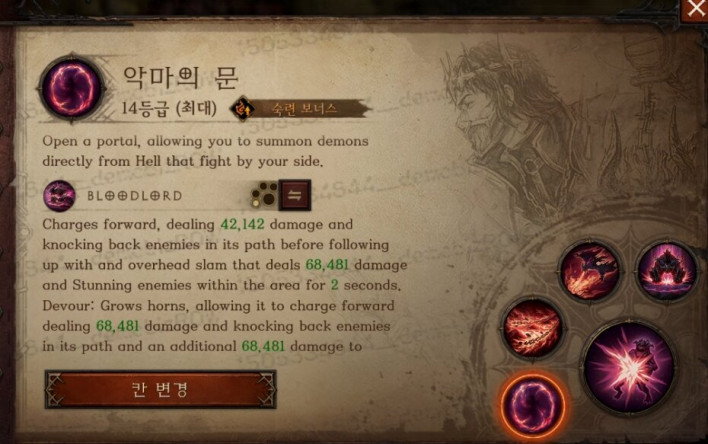
For the Immortal Demonologist, everything from basic attacks to advanced skills is connected to 'Summon.' You throw explosive imps, open portals to summon temporary demons, and even use a demon's foot to fly around. While you can lower your reliance on demons depending on your build, the unique Soulgorger mechanism is so closely tied to summoning that you can't ignore it. The core concept of the Immortal Demonologist is to constantly pull out and consume demons, then strengthen them through various buffs.

In short, it's in the 'middle.' The developers emphasized this: from Diablo II to Immortal and then to the fourth game, the Demonologist has consistently changed, reaching for darker powers. The fact that the Diablo II Demonologist uses demonic power while remaining wary of it, that the Immortal Demonologist actively summons demons but doesn't cross the final line, and that the Diablo IV Demonologist finally becomes a demon itself—all of this lies in this 'temporal flow.'
On the other hand, the perception of the Immortal Demonologist within the game stands out rather than being in the 'middle.' If the Demonologists of other titles are serious characters who, after much agony, fight fire with fire, the Immortal Demonologist appears more reckless, bold, and fearless. It's as if they are quite satisfied with their position as 'a very dangerous and impulsive person, but still better than a demon.' You need that kind of mentality to pull demons out like you're picking radishes.
Lut Gholein has had a rough time since we last saw it
Beyond the Demonologist, there's another important update in this build. 'Lut Gholein,' which was only accessible up to the city gates in the last build, is being added as a main stage. For Diablo fans, Lut Gholein is an unforgettable city, as it's the first real city you encounter in Diablo II. Leaving the ragtag village of Act 1 and arriving in Act 2 to see a golden, jewel-like city for the first time is usually a special experience.
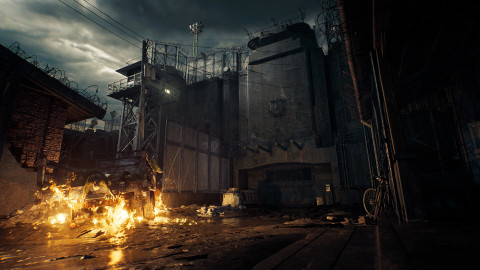
Of course, the Lut Gholein of 'Diablo Immortal,' set 10 years after Diablo II, is very different from what we know. As covered in the comics, it's been mostly destroyed by a demonic invasion, and blood is painted all over the city like house paint. The Lut Gholein in the actual play build shares only the commonality of being a desert city; it's closer to a 'city that used to be,' with corpses piled high everywhere.
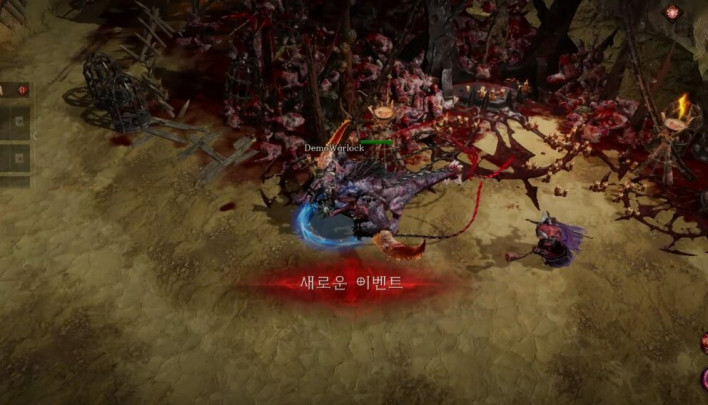
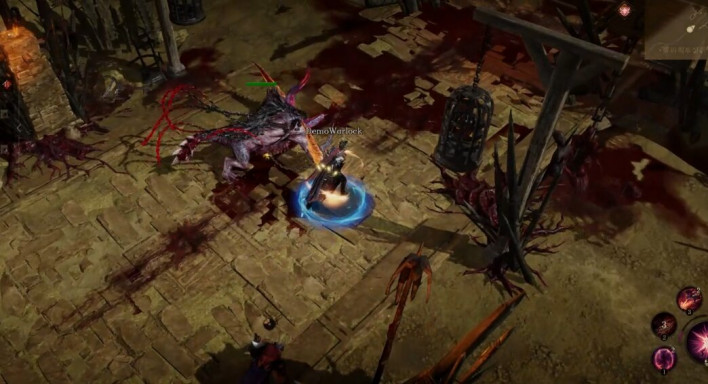
The storyline of this Lut Gholein also features tales related to the Demonologist. I'll keep quiet about the details as it's better to see them for yourself, but since it's content being updated together, Lut Gholein is portrayed as a city deeply connected to the Demonologist.
And waiting for players in the depths of this Lut Gholein, which has become a feast for demons, is the Great Evil sister we've loved for so long: 'Andariel.' The narrative of 'Lut Gholein,' which the developers said was created by imagining 'the worst pain a demon can inflict on a human,' will continue through this update and the Q3 update.
Diablo Immortal's 5 update, 'Bloody Gem,' goes live on June 17. It's a massive update where you can explore everything from the MZ Demonologist to the blood-soaked desert city of 'Lut Gholein.' Not long to go now.

Sort by:
Comments :0