


In subculture games, minigames are usually little more than side dishes. They serve as a quick break from the main story or endgame content to snag a few rewards, and most are simple affairs that end after a few clicks.
Eversoul takes a different path. Its minigames span a wide range of genres—from hide-and-seek and racing to fishing, bank heists, and even mahjong. Some have become permanent fixtures, while others are limited-time events. It’s not just the sheer variety that stands out, but the developer's willingness to experiment with formats rarely seen in the genre.
The 'Bang Bang Bang' auction event, running since July 29, is a prime example. It is a real-time psychological PVP where four players sit at the same table and must read each other's intentions.
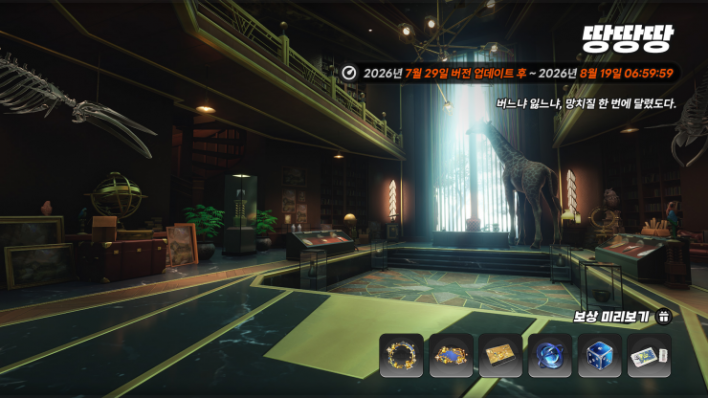
The rules are simple: four players bid over five rounds on a storage unit with unknown contents. The highest bidder takes the entire unit, and their profit is the actual value of the items minus the winning bid. Win it cheap, and you make a profit; overbid, and you end up in the red.
There is one catch: from rounds one through four, a bid only succeeds if it exceeds the second-highest bid by a certain multiplier. The requirement starts at 2x in the first round and eases to 1.6x, 1.3x, and 1.1x in subsequent rounds. To end the game early, you have to bid high, but if that amount exceeds the actual value of the goods, you take a loss. In this sense, the condition for victory can easily become the condition for bankruptcy.
Therefore, the player's job is to gather information. Before the auction starts, you choose an assistant and use scanners during rounds you deem critical to get a glimpse of what's inside the storage. Some assistants only reveal the grade of the items, while others show their shapes. Since scanners are also limited, the information you can secure in a single match is always incomplete.
Crucially, this information is distributed differently among players. With four people looking at the same storage but holding different pieces of the puzzle, you have to value the lot by cross-referencing what you know with what your opponents likely know. By watching how much an opponent raises their bid compared to the previous round, or whether they saved their scanner, you can get a rough idea of how they are reading the board.
You can aim for a win with a minimal bid, or conversely, intentionally drive up the price to force an opponent to overpay for a dud. If the competition gets too heated, players often resort to bidding a trivial amount, like 1 currency, to catch their opponents off guard. It is rare to see this kind of high-stakes deception as an event in a subculture game.
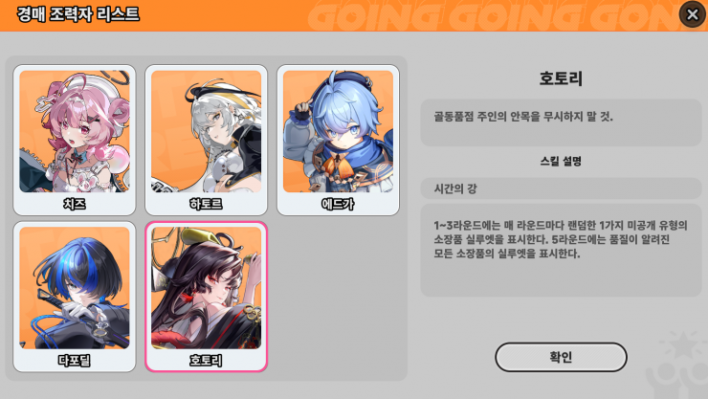
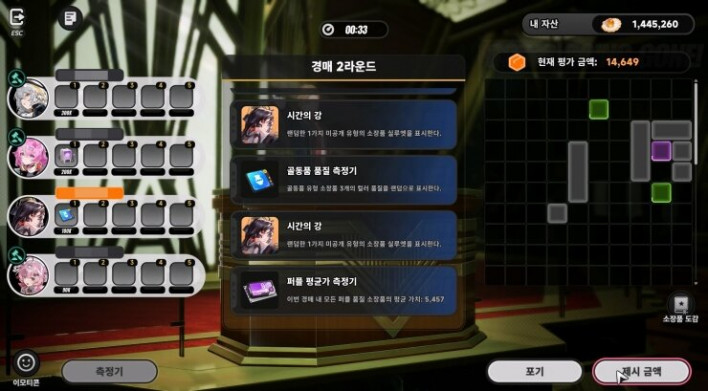
If the match goes to the fifth round, the atmosphere shifts entirely. Everyone hesitates, unsure of the true value, until someone makes a bold bid—which can either be a massive jackpot or a crushing loss. The fact that results come quickly is another reason it’s so addictive.
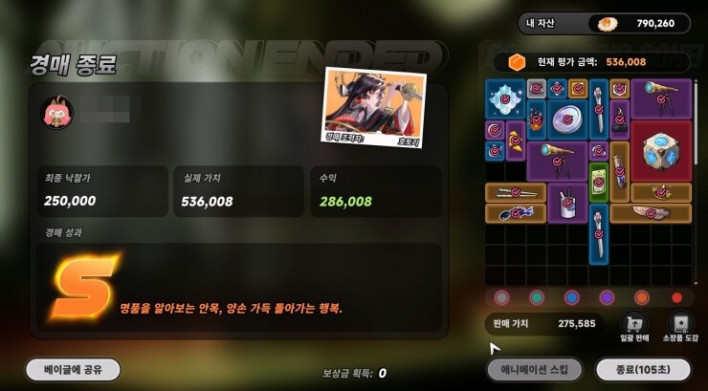
I, too, got hooked on this dopamine rush. In a match where everyone was playing it safe because the board was unreadable, I took a gamble and bid 250k. When it opened, the actual value was over 530k. A profit of 280k.

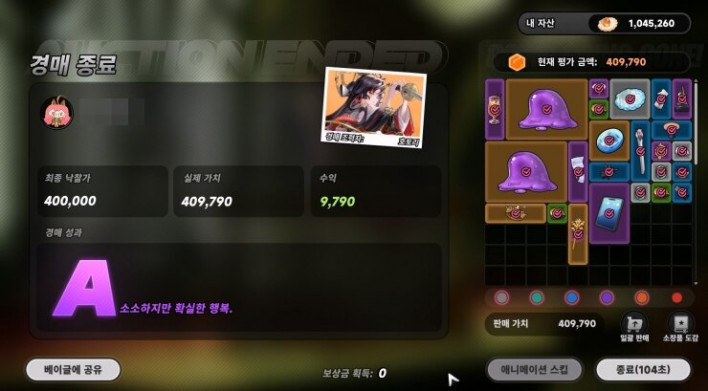
Of course, it doesn't always work out that way. I once bid 400k only to find the contents were worth 409k—I barely escaped with a 9k profit. Because every match leaves behind a story, the community is constantly filled with posts sharing result screens and bragging about their exploits. It’s rare for a single minigame event to generate this much buzz.
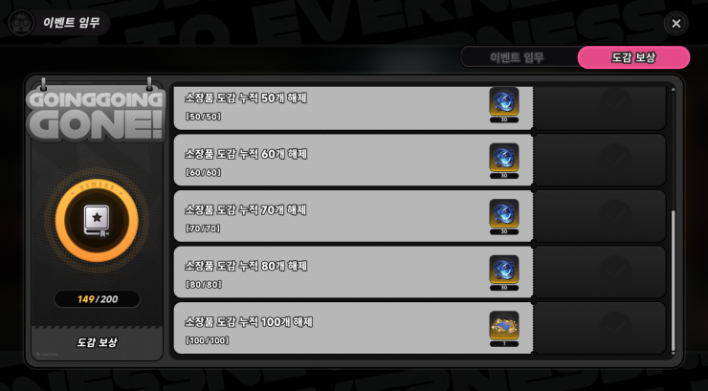
It’s not without its flaws. The tutorial doesn't fully explain the core mechanics like the multiplier conditions or how information is revealed, which can cause some players to lose interest before the real fun begins. The fact that some parts rely more on luck than skill—like the 200-item collection or missions requiring 500k in net profit—is also a bit frustrating.
Nevertheless, the positive reception is clear. The more you learn, the more the board changes, and eventually, you start reading your opponents' bids as well. Above all, the very fact that you can experience this kind of fun in a subculture game event is a rare treat.
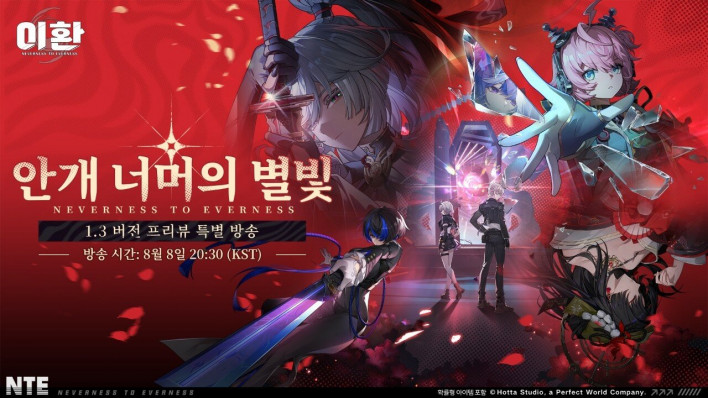
Meanwhile, a preview broadcast for version 1.3 is scheduled for Saturday, August 8, at 8:30 PM. Coincidentally, August 19, the day 'Bang Bang Bang' ends, is also the day the 1.3 update goes live. It’s as if a new version is stepping in just as the auction house closes its doors. I look forward to seeing if they can surprise us again with a unique approach.
![]()
- Sunghyuk "Rune" Lee
- Email : rune@inven.co.kr




Sort by:
Comments :0