


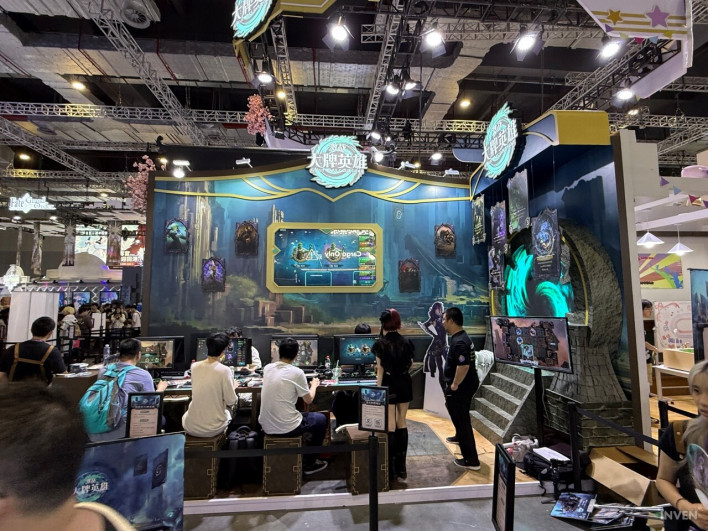
'Mistbound,' a Guild Wars-based CCG developed by NC, with world-building and oversight by ArenaNet and publishing by Bilibili, has made its debut at Bilibili World. While NC has historically kept its distance from subculture-focused content, its recent efforts to bridge that gap make this Guild Wars IP-based entry a surprising, yet intriguing, move.

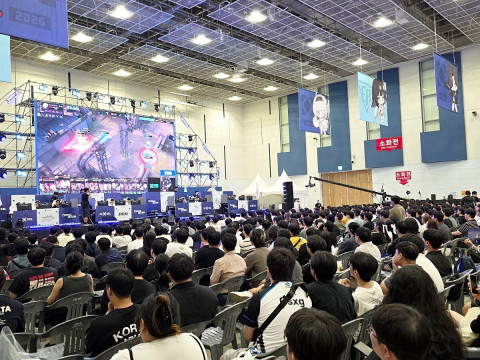
As Bilibili World has evolved beyond a subculture festival into a venue for a diverse lineup of games, the 'Mistbound' booth drew a steady stream of visitors eager to experience a fresh take on the CCG genre. Unlike traditional CCGs, its 5x3 grid structure—reminiscent of moving pieces on a chessboard—introduced unexpected variables that caught players off guard.
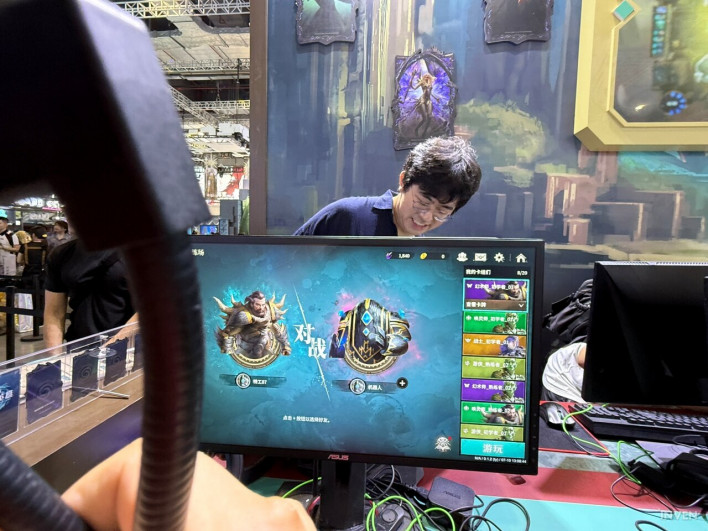
The demo allowed players to go beyond fighting tutorial bots by engaging in friendly matches with others on-site. I even had the chance to face off against designer Baek Hak-jun, a former Hearthstone pro gamer known by the handle 'Kranich.' To be blunt, I was soundly defeated; I struggled to grasp the mechanics, which differ significantly from traditional TCGs, and failed to understand the depth of the game's strategy. However, after reviewing my mistakes and playing a second round, I began to appreciate the unique charm of a play mechanism that blends tactical movement with TCG deck-building.
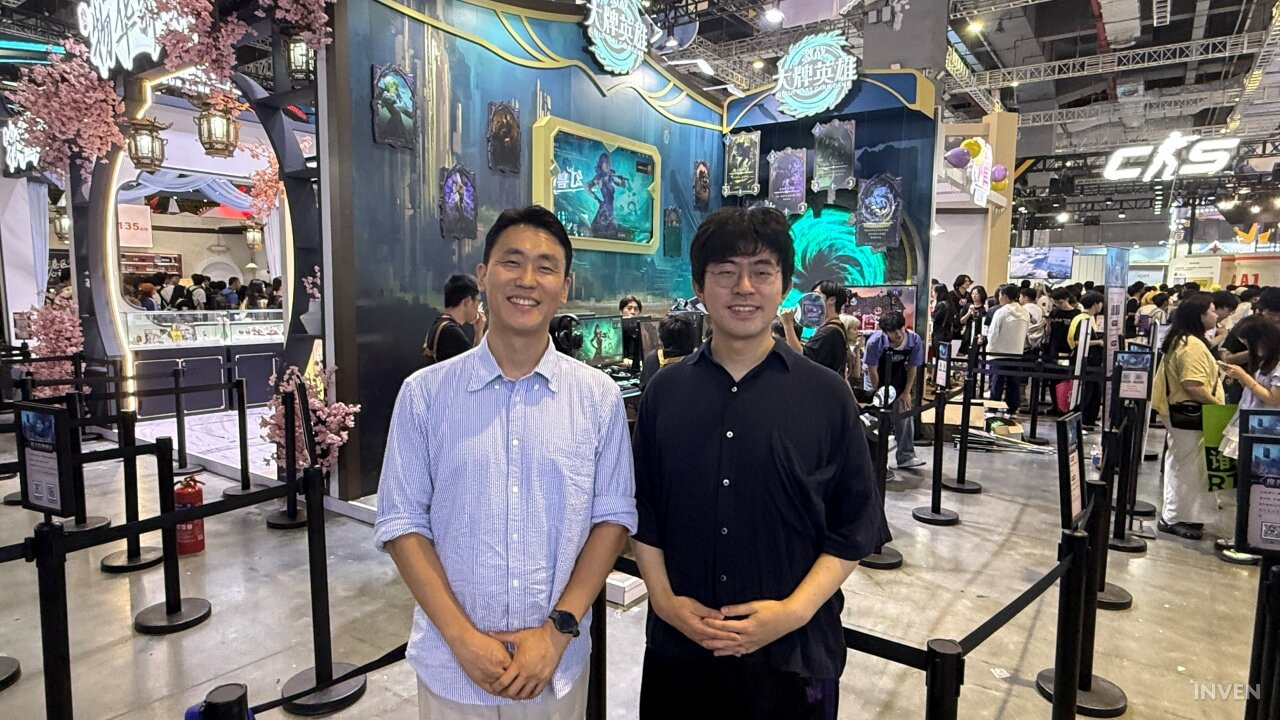
After my first demo, I sat down with NC producer Hwang Sun-woo and designer Baek Hak-jun, who were monitoring the event, to learn more about 'Mistbound.'
What made you decide to create a card game based on the Guild Wars IP, and what aspects of the IP did you feel were a good fit? Also, how did you aim to capture the charm of Guild Wars in a card game.
" Guild Wars is an IP renowned for the 'fun of combinations.' The skill system in the original Guild Wars was actually influenced by Magic: The Gathering. Given that, it felt like a natural progression to consider a card game when we decided to create a spin-off.
In Guild Wars 2, classes aren't locked into rigid roles like tank, DPS, or healer; instead, they can shift between offense and defense depending on how you utilize their unique mechanics. For example, the Mesmer's core mechanic is creating illusions. You can use 'illusions' to draw aggro and tank, detonate them to deal damage, or use them to heal. We focused on translating the fun of freely utilizing these 'unique class mechanics' into a card game.
The three-company collaboration is quite unique. Was there a specific reason for this structure?
" While it might seem unusual, developing with external IP or using external publishers is actually quite common. When you look at it, it was a natural combination where everyone's goals aligned.
NC wanted to challenge the global market, and we felt the Guild Wars IP was an excellent starting point. ArenaNet loves the IP and takes great pride in it, so they were positive about expanding it. Since card games, by nature, require a unified global service, we needed a publisher with the capability to cover China and other major global markets. That’s where our interests aligned with Bilibili.
Bilibili is a company with extensive experience in IP content and IP-based games, and they have successful track records of launching such titles globally. They also had a strong interest in and expertise regarding card games, making them a perfect partner for us.
Above all, the three companies formed a natural consensus on how to cherish this IP, respect existing fans, and ensure the IP's energy is fully realized. Our goals naturally converged, leading to the current structure.
(To Producer Hwang Sun-woo) How has the team's expertise in CCG development been cultivated?
"It started with developers who simply loved CCGs. However, we realized that passion alone wasn't enough. When we were looking for ways to ensure professional expertise, designer Baek Hak-jun, a former pro gamer, joined the team. After that, it became much easier to recruit pro-level talent.
We also needed senior game developers with a deep understanding of card games. Since CCG projects are quite rare, people who were eager to build such games naturally sought us out and joined the team.
This created a team where pro-level players who understand the user's perspective and senior developers who structure the game complement each other's strengths.
(To Designer Baek Hak-jun) You were once a top-tier CCG pro gamer. How did you transition from a professional player to a game designer?
"I was a CCG pro gamer and content creator for about 10 years. During that time, I didn't just play hard; I also produced videos analyzing games to help improve the community's understanding. The development team and the producer happened to come across those videos, which is how they became aware of me.
One day, I spontaneously prepared a presentation on a game I was playing and broadcasted it. They must have seen potential in me as a designer, and I am very grateful they reached out. Working as a designer has proven to be a great fit for me, and the appeal of creating a genre I personally love is immense. I am very satisfied with my work.
This is your first showcase at Bilibili World. How do you feel, and will we see Mistbound at other game shows this year?
"I consider Bilibili World to be one of the most representative gaming and ACGN cultural events in China. Recently, I've come to view it as a significant event on the global stage as well.
It means a lot to us to see how real users perceive the new fun of Mistbound on such a big stage. I am grateful for the interest in a Guild Wars card game and our battlefield-based playstyle. The feedback we received here will be a crucial guide for refining the game moving forward.
While I can't share specifics yet, we want to have more opportunities to meet users at other game shows. We value those opportunities and intend to keep working hard.
How far along is this demo build, and what are you focusing on most during this showcase?
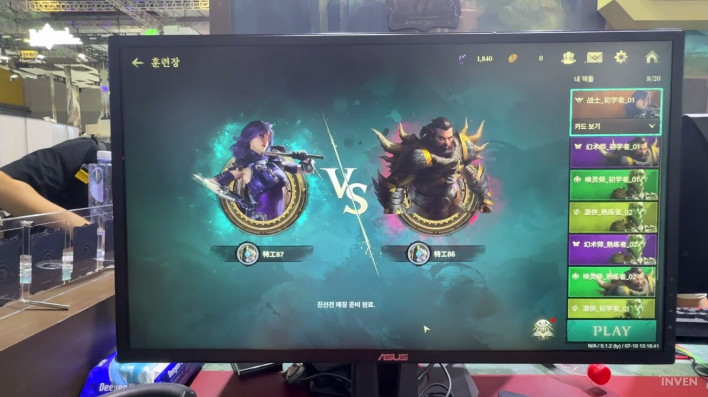
"This build is designed to let players experience the core fun of Mistbound. While it doesn't contain all the content of the final service version, it is sufficient to verify the game's structure, which utilizes movement and positioning.
Our main focus for this demo is to see how intuitively users accept Mistbound's combat style and how much they enjoy the strategy involved in movement and positioning.
The playstyles of the MMORPG Guild Wars and the card game Mistbound are quite different. What elements of Mistbound do you think will appeal to existing Guild Wars fans?
"Revealing Mistbound made me realize once again how much fans love and cherish the characters of this IP. I expect that simply seeing and playing as familiar Guild Wars characters reinterpreted for a card game will be a joy in itself. We are also working to include character-related events and sounds that evoke memories of Guild Wars throughout the game.
Although the genre has changed, the 'fun of combinations' and the unique characteristics of each class that made Guild Wars so enjoyable remain the core of Mistbound. You will find the same pleasure of building and exploring your own unique builds in this card game.
Guild Wars 2, the flagship of the IP, has had 14 years of updates, including six DLCs and five Living World seasons. How much of that history is implemented in the Mistbound demo?
"As you noted, Guild Wars 2 has a vast world, so rather than trying to include everything at once, we are approaching it step-by-step, starting from the beginning. We are currently focusing on the period from the Guild Wars 2 personal story through Living World Season 1. However, we have also included some characters from Guild Wars 1 and other periods that fall outside that scope.
In addition, we are working with ArenaNet to create original characters and stories unique to Mistbound. We plan to expand based on the story after Living World Season 1 while gradually introducing characters from other eras.
The Guild Wars IP has been loved for a long time in the West, but less so in the East. What are you focusing on to create synergy with the IP?
"While leveraging the IP is important, I believe the quality of the card game itself must come first. If the game is high-quality and fun, people will naturally become interested in the characters and the world, leading to expansion.
Of course, utilizing the IP well is also correct. Existing Guild Wars fans have a very high level of interest and affection for the IP. They are already showing interest in how we will incorporate Guild Wars elements by looking at the prominent figures appearing as Commanders. We are brainstorming various ways to meet those expectations.
In other card games, the Commander and class are usually bundled together. In 'Mistbound,' you chose to separate them. What was the reason for this new attempt?
"A key feature of Mistbound is that the Commander descends onto the battlefield and fights alongside the units, much like a King in chess. If the Commander were too simple, those moments wouldn't be fun, but if a specific class were always forced to use one type of Commander, it would become boring.
So, we separated the two: the squad determines 'what you use,' and the Commander determines 'how you use it.' The class mechanics are in the squad, while the Commander can be changed freely. This allows for different playstyles even with the same squad, significantly increasing the number of combinations. At the same time, since Commanders aren't locked to specific classes, we can better highlight the unique personality of each Guild Wars character.
Ultimately, the biggest reason for this approach was to maximize the 'fun of combinations' while preserving the unique thrill of the Commander fighting directly on the field.
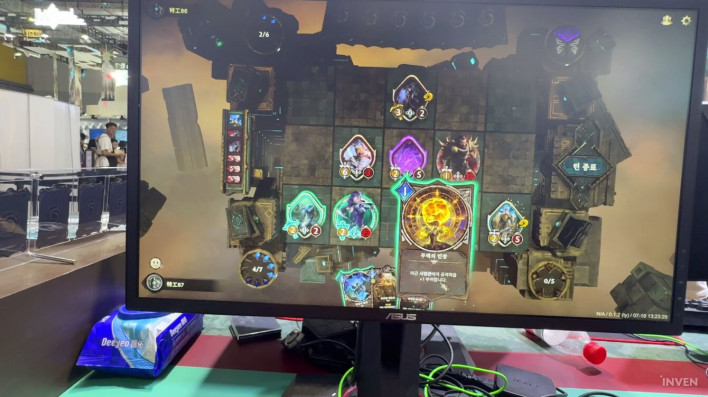
The squad and Commander are the core elements showing the Guild Wars IP. What are your plans for updates after launch
"We showcased four squads in this demo and plan to launch with nine. We intend to match them with Guild Wars two classes and will add squads gradually.
Commanders will be updated every two months. In a way, a Commander is similar to adding a new card. They are your main unit, but they also fight on the field. Releasing them every two months is a difficult task, but I believe it's necessary to keep the play mechanics evolving. Also, these days, I feel users need a fresh experience every two months to stay engaged.
Of course, this doesn't mean the meta will automatically shift to the new Commander. We aim to ensure that the initial Commanders remain meaningful and useful, and that new Commanders expand options rather than being completely overpowered (OP).
It was impressive to see that you don't just play cards, but move them like an SRPG on a 5x3 grid, or apply various effects and skills to the grid. Where did you get the inspiration for these elements, and how did you refine them.
"Like many who love card games, I enjoyed chess, janggi, and board games, and I also enjoyed turn-based games, including SRPGs, on PC.
During the COVID-19 pandemic, playing a game called 'Inscryption' was a starting point. I was fascinated by the fun of a card game that utilizes tiles, but in Inscryption, even though there were tiles, the cards were fixed in place. That created a desire to move the summoned targets myself. When I researched the Guild Wars IP, I realized that this method of positioning on the battlefield would fit the unique feel of Guild Wars perfectly.
The refinement process actually started with paper prototypes. We tested various board sizes like 5x2, 5x3, and 3x3 using paper. Initially, we chose 5x2, with the Commander not descending onto the field, because we thought it was simpler and fit standard card games better.
However, while discussing with ArenaNet, we decided to place more weight on Mistbound's differentiation. So we chose 5x3, adding a row, and naturally, we placed the Commander on the expanded battlefield. I believe that decision led to the biggest feature of Mistbound today.

On the other hand, such unique gameplay can be perceived as difficult by users. How do you plan to resolve this? Also, do you have any recommended combinations for beginners?
"Actually, in similar games that involve moving on tiles, it can sometimes feel sluggish or complex. So, we designed the cards to be as simple as possible, using a language familiar to users. We didn't split turns into attack and defense phases; instead, we allowed players to focus entirely on attacking during their turn. Ultimately, all you need to worry about on your turn is 'where to move/place' and 'which card to use.'
So, while there is plenty of depth if you dig deep, the choices at any given moment aren't overwhelmingly numerous. We also balanced the game so that Commanders with only basic stats are still meaningful, allowing players to start without knowing complex combinations.
For beginners, I recommend the Warrior squad. The Warrior squad focuses on powerfully buffing the Commander, allowing you to concentrate on just one unit. It is the most intuitive of all squads, yet by no means weak. We've made sure you start with a Warrior deck, so I recommend starting with that if you're new.
In the demo, we went straight into friendly matches with bots or other players without a tutorial. How do you plan to naturally introduce this new gameplay from the beginning.
"We are preparing to explain everything step-by-step, from the Guild Wars IP and world-building to basic CCG play and our game's rules. Since combat on a grid is different from other CCGs, we are focusing on explaining this while letting players enjoy the atmosphere of Guild Wars. We believe that once players realize they can move and attack—unlike traditional card games—they will naturally enjoy it. The key will be how naturally we can teach that foundational experience.
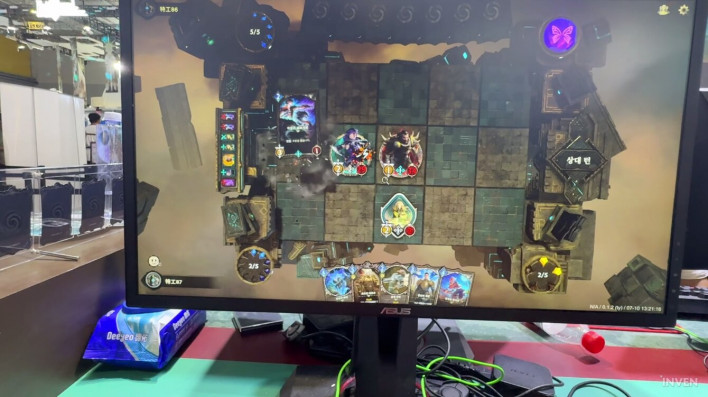

How do you plan to solve chronic card game problems like power balance or the advantage of going first or second.
"If you try to balance solely through cards, power balance tends to collapse as the game progresses. To slow down the speed at which power increases with new cards, we felt we needed more axes to support that power.
So, we split power between cards and Commanders, and we are actively utilizing the foundation of creating various plays based on 'position' rather than just simple numbers. We are distributing balance across multiple axes rather than relying solely on power inflation.
First-mover advantage is a very difficult topic. We tried various things, such as giving more movement points, but we ultimately decided that the second player needs a way to gain extra resources at specific timings. Additionally, in a 5x3 battlefield, controlling the center is crucial, so the starting position has a huge impact on balance. We have the first and second players start in diagonal positions to minimize the advantage or disadvantage of the starting point.
In card games, 'luck' is an essential element of fun. What is the ratio of luck to skill in Mistbound?
"We believe that 'how' you provide luck is more important than 'how much.' So, in Mistbound, we want to design luck in our own way, utilizing movement and positioning. The key is to allow players to control even luck to some extent and turn it into strategy by utilizing those positions well.
For example, if an effect deals damage randomly to the left or right, and you place your unit at the far left, the damage is forced to go to the right. You are controlling the element of luck through positioning. Therefore, it's hard to define the ratio of luck to skill quantitatively.
In a word, the direction we are pursuing is a game where playing well doesn't guarantee a win, but playing poorly guarantees a loss.
A word for the users looking forward to Mistbound.
"Our development team members are users who love card games, and we were just as thirsty for a new card game as anyone else. So, we put the games we wanted to play and the fun we wanted to enjoy into Mistbound.
By doing so, we created the unique fun of Mistbound based on the elements of positioning and movement. I believe you will feel it when you play it yourself. We are preparing to make this a welcome new release for those who love card games, so please experience it for yourself when you have the chance. We will do our best to live up to your expectations, and we thank everyone for their interest.
![]()
- Seoho "Ruudi" Yoon
- Email : ruudi@inven.co.kr

Sort by:
Comments :0