


A 6k-won game sold 10 million copies in just 16 days. That is the story of 'Metcha Chameleon.' In terms of sales alone, it is a feat that stands out against any game released in 2026.
What is interesting is that Metcha Chameleon is not the original. 'Prop Hunt'-style hide-and-seek games have been beloved for a long time. Metcha Chameleon added only one thing: the concept of 'painting'—matching the background color instead of disguising oneself as an object. That small difference led to global success.
In the gaming industry, imitation is nothing new. It is a familiar sight for a flood of similar games to appear once a new genre finds success. The point is not imitation itself, but what you keep and what you change. Even when starting from the same line, some games become the defining name of a genre, while others vanish pages deep into search results.
The genre that best illustrates this difference is 'Survivor-likes.' Since 'Vampire Survivors,' countless titles have emerged, but the ones that survived all offered their own unique answers. 'Brotato' added build design through the Shop, 'Hall of Torment' added equipment farming, and 'Death Must Die' added a Hades-style growth structure. The common thread is that they did not discard the original; they redefined its fun.
The core fun of Survivor-likes is, ultimately, the 'process of becoming stronger.' Successful titles made that process slightly different. They changed how you get stronger, the rhythm of growth, and the way you approach optimization. In other words, they twisted the rules of the game. And that small twist turned followers into leaders.
However, looking at recent successes, a slightly different shift is noticeable.
Cooperative horror games became a genre in their own right starting with 'Phasmophobia.' The games that followed—'Lethal Company' focused on unpredictable accidents, 'Content Warning' on broadcasting and creator culture, and 'R.E.P.O.' on a physics-based transport system. At first glance, they seem to have evolved in different directions, but the target of their twist was surprisingly the same.
It was not the rules of the game, but the way the game is enjoyed.
In the past, the focus was on designing how to become stronger; now, it is on designing how to be remembered. The accidents that happen with friends, the unexpected mistakes, the 30-second clips perfect for Shorts, the moment a streamer screams. Recent successes have focused less on scarier horror or more complex systems, and more on creating experiences that players want to share with others.
Of course, twisting game rules has not disappeared. It is just that the formula for twisting has evolved. Changing the system alone is no longer enough. You must also design what kind of scenes that system creates, what stories it leaves behind, and what laughter it generates. The formula for twisting remains the same. What has changed is the target of the twist.
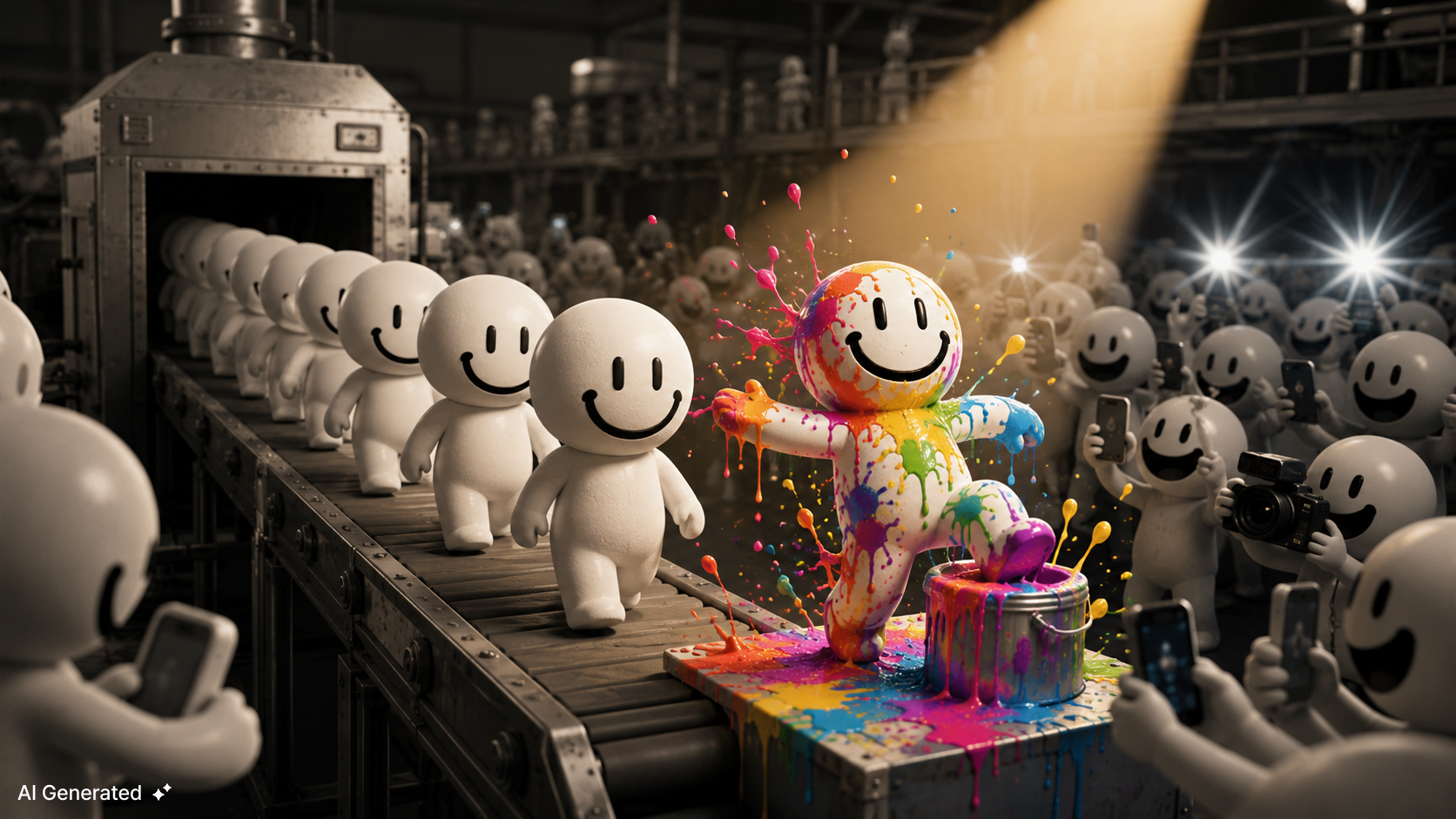
Sometimes, in 'Metcha Chameleon,' you see a player painting their body to blend perfectly with the background. In the game, it is the ultimate camouflage. But the market is different. The moment you paint yourself the same color as the background, the game does not survive—it becomes the background. A chameleon must become the same color as its surroundings to survive. But for a game to survive, it must paint itself a different color than everyone else.




Sort by:
Comments :0