



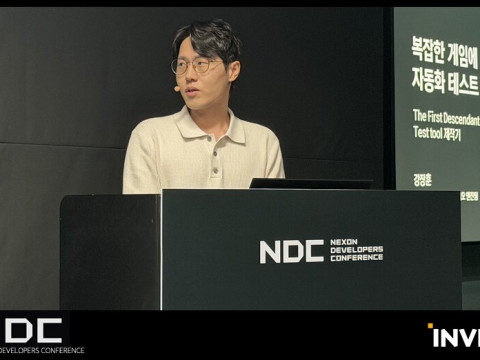
Topic: Reading Users and the Market Through Steam Data: Data-Driven Strategy Formulation Speaker: Seo Soon-ki - Team Lead, Nexon Korea Category: Data, Business & Marketing Recommended for: Planning, business, and analysis professionals interested in global game market analysis and data-driven strategy
Tags: #Global #UserSegmentation
[🚨 Presentation Topic] Unlike the domestic market, the global market makes it extremely difficult to identify user demographics and preferences. To overcome this challenge, the Nexon Shooter Division turned its attention to Steam, a platform that provides access to vast amounts of data. This session introduces four strategic insights for increasing the probability of success within the Steam ecosystem, where data on tens of thousands of games and user behaviors has been accumulated.
'First Impressions' Are Crucial.
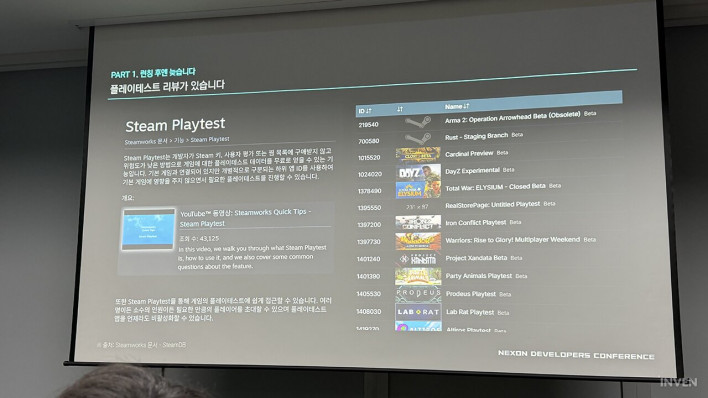
Opening the session, Seo asked the audience how often the "mythic" turnaround—where a game overcomes poor initial reviews—actually happens. He noted that "the reality is brutal," demonstrating that games that fail to make a good first impression rarely survive.
Seo emphasized that among 3k games with at least 10 reviews and a recommendation rate below 50% in their first month, only 50 (1.6%) managed to flip their rating to 70% (Mostly Positive) or higher. He also noted that the median change in recommendation rate from the first month to the present is a mere 3.6 percentage points, with twice as many games seeing their ratings drop as those that saw them rise. In short, Seo argued that once a first impression is set, it is virtually impossible to change.
"Some of you may be wondering if there is a way for developers to gauge that first impression before launch," Seo said, introducing the 'Steam Playtest' feature. This feature allows developers to view reviews left on a trial version. His internal analysis showed a very high correlation coefficient of 0.77 between the recommendation rate during the playtest and the recommendation rate in the first month of launch, proving that developers can predict a game's fate before it even hits the market.
Users Are Less Mobile Than You Think: How Do You Move Them
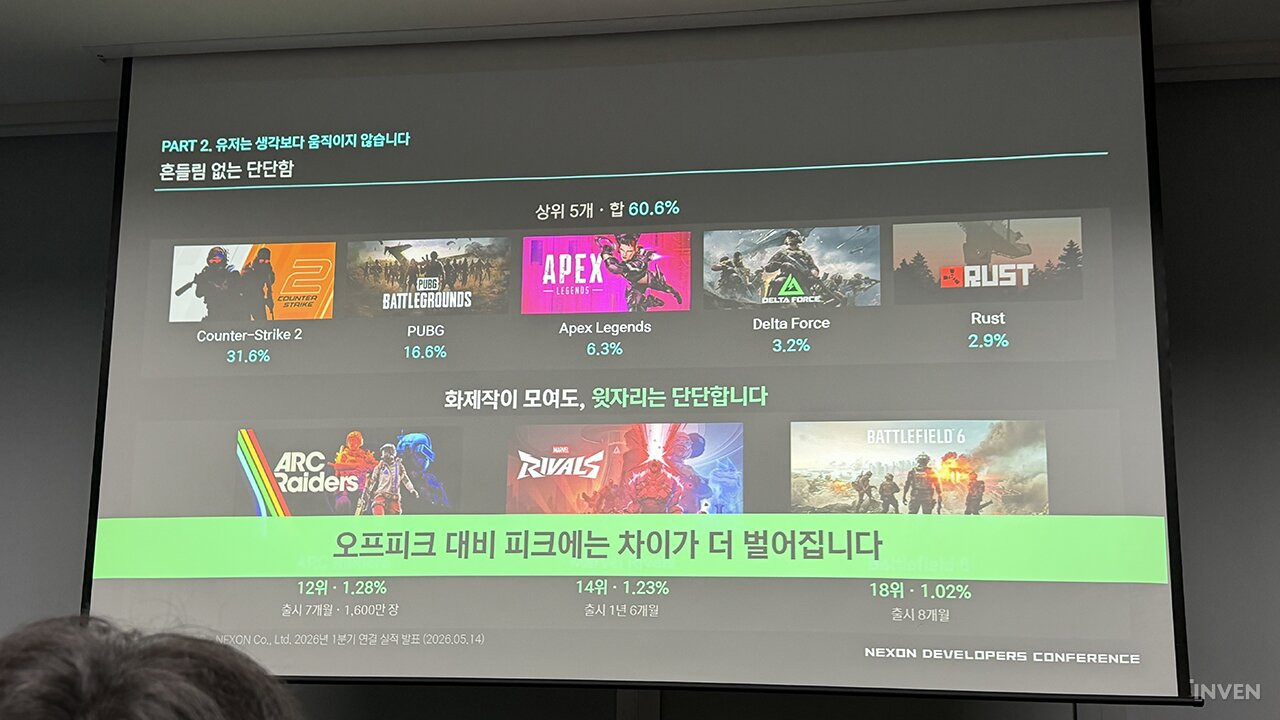
Seo also addressed the conservative nature of gamers, noting that once they settle on a game they like, they are reluctant to move. In fact, the top-ranked game in the shooter market holds a 31.6% market share, while the top five games account for 60.6%.
He explained that 87% of users are casual users who play only one or two games, maintaining 75% of their existing library, and that two out of three users do not change their main game even after a week. He also pointed out that while 20k games were released on Steam last year, nearly half did not receive a single review. This indicates that even when new titles are released, users do not move; they exhibit an inertia that draws them back to familiar games.
"It is impossible to satisfy every user," Seo said, advising that the key is to clearly identify target users likely to settle into your game and to pinpoint your competitors. Before launch, he suggested using the 20+ tags users leave on the Steam store to cluster games and see which titles your new project aligns with.
After launch, he suggested using the 'beer and diapers' analogy (the classic case of placing diapers next to beer to boost sales) to map out and compare which games show strong cross-play tendencies with your own.
In conclusion, Seo suggested that new games achieve high session times and play duration because they share a similar trajectory with games existing users already play. He added that the users you need to potentially acquire are those already playing games of a similar nature.
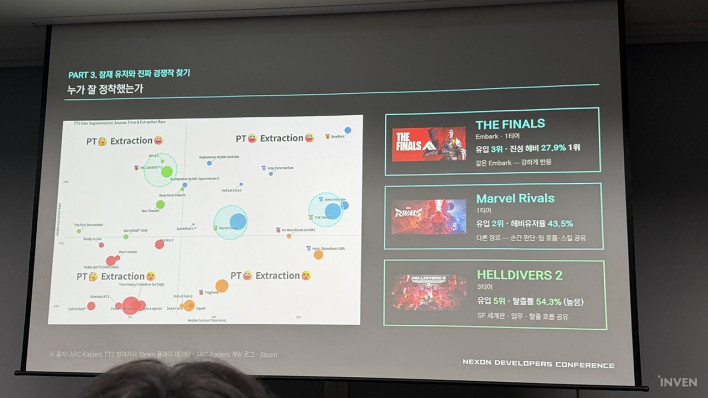
Fix What Users Hate, Protect What They Love.

Seo used the example of repairing bullet-ridden planes: while it is good to reinforce the areas that helped the planes return, it is even more important to strengthen the weak points that caused the others to never return. In other words, while feedback from active players is important, you must also pay close attention to feedback from those who left a negative review.
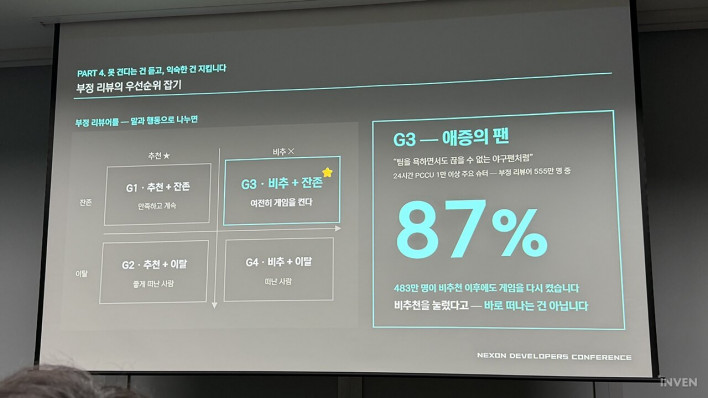
Team Leader Seo then categorized users into four groups: G1, 'users who stayed after recommending the game'; G2, 'users who left after recommending the game'; G3, 'users who stayed after not recommending the game (fans with a love-hate relationship)'; and G4, 'users who left after not recommending the game.' He emphasized that G3 and G4 users are particularly important.
He explained that 'users who stayed despite a negative review' are like baseball fans who complain about their team while watching every game; they often play for hundreds of hours and point out deep-seated issues like lack of content, balance, or matchmaking, which is invaluable for improving live services. Conversely, 'users who left after a negative review' failed to enter the game early on, making their feedback crucial for onboarding new users and improving the initial experience.
Finally, Seo noted that because various competitors already exist in the market and users have already internalized standards for UI/UX, controls, and patch cycles, developers must be good at 'meeting expectations.' Unless you are offering a completely new core experience, he concluded, you must at least meet the basic market hurdles users expect to successfully launch a game and retain them.





Sort by:
Comments :0