


Search engine DuckDuckGo announced that traffic to its 'No AI' search page has tripled recently. The company attributed this surge to the timing of Google's announcement regarding its AI-powered search overhaul.
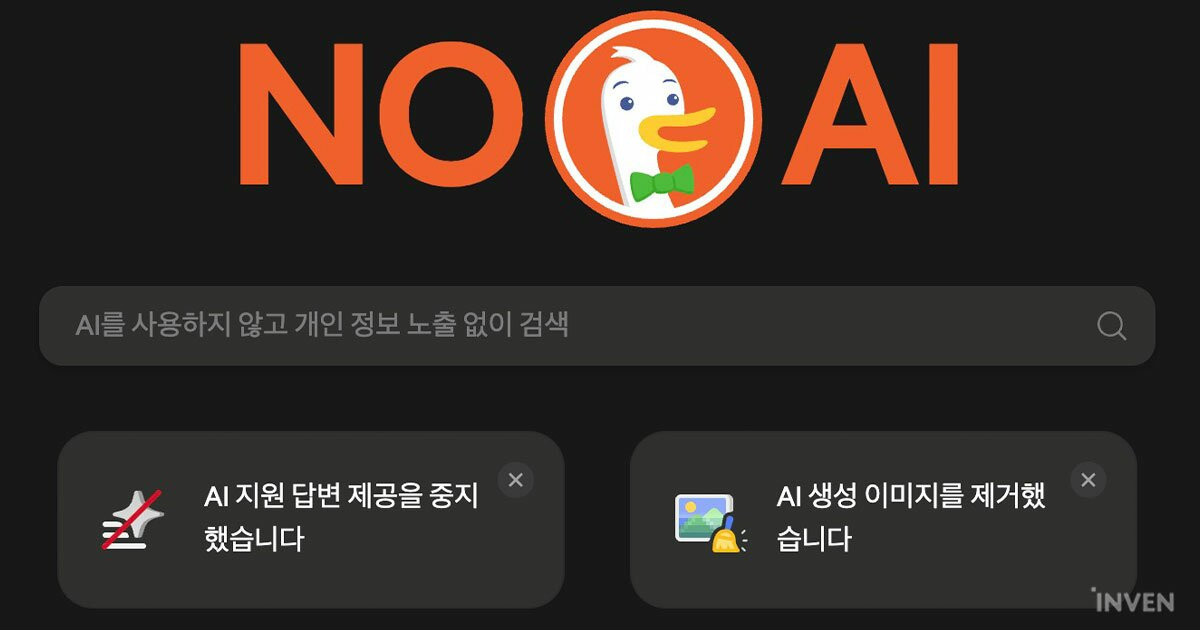
DuckDuckGo reported the significant traffic increase via its Bluesky account. According to the company, traffic began to climb following the Google I/O conference on May 19, reaching triple the previous levels by May 28. Since the announcement, daily visits have consistently remained about 84% above the previous average, indicating that this is not a one-time spike but a sustained increase.
Google previously unveiled a new search interface that integrates AI more deeply into the experience. Described as the 'biggest upgrade in 25 years,' the feature is powered by Google's Gemini 3.5 Flash AI model. While AI does not completely replace traditional search methods, it is moving to the center of the search experience. Google CEO Sundar Pichai has expressed confidence in the AI mode, stating that 'people love it.'
DuckDuckGo also reported that its weekly app installations in the U.S. rose by 21%, with iOS installations jumping by 33%. The company recently released a browser extension for Chrome and Firefox that sets 'No AI' search as the default in the address bar, with support for Edge and Opera currently in development.
DuckDuckGo's move is not a rejection of AI on principle. Alongside its 'No AI' search, the company also operates AI-powered search features. This appears to be a strategic decision to capture both segments of the market: users who want to actively leverage AI and those who prefer a search experience without it.
Of course, these figures do not pose a threat to Google. According to 2025 global search market share data from Cloudflare, Google holds approximately 90%. Because DuckDuckGo has a smaller user base, even minor shifts can result in large percentage fluctuations. However, it is clear that a segment of users, fatigued by the inaccuracies of AI-generated answers and the forced integration of AI, is indeed migrating to alternative search engines and browsers.
![]()
- Seungjin "Looa" Kang
- Email : looa@inven.co.kr







Sort by:
Comments :0