The convergence of the gaming and defense industries is emerging as a new hot topic. With KRAFTON announcing a 'Physical AI' alliance with Hanwha Aerospace and NC AI winning a national project from the Agency for Defense Development (ADD) alongside Hyundai Rotem, the narrative that "gaming technology is heading to the battlefield" has spread rapidly. Against this backdrop, a forum was held to examine the unique legal and institutional barriers of the defense industry.
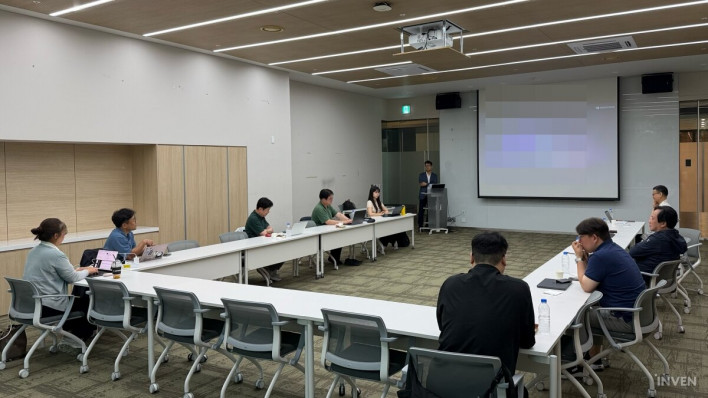
The Korea Game Law and Policy Society (chaired by Professor Yoo Byung-joon of Seoul National University) held its '2026 Workshop' at the Seoul National University Siheung Campus training center on the 19th to discuss the 'Conditions for Collaboration Between the Defense and Gaming Industries.' The keynote speaker, Kim Geun-ho, a partner at YOON & YANG LLC, is a defense industry specialist with experience at the Defense Acquisition Program Administration (DAPA). He provided a comprehensive overview of the regulations that must be considered when the gaming industry's technical and content capabilities intersect with the defense and security sectors.

Among domestic game companies, KRAFTON and NC AI are known to be moving quickly into the defense sector.
On March 13, KRAFTON signed a Memorandum of Understanding (MOU) with Hanwha Aerospace to jointly develop Physical AI technology and establish a joint venture (JV). The plan is to combine KRAFTON's AI research capabilities and virtual environment-based simulation technology with Hanwha's defense and manufacturing infrastructure and unmanned system technology.
The two companies have agreed to pursue joint research and development of core technologies, review demonstration and application scenarios, and build technical and operational systems in phases. Furthermore, KRAFTON has announced its participation as an investor in an AI, robotics, and defense fund (with a target size of $1 billion) being formed by Hanwha Asset Management.
Additionally, the consortium of NC AI and Hyundai Rotem was selected in May as the final contractor for a research and development project commissioned by the Agency for Defense Development titled 'Physical AI-based Integrated Simulator and Modular Robot System.' This project aims to build a digital twin-based simulator and modular robot hardware that can organically control multiple types of unmanned robots on future battlefields and bridge the gap between virtual and real environments. NC AI is overseeing the development of the 'world model' (robot foundation model), which serves as the 'brain' of the robots.
The link connecting game companies to the defense industry is 'Sim-to-Real' technology. While experimentation is essential in weapon system development, equipment is expensive and carries high risks. By learning and verifying in a virtual environment first before applying it to reality, developers can reduce costs and risks while increasing development speed. The same applies to maintenance and operational efficiency based on digital twins.
In particular, as unmanned systems have become a core trend in modern warfare, the importance of data for AI training has grown. However, there is a fundamental constraint: combat-related data is difficult to secure due to security concerns. The alternative that has emerged is 'synthetic data' generated in large quantities in virtual spaces. Ultimately, game companies, which possess strengths in building high-quality 3D virtual worlds and managing behavioral pattern data, have been identified as potent partners.
The defense industry is also paying attention to the real-time 3D rendering, intuitive UI/UX, and training cost-reduction effects inherent in games. Kim identified weapon system development verification, drone pilot training, and the implementation of digital twins for battlefields as key areas where gaming technology can contribute.
Precedents have already been established overseas. Anduril, which KRAFTON CEO Kim Chang-han cited as a role model, is a defense startup founded in 2017 by Oculus founder Palmer Luckey. They grew rapidly by leveraging an operating system (Lattice) that integrates the operation of weapons and sensors. Anduril took over the U.S. Army's augmented reality (AR) helmet project previously led by Microsoft, and last year, it partnered with Meta to unveil the AI combat helmet 'EagleEye.'
The focus of the day's presentation was not on mere 'possibilities' but on realistic 'conditions.' This means that for game companies to enter the defense industry, they must understand and prepare for a regulatory system that is entirely different from that of general industries.
First, the profit structure itself differs from other industries. While being designated as a defense material guarantees opportunities for private contracts, there is no market price; therefore, prices and profit margins are determined by the defense cost accounting system under the law. Attorney Kim explained, "The profit margin for domestic defense materials is set by law and rarely exceeds 10%."
Another unique factor noted is that, unlike the gaming industry, which is accustomed to rapid development cycles, defense research and development involves slower procedures and rigorous cost verification. In particular, because the development of weapon systems typically utilizes a 'provisional contract' method—where actual costs are settled after the fact—it is crucial to be aware that these costs are subject to government verification.
Strict export controls are also an area rarely encountered in the existing gaming industry. Depending on the nature of the technology and goods, export permits must be obtained in accordance with regulations such as the Act on Special Measures for Strengthening and Protecting National High-Tech Strategic Industries, the Industrial Technology Protection Act, the Defense Acquisition Program Act, and the Foreign Trade Act. Even items previously sold for civilian use may be subject to export permits if there are concerns about military diversion.
Kim explained, "If a single item is used for both civilian and military purposes, it may be subject to regulation even if exported for civilian use," adding that companies must verify in advance whether entering the defense sector poses any risks to their existing business.
Intellectual property (IP) structure is also an unfamiliar area for game companies. In principle, the results of defense R&D are state-owned. Joint ownership can be recognized only in exceptional cases, such as when a company bears the R&D costs or enters into a separate transfer agreement. Moreover, if necessary for national security, the state can exercise the IP without the consent of the joint owner. This is a point that game companies, which base their business on the utilization of their own IP, must carefully consider.
In addition, the requirement for approval from the Minister of Trade, Industry and Energy in the event of a substantial change in management control, such as through the sale of shares by a defense contractor, was cited as a constraint in terms of capital and governance structure.
Consequently, the opinion was repeatedly raised during the workshop discussion that it is more realistic for game companies to establish joint ventures or form consortia rather than entering the market directly through their headquarters. Furthermore, the discussion touched on capital flows to foster a 'defense startup ecosystem,' such as the In-Q-Tel model (a venture fund affiliated with the U.S. CIA) and the case of the Military Mutual Aid Association, which began venture investments last year.
The significance of this workshop lies in moving beyond the simple buzzword of 'K-Defense × Gaming' to carefully examine the realistic conditions for the convergence of the two industries from a legal and institutional perspective. Low profit margins, complex procedures, strict cost verification, extensive export controls, and an IP structure that defaults to state ownership risk clashing with the existing culture of game companies, which are accustomed to rapid development and IP monetization.
Ultimately, for game companies to successfully participate in the defense industry, they must devise ways to participate in projects while avoiding the direct application of the defense industry's specific regulations as much as possible, and in the long term, they must pursue institutional improvements that account for the characteristics of the gaming industry.

Sort by:
Comments :0