For those who have long cherished Guild Wars, the idea of this world becoming a card game might not seem strange at all.
Its vast worldview, character narratives, factional conflicts, and, above all, the joy of combination and deck-building are elements that have always resonated with the spirit of card games. 'Mistbound', jointly presented by NC, ArenaNet, and Bilibili, is a title born from that very potential. Based on the official Guild Wars license, this new title is the first CCG (Collectible Card Game) in the Guild Wars universe, introducing a fresh take on traditional card game mechanics by incorporating multi-directional movement and three-dimensional battlefield management.
In this project, ArenaNet, as the original developer and IP holder of the Guild Wars series, provides the world-building and character assets, while NC leverages its online game development experience and technical expertise to lead the game's development. Bilibili is responsible for global publishing and community operations, with the roles of the three companies interlocking to drive Mistbound forward. It stands out not merely as an IP-based spin-off, but as a project that combines the authenticity of the original work with robust development capabilities and a global service infrastructure.
The reason this announcement is drawing attention goes beyond it being a new title based on a famous IP. Mistbound is an attempt to redesign the iconic fantasy world of Guild Wars within the new format of a card game. In other words, it is a reinterpretation of the core appeal of the beloved MMORPG, bringing the strategic depth and the joy of free-form combinations that were inherent to Guild Wars into sharper focus. In fact, the development team explains that the Guild Wars franchise itself started with the idea of creating a unique MMORPG experience by combining CCG concepts with an MMO. While the genre has changed, the philosophy of combat and the structure of fun that define Guild Wars remain at its heart.
Bringing the MMO Battlefield to the Cards
Mistbound: Perfected by 'Commander x Profession (Squad)'
The developers note that the greatest charm of Guild Wars is not just its world or presentation.
NC PD Hwang Sun-woo describes the essence of Guild Wars as "the joy of combination and building that players contemplate and refine themselves," adding, "We determined that a card game was the best genre to capture this fun." Interestingly, the skill system in the early days of Guild Wars was also significantly influenced by card games. The fact that the team has come full circle to present a card game based on the Guild Wars IP shows that Mistbound is not just a new CCG, but a project that naturally inherits a core pillar of the Guild Wars brand.
Therefore, the direction Mistbound is taking is clear: maintaining the iconic characters, fantasy visuals, and musical atmosphere unique to Guild Wars while providing a more dynamic and strategic experience in combat. The goal is to revive the class fantasy and the satisfaction of combinations from the original work within the format of a card game.

At the center of this is the Commander × Profession (Squad) system. Iconic Guild Wars characters step onto the battlefield as Commanders, and by combining this with a system inspired by the nine professions of Guild Wars 2, the game allows for tactical configurations far more three-dimensional than existing card games. Commanders are not merely symbolic; they function as key playmakers with their own abilities and roles, and the gameplay feel changes significantly depending on the profession combination.
To borrow the words of NC PD Hwang Sun-woo, "If the squad determines what you use, the Commander determines how you use it." The game is designed so that even if you choose the same profession, using a different Commander results in entirely different decks and strategies. Some Commanders are specialized for aggressive operations, while others lead the entire board by utilizing positioning and timing. This means Mistbound does not use heroes as mere IP decorations, but as strategic axes that change the playstyle itself.
The True Differentiator of Mistbound
Deepening the Battlefield Instead of Complicating the Cards
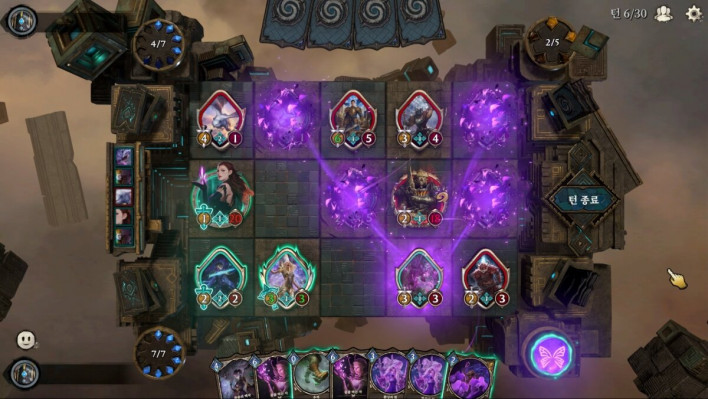
The point where Mistbound differs most from existing CCGs is its battlefield movement system. While traditional CCGs have focused on relatively fixed placements and static combat flows, Mistbound adopts a structure where both cards and Commanders move freely. Players do not just end their turn after playing a card; they must calculate where to move, when to apply pressure, and from which position to initiate combat. In short, it is a game where 'how you moved' is just as important as 'what you played.'.
The developers' perspective on this system is also impressive. NC PD Hwang Sun-woo pointed out that as card games pursue the fun of combinations, the cards themselves tend to become overly complex. He stated that Mistbound wanted to resolve that complexity on the battlefield rather than on the cards. Recalling the area-of-effect skills and combos of Guild Wars, they decided to actively utilize a grid-based battlefield familiar to board game players. Ultimately, the 'movement' in Mistbound does not just mean cards moving; it is a design that makes space a strategic resource, which is the core of the game.
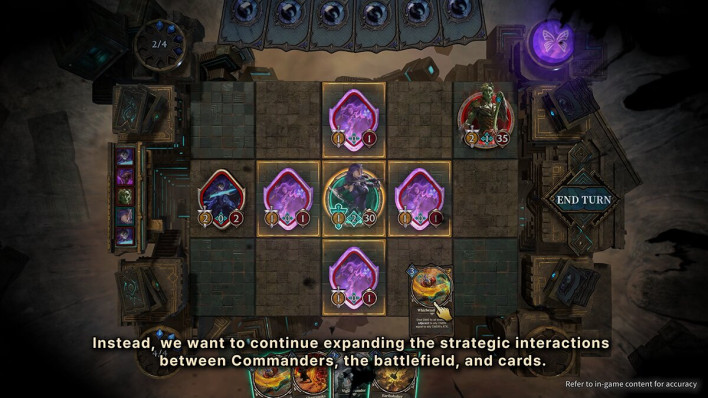
Combat takes place on a 5x3 tactical grid. Units and Commanders can be moved and repositioned freely, allowing for various plays that exploit the opponent's gaps or flip the flow of the game. Movement tactics like pushing, pulling, and flanking also act as important variables on the battlefield. While existing CCGs are closer to comparing card stats and effects, Mistbound adds the sensation of managing an actual battlefield. This is why it reads as a card game that includes tactical positioning and spatial management, rather than a simple card duel.


NC Planning Director Jung Jae-yoon also cited movement and placement as key features, explaining that each squad is designed to move and dominate the battlefield in different ways. For example, a Warrior sets up banners to create favorable engagement conditions and pulls enemies in to control the front line, while a Mesmer uses illusions to block paths or create variables from unexpected positions to disrupt the flow. A Ranger uses traps, ranged units, and pets to utilize the battlefield in a wider, more three-dimensional way, and a Necromancer continuously pressures enemies based on poison clouds and life force. The explanation that different solutions emerge depending on the chosen profession shows that Mistbound is not just a CCG with a movement feature, but a game that has changed the very way the battlefield is interpreted by each profession (squad).
NC Game Designer Baek Hak-jun, a former CCG pro gamer, also highly evaluates this structure. He says that because the result changes depending on where you place the same card on the battlefield, every match in Mistbound feels like a different game. He explains that while it is relatively easy to learn through the intuitive act of placing units and fighting, as you repeat the play, you focus on the choices of each turn and move, eventually leading to the fun of reading the entire board. This suggests that Mistbound is not just for hardcore users, but aims to be a card game designed to be intuitive to enter but deep to master.
Guild Wars' Visuals and Sound
Must Remain Alive Within the Card Game
It is not just the combat system that makes Guild Wars feel like Guild Wars. Users who remember the series can easily recall the landscapes, color palettes, and sounds of Tyria. Mistbound is a title that strives not to miss this. The visuals focus on inheriting the fantasy aesthetics of the Guild Wars series, and familiar characters have been reinterpreted with a modern sensibility. The battlefield presentation maintains the grand atmosphere of the original while being organized for a strategy game, and the participation of the original music team and character-focused voice acting are designed to provide familiarity to existing fans and a vivid first impression to new users.
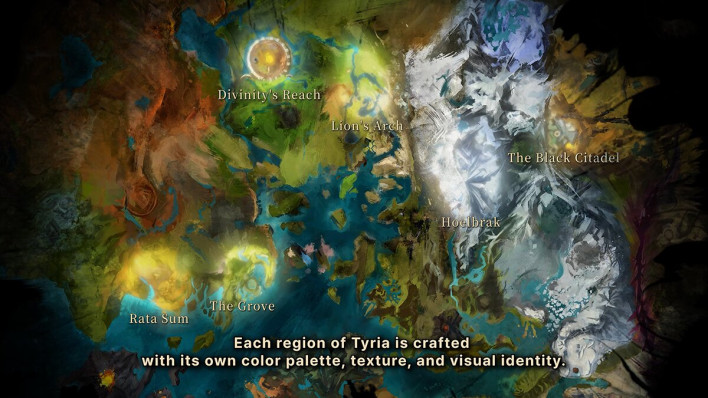
ArenaNet Art Director Aaron Coberly describes the art of Guild Wars not as "creating cool graphics, but as creating an experience like a painting." He explains that the bold and intense brushstrokes are not meant to reproduce reality as it is, but to convey emotions and atmosphere, and that each region of Tyria was crafted to have its own unique color, texture, and visual identity.
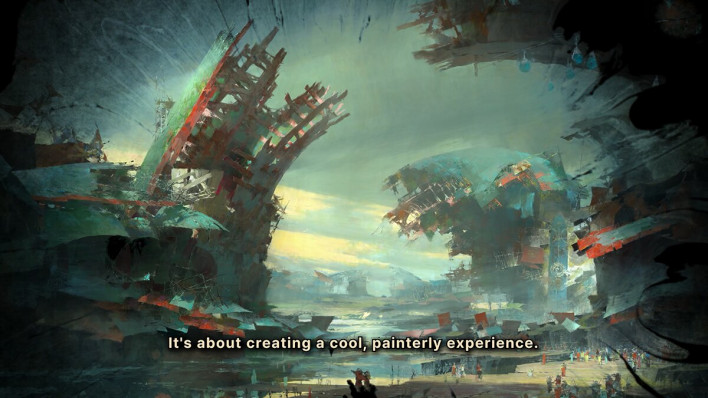
This philosophy extends beyond the world itself to character design, UI, and overall visual expression. The reason Mistbound does not feel unfamiliar to original fans while moving Guild Wars to a card game is not just because it uses character names, but because it attempts to carry over the aesthetic philosophy that makes Guild Wars feel like Guild Wars.
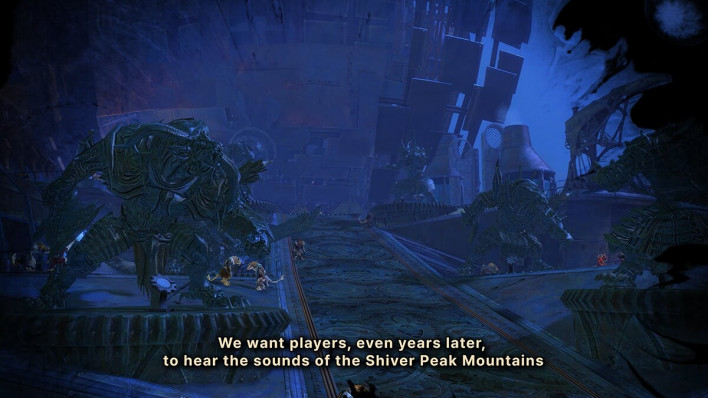
The same applies to sound. ArenaNet Studio Head Colin Johanson says that in Guild Wars, sound is not just decoration, but memory. He hopes that even after many years, the moment a player hears the sound of a specific region or a boss' roar, they can naturally recall their past experiences in the Guild Wars world. This is why the original music team and voice direction are treated with such importance. Mistbound is a work that seeks to recall not only the combat of Guild Wars, but the very sensation of remembering Guild Wars within a card game.
Another Window to Revisit the Guild Wars IP
This design aligns with the Guild Wars IP expansion strategy. The development team views Mistbound not just as a new genre title, but as another window to encounter the Guild Wars world again. They explain that it can serve as an opportunity for existing fans to rediscover Tyria in a new way, and as an introductory work for users new to Guild Wars to more naturally understand the worldview, characters, and relationships between factions.
Guild Wars is a series that has built a fan base over a long time based on its unique worldview, character narratives, and factional conflict status. Mistbound does not stop at using these settings as mere background decoration; it is designed so that players can directly experience the characters, battlefields, and confrontation structures through strategic play. It naturally aligns with the competitiveness, meta research, discussion culture, and community activities inherent to the card game genre. Ultimately, Mistbound is closer to becoming a platform that makes people reinterpret and talk about Guild Wars, rather than just a game that consumes the Guild Wars IP.
Conditions for a Long-Term Service CCG
Service and Community Scalability Are Also Important
For this vision to gain traction in the actual service phase, it must be equipped with not only the game's own completeness but also a foundation for long-term operation and community expansion. In that sense, Bilibili is drawing attention as a platform with a large user base, high community activity, and a rich content ecosystem.
Game content is consumed in various ways, such as live streaming, reviews, clears, and esports broadcasts, and there is a structure where user feedback and community reactions can be quickly reflected in game operations. With the addition of large offline events like Bilibili World, the platform's influence, which encompasses both online and offline, is also considered a key factor. In the CCG genre, where meta changes, user reactions, and community productivity are important, these strengths can be even more impactful.
The direction the developers are talking about for long-term service is also clear. NC PD Hwang Sun-woo explained that from a long-term service perspective, they value not just growth in numbers, but the direction of continuously expanding the strategic options created by battlefield management, cards, and Commanders. They want to create a CCG that can be enjoyed for a long time, where more diverse choices and plays become possible as time goes on. This means they are aiming for an expansion that makes the relationship between the battlefield and cards richer, rather than just shaking up deck power by adding new cards. Users who have enjoyed long-term service card games for a long time will easily understand how important this difference is.
The Direction Proposed by Mistbound
Reinterpretation of Guild Wars and a New Battlefield for CCGs
Mistbound is a title that seeks to convincingly implement the world of Guild Wars within the new genre of a card game and present a new sense of battlefield to the CCG genre, which has long remained in familiar grammar. It contains the direction of reinterpreting the iconic fantasy worldview of Guild Wars, its characters, and narratives in a card game format, and presenting new fun and strategic depth by combining mobility and three-dimensional battlefields with traditional CCG grammar. Industry and user interest in this attempt is naturally gathering.
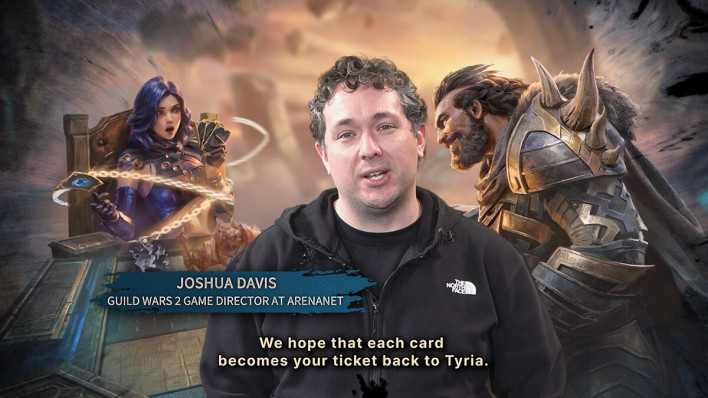
The developers' final message symbolically shows the direction this game is aiming for. ArenaNet Game Director Joshua Davis said, "I hope every card becomes a ticket that leads you back to Tyria." The expression that no matter where you are in the world, you will meet again at the same table, is closer to the hope that Mistbound will not just be a game that consumes the Guild Wars IP, but a place where Guild Wars fans and card game users meet again in a new way.
Mistbound, which revealed itself through its global debut, has just taken its first step. However, looking at the direction revealed so far, the point this work is heading toward is clear: to reveal the joy of Guild Wars' free combinations and building more clearly within a card game, to compete with the depth of the battlefield instead of the complexity of cards, and to expand the world of Tyria into a space where players can stay for a long time once again.
It proposes a new experience to both original fans and card game users, and expectations are high for the synergy that the collaboration of the three companies will create.

Sort by:
Comments :0