February 10, 1988
This was the release date of 'Dragon Quest III: The Seeds of Salvation.'. (Even the subtitle was 'The Seeds of Salvation' (The Beginning of a Legend)...)
Over a million copies were sold on the day of its release alone, and it surpassed 3 million copies within a week, setting the record for the 'best-selling game title in Japan in 1988.'
Recently, Pearl Abyss' Crimson Desert made headlines by reaching 3 million copies sold across global multi-platforms in just four days. Considering that Crimson Desert was a simultaneous global release across digital platforms like Steam, PS5, and Xbox, one can grasp just how surreal the figures recorded by Dragon Quest in the single, offline Japanese market of 1988 truly were.
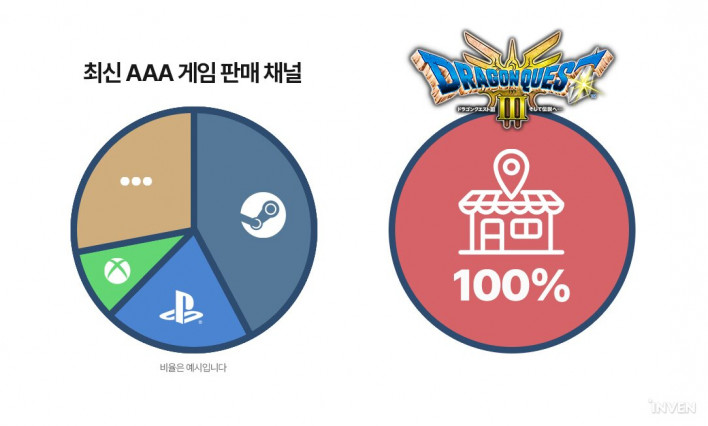
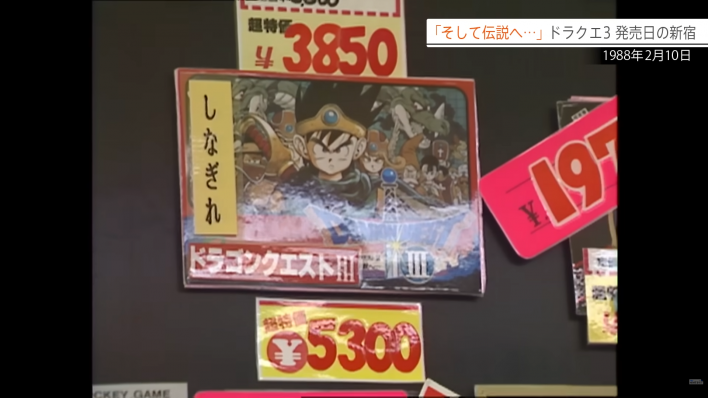
If the numbers alone are hard to fathom, one only needs to recall the scenes in front of retail stores at the time. Thousands of people lined up from dawn, staff with megaphones struggled to manage the crowds, and the throngs of people spilled over into nearby crosswalks. Schools saw a surge in absences, companies reported unauthorized leave, and a series of thefts and assaults around stores led to nearly 300 arrests.
As the situation escalated, Enix (now SQUARE ENIX) decided to move the release dates of future Dragon Quest titles from weekdays to weekends. While rumors later inflated this into a story about the Japanese government forcing the change by law, it was actually a voluntary measure taken by Enix in response to social concerns. Either way, it is a fact that a single game changed the very customs of the industry.


Known as Japan's 'national RPG,' Dragon Quest is a cultural phenomenon. How was this series born, and why was it able to create such a powerful cultural impact?
I want to make a RPG that anyone can enjoy
Dragon Quest is a RPG series created for the Family Computer in 1986 by three individuals: game designer Yuji Horii, manga artist Akira Toriyama, and composer Koichi Sugiyama.
At the time, the RPG genre had first blossomed in North America. With the proliferation of personal computers like the Apple II in the late 1970s, 'Ultima' and 'Wizardry' had established themselves as the two pillars of PC-based RPGs. However, both titles were designed with the assumption of vast amounts of English text and complex systems, making them difficult for anyone but hardcore gamers to approach.

Beyond the genre's high barrier to entry, the situation in Japan was different. While Japan had personal computers like the PC-88 and MSX, and RPGs were being ported to them, the 1983 release of the Nintendo Family Computer (Famicom) quickly solidified the formula that 'games = consoles.' It was a time when many households had a Famicom, but far fewer had a computer. When Yuji Horii set his goal to create an 'RPG that anyone can enjoy,' the Famicom was the natural starting point.
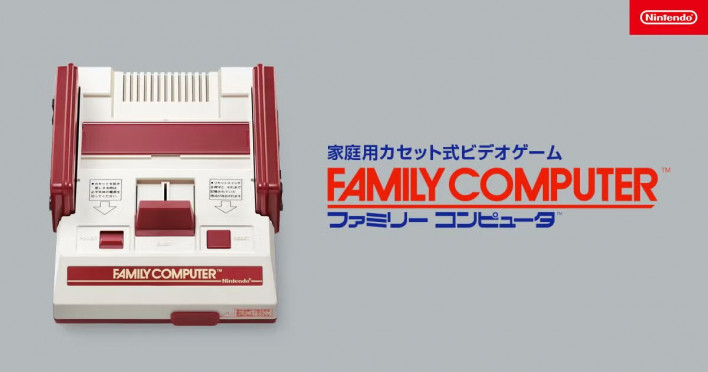
Yuji Horii used the Family Computer as a springboard to break down the barriers to entry for RPGs in the Japanese market. Instead of complex systems, he opted for intuitive combat; instead of dry text, he used witty, manga-style dialogue; and he implemented a level up system where characters became noticeably stronger the more they were played. He created Dragon Quest under the development philosophy of an 'RPG that anyone can enjoy.' All of these elements would later become the very grammar of the JRPG genre.
Two more giants joined the project. Character and monster design were handled by Akira Toriyama, who was serializing 'Dragon Ball' at the time, while the music was composed by classical composer and conductor Koichi Sugiyama. The combination of these three created not just a game, but a piece of comprehensive entertainment.
On May 27, 1986, the first Dragon Quest was released, and the response was immediate. The first title sold a record-breaking 1 million copies, and the second, released in January of the following year, broke that record with 2 million. Then, in 1988, the third installment triggered the aforementioned record-breaking sales and social phenomenon.
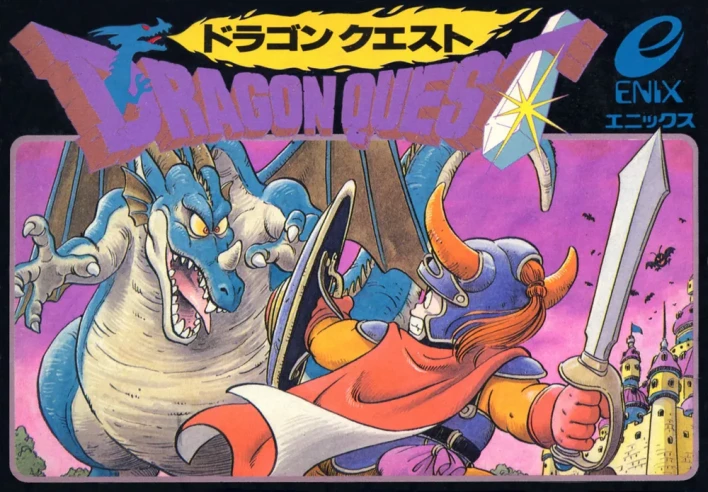
40 Years Built on 11 Numbered Titles
To date, the Dragon Quest series has released 11 main numbered titles. Each work was not merely a sequel, but an independent challenge that actively reflected the technology and platforms of its time.
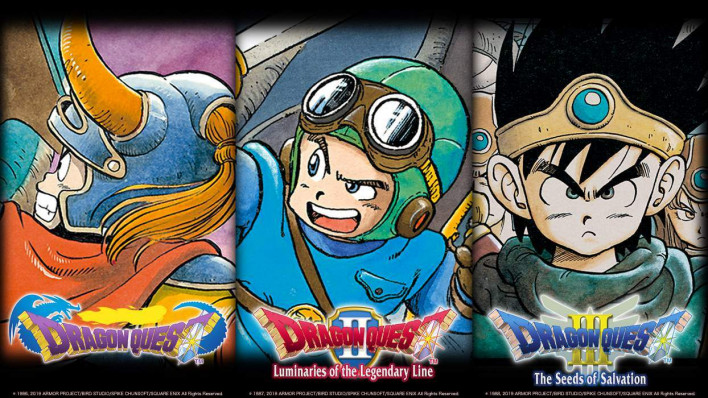
The Family Computer era was a time when the series' foundations were laid. If the first game established the concept of the JRPG genre, the third game significantly expanded the possibilities of the RPG by introducing a job system and free party composition. The fourth installment, 'Dragon Quest IV: Chapters of the Chosen,' released in 1990, introduced an omnibus format featuring multiple protagonists, showcasing new attempts at storytelling.
The series matured further during the Super Famicom era. The fifth installment, 'Dragon Quest V: Hand of the Heavenly Bride,' released in 1992, is considered one of the series' greatest masterpieces for its narrative that follows the protagonist's entire life. It also saw the debut of novel systems such as monster taming and marriage to a heroine. The subsequent sixth installment, 'Dragon Quest VI: Realms of Revelation' (1995), raised the scale of the series with a dual-world structure that allowed players to travel between reality and the world of dreams.

The seventh installment, 'Dragon Quest VII: Fragments of the Forgotten Past,' which moved the platform to the PlayStation, is famous for having the largest volume in the series to date. The eighth installment, 'Dragon Quest VIII: Journey of the Cursed King,' released on the PS2, implemented a fully 3D world for the first time in the series, while the ninth installment, 'Dragon Quest IX: Sentinels of the Starry Skies,' which moved to the Nintendo DS, introduced a new way to play Dragon Quest by strengthening multiplayer elements.
The tenth installment took the plunge as the series' first online RPG, with an offline version released later. The eleventh installment, Echoes of an Elusive Age (2017), combined the latest graphics with the classic Dragon Quest feel to become the series' best-selling title, and it gained many fans in Korea following its official Korean localization.
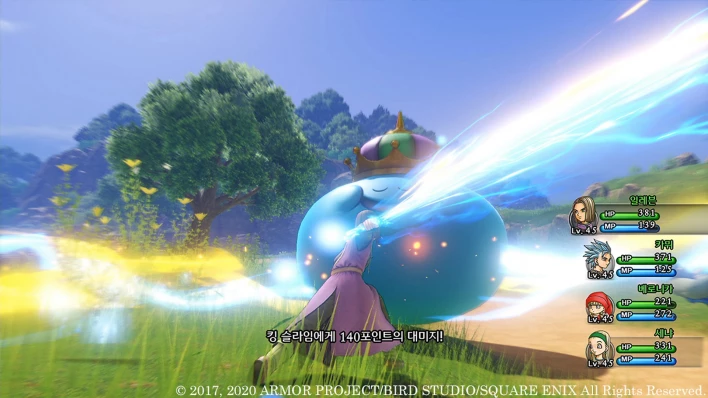
Akira Toriyama and the Comprehensive Art of Dragon Quest
What made Dragon Quest more than just a game series was the presence of Akira Toriyama.
Akira Toriyama's character and monster designs are the very visual identity of Dragon Quest. The round and friendly Slime, the majestic Dragons, and the unique monsters—these creatures did not stop at being enemies in a game; they permeated Japanese culture as a whole through character goods, theme park items, and advertising mascots. When Akira Toriyama passed away in March 2024, the shock felt by Japanese society and the world was a testament to how deeply he was embedded in the public's memory.

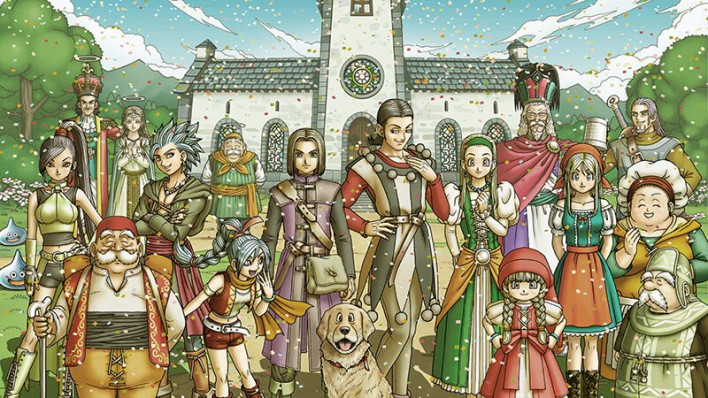
The same goes for the music. The Dragon Quest opening theme, 'Overture,' remains the melody that fans around the world think of first, even decades later, and it is still regularly performed in orchestral concerts. Dragon Quest's music is credited with contributing significantly to the establishment of game music as an artistic creation and a genre in its own right.
Korea and Dragon Quest: Why were we less familiar with this game
In Korea, Dragon Quest is a series known to almost anyone who has spent a fair amount of time gaming. However, compared to 'Final Fantasy,' the other pillar of the JRPG genre, there is a significant difference in terms of recognition. The reasons for this gap are quite complex.
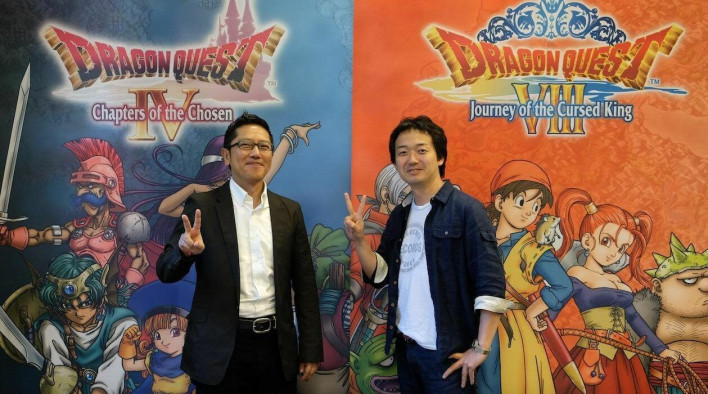
In an interview with another media outlet, producer Yu Miyake attributed the cause to a failed localization strategy. Although Dragon Quest was released early in North America under the name Dragon Warrior, it did not receive sufficient investment in marketing and localization. In the meantime, with the arrival of the PlayStation era, Final Fantasy VII established itself as the first JRPG experience for gamers worldwide, creating an insurmountable gap in global brand recognition between the two series. Miyake expressed regret, noting, "If we had put more effort into localization at that time, we wouldn't be in this situation today."
It was not merely a matter of localization strategy. Dragon Quest is a series in Japan that spans a wide age range, from elementary school students to people in their 50s. This is partly because the fans who grew up with the first game have become middle-aged, and also because Akira Toriyama's art style was already familiar in Japan. 'Dragon Ball' had been enjoying sensational popularity since 1984, two years before the release of the first Dragon Quest, and there was also a work called 'Dr. Slump' before that. Japanese gamers encountered Dragon Quest already accustomed to that art style.
In contrast, Dragon Ball's recognition overseas only began to rise in earnest after the U.S. broadcast of Dragon Ball Z in 1998. By then, the Dragon Quest series was already on its fifth installment, and until that point, Akira Toriyama's manga-style art was easily dismissed by overseas gamers as 'for children.' While playing the games reveals they contain sufficiently heavy narratives, it was not easy to overcome that initial impression.
In Korea, the language barrier was an additional factor. Dragon Quest is a game heavily reliant on text—conversations with villagers, hints from NPCs, and the unique tone and humor written by Yuji Horii himself. Final Fantasy, on the other hand, could convey a significant portion of its content through visual direction and music alone. This is why Korean gamers inevitably felt a much higher barrier to entry for Dragon Quest than for Final Fantasy, despite both being in Japanese.
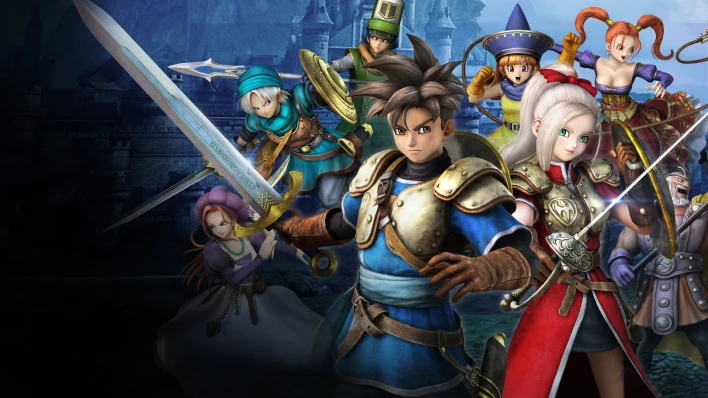
Ultimately, the first Dragon Quest console title to be officially translated into Korean was Dragon Quest Heroes, released in June 2015. It had been nearly 30 years since the release of the first game. During that gap, Dragon Quest was a 'hipster pick' series that only a small number of hardcore fans enjoyed by learning Japanese or relying on magazine guides and unofficial Korean patches.
However, the situation is changing. In recent years, new numbered titles and remakes have all been released officially with Korean language support. We now live in an era where we can experience a 40-year-old series in Korean from the very beginning.
The Legacy of Dragon Quest
Dragon Quest is not just a well-selling game. It was the very process of the RPG genre becoming a part of popular culture in Japan, and the first series to prove that console games could become a social phenomenon. It carries the unprecedented reputation of being the game that forced release dates to move to weekends and the game that brought schools and workplaces to a standstill.
In terms of the genre, Dragon Quest's influence continues to this day. Intuitive command-based combat, world exploration through dialogue with villagers, and character growth through leveling up—Dragon Quest was the first to establish the framework of what we call the JRPG genre today. Countless RPGs that followed, whether consciously or unconsciously, started on this grammar that Dragon Quest created.
Even 40 years later, the series continues. With every new release, past masterpieces are summoned anew through remakes and HD remasters, and the children who once huddled in front of televisions to embark on adventures have grown into adults, knocking on the doors of those worlds once again.
And now, right beside them, a new generation of players is meeting Dragon Quest for the first time.

Sort by:
Comments :0