Some years announce themselves as turning points. For South Asian gaming, 2025 appeared to be one of them from the start.
Across India and neighboring countries, competitive gaming felt increasingly visible and communal. Cafés filled with watch parties, college corridors stayed animated long after matches ended, and references once limited to voice chat surfaced on city billboards. Gaming culture, long viewed as niche, began to occupy shared public space with new confidence.
Riot Games’ footprint in the region expanded alongside that shift, shaped in large part by community participation rather than top-down spectacle. Much of the year’s momentum centered on competitive structure, something players across South Asia had consistently sought.
Legends Ascend South Asia launched as a regional pathway for League of Legends competitors, drawing 95 teams from six countries into open qualifiers. Over four months, the tournament established consistency and stakes, culminating in a title win by S8UL Esports. Their advancement to the LCP Wild Card Playoffs placed South Asian talent on an international stage, backed by audiences who followed nearly a month of broadcasts and local viewing events.
Built Together: Riot Games, Its Community, and the Year Indian Gaming Came Into Its Own
Parallel momentum emerged in PC esports. VALORANT Challengers South Asia posted strong engagement figures across the season, with the LAN finals drawing millions of views and tens of thousands of concurrent spectators. For many fans, the response signaled renewed stability for PC competition in India, complementing a market long dominated by mobile play.
Midyear reflection arrived with VALORANT’s fifth anniversary. Rather than focusing on scale alone, celebrations emphasized familiarity. Campus activations, animated shorts based on player experiences, and public art rooted in community in-jokes framed the milestone as a shared memory rather than a marketing beat.
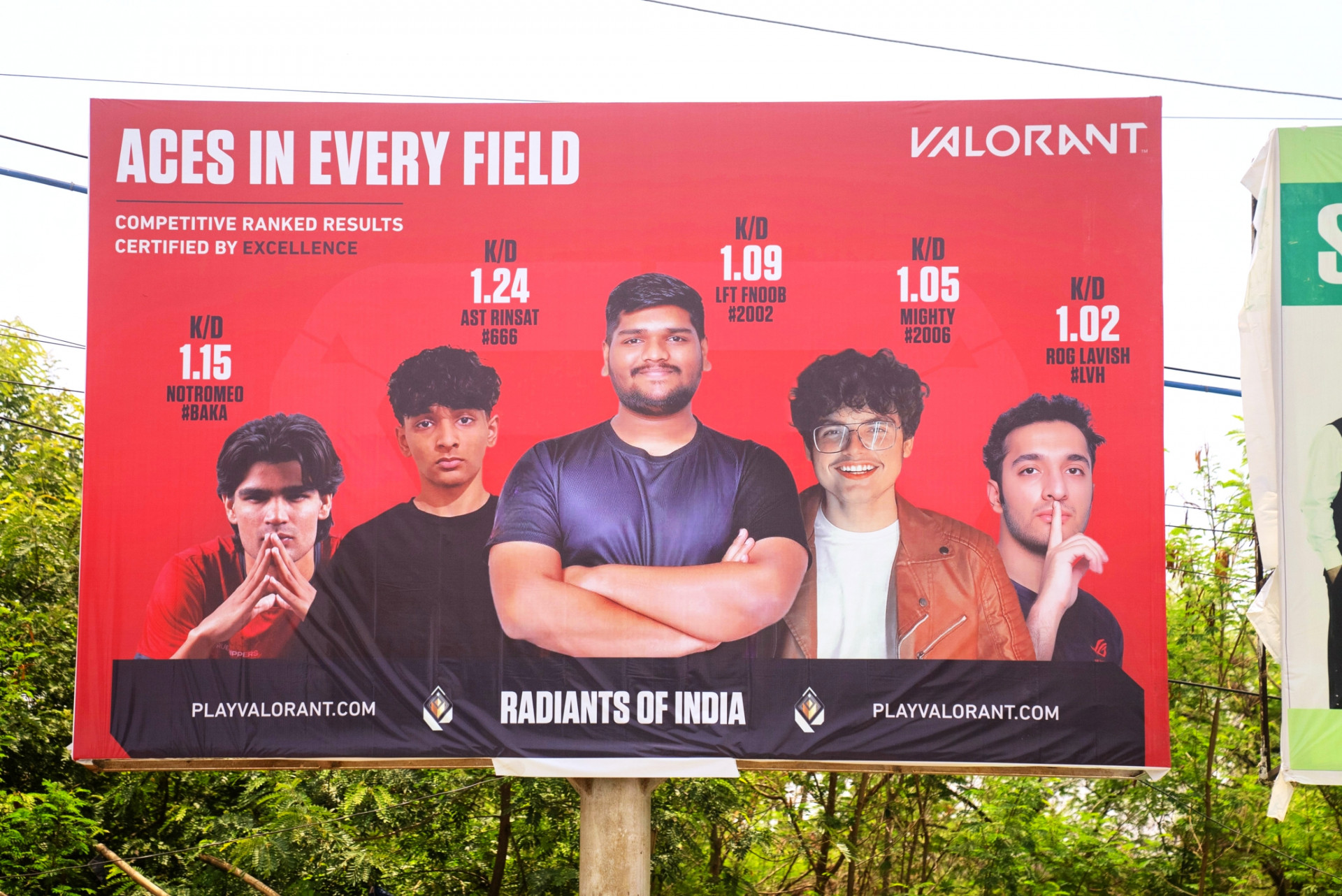
That approach carried into public-facing moments. Billboards in several cities featured player-chosen callouts, while a playful “VAL Toppers” campaign coincided with national exam results, borrowing the visual language of academic achievement to spotlight high-ranked players. The result was a brief crossover into mainstream conversation that extended beyond gaming circles.
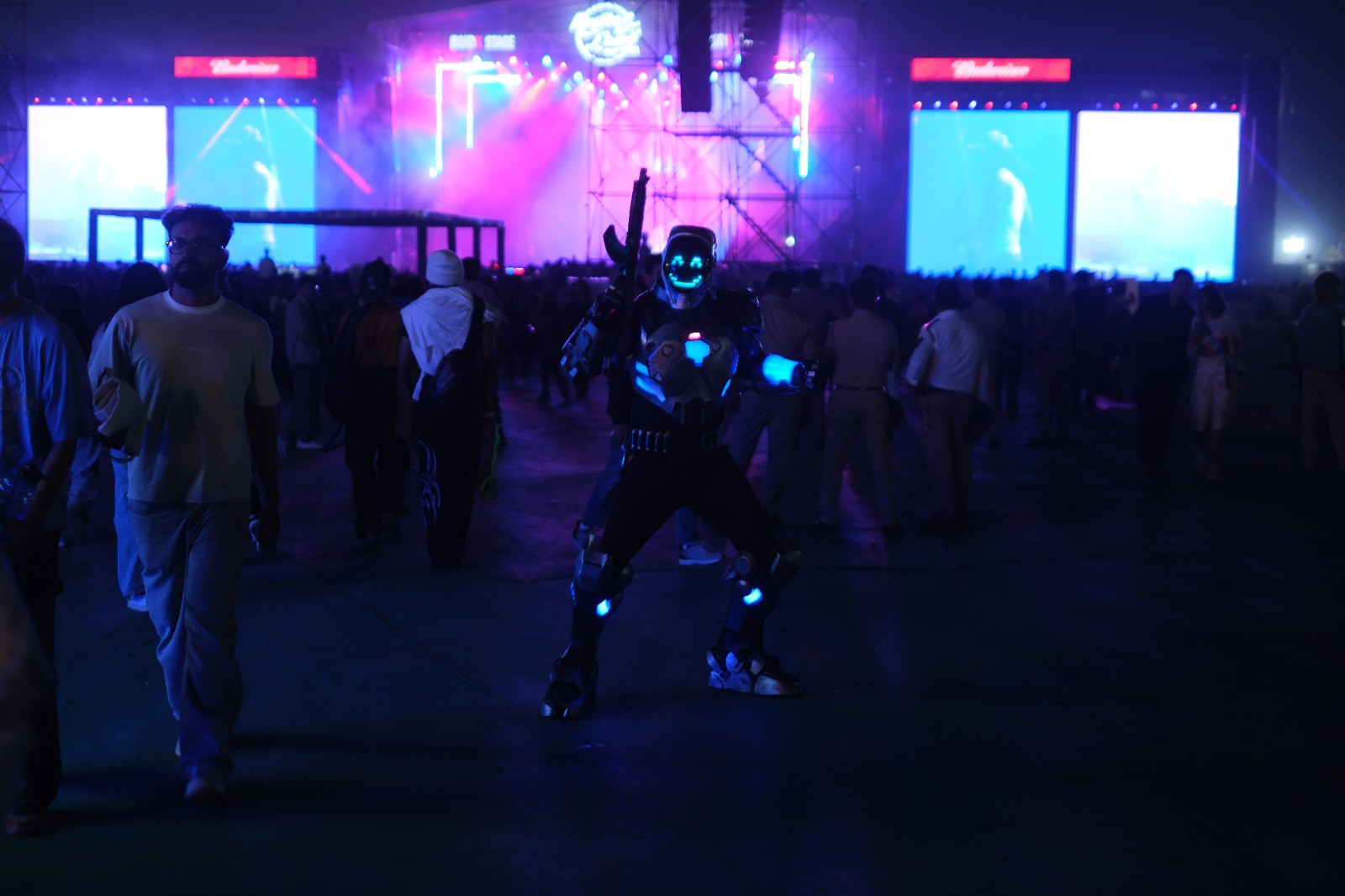
Grassroots efforts continued throughout the year, from mall watch parties to college tournaments welcoming first-time players. The blend of competition and accessibility culminated in November when VALORANT appeared at Rolling Loud India, integrating gameplay zones into a major music festival environment.
By year’s end, gaming in South Asia no longer felt like it was waiting for validation. The through line of 2025 was participation — a sense that the culture was being built collectively, through shared moments that made gaming feel firmly rooted in everyday life.