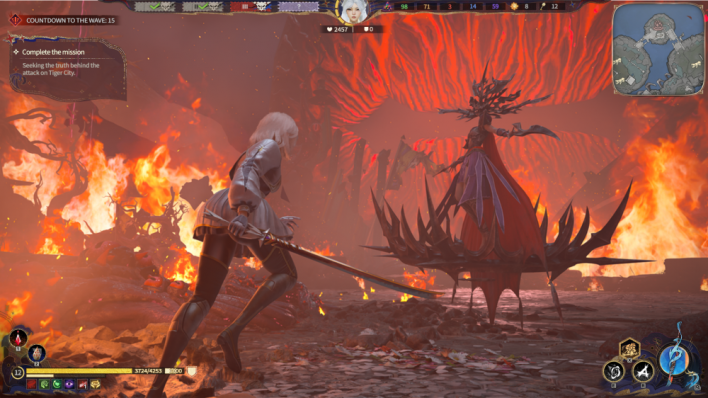
It combines roguelite buildup and defensive combat with 'absurd' weapons and a world that feels like a childhood daydream. Above Land: Rhapsody is a multiplayer cooperative action game where you can bash enemies with a basketball, roll dice to determine damage, or pull foes in with a yo-yo. While the developers describe themselves as "newcomers to this genre," they expressed confidence in the world-building and gameplay loop they have spent over two years refining.
Inven met with Above Land producer Ricky and the development team at the 'Bilibili First Look' event in Shanghai, China, to discuss the game's design intent, combat philosophy, and future service plans.
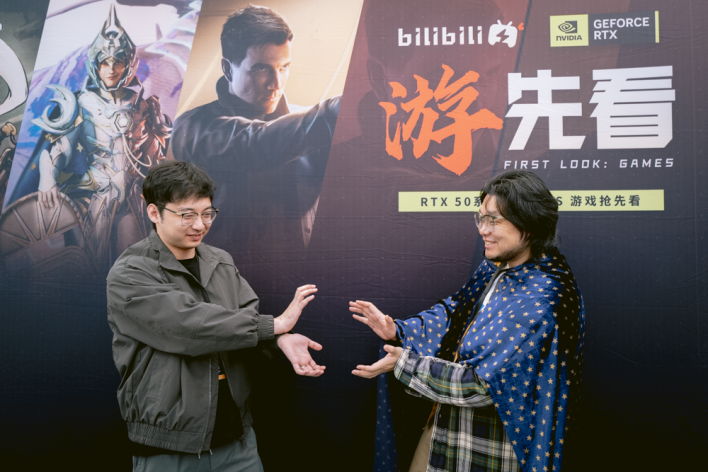
Could you start with a brief introduction of yourselves and the game.
Ricky = I’m producer Ricky. Above Land is our team’s first attempt at this genre. I think of it as a 'micro-innovation' game that combines the content I enjoyed during my youth with the fast-paced, roguelite buildup gameplay that modern users prefer.
Not much information about the game has been released yet. Could you tell us about the development background and the team.
Ricky = Since we haven't officially launched yet, you won't find much information online. We are preparing for a global simultaneous release, after which more details will be revealed.
Our team consists of members with backgrounds in animation and video production, as well as experience in action game development. We have been working on this project for nearly two and a half to three years.
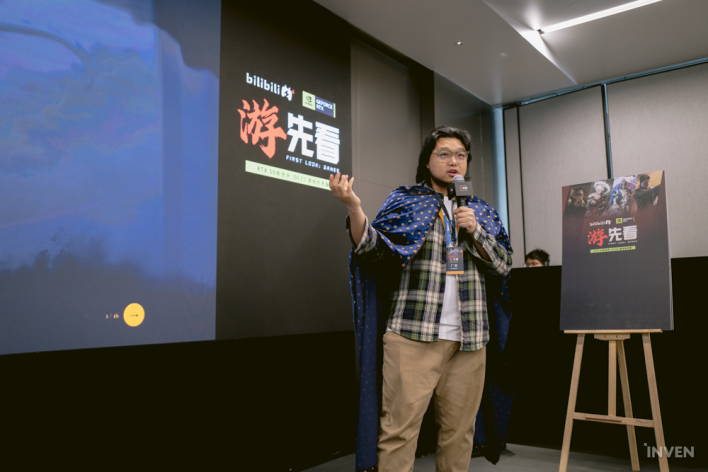
I’d like to hear about the game’s design intent. What kind of experience did you want to deliver.
Ricky = I felt that many multiplayer games on the market today are driven by 'competition' or 'winning.' We wanted to look at the opposite side. We wanted to create a game with a 'childlike spirit'—a game that provides an experience where players feel encouraged just by participating, regardless of whether they succeed or fail.
That’s why the world-building starts with the premise of 'a dream inside a comic book left by Mom.' The player is a child in a dream, embarking on a journey to find the clues left behind.
You’ve highlighted 'absurdity' as a key keyword for the game. Could you explain this direction.
Ricky = The term 'Li Pu' (离谱) literally means going beyond common sense or being in an absurd situation. We wanted players to experience going further and further down this path of absurdity. That’s why everything from the weapons to the enemies and pets follows this direction. We are currently surveying demo players to continuously verify whether this direction actually feels fun.
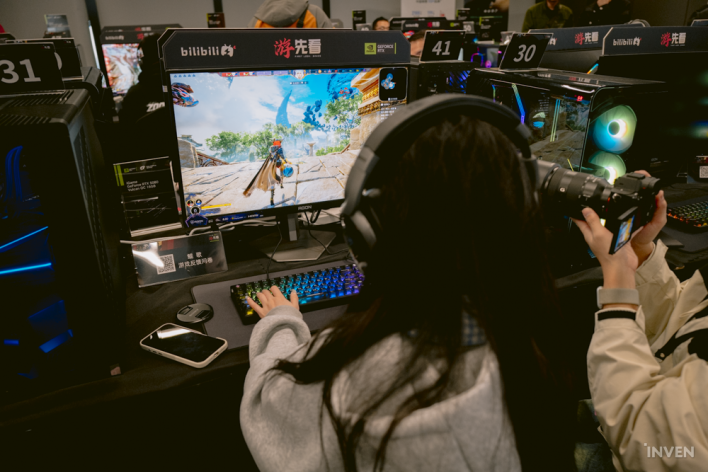
The 'unconventional' weapons like basketballs, dice, and yo-yos in the demo were impressive. What was the intention behind including them.
Ricky = It was a natural choice given that the protagonist is a 'child.' We thought about how a child would imagine everyday toys as weapons. We imagined a child inside a comic book transforming these toys into their own creative means of attack.
We also felt that there weren't many attempts at this in the action RPG genre. We decided that giving players a sense of freshness—that 'Oh, I didn't expect this!' feeling—could be our game's unique appeal.
It seems the combination of left-click and right-click varies for each weapon. Is this the structure for all weapons.
Ricky = The control scheme differs for each weapon. Some weapons build up a specific gauge or resource with a left-click and consume it for a powerful attack with a right-click, while others have combo attacks after specific motions. There are also weapons that require controls similar to 'parrying' to counter at the right time.
Taking the dice as an example, the left-click is the action of throwing the dice, and the right-click triggers an effect based on the number rolled. Depending on the number, it might cause an explosion or other effects. Our core principle is to design each weapon so that its appearance and controls are tightly linked.

Then, how do unique weapons like the basketball play specifically.
Ricky = With the basketball, you dribble with the left-click, and perform skills like shooting or passing with the right-click. For yo-yo weapons, you throw with the left-click and pull with the right-click, or if you hold the right-click while inputting a direction, the player can move in that direction.
Andy = Our motto for weapon design is 'easy to pick up, hard to master.' You should be able to have fun with just a few clicks when you first pick it up, but for skilled players, the accumulation of direction inputs, left-right combinations, and timing should lead to a completely different level of play.
Are there plans to add more weapons? I’m curious about what kind of weapons will be included.
Ricky = We plan to have over 40 types of weapons in the end. Aside from the 'absurd' direction, we will also include traditional action game weapons like greatswords and katanas. Conversely, we are also preparing more unique weapons like an 'umbrella.' We are designing each weapon to be its own combat style and 'school' of fighting.
In the demo, I experienced a structure where waves repeat every 8 minutes after 1-minute intervals. Compared to recent games that try to shorten session times, the 8-minute cycle felt a bit long. How did you plan the overall length of a session.
Ricky = I honestly acknowledge that feedback. The demo version didn't have the tutorial and guidance fully implemented, so it might have felt like the player was just 'waiting' at the shrine for those 8 minutes.

The original design intent is to use those 8 minutes not as 'waiting time,' but as 'time to explore and grow.' The cycle involves roaming the surrounding areas from the base to gather resources and hunt enemies to strengthen your buildup, then returning to defend when the 8 minutes are up. This loop repeats three times, followed by a final boss fight.

There was also a feature to blow a horn to start a wave. Can this be used to shorten the session time?
Ricky = That’s right. If a player decides, "I’m already strong enough," there is a way to summon powerful enemies early. The element described as the 'horn' in the demo serves that role. If you blow the horn, you can trigger the next wave immediately. Skilled players who have already built up their stats and are very strong from the start might want to push straight to the final challenge without intermediate exploration. We wanted to accommodate that kind of experience.
Andy = In multiplayer, you can divide the wave defense roles. For example, one person can guard the base while the others go out to distant areas to explore and grow, then swap roles in the next wave. The map is quite large—much larger than you’d think. The base feels like a tiny dot within it.
Ricky = Since the fun of solo play and multiplayer is different, I recommend trying it alone once and then playing with friends. It will be much more enjoyable if you play together after having experienced it once.
This demo was keyboard and mouse-based. What are your plans for controller support or a console version.
Ricky = Controller support is already in the plans and will be available soon. However, the current version isn't quite ready for a demo in terms of polish, so we didn't reveal it immediately. We plan to officially introduce it once we have a stable build.
Andy = We are also preparing a console version. It’s not yet confirmed if it will launch simultaneously with the PC version, but a console version will definitely be released.

Is there an opportunity for people to experience the current version externally.
Andy = We are considering offline demos at some point after the global release. It’s hard to give a definitive date, but we expect it to be a few months after the global launch. For online tests, we plan to conduct them later, once the build is stabilized.
What is your direction for the monetization model.
Andy = It’s not fully finalized, but we are currently prioritizing a package purchase model. We are considering providing small updates for free and selling large-scale updates like new maps or modes separately. However, all of this is subject to change based on future market conditions.
The demo only featured a female character. Is character customization possible.
Ricky = We plan to support characters of all genders, and a character creation system will be provided at the start of the game. We are aiming for a level of freedom comparable to character creation in other games, from faces to outfits and hairstyles. Outfits will be purchased using in-game currency.
Lastly, a word for Korean gamers, please.
Ricky = First, I’d like to thank the Korean media and gamers for their interest in our team through this interview. I hope our game can be an enjoyable proposition for Korean players as well. And even if it’s just while you’re playing, I hope everyone can keep a bit of childlike wonder in their hearts. That is the biggest message we want to convey through this game.

Sort by:
Comments :0