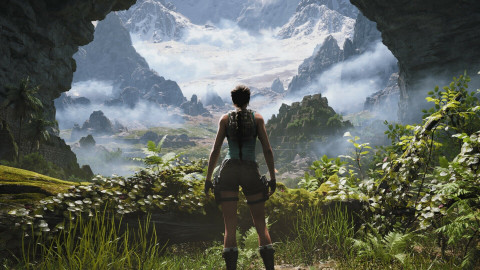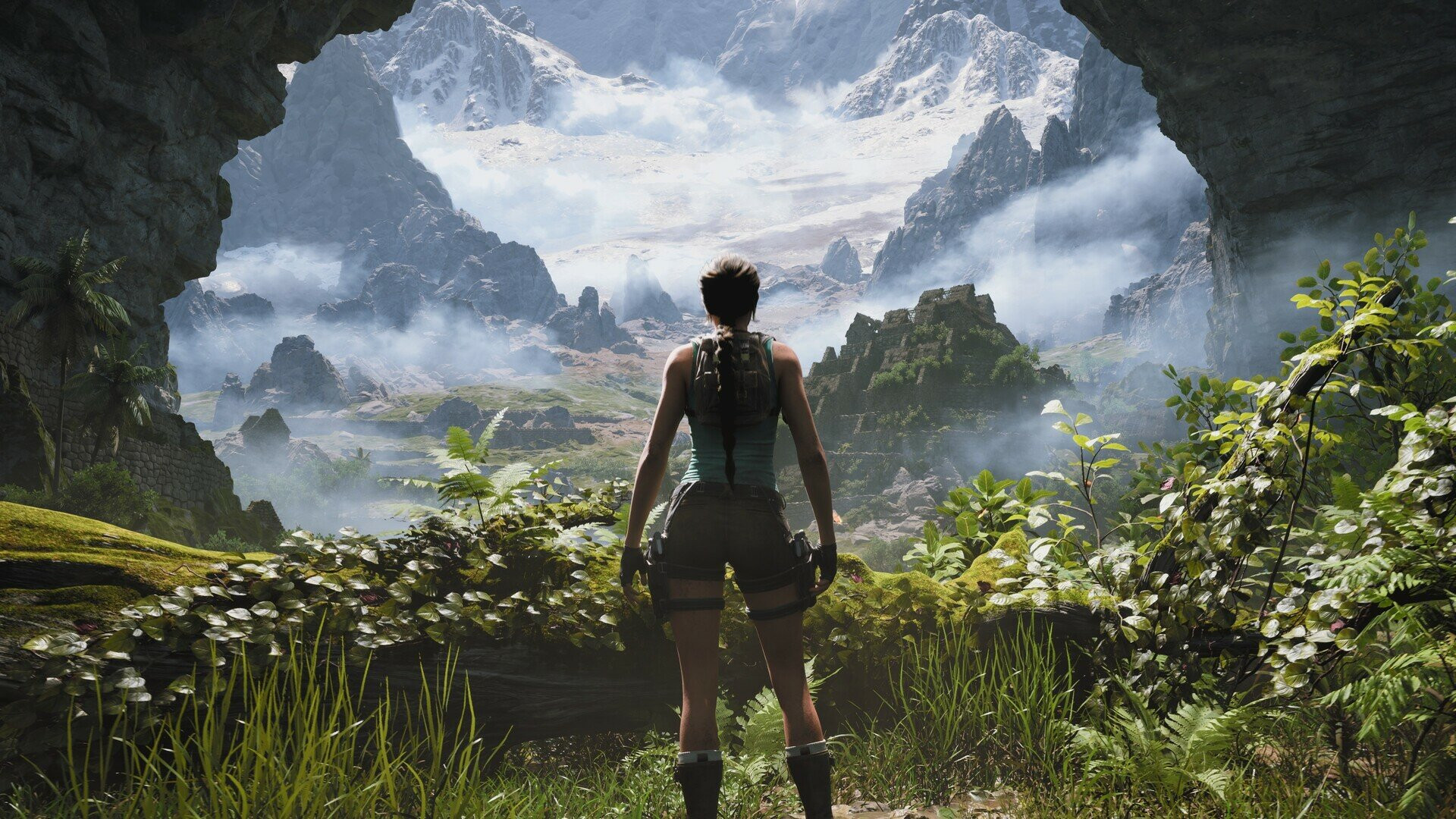
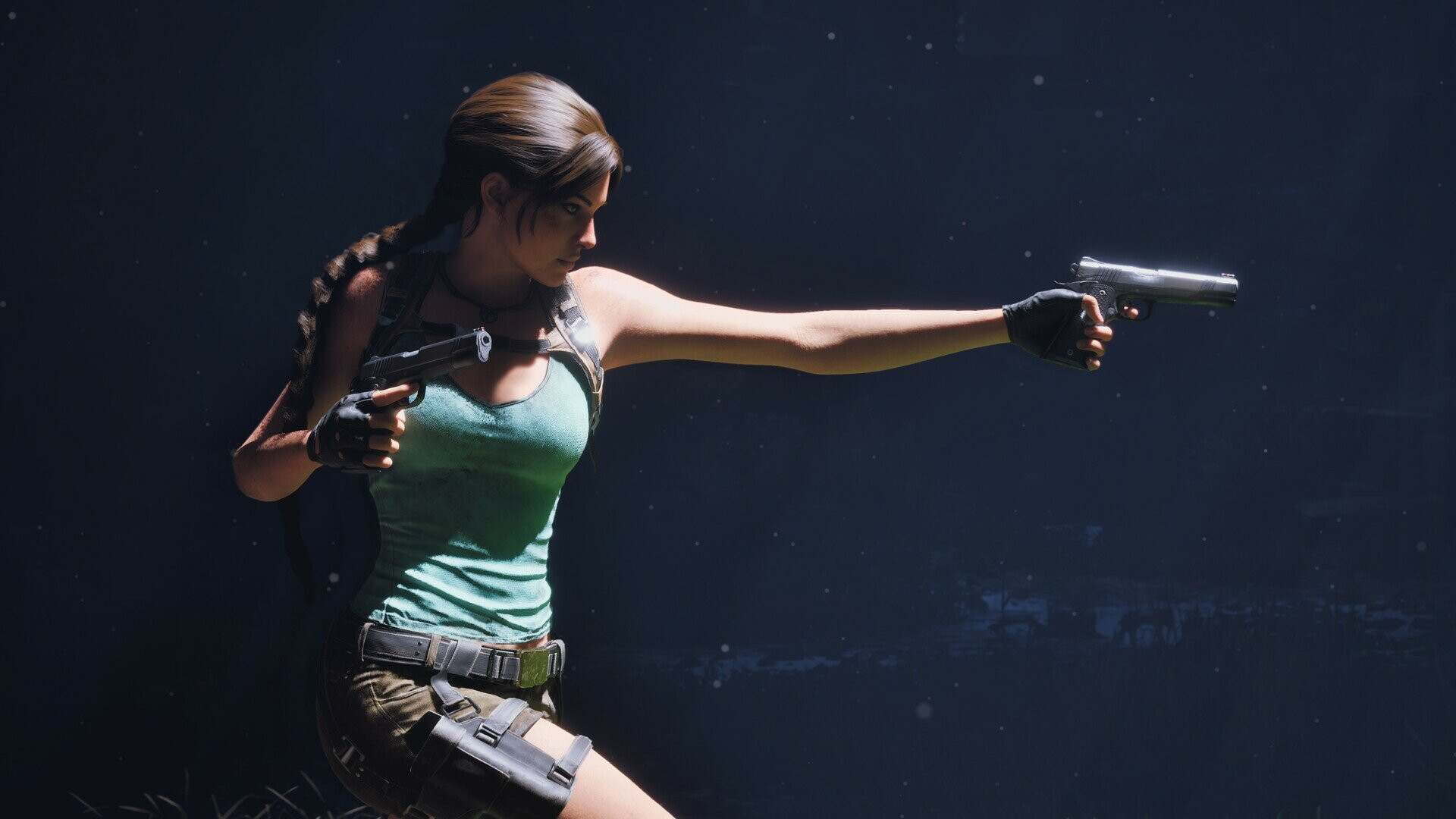
Two new Tomb Raider titles were unveiled at The Game Awards (TGA): Tomb Raider: Legacy of Atlantis and Tomb Raider: Catalyst.
With this being the first major reveal of new Tomb Raider entries in quite some time, anticipation among gamers has been high. We had the opportunity to hear more detailed explanations directly from Scott Amos, Head of Studio at Crystal Dynamics, and Will Kerslake, Game Director at Crystal Dynamics.
Please tell us more about Tomb Raider: Catalyst.
Scott Amos (Head of Studio, Crystal Dynamics)
Tomb Raider: Catalyst represents a completely new chapter in Lara Croft’s adventures. For longtime fans, it depicts Lara at the very peak of her career.
This game answers the question, “What comes next for Lara?” At the same time, we’ve lowered the barrier to entry for new players. It’s designed so you can start playing immediately without any prior knowledge. From beginning to end, it delivers a complete, self-contained adventure that allows players to fully understand the story and the character.
In other words, there’s “no homework required.” Catalyst is also the largest Tomb Raider we’ve ever made. The setting, as mentioned earlier, is northern India—a region rich in history and culture. It’s a location that longtime fans may recognize, and its vast, varied terrain naturally invites exploration.
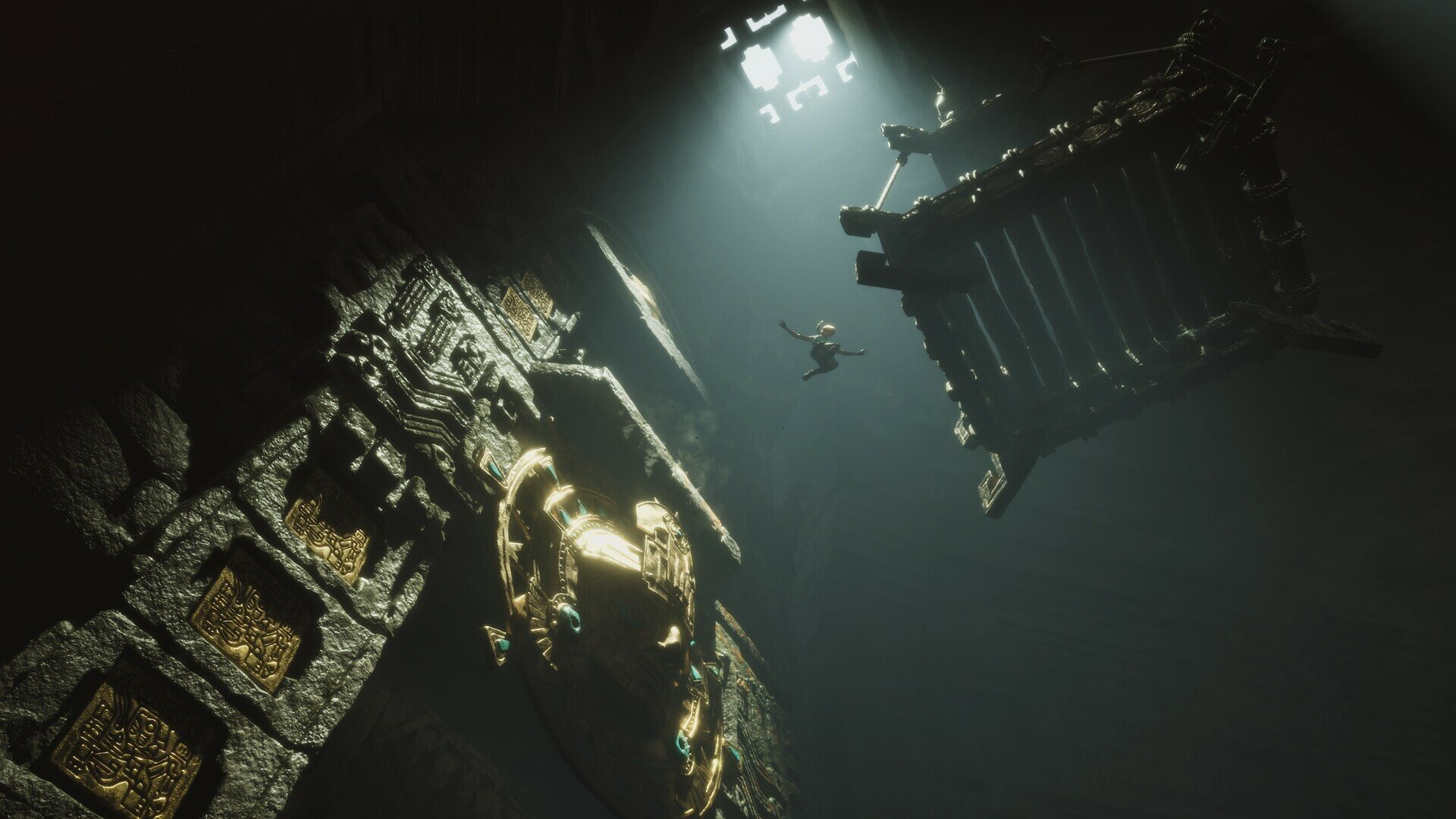
Most importantly, this is the first title our studio has developed using Unreal Engine 5. Thanks to this technology, we’ve been able to capture a sense of depth and scale that simply wasn’t possible before—from majestic high-altitude landscapes to deep, pitch-dark underground tombs.
We’re confident that players will feel both surprise and excitement as they experience this new chapter in Lara Croft’s story.
Many people were surprised to see two Tomb Raider games announced simultaneously at The Game Awards. Could you explain Tomb Raider: Legacy of Atlantis?
Scott Amos
Legacy of Atlantis is like a love letter from fans to fans. As we approach the franchise’s 30th anniversary, we wanted to both commemorate that milestone and honor the original form and spirit of Core Design, which gave birth to Tomb Raider three decades ago.
Because we rebuilt the game from the ground up in Unreal Engine 5, we refer to it not as a “remake,” but as a “reimagining.” While preserving the core elements of the original, we’ve reinterpreted them through the lens of modern gamers.
Spaces that once existed only as background images have been fully realized as three-dimensional environments, and the camera and control schemes have been modernized. For example, the iconic T-rex encounter that many players remember from the original has been reborn as a contemporary action-adventure set piece. For new players, it creates a brand-new memory; for longtime fans, it’s meant to feel like experiencing that moment for the very first time all over again. That sense of surprise and renewal runs throughout the entire game.
What kind of Lara Croft do we see in Catalyst? Is she the same character as in Legacy of Atlantis?
Will Kerslake (Game Director, Crystal Dynamics)
Both games tell the story of the same character—Lara Croft—but they focus on different points in her life. Legacy of Atlantis is a reinterpretation of the original game, while Catalyst is a completely new adventure starring a more experienced Lara at the height of her powers.
Why cast Alex Wilson-Ragan as Lara Croft in both titles?
Scott Amos
Alex made a strong impression on us from the very first meeting. She clearly cared deeply about the character and could naturally convey Lara’s wit, charm, and charisma. At the same time, she brought the emotional depth and confidence required for modern storytelling.
Being able to watch the announcement together at The Game Awards was a very special experience. We got to see fans’ reactions firsthand, and working with her has always been a pleasure.
Will Kerslake
Alex fully understood the direction we were aiming for and brought both strength and emotional nuance to the character. Her passion throughout the entire process was truly impressive.
Why describe Legacy of Atlantis as a “reimagining”? How does it differ from a remake?
Will Kerslake
We wanted to respect the legacy of the original while modernizing the gameplay experience to match what Unreal Engine 5 makes possible today. With 30 years of technological progress since 1996, this is no easy task.
Our ultimate goal is clear: preserve the original “feel” while making the gameplay function like a modern game. Certain core elements are non-negotiable—Lara Croft as a confident, capable adventurer; a globe-spanning journey; and strategic puzzle-solving within those environments.
That said, systems like combat and traversal—anything directly controlled by the player—must be completely re-tuned to meet modern standards.
The stunning visuals shown in the trailer demonstrate how modern technology can elevate the experience of these iconic locations. We want players to see memorable moments they remember—bridge sequences, the fall into the Wolf Pit, or the T-rex—and think, “Yes, this is exactly what I remember!”
But how do you create that emotional impact for new players? Realistically, the gaming landscapes of 1996 and 2026 are entirely different. To deliver the same narrative punch, those moments must be rebuilt within a modern gameplay context. That’s what we mean by “reimagining”—reconstructing the original’s feel and emotion in a form that works for today’s players.
** Legacy of Atlantis is scheduled for 2026, with Catalyst following the year after. Is Catalyst taking longer because of the focus on Legacy?**
Scott Amos
Not at all—though I understand why it might seem that way. We knew from the start that 2026 would mark the franchise’s 30th anniversary, and we planned specifically to honor that milestone.
We actually have two separate development teams working in parallel. While they collaborate closely, Legacy of Atlantis is being developed by Flying Wild Hog, and Catalyst by the Crystal Dynamics team.
We share technology, resources, and assets, but above all, a single leadership team oversees everything—making sure schedules are on track, the universe remains consistent, and the two games and their storytelling align logically.
Bringing Flying Wild Hog on as a co-development partner was a dream come true. When we first met them, they felt like a natural extension of Crystal Dynamics. Before we all came together under Fellowship Entertainment, we had no prior connection, but we immediately started asking, “What would it look like to build Tomb Raider together? How do we feel like one team with one dream, even across countries?”
Their studio culture aligned remarkably well with ours, and their experience making excellent action games was impressive. We couldn’t be happier.
At The Game Awards, we were also joined by Flying Wild Hog’s director, Michał Szustak, and seeing him visibly realize the magnitude of the moment—saying things like, “Wow… this is really happening”—was unforgettable. Developing two titles in parallel to celebrate the 30th anniversary, then continuing with Catalyst as Lara’s next chapter, means a great deal to us.
Will the two games connect to Amazon’s Tomb Raider TV series?
Scott Amos
We’re here to talk about the two games announced last night. That said, I can say our partners at Amazon have been fantastic. From the beginning, they understood and supported our vision of a cross-media franchise—including a live-action TV series and the two games currently in development. We’ll share more details at a later time.
What’s clear is that having multiple Tomb Raider projects in development simultaneously is a tremendous opportunity—and one that ultimately benefits the fans.
Why choose Unreal Engine 5 for both Catalyst and Legacy of Atlantis?
Scott Amos
We used our own proprietary engine for many years, but we took a step back and asked ourselves what we truly want to focus on in the future. We want to be a studio defined by storytelling, not by technology for its own sake.
Storytelling should be possible on any technological foundation. Unreal Engine 5 is constantly updated and supported by a massive global talent pool. Rather than spending time teaching developers our proprietary tools, we can collaborate with talent from around the world more easily.
Of course, we don’t use it out of the box—we customize it extensively to make it our own and ensure the unmistakable Tomb Raider feel remains intact. But as a widely used tool, it gives us far greater opportunities to create dynamic visuals and breathtaking environments.
Will Kerslake
Unreal Engine 5 offers cutting-edge rendering and lighting technologies. It allows us to create incredibly detailed, believable spaces—from beautiful ancient ruins like those seen in the trailer to tombs filled with astonishing levels of detail.
The engine gives us a wide range of tools to experiment with, and we’re excited to dive even deeper into it alongside our friends at Flying Wild Hog. Having more developers working together enables us to push the next generation of Tomb Raider visuals even further.
Was there any other reason for choosing northern India as the setting for Catalyst?
Will Kerslake
As Scott mentioned earlier, northern India is incredibly rich in ancient history and mythology, making it a perfect setting for exploration. It’s also a location with historical ties to Tomb Raider. In the original game’s intro, Lara is seen sitting in a hotel in Kolkata when Larson appears—so it’s a place the series has brushed past before.
It’s a setting we’ve long been interested in, and its vast, diverse landscapes practically beg to be explored. We’ll talk more about how it ties into the narrative later, but for us, it’s a fascinating stage.
In the trailer, Lara uses a grappling hook. Are there other tools or equipment? The teaser seems full of hints.
Will Kerslake
We’ll talk more about specific gameplay details later, but if you watch the trailer closely, you’ll notice quite a few “cool elements” already embedded within it.
Lara says something like “This is only the beginning” in the trailer. Is Catalyst the start of another trilogy or long-running series?
Scott Amos
What we can say for now is that Catalyst represents the next chapter in Lara Croft’s journey. She’ll embark on an entirely new adventure—but that’s all we can share at this point.
Will all locations from the original game return in Legacy of Atlantis?
Will Kerslake
We’re reimagining the entirety of the original Tomb Raider, and the team is also adding some new surprises that we’ll reveal later. Fundamentally, though, this is about rebuilding the original experience itself.
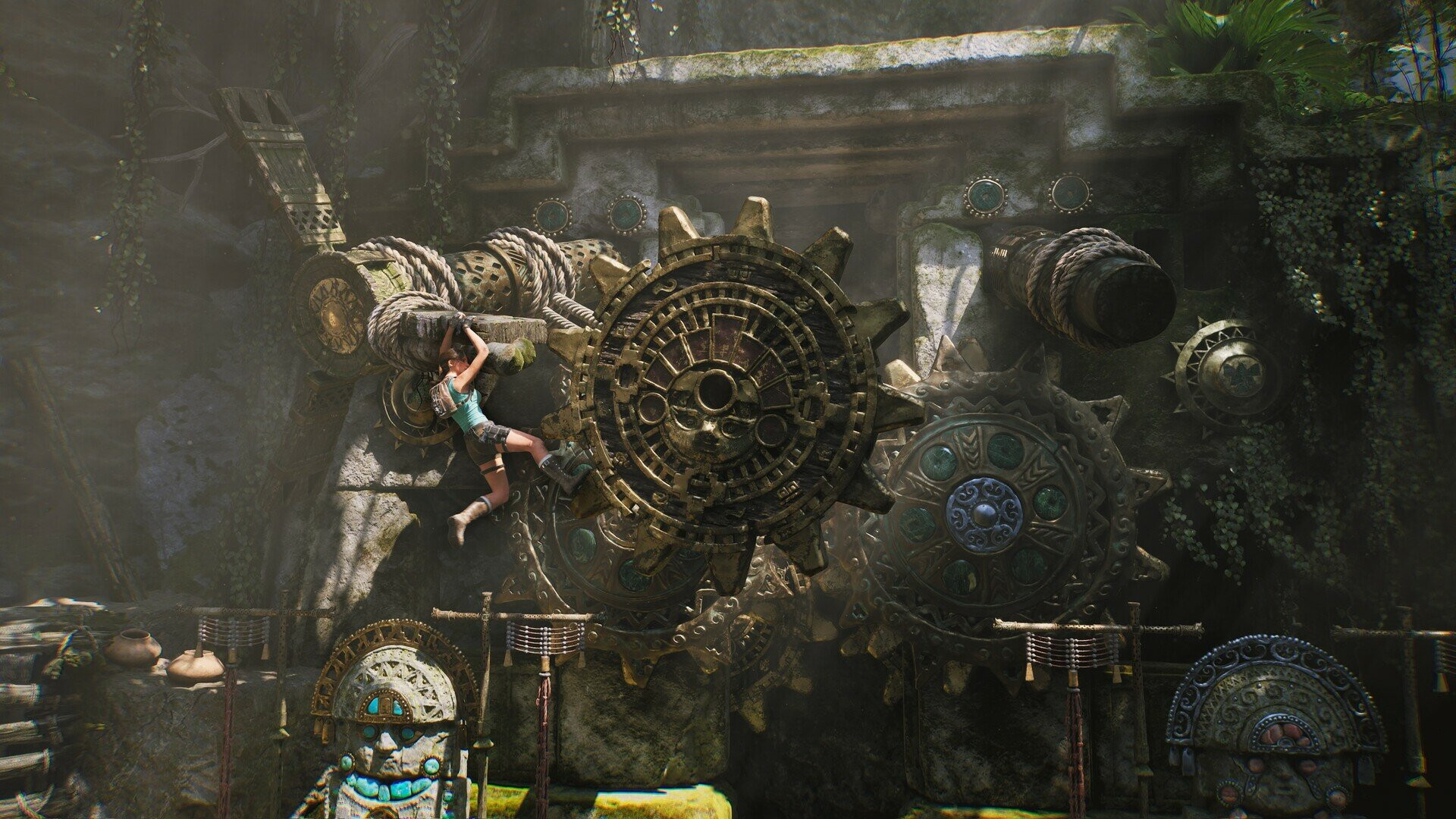
The 1996 original featured many instant-death traps and a trial-and-error design philosophy. Modern games often avoid such punitive design. Will Legacy preserve the original difficulty, or move toward a more forgiving approach like the 2007 remake with QTEs?
Will Kerslake
Properly reimagining a game also means adjusting to changes in modern player preferences. That said, the core Tomb Raider experience must still include puzzles, combat, agile traversal, and life-or-death action.
If you watch the Legacy of Atlantis trailer, you’ll see elements like massive rolling boulders. Everything players expect from a Tomb Raider game is absolutely still there.
What was the process like for redesigning Lara Croft’s appearance? She’s an iconic character—often cited as one of the most frequently featured game characters on magazine covers—and a symbol proving that women can be outstanding game protagonists.
Scott Amos
From a studio perspective, Crystal Dynamics has spent decades with Tomb Raider. Being able to ask, “How do we reimagine Lara, and how does she grow over time?” has been both an honor and a privilege.
We have to consider who Tomb Raider was, who it will become, how players’ perceptions of an “appropriate character” evolve, and how people experience games today. Ultimately, the key is to present a Lara that fits the next generation while always preserving the core DNA that made her an icon in the first place.
Will Kerslake
From a development standpoint, we’re working with the same art director and lead character artists who’ve handled Lara for many years. They ensure the essential DNA elements are preserved while updating her within the limits of modern engines and standards. It’s also crucial to balance the character appropriately depending on which era of Lara the story focuses on.
Is there pressure in remaking such a legendary game?
Scott Amos
Absolutely. We’ve felt similar pressure before, and this process has also been an opportunity for Crystal Dynamics to reflect on what we’ve done with Tomb Raider over the years.
That said, the greatest pressure ultimately comes from ourselves. As fans, we know exactly what we want, and everything we do is for the fans. We listen closely to their voices—what we’ve learned, what we’re doing now, and how we move forward next—all while preserving the respect, symbolism, and core identity that have made this character beloved for so long.
Are any members of the original development team involved in Legacy?
Scott Amos
Crystal Dynamics includes many people who’ve been with the franchise for a very long time—some for nearly 30 years. We’re working with developers who bring experience from across many Tomb Raider titles.
What’s interesting is the blend of veterans and fresh blood. Flying Wild Hog has never worked on Tomb Raider before, so they bring entirely new perspectives and energy. At the same time, some former Crystal Dynamics developers have returned. Together, this mix of history and new ideas is driving us toward the next generation of Tomb Raider.
What role did Amazon Games play in shaping these titles?
Scott Amos
Amazon has been a fantastic partner from day one. They laid out a big-picture vision early on—live-action content, games, and a long-term cross-media franchise including merchandise—and aligned with us immediately.
We collaborate daily and weekly with their teams, sometimes gathering onsite at Crystal Dynamics to review milestones, play builds together, and exchange feedback. Amazon has directors, creative leads, narrative teams, and executive producers all reviewing our work alongside us.
It’s both a mirroring process and a true partnership, all aimed at a single goal: creating the best Tomb Raider game possible.
Will Kerslake
From a development standpoint, having trusted partners who work alongside us, help solve problems, and focus on quality together is incredibly empowering.
Will Legacy of Atlantis include online or multiplayer elements?
Will Kerslake
This project is a reimagining of the original, which was a great single-player action-adventure. Legacy of Atlantis is also a single-player action-adventure.
The original game featured many animal and cryptid enemies. Will that continue? What about combat?
Will Kerslake
It’s still too early to go into detailed specifics about the combat system. What we can say is that we’re modernizing combat with controller-based gameplay in mind.
However, if you look at the trailer, you’ll see Velociraptors, wolves, and the T-rex. In other words, all the creatures players expect are returning.
Any final words?
Will Kerslake
We’re truly thrilled to finally be able to talk about these two projects. Some of us have carried these ideas in our heads for a long time, and it’s exciting to finally share with the world that there isn’t just one game—there are two.
Scott Amos
To all the fans who’ve been with us for years, and those joining us for the first time—thank you. We make games for you. We listen carefully to everything you say and want to reflect those voices in our work. Thank you for joining us on this journey.
This article was translated from the original that appeared on INVEN.

Sort by:
Comments :0