Side-scrolling action, where movement is restricted to forward, backward, up, and down, is a genre that predates the dominance of 3D gaming. It has a rich history and a dedicated fanbase, but that also means it is a difficult genre to approach without a clear vision. It comes with a long-established framework, a history of evolution, and vivid memories of the masterpieces that defined it. Furthermore, the genre itself imposes significant constraints, such as the absence of a Z-axis.
Nevertheless, one game has insisted on bringing side-scrolling action into the 3D era—and as a collectible RPG, no less. That game is 'Echoes of the Void' (working title: Nongmeng) by Nongmeng Studio, showcased at this year's Bilibili World. While its post-apocalyptic setting follows the familiar formula of Chinese-developed subculture collectible RPGs, it seeks to differentiate itself through its side-scrolling action mechanics.
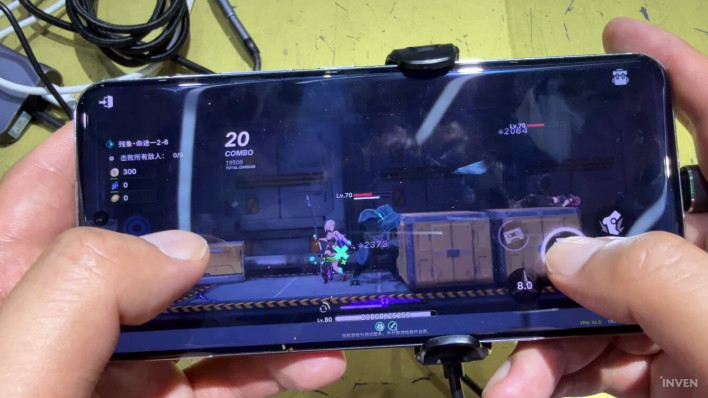
The demo featured three types of content: Roguelike, Boss battles, and Stage challenges. For any veteran of subculture games, the structure of these modes will be immediately recognizable. And since it is a collectible RPG, the gameplay loop is also fairly self-evident.
The formula—a four-person party and action based on 'just-dodging'—remains the same in 'Echoes of the Void.' The question was how well it could deliver its own unique fun within that familiar structure. 'Echoes of the Void' addresses this by emphasizing the hardcore sensibilities of side-scrolling action.
In other genres, you can dodge to the side if things get dicey, but in a side-scroller, you must jump or dash. With fewer ways to respond to attack patterns, you need to be more attentive and move with greater caution. Furthermore, overcoming terrain is almost entirely limited to jumping and dashing, with only rare exceptions like a grappling hook.
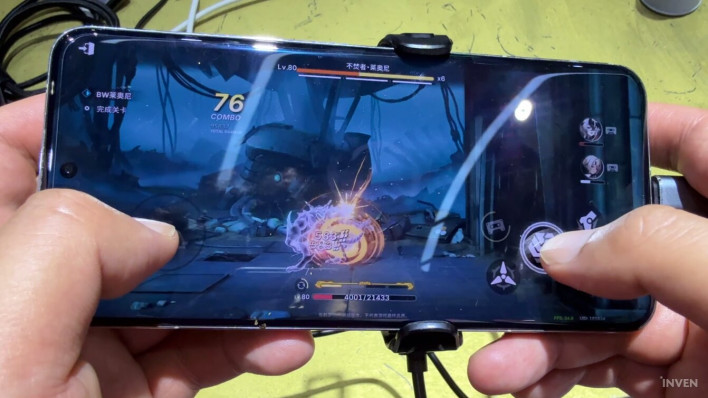
The Roguelike stage, designed around this classic configuration, was quite short but kept the tension high. Because the length of these Roguelike platforms—where you deploy allies in a 'striker' style rather than tagging—is generally short, a single mistake could easily lead to enemies reacting first and camping in front of you. You had to push forward without hesitation to claim your ground, then execute a 'just-dodge' to trigger slow-motion and unleash a flurry of attacks on the vulnerable enemy. It was crucial to maintain momentum by using the funds earned from defeated enemies to recruit new allies or acquire set effects at rest stops, ensuring the pace never dropped.

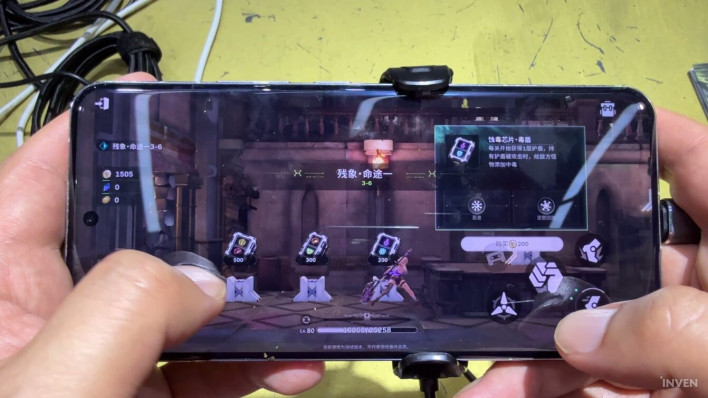
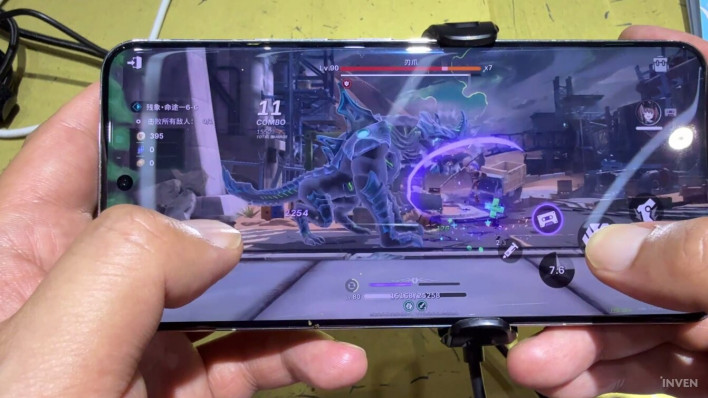
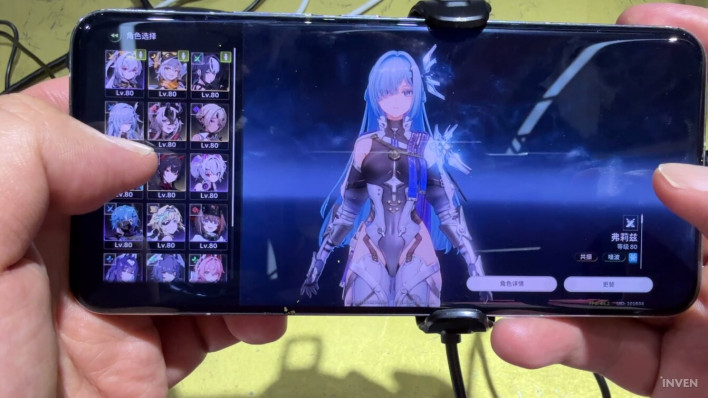
Maintaining this tempo also required understanding each character's mechanics. While the basic framework of normal attacks, special skills, just-dodges, jump attacks, aerial strikes, and tag skills is consistent, the conditions for triggering enhanced attacks after filling the special gauge above the health bar varied. Even within the default party, there were different types: some characters automatically changed their attack style when the gauge was full, while others required charging a special skill or triggered it instantly upon activation. The added variable of having to jump over obstacles like a platformer added a layer of depth to the controls. However, it was a bit disappointing to move on to the boss immediately after getting a brief feel for it.
The Stage Challenge mode was designed to address this, tasking players with forming two parties to clear waves of enemies within a time limit in different stages. Reminiscent of the periodically refreshing towers or dungeons in other games, the key here was how to navigate the terrain while cycling through high-damage combos.
The first stage required players to navigate between platforms using grappling hook points, jumping and swinging to quickly eliminate enemies. Moving too hastily was a mistake, as hitting a spike trap resulted in significant damage. Conversely, it was also possible to use these traps to your advantage by knocking enemies into them for an easy kill.
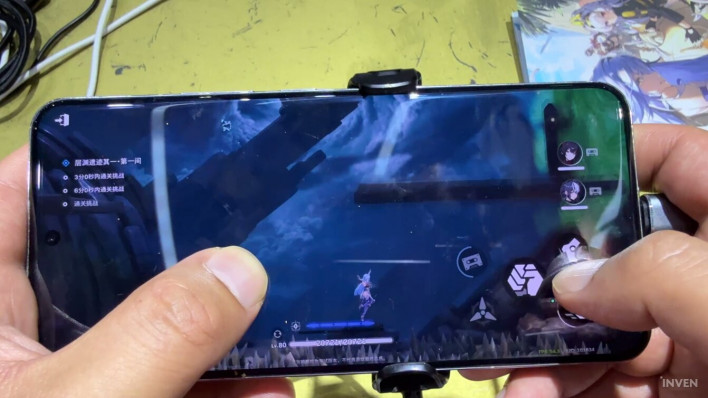

The second stage featured platforms with high elevation differences, spawning a large number of enemies that couldn't move vertically. While they couldn't move up or down, they were persistent in their pursuit, making it easy to get pinned down by enemies camping in areas you needed to cross. You had to think carefully about how to use just-dodges to deal with their attacks and clear them out quickly. The final Boss challenge was exactly what it sounds like: choosing one of the bosses from 'Echoes of the Void' to take on. While the boss' patterns weren't overly complex, each hit was devastating, making it essential to minimize mistakes and execute a clean clear.
With such an emphasis on caution and hardcore mechanics, one might be reminded of the heavy, deliberate feel of a Soulslike. However, 'Echoes of the Void' definitely takes the brakes off when it comes to delivering punchy action. When you go on the offensive, enemies are briefly stunned, giving your character time to land a guaranteed combo, and the addition of flashy effects makes the combat feel incredibly satisfying. Although I couldn't hear the audio due to the demo environment, the scene where a character wielding a flaming greatsword enters a berserk state with an ultimate skill, turning the entire screen into a sea of fire, was impactful enough on its own. The enemies were left helpless, taking the full brunt of the attack as if caught in a combo from a 2D fighting game. The fact that this is implemented directly means the tactile satisfaction is inevitable.

While 'Echoes of the Void' shows great promise, there were some points of concern. As a collectible RPG, I worry about the potential for high fatigue if this hardcore, high-intensity combat is emphasized consistently. Of course, the demo build was designed to provide an immediate impact, so it might differ in the final version, but this is an unavoidable challenge for any live-service game.
It was also a bit disappointing that the smartphone became quite hot after a long session, leading to frame drops that occasionally prevented me from moving as intended. While the hardcore design—which makes it difficult to even reach a platform without precise movement—would have been challenging regardless, I couldn't help but feel that at least some of the hits I took could have been avoided.
I had just started to get the hang of it by sticking with a character that suited my playstyle, but unfortunately, my demo time ran out. The staff were kind enough to let me play a bit longer, even as a lone Korean among Chinese attendees, right when events were in full swing at the nearby Genshin Impact and Honor of Kings booths. Still, I am left with a lingering sense of regret that I couldn't finish it. With the final CBT taking place in China after Bilibili World, I hope they polish it well so that one day we can enjoy it comfortably in Korea as well.

Sort by:
Comments :0