President Lee Jae-myung nominated Kang Yu-jung, senior presidential spokesperson, as candidate for Minister of Culture, Sports and Tourism (MCST) on November 23. Candidate Kang repeatedly served as the primary sponsor for game-related bills in the 22nd National Assembly and co-chaired the Democratic Party of Korea's Special Committee on Gaming. A politician who once raised game policy agendas in the legislature has now stepped into a position to directly execute them.
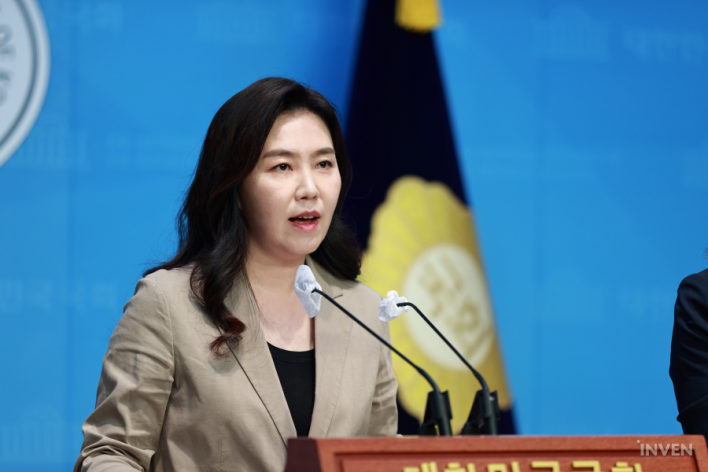
The presidential office of Cheong Wa Dae cited her combination of field experience and state affairs experience as the reason for her nomination. Describing Kang, the office introduced her as "an expert who built nearly 20 years of experience in the cultural field and gained state administration experience as a member of the National Assembly's Culture, Sports and Tourism Committee and as senior presidential spokesperson." Cheong Wa Dae explained that she is the right person to solidify the roots of basic arts, improve public tangible satisfaction across all MCST operations, and build a cultural powerhouse leading the world with K-culture.
Kang entered the 22nd National Assembly as a proportional representative after working as a culture and arts critic and university professor. Her legislative work was centered on the Culture, Sports and Tourism Committee, which has jurisdiction over game legislation. She resigned from her parliamentary seat upon being appointed presidential spokesperson in June 2025 and currently serves as senior presidential spokesperson.
The very first bill she introduced in the National Assembly was a gaming bill. On May 30, 2024, when the 22nd National Assembly opened, her very first sponsored bill was an amendment to the Game Industry Promotion Act recommending the use of the "Esports Standard Contract." The bill targeted the issue that while standard contracts were already established, they were rarely used due to a lack of legal binding force. According to a 2021 MCST survey, only 42.6% of respondents used standard contracts, while 18.5% relied solely on verbal agreements. The amendment does not mandate contract usage; instead, it establishes a legal basis for providing financial support to entities that adopt standard contracts.
A prominent example of her legislative achievements is the "domestic agent designation system for foreign game companies." On June 3, 2024, Kang sponsored an amendment to the Game Industry Promotion Act containing this system. She revived the legislation originally introduced in the 21st National Assembly by former Rep. Lee Sang-heon, which had lapsed due to the expiration of the legislative term. The bill aimed to protect users from "hit-and-run" practices and lax operations by certain foreign game companies, as well as to resolve reverse discrimination experienced by domestic game companies under the loot box probability disclosure system. Merged into a committee alternative alongside other bills with similar intents, it passed the plenary session in September 2024 and went into effect on October 23, 2025. On October 1, a follow-up amendment expanding the duties of domestic agents and reinforcing enforcement mechanisms also passed the National Assembly.
On the issue of the gaming disorder disease code, she consistently pointed out gaps in the government's response. During a Culture, Sports and Tourism Committee briefing on July 8, 2024, Kang noted that the MCST had submitted an opinion to the World Health Organization (WHO) Collaborating Centre for the Family of International Classifications (WHO-FIC) only once, and zero times following the inauguration of the Yoon Suk-yeol administration. On July 15 of the same month, she sponsored a "Partial Amendment to the Statistics Act." The bill aimed to reduce the binding authority of the Statistics Act, which mandated strict adherence to international standard classifications, while making it mandatory to consult stakeholders and experts. At the time, Kang stated, "If gaming disorder is introduced as a disease code, the domestic gaming industry—which accounts for 67.8% of total content exports—is projected to shrink by approximately 8.8 trillion won within two years."
In February 2025, she challenged the stance of Statistics Korea. When Statistics Korea argued at a public-private consultative meeting hosted by the Office for Government Policy Coordination that the gaming disorder code must be listed as-is based on a WHO licensing agreement, Kang countered that the contract had no legal force under domestic law. She also pointed out that bringing up new conditions late in a matter discussed for years compromised procedural legitimacy.
She continued her legislative efforts for user protection. On November 14, 2024, she sponsored an amendment introducing litigation exemptions so that users harmed by misrepresented loot box information could seek remedy through lawsuits, while clarifying the scope for calculating damage amounts. She also pursued an amendment to the Telecommunications Business Act requiring app stores to publish rankings based on active user counts over the past week alongside sales and download rankings. The intent was to give high-quality games with lower monetization pressure greater exposure. For these initiatives, she earned the nickname "God Yu-jung" among gamers.
Within her party, she led game policy discussions. On February 19, 2025, the Democratic Party of Korea established a Special Committee on Gaming to promote the game industry and advance esports, appointing Kang and former professional gamer Hwang Hee-doo, a board member of the Roh Moo-hyun Foundation, as co-chairs. In May of that year, the special committee presented policy proposals, drafting the blueprint for gaming pledges in the presidential election. These included proposals to defer the adoption of the disease code while conducting medium-to-long-term research, and to restructure game governance currently split between the Korea Creative Content Agency (KOCCA) and the Game Rating and Administration Committee (GRAC).
If appointed as minister, Kang will handle issues she previously raised in the National Assembly and her party—such as responding to the disease code, regulatory fairness for foreign game companies, and improving conditions for esports workers—armed with executive policy authority. Before that, she must undergo a National Assembly confirmation hearing.