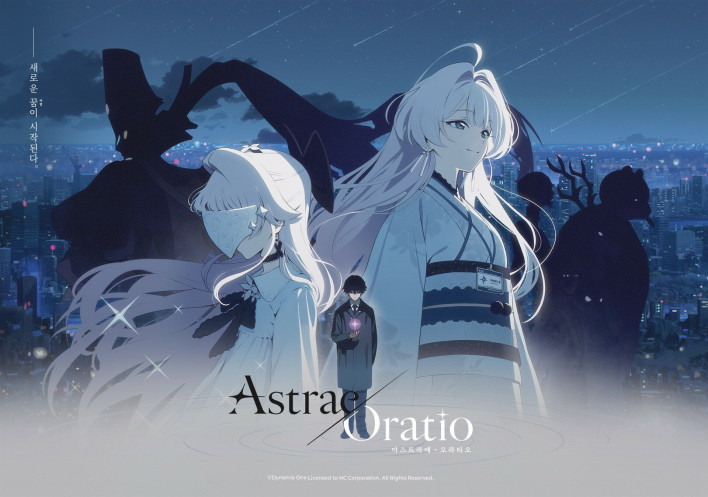
'Astrae Oratio,' developed by Dynamis One and published by NC, held its global closed beta test (CBT) from October 2 to October 6. Set in a fictional 1989 Tokyo and built around 'Shin-denki'—a modern urban fantasy genre popular from the late 1990s through the early 2000s—Asuora drew significant attention across local communities when first revealed. Amid a mix of anticipation and concern, Asuora followed its September TGS demo with the CBT, showcasing a unique world and story centered on magic and public administration, distinct characters, and gameplay blending turn-based mechanics with real-time elements, recording high player retention.
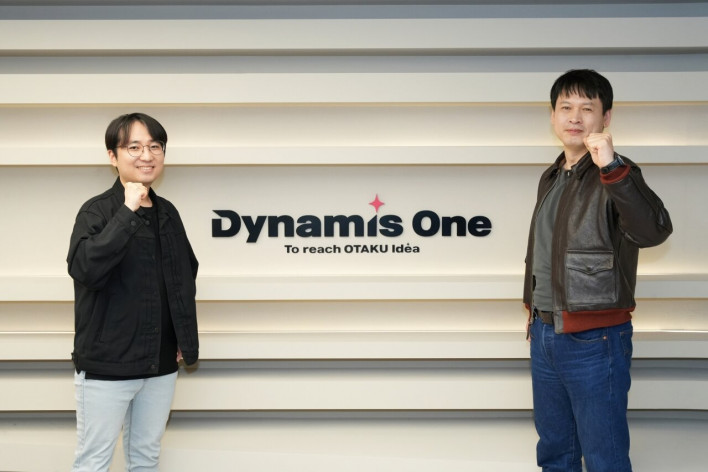
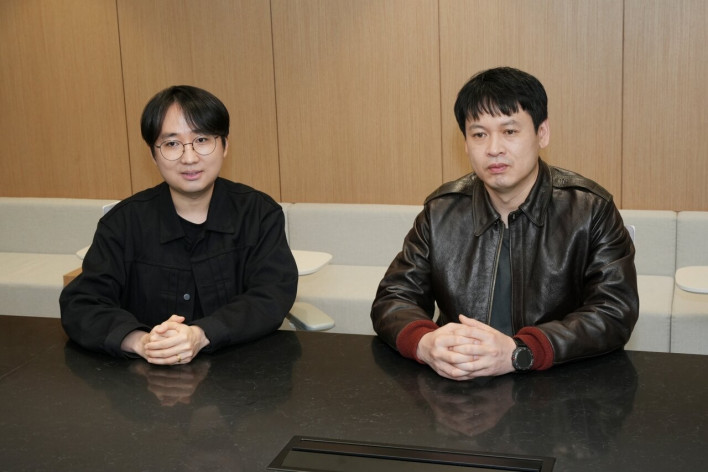
Riding this momentum, Asuora is stepping up as the main sponsor of AGF 2026 to connect more closely with Korean gamers. Game Director Lim Jong-gyu and Art Director Kim In of Dynamis One sat down with local media to answer questions about how they are preparing for the official launch following the CBT.
Global CBT appeals to fan passion across borders; build to be refined using feedback ahead of official launch
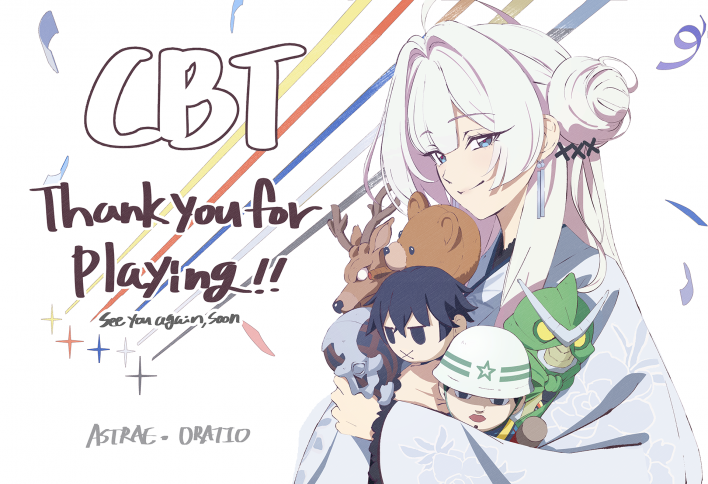
How do you feel after concluding the first global CBT? What was the most common feedback, were there any unexpected reactions, and were there noticeable regional differences?
Game Director Lim Jong-gyu = The first global CBT was a valuable opportunity to see how the fun we prepared was delivered to players. We sincerely thank everyone who played the test and sent us detailed feedback.
We were greatly encouraged by the positive reactions to the story and art, and we received diverse feedback regarding both the enjoyment and areas needing improvement in the combat system. Based on this, we plan to refine the game to present a higher level of polish.
While there were subtle differences in regional feedback, players across all regions shared a similar enjoyment of the charm we wanted to convey. I felt that when it comes to what people love, there are no borders. Truly, "otaku are We Are the World."
The hybrid system combining turn-based and real-time combat was striking. What made you blend the two instead of picking one? What are the advantages of this system, and what is your ultimate vision for combat?
Game Director Lim Jong-gyu = We wanted to capture both the hands-on feel of directly controlling characters and the strategic fun of anticipating your next move. Combining the thrill of fighting games—reading your opponent's movement, finding openings, and stringing together combos—with turn-based resource management was the starting point for Asuora's combat.
The bridge connecting these elements is AP (Action Points). Players must decide whether to invest AP into an aggressive push or save it to react to enemy attacks, requiring both split-second execution and long-term planning.
Ultimately, we aim for combat where each character's fighting identity shines through, empowering players to create and capitalize on opportunities through their own tactical decisions and execution.
Based on CBT feedback, what areas are you determined to fix before official launch? Conversely, what unique feature of Asuora will you preserve regardless of feedback?
Game Director Lim Jong-gyu = Many players pointed out elements that interrupted the flow and tempo of combat. The development team agreed that this was a critical area for improvement, and we are polishing the combat to make it much smoother by launch.
I don't believe there is any feature we must preserve unconditionally regardless of feedback. However, the strategic fun felt through manual control and active decision-making remains a core pillar for Asuora. While we will provide the convenience of auto-battle, we want to maintain the advantages of manual play so that players can achieve better results through situational choices.
There was combat balance feedback regarding forced squad compositions to counter enemy patterns, remaining AP expiring upon killing an enemy, and insufficient rewards for successful parries. What was the intent behind these designs, and how do you plan to adjust them?
Game Director Lim Jong-gyu = In the CBT, our goal was to clearly establish and validate combat rules before moving to the next stage. Rather than applying compromises from the start, we wanted to see what fun and frustration emerged under strict rules. Clearer problems allow us to formulate concrete improvements and evaluate whether subsequent changes produce a genuinely better experience.
The forced inclusion of specific characters, loss of remaining AP upon enemy defeat, and insufficient rewards for parrying are all key pieces of feedback we gathered through this process. The current rules are by no means final. In particular, we will adjust remaining AP so the combat flow isn't interrupted and ensure successful parries offer a clear sense of reward. We will refine these systems based on test feedback and validate the results once more.
The efficiency gap between auto and manual combat is significant, which could lead to high fatigue during repetitive manual play. Are there plans to improve auto-battle or add QoL features like sweep or game speed toggles?
Game Director Lim Jong-gyu = To preserve the rewards of active decision-making in manual combat, we plan to maintain a certain efficiency gap with auto-battle. However, to reduce repetitive play fatigue, we are improving auto-battle speed and considering faster speed options.
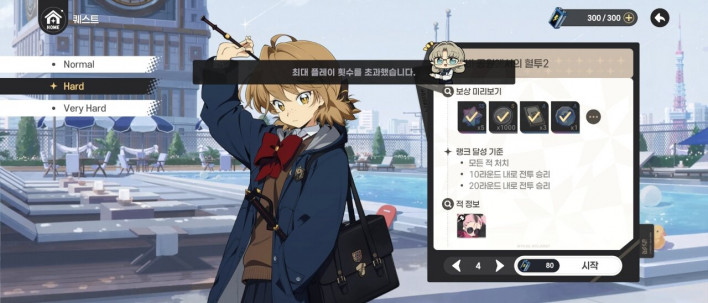
Additionally, we plan to significantly raise multi-run limits to a comfortable level, and while not a traditional sweep feature, we are developing a system that lets players obtain necessary resources more conveniently. We will work to balance the fun of direct combat with the convenience of farming.
Many players noted that progression resources were limited, making it difficult to build multiple characters. Do you plan to ease the progression burden through increased resource supply or reset mechanics?
Game Director Lim Jong-gyu = Through public administration content and seasonal events that were not included in the CBT, we are preparing for the official launch to supply progression resources much more smoothly than during the test.
Additionally, we are considering features to transfer artifact progression and adding various systems so that excessive burden does not become an obstacle to nurturing diverse characters.
Could you explain the background and direction of the overall monetization (BM) structure, including combined character-artifact banners and the pity system? Is there a possibility of changes before official launch?
Game Director Lim Jong-gyu = The overall BM structure—including combined recruitment for characters and artifacts as well as the pity system—is not yet finalized. We are evaluating improvement options based on feedback from this test, and changes may occur prior to official release.
Fundamentally, we are designing it to stay largely within standards generally accepted in the genre. We believe players should be able to collect characters and enjoy the game through steady play, and we will fine-tune specific structures and rates with this principle in mind.
Social features common in Japanese mobile gacha games, like friend lists, were not prominent in the CBT. How are you preparing these? Also, you previously expressed negative views on PvP in overseas interviews—are you ruling out standard asynchronous PvP as well?
Game Director Lim Jong-gyu = We are preparing standard friend system features, along with additional quality-of-life additions. As for PvP, we are ruling out asynchronous PvP as well. However, if we were to introduce PvP in the future, we think it could be fun as a limited-time event designed like a fighting game with zero pay-to-win elements.
What will the content volume be at launch compared to the CBT, and what is the update cadence for story and content post-launch? Are there any endgame modes or minigames under consideration?
Game Director Lim Jong-gyu = Because development is ongoing, it is difficult to give a definitive answer regarding total content volume at launch. In terms of playable roster, we featured 18 characters in the CBT and plan to launch with around 30. Post-launch, we aim to release monthly updates and introduce approximately 30 new characters per year.
I think "endgame content" means different things to different players. However, we do not intend to make competition or PvP the ultimate end goal. We want to build a game where players look forward to new content, stories, and challenges every month, much like waiting for the next chapter of a serialized series.
Of course, we will prepare content for players who enjoy challenge and accomplishment. We are reviewing options such as Score Trials and seasonal World Raids as potential additions.
Much like Disneyland or Universal Studios opening new themed areas, we want to expand new attractions while preserving familiar fun. Our goal is to build a game where playing longer widens your choices rather than increasing your burden.
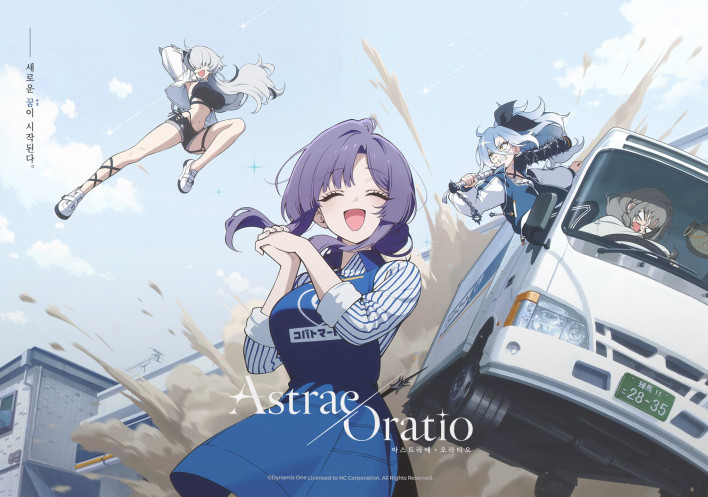
Asuora embraces nostalgia; voice dubbing in other languages being considered for the future
Voice acting in the main and sub stories received high praise. However, certain sections and content lacked voices or subtitles. What is the planned scope for voice coverage at launch, and are there plans for dubbing and subtitles in languages other than Japanese?
Game Director Lim Jong-gyu = For official release, our goal is to apply Japanese voice acting to major storylines, including the main story, as extensively as possible. Japanese voiceover will also be added to the latter half of the main story, which missed the CBT schedule. Subtitles will be provided wherever necessary for narrative comprehension and clarity, and we will continuously review and fix any missing parts.
We are also reviewing dubbing in other languages, but given our current production experience and resources, we expect it will be difficult to offer additional dubs at launch. We plan to consider expanding language support post-launch as we gain experience and assess production conditions. We will do our best so that more players can vividly experience the charm of Asuora's story and characters, so please stay tuned.
Why was the protagonist designated as a "Chief" (Shunin)? How will the Chief's role expand, and what kind of character do you plan to shape them into?
Game Director Lim Jong-gyu = In the world of Asuora envisioned by our scenario director, various events unfold between regional factions. The setting can encompass everything from small inter-district sports competitions to major conflicts between cities. To allow the protagonist to navigate relationships between these regions and factions, we selected the theme of "public administration," leading to the creation of the Chief, a civil servant at the Special District Office.
The Chief and the mages complement each other's weaknesses. While the Chief is unfamiliar with the hidden world, they can resolve problems using the rules and administration of the mundane world. Conversely, while mages are familiar with the hidden realm, they often need help navigating everyday life in the surface world.
We plan to keep building the Chief's role around this complementary dynamic. We hope players look forward to experiencing the story from the Chief's perspective, joining forces with mages to resolve incidents across diverse regions and factions.
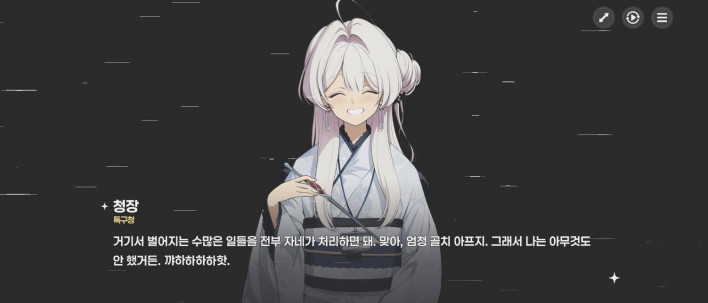
What do the developers view as the core of "Asuora's Shin-denki"? Do you plan to expand the world, such as deepening the overlap between everyday life and the supernatural world or widening the geographical regions?
Game Director Lim Jong-gyu = We believe the core of the Shin-denki genre portrayed by Asuora is the contrast between familiar urban everyday life and a mysterious world where magic exists, along with the artwork and overall sensibility that capture it.
We are considering expanding the stage to new regions in the future. Beyond in-game expansion, we also dream of someday sharing stories of other locations or characters through media mix adaptations.
The feeling of stories connecting across multiple media channels to broaden a single universe is a key appeal of live-service, original IP games. We want to build Asuora into a world that players will enjoy exploring alongside us for a long time.
Why did you choose an art style and color palette evocative of 1990s Japanese animation, and what did you focus on when adapting it for a modern audience?
Art Director Kim In = Asuora's visuals originated from three pillars: magic, the Shin-denki theme, and Tokyo as the setting. From early development, rather than leaning into familiar near-future or high-fantasy aesthetics, we focused on reinterpreting the nostalgia and sensibility of late 1980s through early 2000s works that influenced us for modern audiences.
We particularly aimed to convey the unique atmosphere and charm found in Shin-denki titles of that era. Rather than simply replicating vintage art styles, our core direction was to re-express the nostalgia of that period and the pleasant, distinct atmosphere of "Nostalgic Tokyo" in line with modern trends.
Personally, I designed the color scheme around the winter atmosphere and day-night contrast associated with Shin-denki. To express winter's chilly mood, we built the color palette around blue tones, while balancing it with spring-like pinks and greens to keep it from feeling overly dark. Furthermore, to emphasize the contrast between day and night, we applied black-and-white contrast to graphic design and layouts as well.
DoReMi led the overall art style design and direction. For this project, drawing on the characteristics of the transitional period from cel animation to digital art, we aimed to create a thick, textured visual style that retains a human hand-crafted feel. Character designs also incorporate distinct features of 1990s and 2000s anime art, such as bold linework and stroke weight.
Building on this direction alongside DoReMi and background artist feev99, we constructed Asuora's signature visual identity. We hope players will feel that tangible texture in the game's visuals.
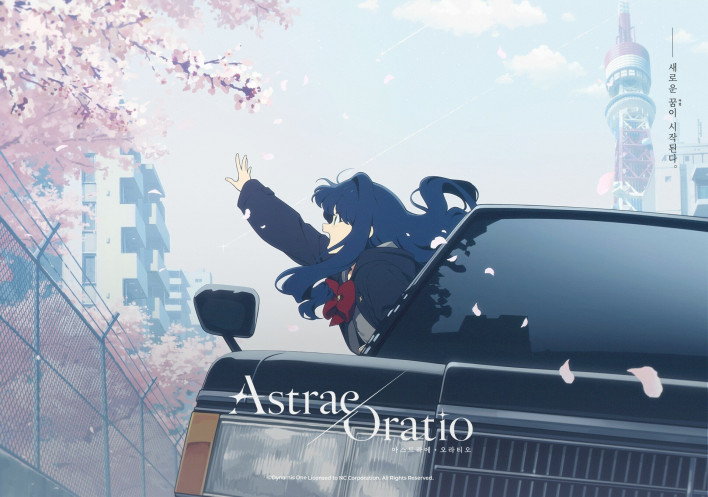
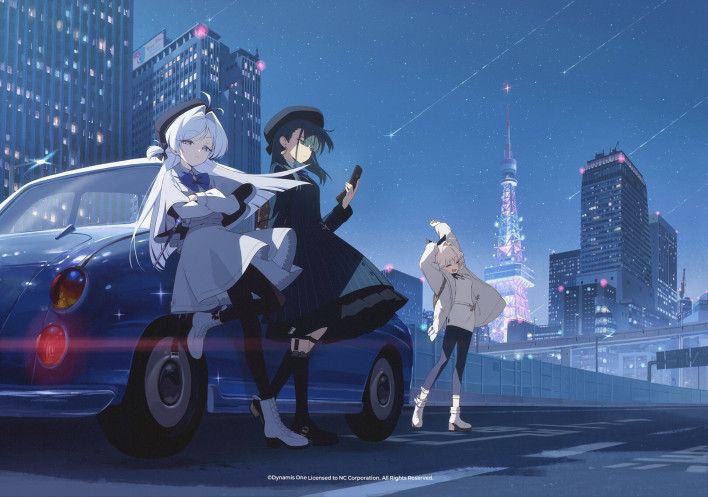
Each character has a distinct identity. What mechanisms give each clan its uniqueness, and how do you unify the art style across the world? What did you focus on most when bringing 2D characters into 3D?
Art Director Kim In = We assign themes and key colors to each clan, taking care to prevent their visual appeals from clashing with one another. We also carefully check whether characters blend naturally when active within their clan's home territory ("Dominion").
In terms of unifying the art style, our top priority is ensuring that color schemes don't clash and remain balanced when characters stand together on the same stage. Beyond that, we apply universal IP-wide design rules for details like line weight, eyes, and hair to tie everything together.
When rendering 2D into 3D, we focus on highlighting the unique strengths of each medium. In 3D, rather than simply duplicating 2D illustrations, we aimed to deliver the charm exclusive to three-dimensional expression, such as fluid character motion, a sense of spatial depth, and dynamic camera angles.
On the other hand, in 2D, we actively used Spine animation to preserve the sensibility of illustrations without letting them feel static. Through this, we structured the game so players can experience 2D's distinct charm throughout. We believe the visual harmony created by blending these different media is one of Asuora's key attractions.
The anime-inspired presentation stood out. What was the biggest challenge in translating this naturally into a 3D environment? On the flip side, frequent phase transitions and loading screens resulted from this—how are you addressing these issues?
Art Director Kim In = Our main focus was bringing the artistic appeal of traditional 2D animation naturally into a 3D environment. We worked to maximize the expressiveness of keyframes—equivalent to key animation in traditional production—while ensuring that appeal carried through into the in-between frames of motion.
In particular, because characters move within 3D spatial environments, a major challenge was making lighting and effects blend naturally within the space while preserving the character of the original key artwork.
We prioritize raising this level of cinematic polish, and we are working to resolve gameplay flow interruptions caused by phase transitions and frequent loading ahead of official release. We will continue optimizing post-launch as well.
Asuora joins AGF as main sponsor: "We will establish the IP by steadily highlighting its unique charm"
Are there plans to support other platforms like PC, and what can you share regarding launch timing and future schedules?
Game Director Lim Jong-gyu = We are preparing for players to enjoy Asuora on PC as well as mobile platforms. However, whether mobile and PC versions will launch simultaneously has not been decided, and specific release schedules will be announced later. The official release window is also being comprehensively evaluated based on development progress, and we will announce it through official channels once ready.
What are your plans for player communication leading up to launch—including AGF participation—and your long-term vision for IP expansion?
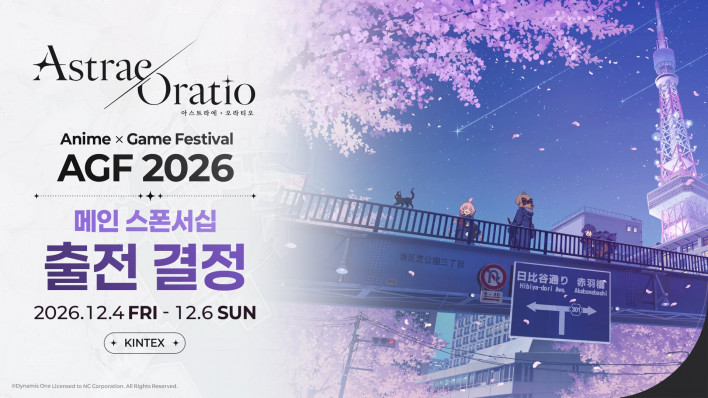
Game Director Lim Jong-gyu = We will participate as the main sponsor of AGF 2026 this coming December. Following Comic Market and Tokyo Game Show, this will be our first offline event meeting Korean players in person, so we are preparing so visitors can experience Asuora's universe and character charms up close.
Furthermore, leading up to and following official launch, we plan to roll out diverse online and offline marketing initiatives across key service regions including Korea and Japan to broaden touchpoints with players.
As an anime subculture game where character and story appeal are paramount, we aim to pursue various business initiatives—including merchandise production—so fans can enjoy the IP beyond the game itself.
How would you summarize the core appeal of Astrae Oratio for players who haven't had the chance to experience the game through demos or the CBT? What key fun do you want to deliver?
Game Director Lim Jong-gyu = In short, we are building a game where you are drawn in by captivating art, stay for exciting gameplay, and find yourself immersed in the story before you know it. If you feel "Ah, I love this!" from any one element—art, story, or gameplay—our goal is for that charm to naturally guide you into enjoying every other aspect.
Finally, do you have any closing words for players anticipating the official launch of Astrae Oratio?
Game Director Lim Jong-gyu = We extend our deepest thanks to everyone waiting for Asuora and to all who shared affectionate feedback during the CBT. Based on your expectations and critiques, we are hard at work preparing for official launch. We hope you look forward to the story of Asuora that we will build together, and we ask for your continued support.
Art Director Kim In = Thank you for all your support and expectations. Our entire development team is pouring full effort into reaching official launch. We are also preparing to deliver a wide range of attractions and charm post-launch as well, so please stay tuned for what's ahead in Asuora. Thank you once again to everyone waiting for the game.