Amid the AI revolution, the game industry remains in a period of turbulence. As AI has begun replacing multiple components necessary for game development, all sorts of issues have emerged, but perhaps it is fair to say a delicate balance is being maintained just short of complete replacement? While the direction of change will become clearer with time, most would likely agree that human involvement in game development remains essential for now.
One reason is that games are composite works with inherently complex structures, and a second is likely the need for a creative key—a "formula for new fun"—that AI cannot conceive on its own.
However, "mods" are a somewhat different story.
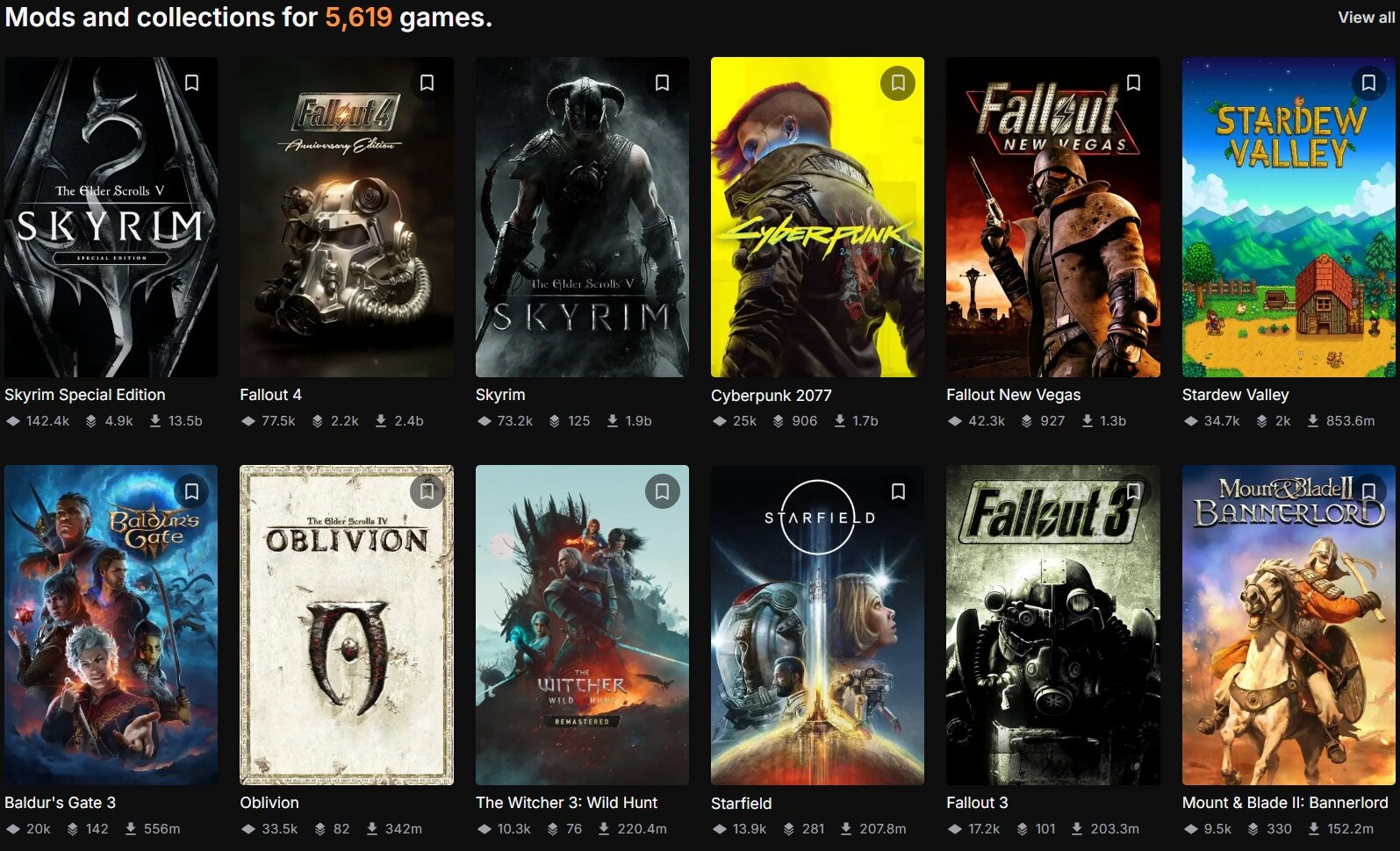
While creating a game from scratch on a blank canvas is no easy feat, adding color to an already detailed sketch is far less daunting. Even before the era of AI, many "modders"—those who create mods—were non-professional developers. While whipping up an entirely new game using AI is not as simple as it sounds, this "mod" market is expanding faster than ever before.
A surge in pure numbers,
A modding ecosystem entering a new phase
Last August, Minecraft mod platform Modrinth announced a new policy regarding AI mods. The platform explained that project submissions had surged from around 2,500 per week early this year to over 5,000 in August, with a significant portion consisting of AI-generated content. While submission volume does not directly correlate to the exact number of active modders or finished mods, it clearly signaled a shift in the scale of content entering the platform.
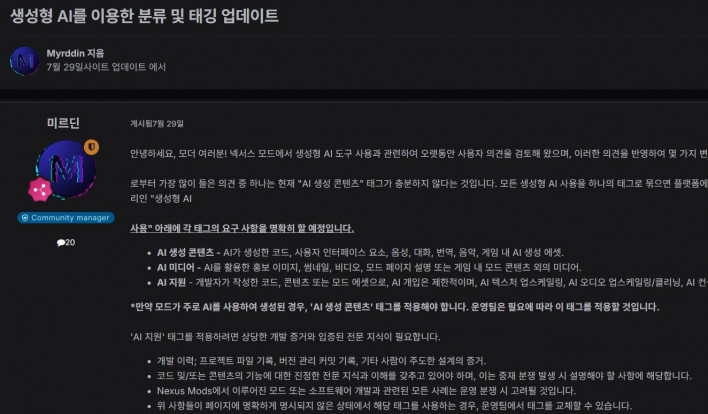
In response, Modrinth chose to restrict them. While projects where a human modder played a substantial role and used AI only as an aid were allowed, projects created mostly or entirely by AI were banned from public listing. Promotional images generated by AI were also restricted. Meanwhile, the mod host platform Nexus Mods opted for categorization over restriction. It refined tags based on the extent of AI usage and incorporated criteria such as development history and code comprehension into its moderation standards to verify human-led work.

These moves by modding communities can be viewed as transitional phenomena stemming from rapid expansion. In mod communities that lack clear regulations or legal protections, using AI to modify or tweak someone else's mod before reposting it has become easier than ever. An influx of unverified, low-quality mods makes finding desirable content difficult and adds heavy moderation burdens. Lowering the barrier to creation does not guarantee that every output is good content. Turning the faucet on full blast does not mean only clean water pours out.
What matters more than the sheer increase in AI-made mods is that the existing modding ecosystem has begun rewriting its rules for a new production environment. AI holds the potential to accelerate the workflow of experienced modders while granting players lacking technical expertise the chance to try their hand at creation. Although statistics are still insufficient to measure how much modder counts and productivity have changed, shifts are already visible in the volume of content platforms must handle and their management methods. A culture where players modified developer-made games to suit their preferences is evolving into a full-fledged creative ecosystem that demands dedicated management systems.
Through this process of transformation, game developers are also facing deeper dilemmas.
From games that "tolerated" mods
To games built with mods as a core assumption
For developers, mods are a double-edged sword they did not build themselves. With a slight shift in intent, mods can be repurposed into hacks or cheat programs; yet well-crafted mods enhance convenience, boost player retention, and attract new users. Consequently, game companies have responded in wildly different ways. What recent moves share in common, however, is that modding is no longer treated as something happening purely outside the developer's domain.
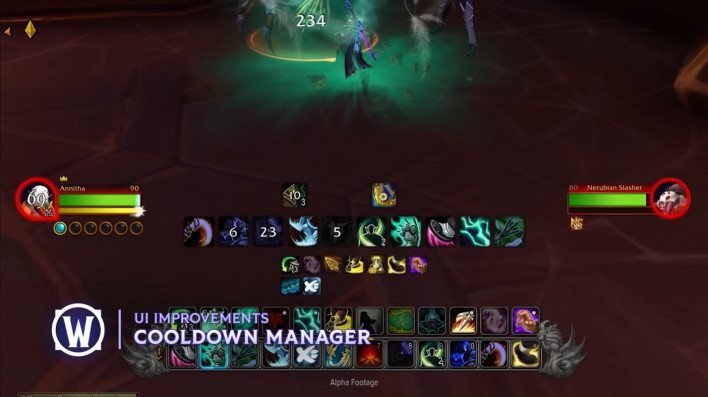
Riot Games chose to heighten its control fences. Starting October 6, the studio began blocking unauthorized third-party programs from accessing game memory. The decision came from the assessment that advancing AI-powered reverse engineering had lowered the barrier to creating cheat programs. Blizzard similarly curbed add-ons' combat information processing capabilities in the World of Warcraft expansion 'Midnight'. While displaying information remains permitted, functionality that analyzes data to make decisions on behalf of players was restricted. Both companies opted to directly define the boundaries of what user-created tools can touch.
Conversely, some companies actively embrace modding as part of their games. In 2024, Starfield and Baldur's Gate 3 introduced official modding tools and in-game management features, and in 2025, Hogwarts Legacy joined in with official mod support two years after its launch. In 2026, S.T.A.L.K.E.R. 2 expanded its toolkit to let players create quests, voiceovers, and localizations. Going beyond merely permitting mods, studios have begun providing environments where players can generate new content.
Some have taken things a step further. In 2026, EA launched a Maker program in The Sims 4, allowing user-created content to be sold on an official marketplace. Beyond creation tools, EA provides quality verification and post-update compatibility support. Cities: Skylines II introduced its own mod platform and editor, steadily expanding related features. Rockstar Games went as far as acquiring Cfx.re, the team behind dedicated roleplay server communities for GTA V and Red Dead Redemption 2. These cases show developers turning user creations into a content pipeline for their games or bringing the modding ecosystem directly inside their business boundary.

Microsoft's recent announcement of "Xbox Labs" connects directly with this trend. Xbox CEO Asha Sharma highlighted experiments involving decompiling existing games to run on different hardware or combining elements from different titles. She noted that the line between game development and play is blurring, allowing more players to become creators and co-creators. While this does not mean every game will be open for unrestricted modification, it is significant that even major platform operators have begun viewing player-led game reconstruction as a viable technical and business opportunity.
Not all of these changes stem from AI. Official modding support from game developers long predates the rise of generative AI. However, if AI reduces the technical barriers and time required for modding, it is highly likely to accelerate shifts that were already underway. As user-generated content multiplies, developers cannot simply decide whether or not to permit mods; they must weigh how extensively games can be altered, as well as how that content is distributed and managed. Whether raising fences or leaving doors open, companies are ultimately redesigning the architecture of their boundaries.

For a long time, the game industry operated under a structure where developers created content and players consumed it. Modding was an exception outside that framework, but it has now established itself as a major pillar of content production. While a future where AI fully replaces game developers still feels distant, players using AI to reshape finished games is becoming reality. Going forward, what matters will not only be how much content a game offers at launch, but also how many possibilities players can add to it post-release.
In other words, an era is arriving where enabling players to modify a game well is becoming just as competitive an asset as building a great game in the first place.