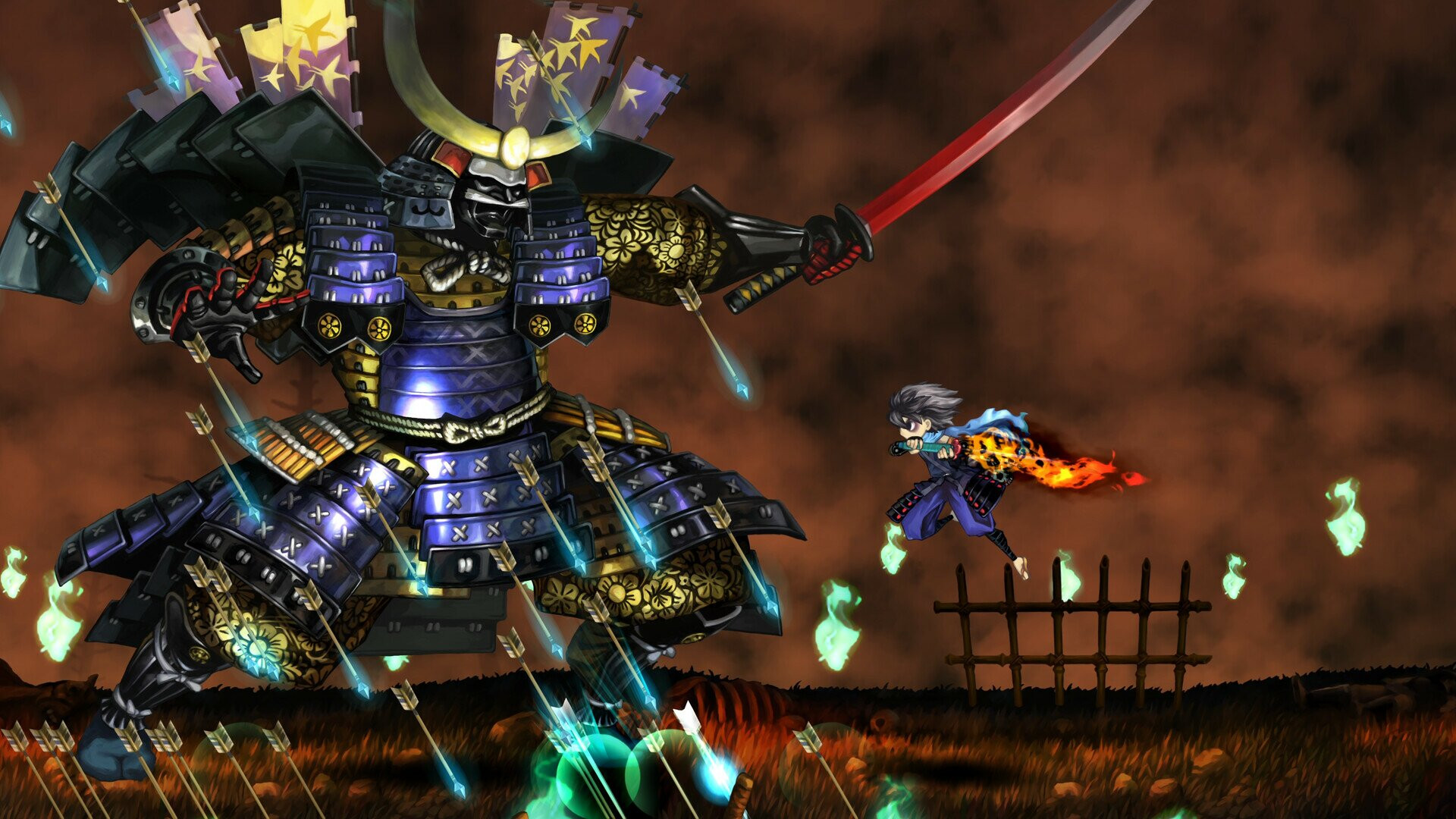
Reviving 'Muramasa: The Demon Blade' while keeping it true to 'Muramasa'. That is the principle Vanillaware held fast to while creating 'Muramasa: Revenant Blades'.
'Muramasa: Revenant Blades' is a refined modern-generation update of 'Muramasa: The Demon Blade', a Japanese-style action RPG developed by Vanillaware and released by Marvelous on the Wii in 2009 and PS Vita in 2013. It also includes the four stories from the paid DLC 'Genroku Legends' from the very start. The game will launch globally on February 4, 2027 for Steam, PS5, and Nintendo Switch 1 and 2.
It is not simply a remaster with bumped-up resolution. Players can now freely swap Secret Arts that were previously bound to specific blades, and they can enjoy the stories of all six protagonists in any order they choose right from the start. A Classic Mode has also been separately prepared for players who want the experience of the original game. We spoke with director Wataru Nakanishi of Vanillaware and producer Makoto Shioda of Marvelous about what they preserved and what they changed.
"The flavor of hand-drawn art can only be created through hand-drawn art"
It has been over 15 years since the original game was released. Why bring back 'Muramasa' now?
" Producer Shioda: Within Marvelous, there were always voices expressing a desire to make 'Muramasa' playable on current platforms. I was one of them. We spoke with Vanillaware several times over the years, and this time the timing aligned for both companies, making it a reality. I think Director Nakanishi enthusiastically declaring "I want to do it!" was also a huge factor.
Rather than a simple remaster, it was restructured as 'Revenant Blades'. What was the most important guiding principle set for this project?
" Director Nakanishi: We didn't set anything down in a formal document. However, if I were to summarize it in one phrase, I personally held dear the idea of "reviving 'Muramasa' for the modern age while keeping it 'Muramasa'." I believe the flavor and atmosphere of this game possessed something unique that went beyond its lore or visuals, extending across the entire experience. We built it with the policy of preserving that signature 'Muramasa' feel, while actively working on areas where we could elevate it further as a game.
How was original creator George Kamitani involved? Were there specific areas where his input was particularly crucial when deciding what to keep and what to change?
" Director Nakanishi: At first, I shared system concepts like equipping and unequipping Secret Arts with Kamitani-san, and after that, he basically left things in our hands. Making each hot spring background distinct across all 16 locations was Kamitani-san's idea. Even before the project officially began, he had already finished illustration after illustration before anyone realized it.
The original game is still highly praised for its unique 2D art and animation. How did you preserve the texture and atmosphere of the original artwork while updating the graphics for modern hardware and high resolutions?
" Director Nakanishi: The virtues of hand-drawn artwork can only be expressed through hand-drawn artwork. So we increased the resolution through the meticulous, straightforward work of retouching every single texture one by one. With the main game plus four DLCs, the sheer volume of assets made it a grueling process. Still, thanks to our designers tenaciously sticking with it, I believe we achieved visuals that are so detailed and rich with sights that it's hard to believe it originates from a game over a decade old.
The combat and weapon systems were also revamped. Looking back at the original game, what did you feel was the top priority to fix for modern players?
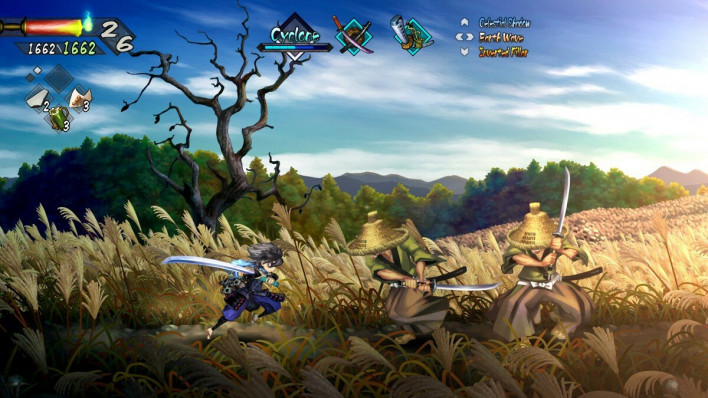
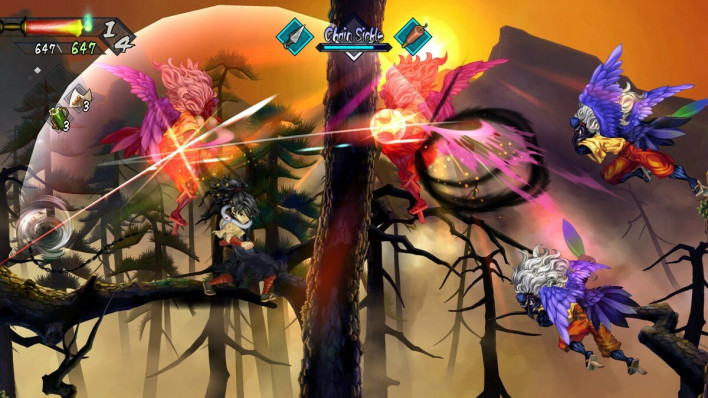
" Director Nakanishi: In the original game, Secret Arts were fixed to specific swords. Because of that, most of the 108 Secret Arts ended up unused in the late game. We felt that was a waste, and as a game, it narrowed tactical flexibility. So the very first thing we did was build a system that allows players to attach and detach Secret Arts.
This time, players can assign up to three Secret Arts each for ground and aerial combat. What was the goal behind implementing this system?
" Director Nakanishi: As mentioned earlier, we introduced this Secret Art system because we wanted to give all those skills a purpose in combat. At the same time, to avoid overcomplicating the controls, we provided three slots each for ground and aerial combat so players can execute different Secret Arts using simple combinations of directional inputs and the Secret Art button.
The original is permanently preserved in Classic Mode, which allowed us to rebuild freely
Now players can freely choose among all six protagonists right from the start. What was the reason for removing restrictions on narrative progression?
" Director Nakanishi: Originally, there were no restrictions on play order. However, since the original game distributed DLC sequentially, the play order was effectively predetermined. The six protagonists' stories are standalone, so we hope players feel free to start with whichever character catches their interest.
The main game and 'Genroku Legends' were created at different times with slightly different design approaches. What adjustments were made to unify all six stories into a cohesive experience?
" Director Nakanishi: To allow character progression for the four 'Genroku Legends' characters similar to the main game's two protagonists, we added elements like crafting and upgrading talismans instead of forging swords. By making system features universal across all six characters, we refined the entire game so it can be enjoyed seamlessly as a single experience.
On the other hand, you also included Classic Mode, which preserves the original gameplay experience as-is. Why was it important to offer both the newly refined version and the original style?
" Director Nakanishi: Classic Mode also serves the purpose of permanently preserving the high-definition version of the original game. As it becomes increasingly difficult to set up environments to play the original, we were given the opportunity to recreate this game for modern platforms. That's why we included Classic Mode, so players can enjoy the original at any time. On top of that foundation, we rebuilt the game without hesitation—and that result is this title.
'Muramasa' draws heavily from Japan's Genroku era, folklore, and yokai culture. Since you are now reaching a much broader global audience, did you reconsider how Japanese cultural elements are presented or explained?
" Director Nakanishi: We didn't alter the expressions themselves or add supplemental explanations. However, to deepen players' understanding, we added gallery elements like 'Memories' and 'Scripts' that allow players to rewatch event scenes and reread dialogue as many times as they want. This game contains archaic phrasing and complex terms that even Japanese speakers might not immediately understand. Marvelous's localization team translated them meticulously.
The localization was newly redone, and English voiceovers were added. What was the key element you wanted to preserve when re-handling dialogue and characters from a game over 15 years old?
" Producer Shioda: We approached it as a brand-new project and collaborated closely with Vanillaware throughout the entire localization process. We poured our efforts into ensuring that players could fully experience the references to Japanese culture and history embedded throughout the game, as well as the overarching atmosphere of its story.
Features like character viewers, event replays, and galleries were also added. Why did you feel these viewing features were necessary for an action RPG?
" Director Nakanishi: Visuals are one of 'Muramasa's' biggest draws, so we wanted to provide a place where players could take their time to admire them. In a way, because this is an action RPG with fast-paced, exhilarating gameplay, these features are even more essential—during combat, movement is so rapid that you rarely get a chance to take a close look.
This marks the first time 'Muramasa' is coming to PC. How was that decision made, and were there any particular difficulties in adapting the game for PC players?
" Producer Shioda: 'Muramasa: Revenant Blades' is not a simple remaster, but a heavily refined work adapted for modern gaming environments. Marvelous proposed the PC release because we wanted to reach as many players as possible.
Director Nakanishi: Supporting PC was a first for our studio, so there were many challenges. Even just controls alone required extensive thought and tweaks to ensure comfortable play on keyboard and mouse, and the sheer volume of work meant every step was a process of trial and error. But seeing the results, I believe it has turned into quite an accessible and enjoyable experience.
When porting a classic game to modern platforms, how do you decide what to preserve and what to change? Has your perspective on preserving classic games evolved over time?
" Director Nakanishi: Personally, I think what matters most is how carefully you protect the essence that defines the game. While cherishing the game's unique flavor and traits, you identify areas where you can add depth to the overall gameplay experience. I believe that is what's crucial in a remake.
What do you hope long-time fans rediscover most in this title? And for first-time players, what do you hope leaves the lasting impression?
" Director Nakanishi: For those who have loved this game for a long time, the combat changes will feel fresh. The freedom of movement along the highways has also expanded significantly, so I hope players enjoy the sensation of exploring this world through their own choices of destination.
For first-time players, above all else, I hope they fully savor the new scenery, characters, and story. It's a game that condenses the beauty of Japan alongside bold, dramatic presentation, and I'm confident those elements alone will captivate them.