Minister of Culture, Sports and Tourism Choi Hwi-young brought up "public discussion" as a precondition for video game production tax credits. Minister Choi, who promised consultations with tax authorities and inclusion in national policy tasks shortly after taking office, prioritized building social consensus during an October 20 meeting following the exclusion of games from the 2026 tax reform plan. The primary ministry tasked with leading the implementation of the system appears to have taken a step back.
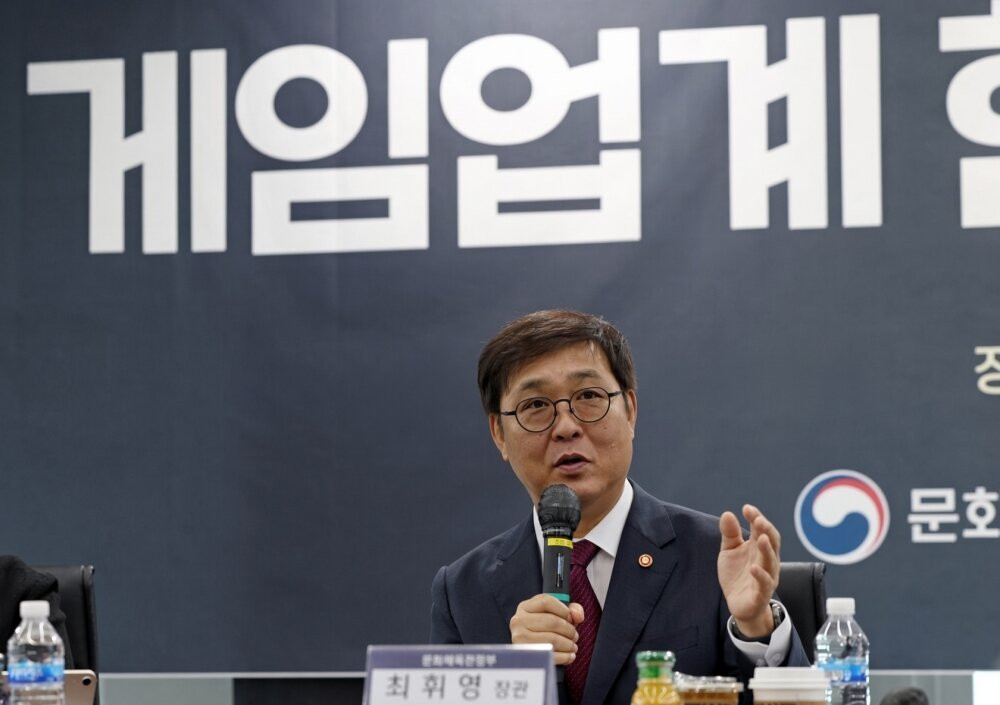
During the 3rd meeting of the Game Subcommittee under the Culture and Arts Policy Advisory Committee held on October 20 at the National Museum of Modern and Contemporary Art (MMCA) Seoul in Jongno-gu, Seoul, Minister Choi stated, "Regarding tax credits, it seems important to spark public discussion and foster a favorable societal atmosphere," adding, "From the beginning of next year, we must persuade others why this system is desperately needed for the game industry and build consensus." In the same meeting, the Ministry of Culture, Sports and Tourism (MCST) announced that it had allocated 6 billion won for a newly established 'Global Frontier Production Support' initiative in the 2027 budget bill and increased support for indie game creation from 9.3 billion won to 13.8 billion won.
His remarks 1 year and 2 months ago were different. On August 19, 2025, during a general meeting of the National Assembly's Culture, Sports and Tourism Committee, Minister Choi responded to a question from People Power Party Representative Jeong Yeon-wook, stating, "We are actively consulting with tax authorities to introduce tax credits for game production costs, and we will make every effort to ensure it is actively reflected in the process of finalizing national policy tasks."
On September 30 of the same year, in a congratulatory address at the "Discussion Forum on Introducing Production Cost Tax Credits for K-Content," he specified the direction. In the text of the address released by MCST, Minister Choi stated, "Expanding production cost tax credits—which previously applied only to video content—to other sectors is included as a 'national policy task.'" He added, "Next, we are working to extend it to game and music content."
On April 30, 2026, working-level procedures were disclosed during the 2nd meeting of the Game Subcommittee. Minister Choi stated, "For game production tax credits, we submitted a tax expenditure proposal to the Ministry of Economy and Finance based on the deduction rates currently applied to video content," adding, "We will consult with the Ministry of Finance from that perspective." He also argued that tax credits would lead to industry promotion and value-added expansion rather than tax revenue loss.
The result came in the "2026 Tax Reform Proposal" announced by the Ministry of Economy and Finance on August 3. Game production cost tax credits were not included in the proposal. Instead, a new tapering structure was added to the existing tax credits for video and webtoon content production costs (Articles 25-6 and 25-8 of the Restriction of Special Taxation Act) for companies graduating from small and medium-sized enterprise (SME) status, applying a 12.5% tax credit rate for three years after the grace period ends. The Ministry of Finance has maintained a cautious stance on the grounds that it overlaps with the research and development (R&D) tax credits game companies already receive.
Under current rules, the base deduction rate for video content production cost tax credits is 15% for SMEs and 10% for mid-sized and large enterprises. If requirements such as having a domestic production cost ratio of 80% or higher are met, companies receive an additional tax credit at the same rate. Webtoon content is subject to the same base deduction rates. No corresponding provision exists for games. According to a survey by MCST and the Korea Creative Content Agency (KOCCA), gaming accounted for $8,503.47 million, or 60.4%, of South Korea's total content industry export value of $14,075.43 million in 2024.
The industry pushed back. On August 14, five organizations—the Korea Association of Game Industry (K-GAMES), the Korea Game Developers Association (KGDA), the Korea Mobile Game Association (KMGA), the Korea AI Game Association, and the Korea e-Sports Association (KeSPA)—issued a joint statement demanding that "tax imbalances with other content genres such as film, broadcasting, and webtoons must be corrected". During the parliamentary audit of MCST on October 7, no remarks addressing game production tax credits were made.
Minister Choi's stance shifted from "consulting with tax authorities and reflecting in national policy tasks" (August 2025) to "pushing to expand to games and music" (September 2025), to "submitting a tax expenditure proposal based on video deduction rates" (April 2026), and finally to "creating a favorable societal atmosphere through public discussion" (October 2026). His past remarks confirm the effort to suggest tax credits equivalent to video content and persuade the Ministry of Finance. However, after inclusion in the government proposal fell through, the next step presented was not a schedule or legislation, but building consensus.
While MCST demonstrated its willingness to support the gaming industry through budget increases, it remains disappointing that the ministry failed to present a timeline or alternatives for re-pursuing tax credits. For public discussion to be effective, concrete measures must accompany it, such as resubmitting the tax expenditure proposal and clarifying the government's stance on pending bills introduced by lawmakers. Ensuring that an industry responsible for 60.4% of content exports in 2024 receives tax support equal to other genres falls squarely on the responsible ministry.
Amendments to the Restriction of Special Taxation Act, sponsored by People Power Party Representatives Jeong Yeon-wook and Park Seong-hoon, remain pending in the National Assembly. This leaves open a path that does not require waiting for next year's tax reform proposal.