The global games industry, which expanded explosively during the COVID-19 pandemic, is continuing its fifth consecutive year of intensive workforce reductions following the shift to the endemic phase in 2022. Although a temporary slowdown last year led to observations that restructuring had entered its final stages, layoff figures crossed 10,000 once again in 2026 as major publishers consolidated studios and cut development budgets.
According to figures compiled as of October 10 by the "ASGC Games Industry Layoffs Tracker"—operated by Amir Satvat, General Partner at 1Up Ventures (and former Tencent Games Director)—the cumulative global games industry layoffs over the five-year period from 2022 through the end of 2026 are estimated to reach a total of 57,640 people. Confirmed annual totals rose from approximately 8,500 in 2022 to around 10,500 in 2023, before hitting an all-time peak of 15,631 in 2024.
Layoffs entered a breathing space in 2025 as figures fell to 9,197, but by the end of September 2026, 10,512 people had already been laid off (132 cases and 10,581 people as of October 10), surpassing last year's full-year total ahead of time. The tracker's full-year layoff projection for 2026 stands at 13,812.
2022–2024: Liquidating Pandemic Overinvestment and the M&A Aftermath
During the five-year pandemic boom period from 2017 to 2021, the global games industry saw a net gain of approximately 150,000 new jobs. Driven by the contactless boom, player playtime and revenues surged, while low interest rates fueled massive expansions in major mergers and acquisitions (M&A) as well as new game projects.
However, in 2022, the transition back to normal life coupled with interest rate hikes halted this expansion phase. Around 8,500 people lost their jobs that year as Square Enix sold off Western studios such as Crystal Dynamics and Eidos-Montréal, and Unity conducted its first round of layoffs (approximately 200 employees).
The brunt of the storm hit in 2023 (approx. 10,500) and 2024 (15,631). Sweden's Embracer Group, which had aggressively acquired dozens of development studios, saw a $2 billion (approx. 2.7 trillion won) investment deal collapse, prompting it to close studios like Volition (developer of 'Saints Row') and Free Radical Design, sell off Gearbox Software, and lay off over 1,400 workers starting in 2023. Epic Games (830 employees, 16%), EA (approx. 800 employees), and Amazon Games joined the wave in 2023 as well.
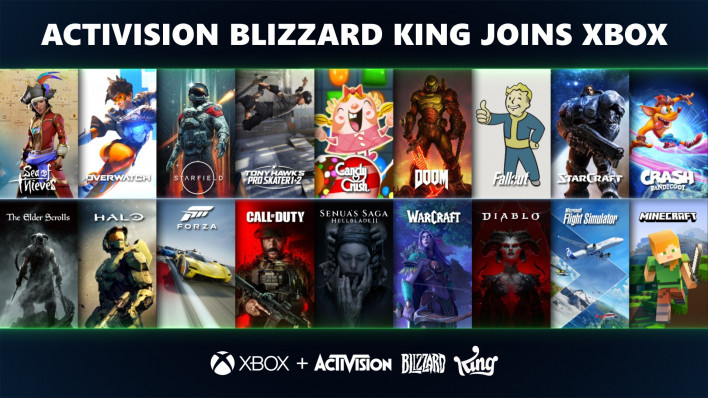
At the 2024 peak, platform holders and game engine companies joined the industry-wide cuts. Microsoft (MS), having completed its acquisition of Activision Blizzard, laid off 1,900 workers in January that year, followed by the closure of Arkane Austin ('Redfall') and Tango Gameworks ('Hi-Fi Rush') in May, and an additional 650 reductions in September, cutting over 2,500 jobs in a single year. Sony Interactive Entertainment (SIE) laid off 900 employees (8%) in February—including the closure of London Studio—and eliminated over 1,100 positions total following further cuts at Bungie (220 employees) and the shutdown of Firewalk Studios, developer of 'Concord', which was taken offline just two weeks after launch. That same year, Unity (1,800 employees, 25%), Riot Games (530 employees, 11%), EA (670 employees), and Take-Two Interactive (approx. 600 employees) also executed major restructurings.
2025–2026: 'Tentpole Restructuring' and Post-Launch Layoffs Follow a Temporary Lull

In 2025, annual layoffs dropped to 9,197, a decrease of approximately 41% compared to the previous year. However, project-level cuts persisted: Warner Bros. Games shut down three sub-studios, including 'Wonder Woman' developer Monolith Productions, and Microsoft closed developer The Initiative while canceling the 'Perfect Dark' reboot and 'Everwild' as part of a company-wide layoff of 9,100 employees.
Surpassing 10,000 once again in just one year, layoffs in 2026 showed a heavy concentration among a handful of major corporations and within North America and Europe. According to the ASGC tracker, 96% of layoff events this year occurred in North America (67% of cases, 79% of affected personnel) and Europe (30%), with the top five largest layoff events accounting for 51% of total job cuts.
Microsoft and Epic Games accounted for the largest shares. In July, Microsoft's Xbox division announced plans to reduce staff by a total of 3,200 positions by mid-2027, laying off approximately 1,600 employees that same day, and cut an additional 268 roles in September from Halo Studios and other teams. In the process, it extensively consolidated subsidiary organizations—spinning off Compulsion Games, Double Fine, and Undead Labs while initiating closure procedures for Ninja Theory. Epic Games also laid off about 1,000 employees—roughly 20% of its workforce—in March, citing slowing growth for 'Fortnite' and rising cost pressures.
SIE closed remake specialist studio Bluepoint Games (approx. 70 employees) in February this year, before laying off another 400 staff—half of Bungie's workforce—in June. Ubisoft also eliminated around 185 positions in January, including the shutdown of its Halifax studio, and roughly 380 positions in June with the closure of its Winnipeg and Belgrade studios. On October 14, Ubisoft notified employees of plans to close Finland's RedLynx (up to 52 positions) and cut 70 positions at its Singapore studio.
This year in particular saw a wave of cases where staff were cut immediately after launching hit titles—such as EA reducing personnel across four studios following the release of 'Battlefield 6', or Ubisoft Singapore being subjected to layoffs despite leading development on 'Assassin's Creed Black Flag Resynced', which sold over 3.5 million copies following its release in July. Speaking during his gamescom dev keynote address in September, Amir Satvat pointed out, "With 50 to 60% of total gaming industry revenue concentrated in the top 20 live-service games, the vast majority of studios are facing the dual pressures of rising development costs and revenue concentration."
Five Years in the Korean Game Industry: From 'All-In Hiring' Bills to Voluntary Resignations and AI Efficiency
The Korean game industry followed a similar trajectory immediately after the pandemic. In 2021, amidst fierce competition to secure developers, major gaming companies raised salaries across the board and launched large-scale public recruitment drives for both entry-level and experienced roles. However, starting in the second half of 2022, a combination of underperforming new releases and fixed labor cost burdens forced a shift toward austerity.
While explicit layoff announcements were rare compared to Western studios, subsidiary liquidations, recommended resignations, and voluntary departure programs began in earnest in 2023. Throughout 2023 and 2024, workforce adjustments and voluntary resignations continued at Line Games, Com2uS and its metaverse subsidiary Com2Verse, Devsisters, and Netmarble subsidiaries, while Smilegate, Wemade, and Kakao Games scaled back non-core new business divisions such as metaverse and blockchain.
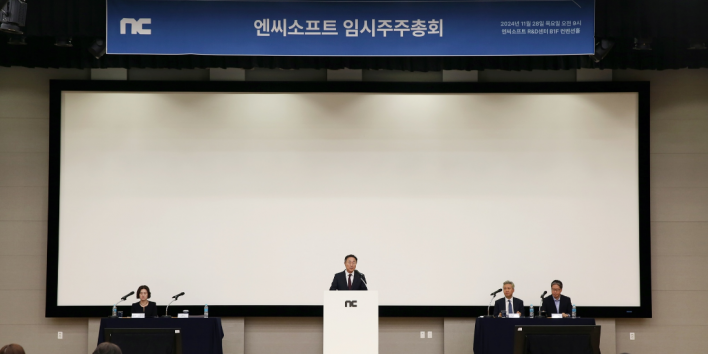
The biggest watershed moment in domestic restructuring was NCSOFT's organizational overhaul in 2024. Conducting its first large-scale voluntary retirement program in its 26-year history along with spinning off four subsidiaries, NCSOFT cut its headquarters workforce from 4,886 at the start of 2024 to 3,170 by the end of 2025, a 35.1% reduction (1,716 employees). Nexon also initiated voluntary resignations and corporate bankruptcy proceedings for its development subsidiary Nitro Studio upon shutting down 'KartRider: Drift' at the end of 2025.
In 2026, workforce reductions across the Korean industry are being driven not only by emergency management measures to defend financial performance, but also by workflow efficiency gains resulting from artificial intelligence (AI) adoption. KRAFTON, despite breaking sales performance records, completed voluntary resignations for approximately 200 employees by the first half of this year through a company-wide voluntary departure program introduced late last year, maintaining its policy of AI-centric organizational efficiency and hiring freezes. Devsisters entered company-wide voluntary resignation and executive unpaid management policies in May following a shift to an operating loss in Q1, while NHN decided on October 13 to shut down 'Darkest Days'—a new title still in open beta ahead of its official release—in November.
As employment instability extends into its fifth year, reemployment difficulties for developers are worsening. According to the 'GDC 2026 State of the Game Industry' report released in January this year, 48% of developers worldwide who were laid off in the past two years (and 36% of those laid off for more than a year) have yet to find employment, while in Korea, large-scale open recruitment drives for developers have virtually disappeared, with the job market restructuring around limited rolling hires for experienced personnel and internal reassignments.