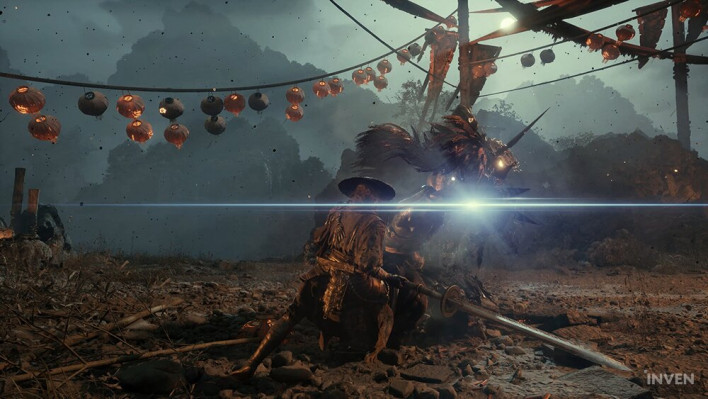
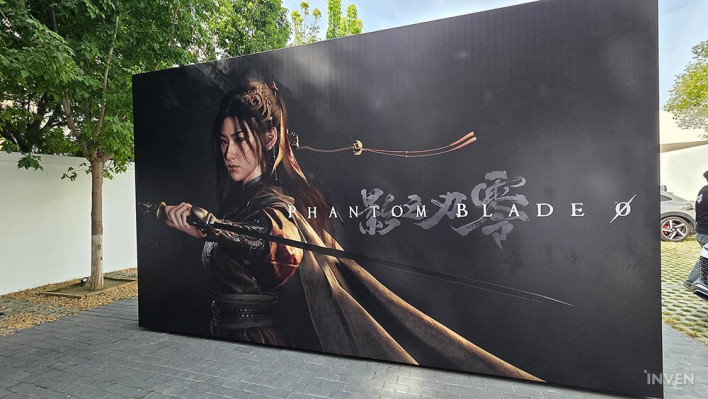
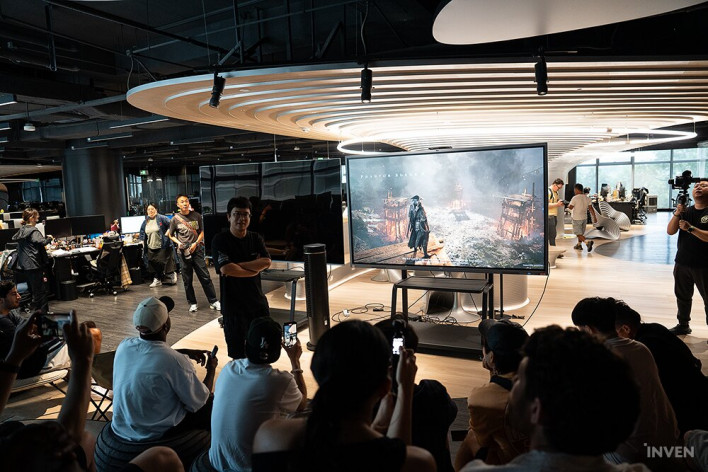
Ahead of its official launch, 'Phantom Blade Zero' held a hands-on preview event for global media in Beijing, China. At the event, attendees were able to play the game firsthand for about 6 hours, including Chapter 1 and a late-game boss battle.
Following the hands-on session, an interview was held with Soulframe, CEO of S-Game. Through this interview, we gained insight into everything from combat, boss design, and weapon systems to the direction of development ahead of release and the overall game vision.
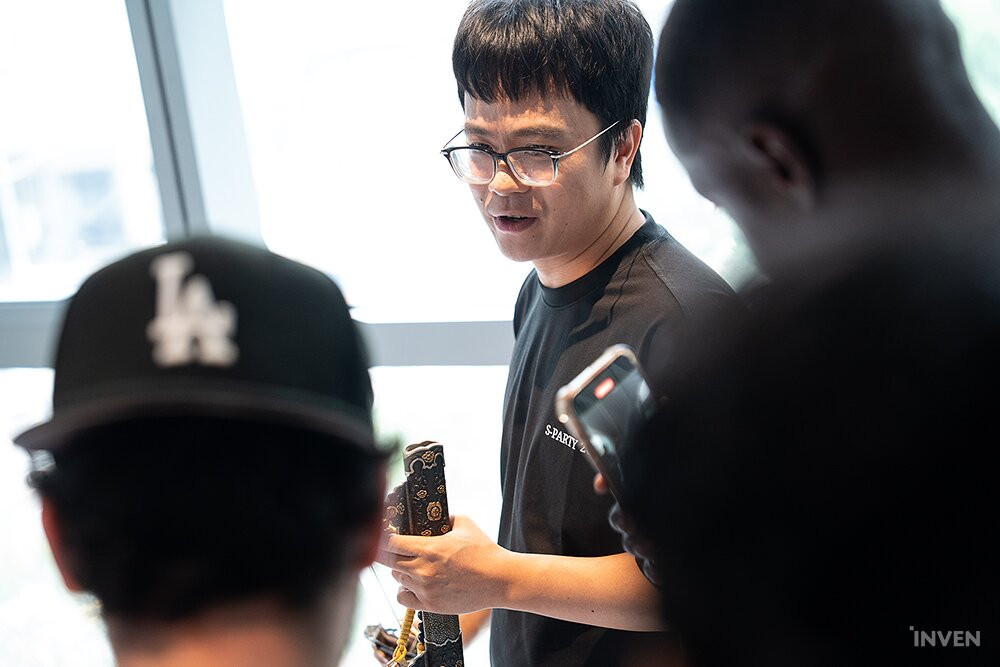
There are many weapons in the game. How did you design them to balance the game while giving each weapon its own distinct identity?
“We designed 30 types of weapons in total and put a lot of effort into each one. Naturally, we hope players experience as many weapons as possible, but we didn't want to restrict their playstyle. It's perfectly fine if someone wants to play through from start to finish using just one weapon.
I don't know if you noticed while playing, but there is also a wooden sword meant as a challenge weapon. Theoretically, you can finish the game with only this wooden sword. It reflects the Chinese Kung Fu philosophy that once you hone your skills to the limit, you no longer need superior weapons—you can defeat your opponent with just a wooden sword.
In some cases, weapons differ completely not only in movement but in their core mechanics as well. For example, the Drunken Sword is vastly different from other weapons, from its combat tempo to its attack range. When the character drinks alcohol and gets intoxicated, the sword flies around, and as they get drunker, they become even stronger.
Of course, balancing this many weapons is difficult. However, Phantom Blade Zero is not a PvP or multiplayer game. We felt it was more important to create different types of fun rather than tuning every weapon to the exact same level.
As you progress through the game, you will encounter different challenges and mechanics, and each weapon serves as a key to solving them. Facing a shield-bearing enemy with an axe is a simple example. But that doesn't mean you must use an axe. You can break the shield in other ways too. Ultimately, what matters is offering continuous new fun and freshness throughout gameplay through a variety of weapons.
For S-Game, Phantom Blade Zero is a major challenge in terms of scale. What was the most difficult part of transitioning to a AAA console game?
“Previously, we had only made mobile games, and this was our first time developing a 3D AAA game on such a large scale using Unreal Engine 5. However, the IP itself has been refined for over 20 years, starting back when I was a student. I began building the story and world then, and it has continued to this day. You can say only the scale of the project changed.
However, there weren't many developers in China with experience developing this kind of game. So we had to build everything from scratch. Fortunately, there were many outsourcing studios in China that had long provided animation, 3D modeling, and concept art to Western and Japanese studios, and we were able to receive help from them.
If you ask what part was the most difficult, I'd say everything was difficult. Everything was new, and we had to find solutions in new ways to realize what we wanted. We also recruited very young developers. We entrusted crucial tasks, like the final boss or the opening sequence, to people recruited straight out of school who had zero experience with a project of this scale.
Some people ask if Phantom Blade Zero is an indie game. Looking purely at scale, it's hard to call it an indie game. It's a project with a pretty large budget. However, in spirit, I consider it an indie game. That's because we try to maintain a mindset of taking on new, extreme challenges and not being afraid to step outside established boundaries. I believe that spirit played a major role in making this game a reality.

Phantom Blade Zero is deeply rooted in Chinese culture, yet it targets a global audience. What efforts did you make to maintain its Chinese identity while making it easy for global players to embrace?
“Phantom Blade Zero is an original IP. I personally envisioned and created the world at first, and later developed it together with the team. While it contains many elements of Chinese culture, the story is original, and the structure itself is relatively straightforward. You can view it as the story of an elite assassin hunted by the very organization he belonged to.
We wanted to make a game deeply grounded in Chinese culture. We take pride in our culture and want to convey its authenticity. At the same time, however, we didn't want the culture itself to become a barrier to understanding the game. We felt Chinese culture should be an element that enriches the game and makes it fresh, not something that makes the game difficult to get into.
That's why we tried to make the narrative and emotions as universal as possible. Emotions like friendship, love, revenge, and hatred can be understood by anyone regardless of culture. On the other hand, in external elements like movement, weapons, and scenery, we tried to capture the authenticity and beauty of Chinese culture as much as possible.
Going a bit deeper, there are also expressions rooted in Chinese philosophy and culture. Of course, you don't need to understand all of that to enjoy the game. We'd be happy if players feel the deeper meaning, but our priority was creating an experience anyone could resonate with.
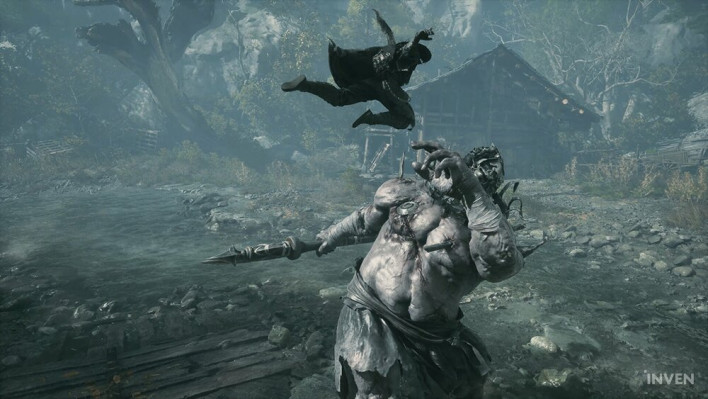
The combat feels extremely cinematic and refined. What was the process like translating actual martial arts into player-controlled gameplay?
“This is one of the areas we spent the most time contemplating over the past four years. First of all, we wanted to make something different from what people had seen before. However, there were no existing references matching exactly what we wanted, so we ended up researching and creating much of it from scratch.
We studied classic martial arts films and learned a great deal from traditional Kung Fu schools and various Kung Fu masters, including Donnie Yen. However, most of these martial arts are meant for film. In movies, a single move flows seamlessly into a continuous sequence, but in a game, every action must be directly controlled by the player. So we had to break continuous movements into multiple segments and redesign the timing and mechanics for each. We also had to figure out how to reconnect these segmented moves naturally and add various hit effects. It was a truly challenging process.
We have a dedicated core combat team for this. They take in the insights gained from external martial arts experts, including Donnie Yen. I think of them as translators of a sort—their role is translating the cinematic language acquired externally into game language. They design the start and end of each movement and figure out how to connect different moves together, making sure all possible transitions link as fluidly as possible.
Phantom Blade Zero is often compared to games like Soulslikes or Devil May Cry. How do the developers define the game's genre?
“Many people were surprised when they actually played the game. In trailers and previous demos released so far, we mostly showed combat. So it's easy to assume it's a hack-and-slash game where you quickly mow down enemies and move to the next area to fight again.
However, once you play it yourself, you realize it's different. Story plays a major role, and there are exploration elements and hidden secrets. So rather than defining it as a single genre, I consider it a hybrid genre combining several styles. We took the core fun from different genres, trimmed away complex parts, and merged them into one.
If I were to explain it as a pyramid, the RPG system lies at the very base. The map contains elements to guide players, but it doesn't display countless icons. We marked only essential things to keep it as simple and intuitive as possible. There is also exploration, such as discovering clues related to the secrets of the world while talking to NPCs.
In the level design above that, we borrowed some elements from Soulslikes. But that doesn't mean the entire game is a Soulslike. At the top sits fast-paced, combo-driven combat, where we drew traits from hack-and-slash games.
You can think of it as taking necessary parts from multiple types of games to build a brand new one. It's not a Soulslike, nor a hack-and-slash, nor an open-world RPG. Perhaps you could call it simply the 'Phantom Blade Zero' genre, or describe it as a Wuxia action-adventure.

What was the reason for offering multiple difficulty settings? On higher difficulties, do enemies simply gain more health and attack power?
“Initially, we had to consider the Chinese market. In China, many players transitioned from mobile gaming, and many are not accustomed to high-difficulty games of this kind. So we first needed to make it accessible to Chinese players.
Later on, however, we realized there was demand outside China as well. Many people are interested in Kung Fu culture, and they enjoy the thrill of martial arts moves, the cool factor of weapons, and the clashing sound of metal. But that doesn't mean everyone enjoys extremely difficult games. We didn't want players drawn to Phantom Blade Zero's theme and style to miss out on the fun simply because they haven't played many games like this. So we allowed everyone to choose a difficulty level that suits them.
Conversely, having difficulty options allowed us to build much tougher challenges for veteran players. In particular, '66 Days' is a brutally difficult mode, with the number of retries capped at 66.
On higher difficulties, enemies don't just get stat boosts; their behavior trees change entirely. Enemies move much more aggressively and use more skills or deadlier attacks. Even for the same enemy, the combat pattern itself changes depending on the difficulty. Of course, creating these systems required immense extra work. We spent a long time designing high-difficulty combat that many players might never even experience. But if someone finds it exciting and takes on the challenge, we believe it's entirely worth it.
You've used the expression 'Kung Fu Punk' since early in development. What does Kung Fu Punk mean to you?
“Our ultimate goal is for Kung Fu Punk to become a concept that everyone naturally understands, just like Cyberpunk or Steampunk. Kung Fu is a culture we take immense pride in, and this is our way of paying homage to tradition. But we wanted to add something new, new excitement, and fantasy to that tradition to transform it into modern pop culture. That is Kung Fu Punk.
I think Bruce Lee accomplished something similar long ago. Bruce Lee brought Kung Fu to Hollywood, transforming Chinese culture-based Kung Fu into a cultural medium understandable to people worldwide.
We wanted to carry that same spirit forward into gaming. We drew influence from Hollywood and took elements from Japanese manga and anime culture. Blending those with Kung Fu and Wuxia culture, we created a world that feels new yet coherent. Symbolic elements in the game—such as mechanical structures, red strings, and bells—all serve to build a unified aesthetic and universe. We call the overarching fantasy created by combining these elements 'Kung Fu Punk.'
The kind of fantasy we want to create isn't the familiar trope with dragons flying through the sky, or ghosts, skeletons, and necromancers. It is a new fantasy grounded in Chinese culture that expands according to our own internal logic. I hope that one day, the term 'Kung Fu Punk' itself becomes a concept everyone naturally understands.
Are you also preparing specific enhancements for the PS5 Pro?
“Absolutely. We are preparing various enhancements for the PS5 Pro. Beyond ray tracing, PS5 Pro enhancements will apply to high-quality character and environmental modeling, as well as lighting. Specific details will be shared in detail through PlayStation at a later date.
What serves as the starting point when designing a boss?
“It can start from anywhere. Sometimes an idea springs from looking at a flower, or it might begin with a prop, an emotion, or a snippet of music. Ultimately, a boss is a vehicle for delivering narrative and giving the player an intense experience. Multiple elements—weapons, story, visual appearance, and music—all combine to shape a boss.
We view each boss fight as an independent show, like watching a performance on Broadway or in Las Vegas. Music, stage design, scene composition, the way the boss enters, and how they fight all come together to complete the boss encounter.
The same applies to weapons. We first research real weapon archetypes, then infuse their traits into the weapon while keeping the boss's personality in mind. We then modify and expand upon it appropriately to craft that boss's unique style.
When you defeat a boss and acquire their weapon, you can carry forward the spirit of that boss into your own battles. Ultimately, a boss fight is a single show composed of combined elements, and that experience carries over into the player's subsequent combat.
What changes in New Game Plus?
“We didn't want to create a hierarchy among players based on content, difficulty, or New Game Plus. As long as you thoroughly explore and master combat and game mechanics, you can earn the Platinum Trophy in a single playthrough on any difficulty level. New Game Plus or higher difficulty modes are not mandatory steps to see new content; rather, they are realms where players can seek out new fun and challenges for themselves.
There are a tremendous number of weapons in the game, and some are obtained from late-game bosses or even the final boss. A lot of effort goes into crafting these weapons, but in a single playthrough, you don't get much time to actually use them. A weapon gained from the final boss might end up sitting purely as a collectible.
In New Game Plus, however, you can take these late-game weapons and fight early bosses again. You get to experience the same fight in a completely different way. We didn't lock exclusive new content behind New Game Plus. Instead, we designed it so players can enjoy a fresh experience by finding new ways to utilize various weapons. New Game Plus and '66 Days' are ways to offer these new challenges to skilled players.
How long is the overall playtime?
“For a skilled player, we estimate a full playthrough will take around 25 to 30 hours. Of course, playtime can vary depending on how often you get stuck on boss fights.
We believe what matters isn't simply how long the game is, but the density of the experience. We didn't want to make players repeat the same actions to gather resources or roam aimlessly through empty maps. We tried to avoid those elements as much as possible. Side quests were also designed to enrich the world of Wuxia and Kung Fu. The key was ensuring players continuously feel like a truly powerful swordsman while playing.
Even if you get stuck on a boss, you don't have to keep retrying the exact same way repeatedly. You can tweak your build or switch up your weapon set and accessories. By adjusting your setup to suit the situation this way, you can handle the boss much more easily. There's no need to try 100 times with the exact same build.
About two years have passed since Phantom Blade Zero was shown at Summer Game Fest 2024. Looking back on that time now, how do you feel?
“Looking back, it gives me deep emotions and I feel truly fortunate. I can feel how much love we've received from the community and from all of you.
When we attended PlayStation Showcase 2023 and when we first debuted our demo at Summer Game Fest 2024, we were a studio virtually unknown to both the industry and players. But now, over 1 million players are waiting for our game. And we are able to invite so many people to experience the game firsthand and talk with them. The past three years have been an unbelievable journey.
The most important thing is to keep growing and improving. We felt that every time we reveal a new trailer or demo, we must be able to take pride in what we show the community. At Summer Game Fest 2024, it was a demo featuring three consecutive boss fights with no exploration. Back then it was only three bosses, but now, naturally, we've built far more than that.
We want to show the fun inherent in Kung Fu, our Kung Fu Punk style, motion capture, and everything else our team has to offer. The young developers who joined straight out of school and were suddenly assigned crucial tasks also have so much they want to show. It's not just me; the entire team wants to convey our excitement and passion through the game. Above all, I hope players can feel our team's heart and passion for the game when playing it.
I believe that is why I chose to become a game developer 20 years ago as a college student, and it's the spirit that my team and I have maintained to this day.