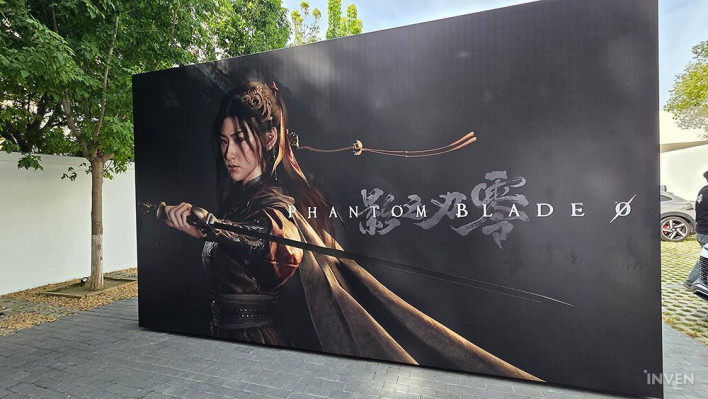
S-GAME's 'Phantom Blade Zero', which has drawn attention for its exhilarating kung-fu punk action and distinct boss battles, held a global media preview event in Beijing, China, ahead of its official release.
At this event, media were able to play through Chapter 1 of Phantom Blade Zero as well as two standalone boss encounters over a full six hours. The play session was conducted on PC using the Korean language version, and since the game is still in development, the localization was not yet fully complete.
To sum up the six-hour play session upfront: the action is absolutely incredible. While the build played last year relied heavily on individual mechanical skill, this demo delivered strong engagement through deciphering and countering each boss's distinct mechanics. In addition, players could clearly experience the unique characteristics of each weapon during gameplay.
* The game was played using the Korean language version, but the images and videos included in this article were provided by the developer.
Most Impressive of All Was, Undoubtedly, the Boss Battles Distinct Boss Identities Felt Through Combat, Atmosphere, and Mechanics

In this preview, being able to play Chapter 1 right from the start allowed players to experience a wide array of game elements—such as exploration, quests, and story—unlike previous demos that focused solely on combat itself.
Even with all those elements included, however, the boss battles remained the most intriguing, surprising, and central aspect of the game. Every boss encountered possessed distinct mechanics, allowing the fun of both raw action and mechanics resolution to shine through.

There were more boss encounters in the demo section than expected. What made this interesting was that no two bosses felt repetitive, each presenting a completely different style of combat. Most of the bosses encountered this time were humanoid, yet every single one offered a distinct battle experience.
Just as the player's attack style changes entirely depending on the weapon equipped, bosses also alter their attack patterns completely based on their equipped weapons. Even including the bosses experienced last year, not a single one overlapped.
As a result, every boss clearly offered the thrill of taking on a challenge, figuring out strategies, deciphering mechanics along the way, and dodging attacks to strike back at the right moment. Additionally, each boss balanced mechanical skill and mechanics resolution slightly differently, which was another intriguing highlight.

While every boss was challenging, the most memorable was Bai Jielian, who could be played as a standalone fight. Wielding a chain-like weapon that extended at will, her movement and attack patterns were highly fluid, and the mechanics themselves were exceptionally distinct.
It could be said that the balance between controls and mechanics resolution was executed extremely well. Blocking or dodging incoming enemy attacks from virtually every direction—from the air down to the ground—and quickly counterattacking only when an opening appeared to deplete the boss's Sha-Chi before delivering a devastating blow meant that individual mechanical mastery played a vital role throughout the fight.
However, raw mechanical skill alone will not solve everything. Clear mechanics-handling phases exist, and performing them properly is necessary for a smooth victory. It is not simply a matter of blindly dodging and hitting until the boss drops. At the same time, resolving mechanics alone will not defeat the boss either. Because enemy attacks are extremely fierce, the mechanical skill needed to avoid those strikes while maintaining combat pressure is equally essential.

On top of that, the distinct "atmosphere" that each boss conveys is equally impressive. The audio played throughout combat, combined with visual elements like graphics and cinematic direction, merges with the boss's appearance and attack style to deliver a unique atmosphere.
Some bosses exude a grotesque vibe, while others create an atmosphere akin to watching a horror film. Conversely, some bosses capture the stylish flair seen in classic Chinese kung fu movies, while others feature traditional aesthetics or convey intense action, with each providing a distinct atmosphere.
In this process, the sound design plays a massive role. Through music that clearly delivers a modern, funky vibe, the boss movements and combat flow feel significantly more tense and rhythmic. In particular, strong musical variations trigger when phase transitions occur, instantly boosting immersion. Moreover, despite the strong Chinese visual themes, this music lends a sleek, sophisticated feel to the combat overall.

Solidly Delivering the Fun of Action Combat Experiences That Vary by Weapon and Difficulty
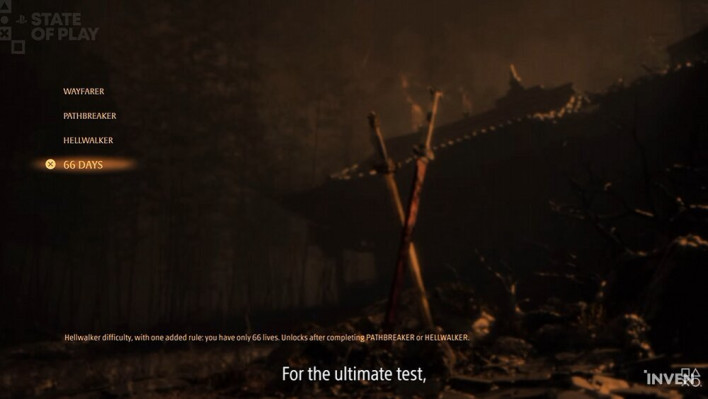
The game's difficulty options are divided into Initiate, Breaker, Defier, and 66 Days. While the base difficulty of 66 Days is identical to Defier, it limits the total number of deaths to 66. After trying all three available difficulty settings—excluding the locked 66 Days mode—the play experience delivered by each difficulty felt completely different, as if shifting genres altogether.
Initiate, the easy difficulty, is undeniably easy. It is perfect for enjoying pure action without any stress whatsoever. Taking hits from bosses carries little penalty, and naturally, combat duration is significantly reduced. However, in this preview build, once the difficulty was switched to easy mid-game, changing back to another difficulty was impossible.
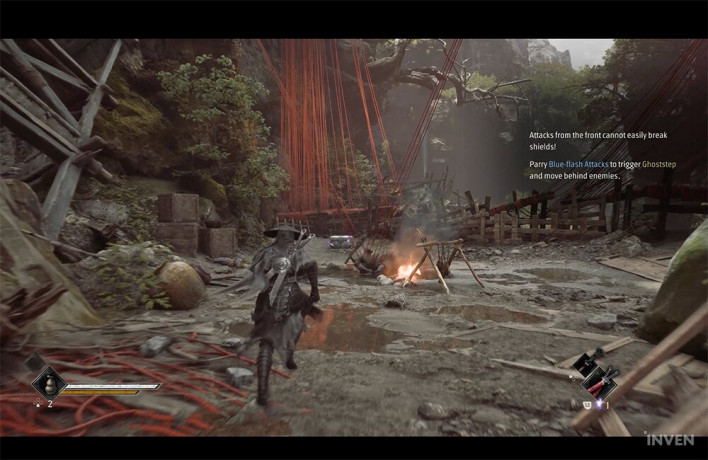
Breaker, the normal difficulty, strikes an excellent balance between thrilling action and control mastery. It is also the difficulty setting where the unique identity of Phantom Blade Zero shines brightest. Players experience exhilarating action that makes them feel like a kung fu master, while still needing to dodge enemy attacks precisely and handle mechanics flawlessly.
The overall playthrough for this demo was conducted on this difficulty, and while it varied by boss, most could be defeated within a few attempts without feeling excessively punishing.
Defier, the hard difficulty, is the exact opposite of Initiate—it is brutally difficult. Remarkably, it goes beyond simply inflating enemy health and attack power. Playing on Defier upgrades the bosses' actual attack patterns. Rather than just dealing heavier hits, bosses unleash far more complex and challenging attack strings.
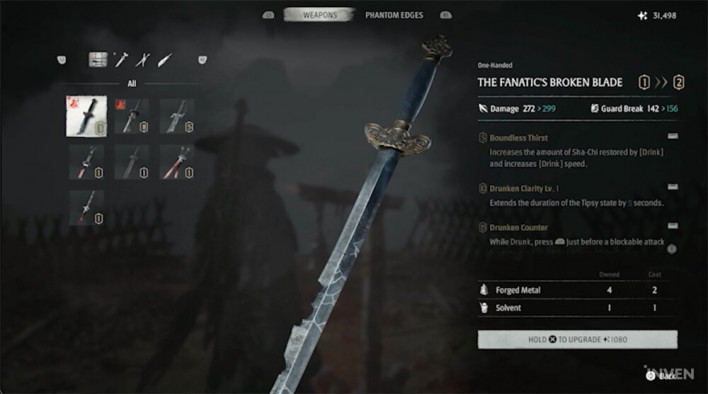
Another highlight of the gameplay is weapon variety. Although Phantom Blade Zero is an action game, its button inputs are not overly complex. That is not to say attack combos are absent; rather, the inputs required to execute those combos are streamlined and intuitive.
This design appears tied to the game's core feature where attack styles shift dramatically depending on the equipped weapon. Because each weapon possesses unique action combos, the inputs were intentionally kept simple. Even when pressing the same button, each weapon triggers distinct options, leading to entirely different follow-up attacks, making the controls remarkably easy to grasp.
Furthermore, playing with basic starter weapons feels completely different from acquiring and upgrading new weapons as you progress. Each weapon differs in attack speed, range, action combos, and even skills and utility, meaning gameplay becomes deeply individualized based on weapon choice. While core mechanics like attack, dodge, parry, Ghost Step, and Perfect Dodge remain constant, virtually every other combat aspect changes.
While impact feedback varies slightly by weapon, the overall hit feel leans toward a light, nimble touch. Instead of heavy, weighty action, it delivers an exhilarating, airborne sensation. As a result, combat feels exceptionally flashy and fast-paced overall.
Additional Game Elements Graphics, Story, and Game Flow
Even within the demo build, every aspect—from story and character designs to dialogue—exudes a distinct Chinese wuxia aesthetic. The dialogue in particular features heavy terminology that may be challenging to grasp for those unfamiliar with the wuxia genre, carrying enough depth that it feels like it would require footnotes in a novel.
Aside from the protagonist Soul, key characters, bosses, and NPCs carry a surprisingly traditional Chinese visual style. These traditional designs, along with the dense wuxia story and complex dialogue, may prove to be a matter of personal preference among players.
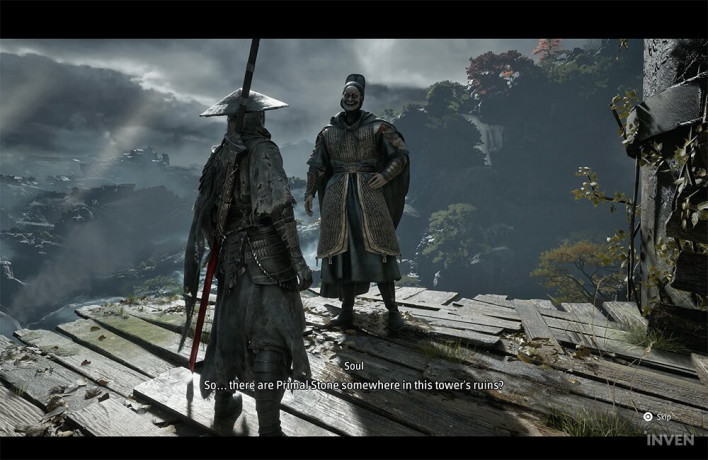
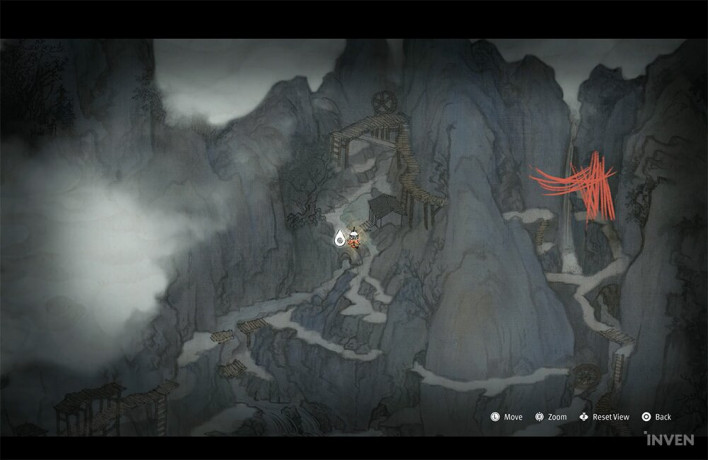
In terms of overall progression and map design, the structure is both linear and non-linear. The direction of advancement is undeniably linear—it is not an open world, so accessible areas and the main storyline follow a set path.
However, along that main path, various side quests separate from the primary storyline appear, leaving decisions on which side quests to undertake and which areas of the map to explore up to the player's choice.
Certain map sections are inaccessible during initial exploration. Because they require specific Phantom Edges or keys obtained later in the game, players are naturally guided to progress through the main story before backtracking. Whether to pursue side quests during this process or stick strictly to main story progression remains entirely up to the player.
Naturally, fast-travel save points in the form of bells are scattered across the map, making backtracking clean and convenient.
The raw action quality of Phantom Blade Zero is unquestionably top-tier. Six hours flew by almost imperceptibly thanks to how engaging the gameplay is—a feeling driven almost entirely by its stellar action.
Attack, dodge, block, counter. Built upon these fundamental controls, Phantom Blade Zero layers distinct combo mechanics through its highly unique weapons. Remarkably, combat remains deeply engaging using only basic mechanics alone. Even early encounters with minimal combo potential grip players tightly, creating noticeable tension in the hands holding the controller.

To maintain a seamless combat flow, the game connects stamina—known as Sha-Chi—with weapon swapping. Sha-Chi powers all basic actions, and once depleted, players can no longer attack, block, or dodge. However, swapping weapons instantly fully restores Sha-Chi. In short, constantly switching between two equipped weapons is key to sustaining uninterrupted combat.
This mechanic naturally encourages players to experience the contrasting combat styles of both equipped weapons, creating a strong synergy between their distinct action profiles—made possible because each weapon possesses such a defined identity.
Furthermore, by giving every boss clear tactical solutions, the game successfully pairs precise controls with the satisfaction of cracking boss mechanics. To keep combat and challenges from becoming frustrating, the game thoughtfully allows players to restart directly from the current phase upon reaching a new phase transition.
And now, the official launch to experience all this action is right around the corner. Phantom Blade Zero will be released on PC and PS5 on October 29.