Attending TGS for the second consecutive year, TiMi Studio Group's 'Monster Hunter Outlanders' (hereafter MH Outlanders) is set to launch globally on October 29 across regions worldwide except mainland China. Having first revealed a playable demo at last year's TGS, 'Monster Hunter Outlanders' drew global fan attention by bringing Monster Hunter's signature action to mobile alongside a variety of original content. While inheriting core elements from the original series, it also featured title-specific mechanics such as companion Adventurers, unique skills, and ultimate abilities.
Naturally, there were points of criticism. Due to the nature of the mobile platform, controls were tricky for some, and critics pointed out that ultimate ability cutscenes interrupted the flow of the hunt. However, TiMi Studio actively embraced this feedback and incorporated it into development. Re-emerging at TGS 2026, 'Monster Hunter Outlanders' showcased a significantly polished experience, entering its final phase of refinement ahead of official release.
With launch just about a month away, it is time to look at what has changed throughout development and what preparations have been made. At TGS 2026, we spoke with Capcom producer Ichiro Kiyokawa and TiMi Studio producer Dong Huang to discuss how player feedback was applied to development and what lies ahead for 'Monster Hunter Outlanders' as it approaches official release.
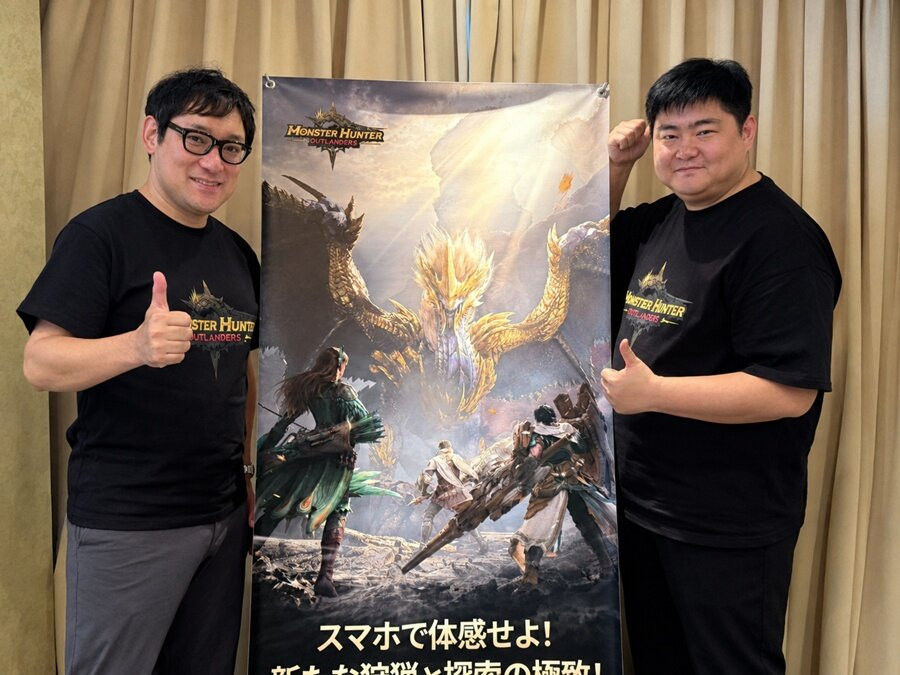
Compared to previous Monster Hunter titles, playable characters seem to be the biggest point of differentiation. In previous entries, the protagonist was a 'Hunter,' but in this title, that has changed to an 'Adventurer.' Furthermore, companion Adventurers with unique appearances, weapons, and skills make an appearance. What was the reason behind introducing this concept of Adventurers?
Ichiro: This title is not developed directly by Capcom; Capcom oversees supervision, while TiMi Studio handles development. During our discussions, we added original settings to leverage TiMi Studio's development expertise to the fullest, and through that process, the concept of 'Adventurers' emerged.
One of the key features of 'Monster Hunter Outlanders' is that you can gather resources in the field and build structures to assist with movement and other aspects. You can think of it as creating characters with slightly different roles than traditional Hunters—characters who do things original Hunters couldn't do. These original settings are progressing well in development.
Although developed by TiMi Studio for mobile platforms, the game stays closer to the mainline experience than other spin-offs. Could you explain what connections, story ties, or inherited elements exist in relation to previous titles?
Dong Huang: In making 'Monster Hunter Outlanders,' the world setting inherits that of the original franchise. Much of the technology level, character traits, and monster ecology were adapted from the original series.
However, the story and the crises and challenges that unfold in this game are original elements unique to 'Monster Hunter Outlanders'. You can view it as a story taking place in a new region and a new timeline.
The original series emphasizes the fun of combining various gear and decorations to build custom setups. 'Monster Hunter Outlanders' seems to focus more on the characters who use the equipment rather than equipment itself. What was the reason behind structuring the game differently like this?
Dong Huang: While many entries in the Monster Hunter series emphasize the joy of customizing builds through gear combinations, this game also incorporates progression through gear. Building setups by combining equipment, as you mentioned, is a prime example.
However, in this title, we introduced character progression systems to lower the barrier to entry needed for players to understand the equipment system.
Rather than introducing an overly complex equipment system, we designed it to be more accessible, retaining parts of the traditional gear system while allowing players to easily swap characters.
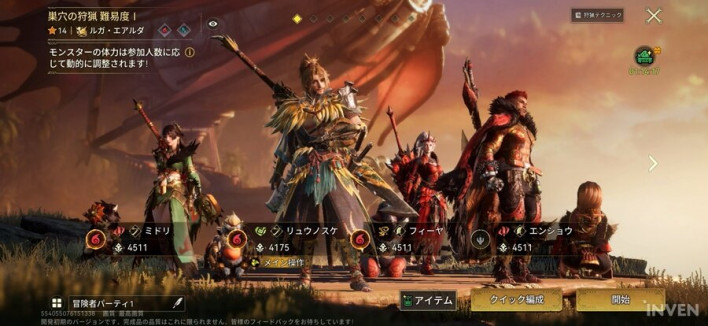
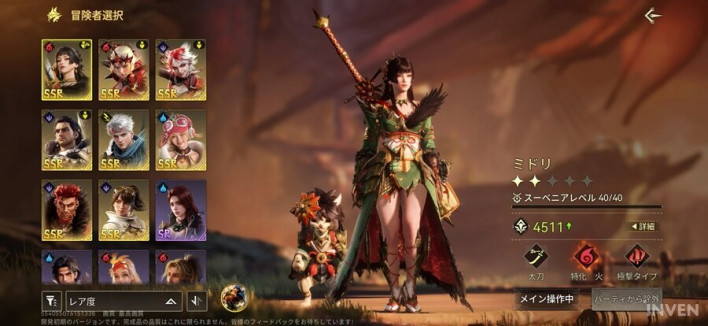
Weapon animations seem to differ from the original games. I tried playing Midori and a male Long Sword user; Midori felt closer to original animations, whereas the male character felt quite different, making the changes feel substantial and difficult. What was the reason for applying different animations and movesets while using the same Long Sword?
Dong Huang: Are you referring to the male character named Ryunosuke? The one with the meat-eating animation, right? Yes, that character is Ryunosuke.
When initially designed, Ryunosuke was built around the Long Sword's Spirit Gauge mechanic. The position we envisioned for Ryunosuke was a Long Sword user who supports the entire party, providing buffs to Buddy characters.
These concepts combined into a design where he eats meat to recover energy, buff Buddies, and support the party.
Since he has many meat-eating animations, we wanted to convey lighter, more playful movements, resulting in movesets that differ slightly from the traditional Long Sword.

This title feels quite unique even among the Monster Hunter series revealed so far. In collaborating with TiMi Studio, what core identity of Monster Hunter did Capcom feel was non-negotiable? Conversely, were there areas where TiMi Studio was given creative freedom, and could you provide examples?
Ichiro: Since this is a Monster Hunter game, players will encounter many monsters featured in previous titles.
During supervision, Capcom carefully checked whether any monster animations in 'Monster Hunter Outlanders' were difficult to align with the originals or contradicted the monster's ecology.
However, TiMi Studio also has many passionate Monster Hunter fans developing the game, so we trusted that handing certain aspects to them would not produce anything out of place.
Additionally, 'Monster Hunter Outlanders' features Radiant Species monsters. These are stronger variants than their original counterparts, and we supervised them with the same care. For certain animations where TiMi Studio used expressions different from Capcom's usual style, we granted them more creative freedom during development.
Even for game-exclusive monsters like Radiant Species, there were cases where we asked for revisions, but otherwise, development progressed through open discussion with TiMi Studio.
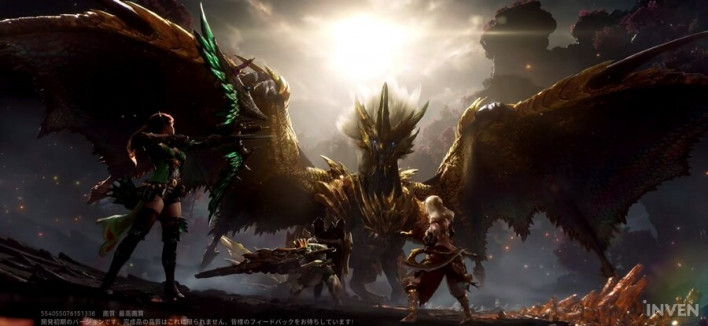
In the original series, roles were not explicitly defined by weapon type, but Sword and Shield or Hunting Horn are generally seen as support weapons. In 'Monster Hunter Outlanders,' roles seem to be divided into Assault, Disruptor, and Support regardless of weapon type features. What led to the creation of this system?
Dong Huang: First of all, we deeply respect the community perception that Sword and Shield and Hunting Horn are support weapons in the original games, so we plan to reflect this in future updates for 'Monster Hunter Outlanders.'
However, because 'Monster Hunter Outlanders' is a live-service title meant to run long-term, we are making long-term plans to distribute character roles across various types. Accordingly, we are ensuring a balanced distribution across different weapon types, Adventurers, and roles.
An important factor here was that players won't always find party members that match every required role. If a party needs a Support role, players can swap in a Support-type Adventurer to adapt. In the future, we plan to create Adventurers that break traditional weapon norms, and some have already been designed this way.
Currently, seven weapon types have been revealed for 'Monster Hunter Outlanders.' Are the remaining weapon types planned for inclusion? Also, are there any plans for original weapon types exclusive to 'Monster Hunter Outlanders'?
Dong Huang: All 14 weapon types from the original series will be added through seasonal updates.
Regarding original weapons, we discussed it extensively with Capcom, but felt that the 14 existing weapon types in the Monster Hunter series already offer immense appeal and versatility. Therefore, we plan to first fully showcase the charm of the original weapons and Adventurers before revisiting discussions on original weapon types.
New entries in the Monster Hunter series continue to be released, including console titles. In this climate, what position do you hope 'Monster Hunter Outlanders' holds within the Monster Hunter IP? There could be multiple directions, such as attracting new players who haven't played Monster Hunter before or providing a fresh experience for existing fans.
Ichiro: We hope to fulfill both positions. For fans who love the Monster Hunter IP, we combined the series' core combat decision-making and distinctive action with 'Monster Hunter Outlanders'-exclusive roles and cooperative skills, allowing even hardcore Monster Hunter players to enjoy a fresh experience. We believe this will deliver new excitement.
At the same time, we hope it serves as a gateway for new players to enter the Monster Hunter franchise. Capcom primarily develops games for PC and console platforms. While we do develop mobile games on occasion, TiMi Studio has extensive experience in mobile development, so we believed they could craft a higher-quality game on mobile platforms.
As a result, even in the playable demo version shown today, despite being a landscape mobile game, both the action and overall quality turned out exceptionally high.
As a side note, the Starting Mode in 'Monster Hunter Outlanders' is a well-designed control system that I personally really like. Because controls in this mode are accessible while still enabling a wide variety of moves, I think it is ideal for newcomers entering Monster Hunter.
In summary, we hope it takes on a role that appeals to both veteran Monster Hunter players and new audiences.

In last year's test, there were cinematic cutscene presentations for ultimate abilities, but they seemed to be removed this time. I recall feedback from playtesters at the time stating that those cutscenes didn't fit the Monster Hunter vibe. Was their removal a result of this feedback?
Dong Huang: First, thank you very much for trying 'Monster Hunter Outlanders' two years in a row.
Regarding your point, that consideration was definitely a factor. The background behind adding those cinematic cutscenes was our intention to create moments in the game to showcase flashy flair—literally showing off cool action with ultimate cutscenes.
In hindsight, we realize we miscalculated. Monster Hunter is a game with critical timing throughout hunts, so interrupting that flow is the worst thing to do, but we overlooked that because we were focused on adding stylish flair. As a result, playtester feedback indicated that rather than feeling cool, these cutscenes disrupted combat flow.
Based on that feedback, we tested three formats: first, the traditional full cinematic cutscene; second, a brief flash of character art; and third, the dynamic camera presentation showcased this time. Testing showed the third format received the best reception, so we set it as the default.
However, data analysis showed clear player preferences for all three options. Rather than retaining just one, we set the dynamic camera presentation as default while including all three options in the full build so players can select freely.

Companion Adventurers have flashy visuals, skills, and attack animations, so I worry the main playable Adventurer might get overshadowed—for instance, players saying, 'I'll only play Midori for Long Sword.' Are there features designed to highlight the distinct identity of the main playable Adventurer?
Dong Huang: That is a great question. First, in the 3rd CBT, the playable main Adventurer received substantial buffs, improving combat strength and progression elements.
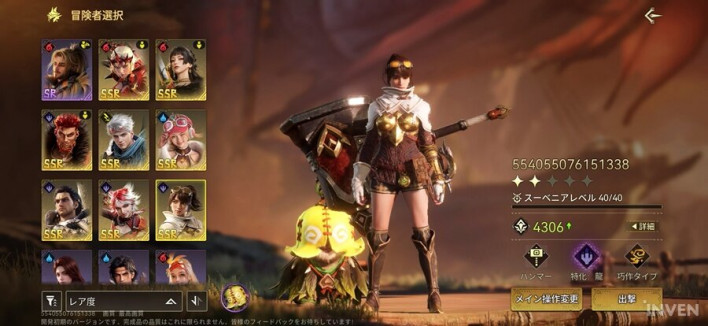
Furthermore, the main Adventurer's greatest appeal lies in deep customization. Following official release, we plan to add many visual customization options tailored to new designs.
In terms of story, the main Adventurer has a unique advantage companion Adventurers lack: being the protagonist of 'Monster Hunter Outlanders.' While other Adventurers carry their own responsibilities and goals, the entire narrative centers around the main protagonist.
To add to that, the main playable Adventurer is positioned as a versatile character adaptable to any challenge or content, offering stat progression as well as the freedom to swap weapon types and roles.
In summary, the main Adventurer is a free character that builds the foundation for player progression—a highly versatile, core character that ensures players can enjoy all content without paying.
How are post-launch update and content plans structured?
Dong Huang: It is still too early to reveal specific update frequency and cadence. However, every version update will introduce new gear, Adventurers, monsters, Buddies, fields, scenarios, and fresh gameplay elements.
Although 'Monster Hunter Outlanders' is a mobile title, its detailed action reminiscent of PC and console games is a major appeal. However, controls can feel difficult on mobile devices. Dodging in particular felt tricky, likely because placing multiple fingers over buttons simultaneously is tough on mobile. Are there plans to implement dodging as a flick gesture?
Dong Huang: Implementing dodge via flicking is an interesting idea. However, introducing it to 'Monster Hunter Outlanders' presents a challenge. Unlike other games where the camera constantly locks onto monsters, 'Monster Hunter Outlanders' features larger combat arenas. As a result, flick controls could conflict with camera controls.
We take control difficulty very seriously, so we are addressing it through three approaches.
First is the aforementioned Starting Mode. Second is offering extensive control customization, allowing players to freely adjust button sizes, functions, and positions.
Third is simplifying control inputs for certain skills. While some characters may feature higher control complexity, other characters streamline inputs by combining multiple functions into single inputs for easier control.
Finally, do you have any closing words for Korean gamers?
Dong Huang: 'Monster Hunter Outlanders' will launch globally on October 29 across regions worldwide except mainland China.
To Korean players, 'Monster Hunter Outlanders' is free-to-play, so if you want to experience Monster Hunter on mobile in a fresh, accessible way, I strongly encourage you to try it. I hope you experience the unique fun that the Monster Hunter franchise offers.
Ichiro: Ever since my university days, I spent a lot of time playing Korean MMORPGs. Even today, Korean studios continue to develop and release great games, and because many games I love were developed in Korea, I feel a strong sense of fondness for the country.
As such, I am thrilled that 'Monster Hunter Outlanders' is reaching Korea for its official launch. I hope Korean gamers jump into the world of 'Monster Hunter Outlanders' and fully enjoy everything the game has to offer.