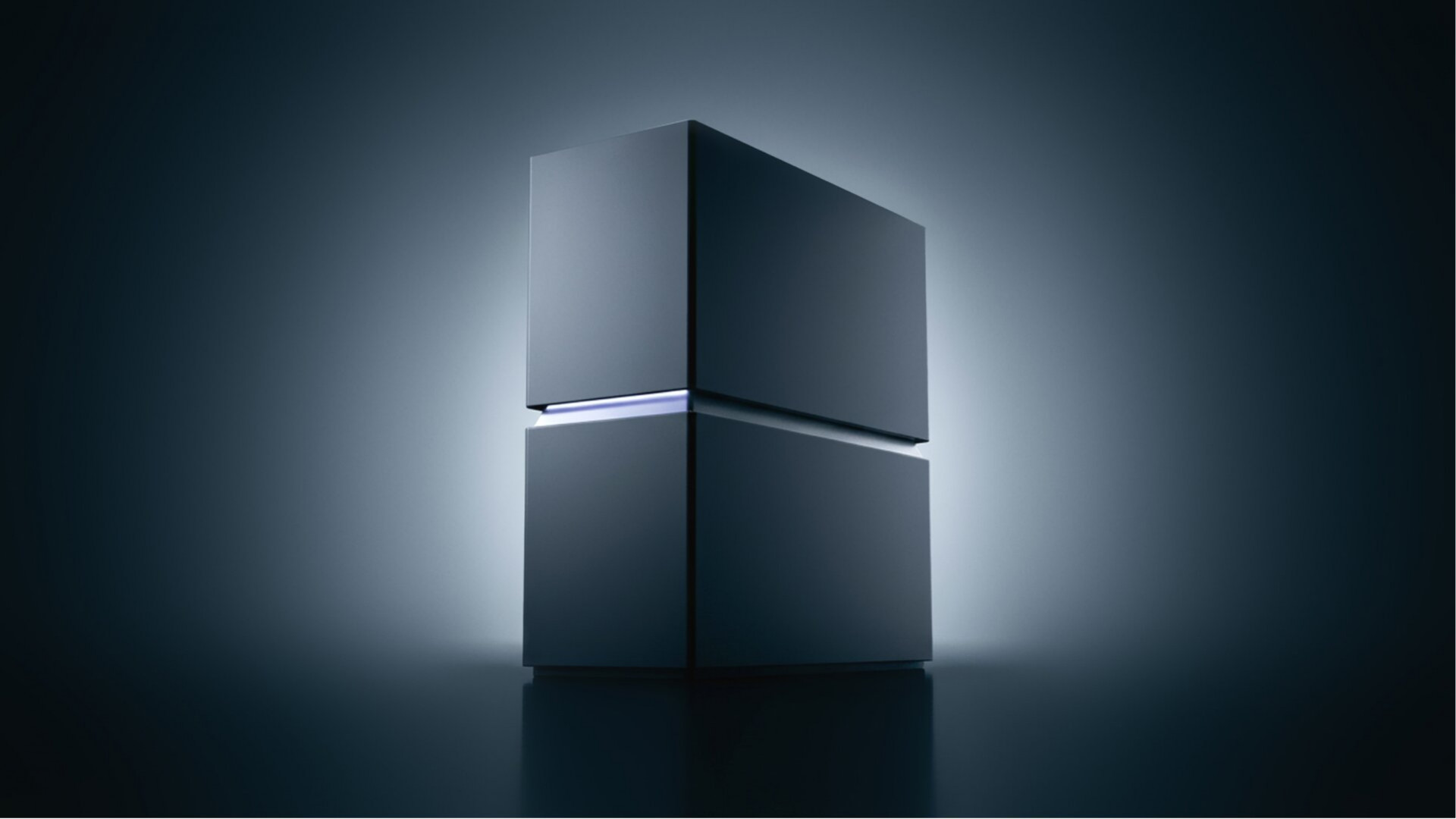
TP-Link announced its first router supporting key technologies of the next-generation wireless standard Wi-Fi 8, the 'Archer 8 Ultra'. Unlike previous generations that focused heavily on boosting peak transmission speeds, Wi-Fi 8 is characterized by its focus on "Ultra-High Reliability (UHR)," which maintains consistent connection quality in real-world usage environments.
Wi-Fi 8 is based on IEEE 802.11bn, which is currently under development. As of September 2026, IEEE lists it at the Draft 2.0 stage, with final standard approval expected in 2028. TP-Link also describes the Archer 8 Ultra as a product based on the upcoming IEEE 802.11bn standard, making it a product that early-adopts technologies currently undergoing standardization.
TP-Link built its core Wi-Fi 8 technologies into the "Wi-Fi 8 StabilityEngine". At launch, the Archer 8 Ultra supports UEQM (Unequal Modulation), New MCS (improved Modulation and Coding Scheme), 2×LDPC (Enhanced Low-Density Parity-Check code), and NPCA (Non-Primary Channel Access).
UEQM applies different modulation schemes based on the signal condition of multiple spatial streams. New MCS provides finer modulation and coding steps to reduce sudden speed drops when signal conditions fluctuate. 2×LDPC strengthens error correction functionality to increase data transmission stability in environments with interference or weak signals. NPCA allows communication to continue by utilizing secondary non-primary channels when the primary channel is congested.
Qualcomm also highlights UEQM, new MCS, enhanced LDPC, and NPCA as key Wi-Fi 8 technologies. Rather than raising peak speeds, the main shift in Wi-Fi 8 is maintaining consistent throughput and latency in real-world environments with congestion, interference, and edge coverage limits.
Additional Wi-Fi 8 technologies will be implemented through future software updates. DSO (Dynamic Sub-channel Operation) efficiently allocates sub-channels according to the bandwidth required by each device, while ELR (Enhanced Long Range) improves connection stability for devices located far from the router. DRU (Distributed Tone Resource Unit) spreads uplink signals across a wider band to improve communication performance for low-power or long-range devices.
In addition, multi-access point coordination technologies that jointly coordinate wireless resources—such as Co-TDMA (Coordinated Time Division Multiple Access), Co-SR (Coordinated Spatial Reuse), and Co-BF (Coordinated Beamforming)—will also be added. TP-Link plans to deliver these features sequentially via OTA updates as the standard matures, supporting ELR, DRU, and DSO via free software updates between 2027 and 2028.
In TP-Link internal testing, the router recorded up to 33% higher throughput at mid-to-long ranges compared to Wi-Fi 7, while throughput consistency improved by up to 24% under interference. These figures reflect internal manufacturer testing, and actual performance may vary depending on the installation environment and connected devices.
Powered by Broadcom's Wi-Fi 8 chipset, the Archer 8 Ultra supports tri-band wireless connections reaching up to 19 Gbps across the 6 GHz, 5 GHz, and 2.4 GHz bands. It features 18 built-in antennas, two 10 Gbps WAN/LAN ports, and four 2.5 Gbps LAN ports, supporting up to 200 connected devices.
TP-Link opened pre-orders for the Archer 8 Ultra on September 30 in select regions, including the UK, Germany, Australia, and Canada, with rollout in other regions to follow sequentially. Further details regarding the product and Wi-Fi 8 technology can be found on TP-Link's official website.