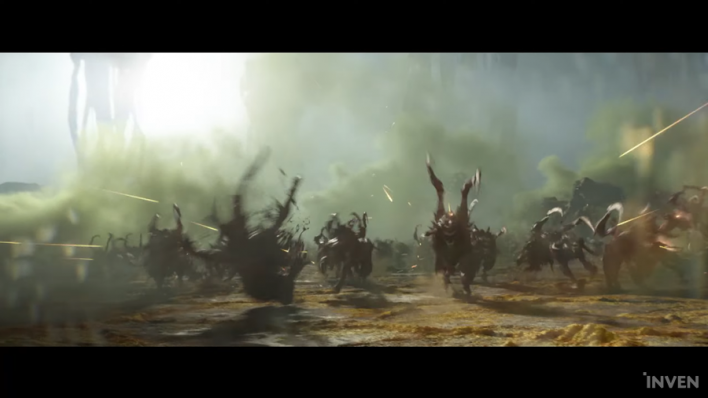
One of the most eye-catching announcements at the BlizzCon 2026 Opening Ceremony was the return of StarCraft, which had gone without news of a new title for a long time. However, the newly unveiled StarCraft was not a real-time strategy (RTS) game like previous entries in the series. This time, instead of commanding the battlefield from high above, the franchise shifted genres into an open-world shooter where players jump directly onto the battlefield.
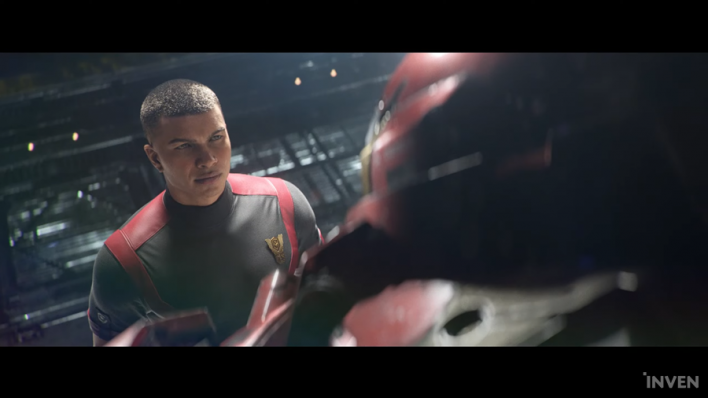
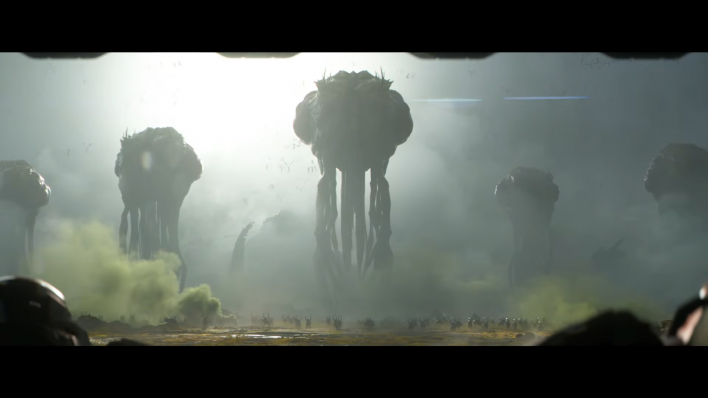
The video revealed at the opening ceremony also emphasized this shift. It depicted a young recruit who believed he was fully trained and ready for battle being deployed onto a real battlefield, only to face a swarming horde of Zerg filling his vision. Players will now directly experience the battlefield as an individual soldier, rather than observing it from afar as in classic StarCraft.
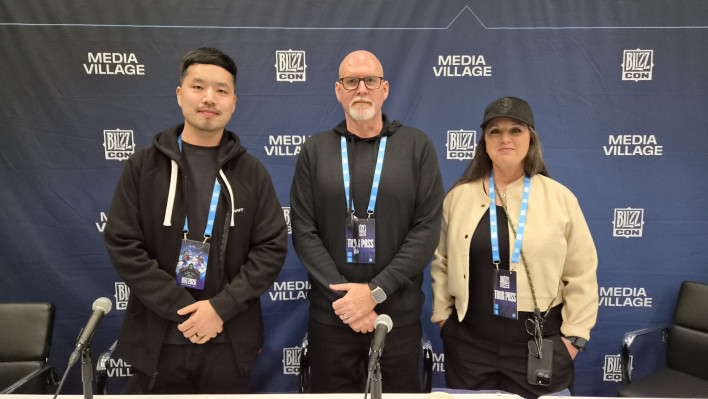
Following the video reveal, an interview with the developers of the new StarCraft title was held for Korean media on the afternoon of the same day at BlizzCon 2026. In attendance were Dan Hay, StarCraft GM and Creative Director on this project; AnaLee Haertling, Associate Manager of Development Operations; and Paul Lee, Senior Producer.
At the opening ceremony, the new title was introduced primarily through a video. Could you elaborate on what kind of game this new StarCraft currently in development actually is?
Dan Hay: That's a very big question. If you look closely at the revealed teaser, you can see a young recruit. He thinks he knows how the world works, believes he's fully trained and completely prepared for combat as he heads to the battlefield. But in reality, that wasn't the case, and as he directly encounters a massive swarm of Zerg, he realizes he wasn't truly ready.
From this, you can gauge the direction of the game we are making. This time, instead of placing the player up high to look down on the battlefield, we want to drop them right into the middle of the battle on the ground. We want it to feel like a very up-close and personal experience while delivering high tension. Our primary goal is to create an experience where you feel what it would actually be like to be deployed into that situation—where every step you take and every opportunity before you feels consequential.
To be a bit more specific: even within open-world shooters, there are various forms like looter shooters, seasonal games, single-player, or multiplayer. While things might evolve during development, what is the ultimate vision the team is targeting right now?
Dan Hay: If I were to describe the overall structure we currently envision, it's a "box product." It is a narrative-driven open-world shooter where players create a character, name them, and follow that character's story. The story has a beginning, a middle, and an end.
You can roam around and explore a rich open world, but our story has a definitive ending. Think of it as purchasing a standalone boxed game, playing it, and experiencing its story. We hope players enjoy it, love it, and return to us later. At the very least, what we are building right now is not a seasonal game.
Given the major shift in genre from RTS to open-world shooter, maintaining StarCraft's identity seems crucial. What does the development team consider to be the core identity of StarCraft, and how are you trying to bring that to life in this new game?
Dan Hay: Identity is extremely important. StarCraft has a very unique identity, and it's a franchise that holds deep personal meaning for me. I love the gritty, rough edge unique to StarCraft, as well as its space Western sensibility. It has that vibe of being on the frontier—remote, distant, and isolated.
The characters aren't people who always just do what they're supposed to do, either. In fact, they often do things they shouldn't. There are countless political moves taking place between hostile forces, with factions constantly clashing. There's an underlying tension that the whole world could tilt into catastrophe at any moment. That's why I feel it's vital for StarCraft to maintain that dark and gritty atmosphere.
The difficult part comes after that. Because we love StarCraft so much, looking back at the original works might make you think, "It's already perfect, so why touch it? Why not just leave it as it is?" But at the same time, we needed an opportunity to create something new. That's why we set the timeline for this project 70 years after the previous story—to secure creative freedom to a degree.
Thanks to that, we can build new stories, adventures, and characters. Factions that looked a certain way in the past might have shifted their perspectives over 70 years, disagreed with each other, or fractured into splinters. These changes provide ample room to forge new narratives. It's crucial to tell a new story while preserving StarCraft's signature dark, gritty mood and space Western atmosphere.
Does moving the setting 70 years into the future mean that it was ultimately a choice to create a new story while respecting the established StarCraft universe?
Dan Hay: That's right. If you're bound solely by the mindset of keeping everything exactly as it was, it's very hard to create something new. Having 70 years of time allows us to explore how past factions and relationships have evolved. Groups that held a specific stance in the past might now hold different views, or they might have split and fractured.
For us, those transformations create room to generate new stories, adventures, characters, and relationships. In our real world today, there are various conflicts and dark realities, and in that sense, StarCraft feels grounded in reality once again. We believe we can present a fresh story to today's players while preserving its core identity.
Players who first enjoyed StarCraft 1 are now entering their 40s, and a significant portion of StarCraft II players are in their 30s. For veteran fans accustomed to RTS, a shooter is a completely different genre, and many may not have the fast mechanical controls or rapid reactions of younger players. Why did you choose an open-world shooter despite this? Furthermore, what mechanisms have you prepared to ensure existing fans can enjoy the game?
Dan Hay: I completely understand the intent behind your question. We know how deeply important StarCraft was to so many people. The game we are making must also respect what came before. I believe we must start from StarCraft's lore, legacy, and what the game meant back then.
The shooter we are building features a deep story, main missions, side quests, and character progression. While it will be a gritty and challenging game, we aren't trying to make it overly punishing. We want to present a degree of challenge while letting players experience an adventure within it. In particular, if a certain mission feels too difficult, you can return to the open world and engage in other activities at your own pace.
It might sound a bit odd, but I compare it to a hot tub and a swimming pool. Both the hot tub and the pool are filled with water and located only a few meters apart, but nobody does a cannonball dive into a hot tub. In a swimming pool, on the other hand, that's completely natural behavior. Even though both are water, different rules and experiences exist. In our game, we want to provide two distinct experiences in a similar way.
On one side, there are serious missions and a powerful narrative. You might remember the moment Kerrigan was abandoned in StarCraft. When the camera pulled back on Kerrigan left all alone, you wanted to scream at the screen, "No, don't leave her behind!" In our missions, we want to deliver that intensity of emotion once again.
Conversely, in the open world, players can progress at their own speed. If you lack adequate gear, you can head out into the world, scavenge for what you need, deck out your armor, and try again. I'm not a high-reaction-speed player myself, either. So I want to build a game that I can thoroughly enjoy. I like wandering around slowly, exploring, discovering new things, and encountering unexpected turns.
We want to give players that exact choice. We chose a narrative-driven game to give players the time and space to experience the world at their own pace. Tackling intense missions, and then, if needed, stepping back out into the free open world to play your own way—that is the game we are making.
Paul Lee: Questions about transitioning from an RTS to a shooter have come up several times, but as Dan mentioned, story is one of StarCraft's core pillars, and it's an element we definitely intend to maintain in this game.
I am also Korean-American and play many games made in Korea. It's easy to assume the Korean market is more accustomed to live-service or free-to-play titles. However, looking at recent boxed titles developed by Korean studios—games like Lies of P, Stellar Blade, Crimson Desert, and Dave the Diver—they each cover different genres and target different spaces, yet they possess compelling stories, gameplay, and narratives, receiving great responses from both global and Korean players.
As someone of Korean descent, I completely understand why questions arise about how StarCraft, originally an RTS, will transition into a shooter. However, I believe the core essence of StarCraft's story, its conflicts, and its narrative are elements that can resonate across generations of players. We want to treasure and preserve that aspect in this game as we show it to players throughout development.
In the trailer shown at the opening ceremony, the Protoss were not conspicuously visible. Was their presence intentionally hidden, or will the Protoss not appear in this story?
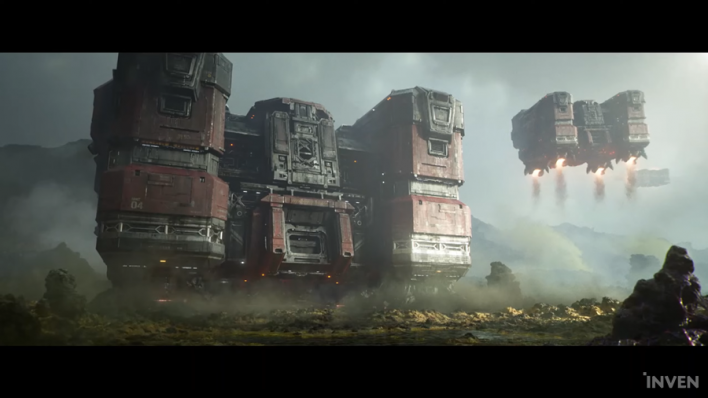
Dan Hay: We didn't hide them. The Protoss are there. Take another look at the scene where the soldier is deployed onto the battlefield, the door opens, and Mutalisks fly past. If you look closely at the background terrain and architecture, there is a structure that is neither Terran nor Zerg. It's a Protoss structure. The screen was very bright and the shot passed by quickly, so it might have been hard to spot, but it is definitely there.
The Protoss are definitively one of the factions featured in this game. What's important to us is maintaining the core essence of the Zerg, Protoss, and Terran, and capturing the asymmetrical dynamic that emerges when they clash with one another.
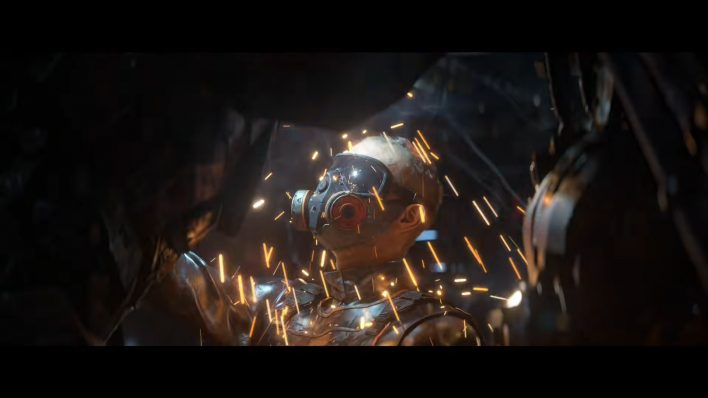
Of course, we don't want to reveal everything right from the start. If we show everything at once, we won't have anything left to talk about down the road. Even in this teaser, we spent a very long time reviewing every Mutalisk, Overlord, and Zergling appearing in that space, and the same went for the Protoss structure. If you rewatch the video, you'll be able to spot these subtle hints.
StarCraft features distinct cultures and groups that don't agree with one another. They fight over resources and clash over ideologies or beliefs. It reflects dynamics we see in the real world today, and StarCraft has always explored these themes.
The Protoss are immensely powerful and a force we respect, but they are deeply bound by their traditions and do not act lightly. The Zerg cannot be reasoned with or persuaded to join our side; they think in an entirely different way. The Terrans roam space somewhat chaotically, taking whatever they can grab. We love this asymmetry among the three races and are exploring how it can evolve in this game. The hint in the trailer is tiny, but the Protoss are definitely there.
StarCraft is a monumental title in the history of RTS and esports, and its influence remains significant in Korea today. Does developing this new game as an open-world shooter mean StarCraft as an RTS stops here? Is there a possibility of making an RTS again in the future?
Dan Hay: That's a very big and important question. First off, the starting point for developing this title as an open-world game was the story. There was a narrative we wanted to tell, and development began from figuring out how to realize that vision.
However, I have to be extremely careful when answering what we might do in the future. Today, we are here to talk about this specific game, not to announce something else we might make down the road.
We fully understand that StarCraft began as an RTS and occupies a hugely important and powerful position not only in its lore and universe, but also in the evolution of esports. Blizzard has also served as a vital partner in that space. Right now, our focus is entirely on crafting a great story and compelling characters for this project.
Of course, we think about the future too. I'm always pondering where we can go next and what we can do in the future. But I want to avoid a situation where I say something here and headlines come out reading "Blizzard Developing Another StarCraft Game Beyond This Title." I know how important this question is, but I cannot speak beyond that today.
Prior to the official reveal, several ARG events took place on the official website. What made you prepare this style of marketing that encouraged players to discover and decipher clues on their own?
Dan Hay: One of the things I love about the StarCraft brand is that it feels very grounded and believable. The events taking place in this universe feel like they could actually happen in our own world. Even though it's sci-fi, it sometimes feels as though it's rooted in real science. It has an industrial, powerful, and heavy weight to it.
So when the opportunity came to tease the game for the first time, we thought long and hard about how to do it. Rather than simply showing information, we wanted to create an experience akin to an old-school radio drama, where something arrives when you least expect it. On the website, we envisioned the feeling of someone suddenly knocking on your door without any explanation. Personally, I love hiding things quietly and letting people discover them on their own.
An open-world game, after all, is a game about discovery. You don't need to explain everything. Players are smart enough that you don't have to script every moment or spell out every detail from A to Z. You just need to build a beautiful yet dangerous world and give them the opportunity to explore and discover new things within it.
Personally, I also love moments when something familiar suddenly behaves in an unexpected way. When a question pops up—"Wait, why is this happening? What's going on here?"—you naturally want to figure out what it is on your own. A game begins right at that moment.
We wanted to create that exact experience on the website as well. People who noticed something unusual would wonder, "What is this?" and start asking questions and starting conversations with others. It closely mirrors the experience of stepping out into an open world, discovering something, and figuring out solutions on your own. That was our intention, and I think it came together quite well.
AnaLee Haertling: I'd like to add one thing. The development team is also tremendously passionate about this project and StarCraft, and we were incredibly excited just to be able to unveil it to the community, the players, and the world.
The website was another way to build up that anticipation. We are just as excited about StarCraft and this project as the community and players are. One of the reasons we prepared the website was that we wanted to share our passion with the community and foster an environment where everyone could get excited together.