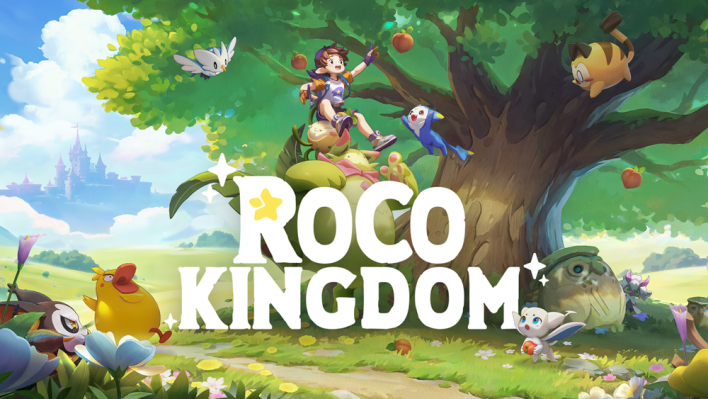
"Roco Kingdom," a new title developed by Tencent Games' Morefun Studios, has announced its global release. As the latest entry in a massive IP that began 16 years ago as a web-browser game and amassed over 350 million registered users, the game drew 15 million players in just 13 hours when it launched in China this past March. Building on that momentum, the game is gearing up for its global Closed Beta Test (CBT) on October 27, and will reach gamers worldwide as a completely free-to-play, cross-platform title supporting PC, console, and mobile.
Set on the magical continent of Carosia, players collect creatures called "Jinies" in a game that successfully combines the core essence of a creature-collector RPG with the scalability of an MMO. It offers a smooth open world where player capacity adjusts dynamically based on location, while Jinies form a living ecosystem in their habitats, interacting much like real animals. In particular, the turn-based counter system—where attack, defense, and status-effect skills interact in a rock-paper-scissors dynamic using 10 energy—goes beyond simple stat comparisons to maximize intense psychological warfare and the thrills of PvP.
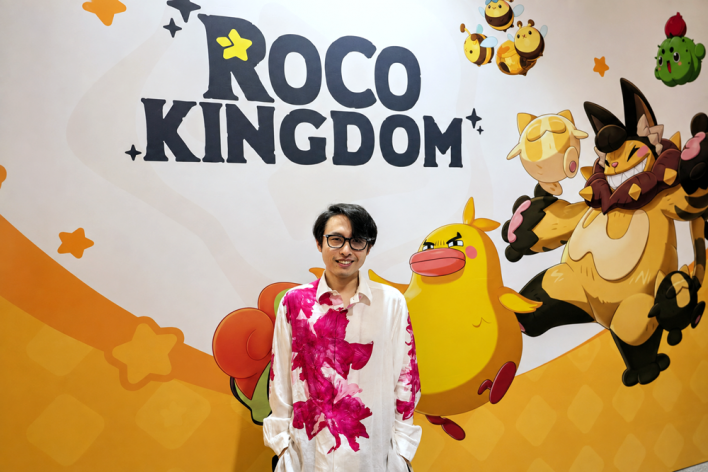
At Gamescom 2026, we met Xiaoye, Narrative Director and Localization Lead at Tencent's Morefun Studios. We spent time exploring the fields and hunting bosses together while hands-on with a playtest build, gaining vivid behind-the-scenes insights into the core appeal, multiplayer elements, and combat systems of Roco Kingdom ahead of its global launch.
Q. Could you explain the basic features of the game and its multiplayer (MMO) environment?
"Roco Kingdom" is an open-world creature-collecting RPG with multiplayer elements. It isn't a traditional full MMO where hundreds or thousands of players appear on a single screen; instead, player visibility dynamically scales depending on the area. You might see 10 to 30 people in town, but when you venture into the wild (overworld), like hiking on a real-world trail, the number of players you encounter decreases. Once the global version launches, including in South Korea, all players worldwide outside of China will be able to enjoy cross-play together on a single unified server.
Q. Compared to other creature-collector RPGs, what is Roco Kingdom's unique strength?
We take pride in outperforming other creature-collector games across overall quality, including scale, volume of content, and the uniqueness of Jini designs. Above all, our greatest strength is that it is a true 'MMO' where players across the world can enjoy cross-play seamlessly without barriers across PC, console, and mobile.
Q. Are the creatures known as "Jinies" strictly for collecting and battling, or do they have other uses, such as being mounts?
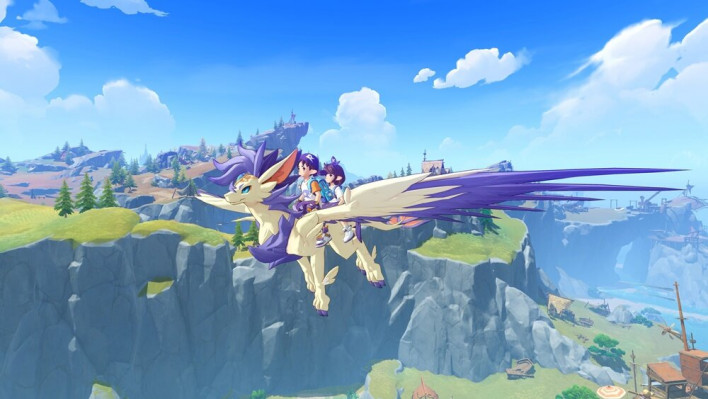
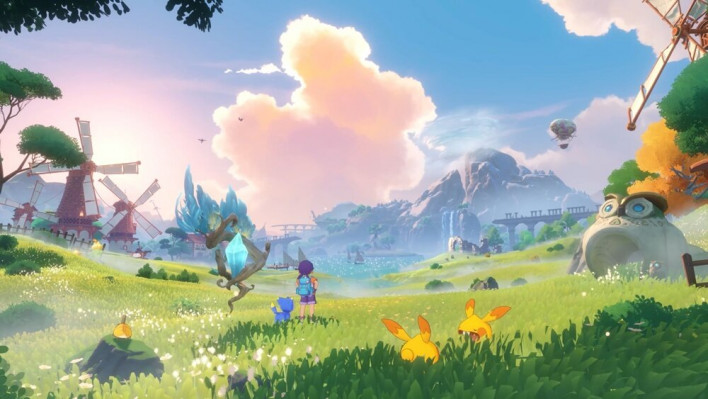
Jinies are not only core to combat, but also serve as excellent modes of transportation and companions to bond with. Most Jinies can be mounted, allowing you to sprint or fly by consuming stamina. We want every Jini to have a meaningful purpose. Therefore, flying mounts aren't automatically the fastest creatures; for example, a tiny, adorable flower-shaped Jini might boast incredible speed on the ground.
Q. Roco Kingdom features a turn-based combat system. What is its core combat mechanism?
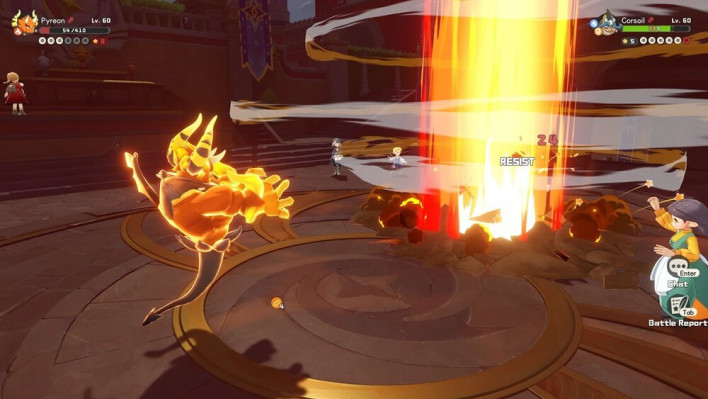
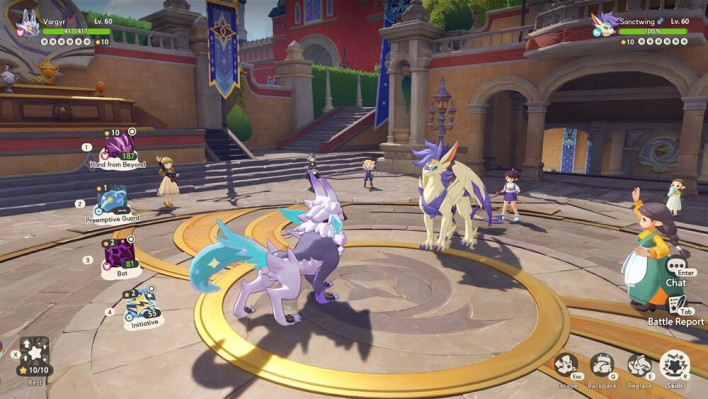
Each Jini has 10 energy, which is consumed whenever skills are used. Skills are broadly categorized into three types: Attack, Defense, and Status Effects (buffs, etc.). Attacks interrupt status effects, status effects negate defense, and defense counters attacks. It works like a rock-paper-scissors system.
You have to gauge your opponent's remaining energy to predict whether they will choose to "Rest" or defend. Because skill activation happens simultaneously, constant mind games take place, which really shines in PvP battles. There are also unique traits for each Jini, such as skills of a specific element (e.g., Water class) consuming progressively less energy when used repeatedly.
Q. How do you capture Jinies in the game?
Basically, when you encounter or battle a wild Jini, you throw a specialized item called a "Pod" (a type of capture ball) to catch it. In addition to the most standard purple Pod, there are specialized Pods tailored to specific classes (e.g., Lightning). If you capture a Jini using a special "Prison Pod," you can gain unique cosmetic effects, such as random parts of its body taking on a luminous, randomized color.
These Pods can be purchased from town NPCs using standard currency or obtained from the in-game shop, and they can also be crafted at your "Homestead" by gathering materials like harvested crops.
Q. How do capturing and earning rewards work during multiplayer? Couldn't players fight over capturing a Jini they discover at the same time?
We don't want players fighting over resources, so we designed the system to be very wholesome. If two players spot a Jini in the wild, both can attempt to capture it and get their own. You can also transfer a captured Jini to a party member using the "Companion Gift" feature.
For content like Boss Challenges, players receive an "Egg" as a reward instead of capturing directly, which can also be shared. Additionally, if you place "Jini Fruit" at specific shrines in the field, rare Jinies that don't normally spawn will swarm the area, allowing friends visiting your world to catch them together.
Q. We'd love to hear more about each Jini's personality traits and the evolution system.
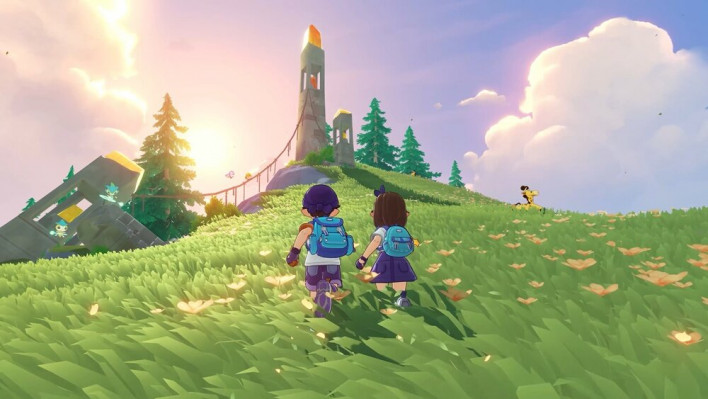
A Jini's stats vary depending on its personality, and they exhibit different facial expressions like crying or smiling. Furthermore, when released on your Homestead, they may get along smoothly or growl and bicker with each other based on their personalities.
Most Jinies can evolve up to twice. A creature that starts out looking like a small balloon might transform into a furry imp-like demon. Beyond standard biological forms, there are also Jinies with unique appearances inspired by everyday objects like cauldrons, jars, or witches' broomsticks. Once you build up enough affinity, you can also give your Jini a custom name.
Q. How are character customization options and the monetization model structured?
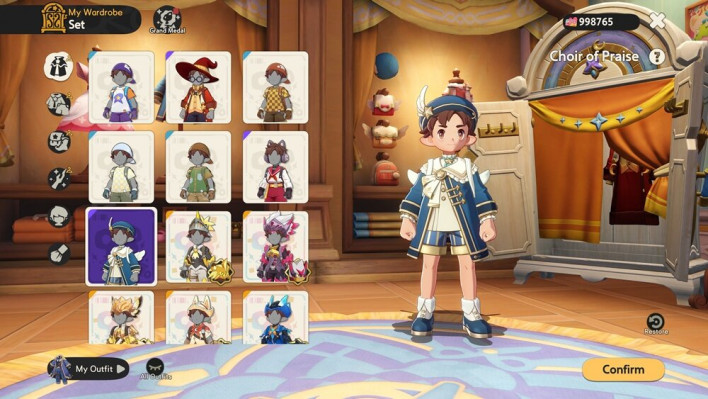
Detailed facial customization is available, including skin tone, eye color, and makeup. Certain outfit sets are paired with specific Jinies; entering battle with that designated Jini while wearing the matching outfit triggers special unique animations.
The monetization model is planned to be very lightweight. Outfits can be bought in the in-game store, but when featured in the random store rotation, they can also be purchased with free currencies earned by playing with other users (such as Friendship Points).
Q. Does the open world support PvP when encountering other players in the field?
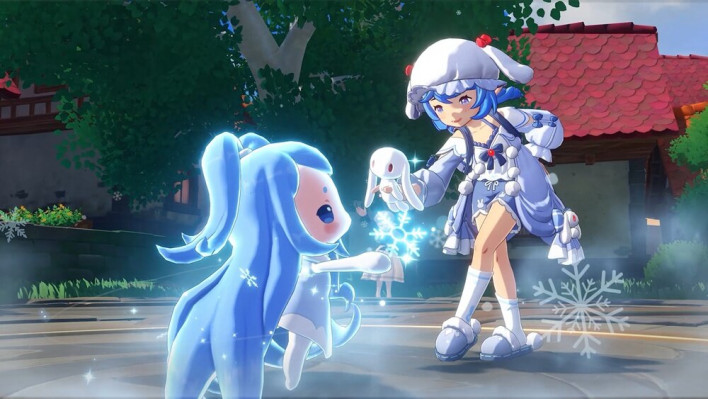
We have a ranked matchmaking PvP mode called the "Shining Tournament". If you prefer not to engage in hard-core competition, you can challenge players you run into in the field to a casual 1v1 duel (friendly match) at any time. In addition, casual multi-player PvP events where you can compete and earn rewards without rank pressure will be held regularly.
Q. Are there non-combat multiplayer features, such as social elements and interaction between players?
Of course. We support various interaction animations, such as hugging or fist-bumping other players. Additionally, in your "Homestead" (personal domain), which can host up to 4 invited players, you can decorate your home with indoor furniture, cultivate crops, and let your collected Jinies roam freely to relax.
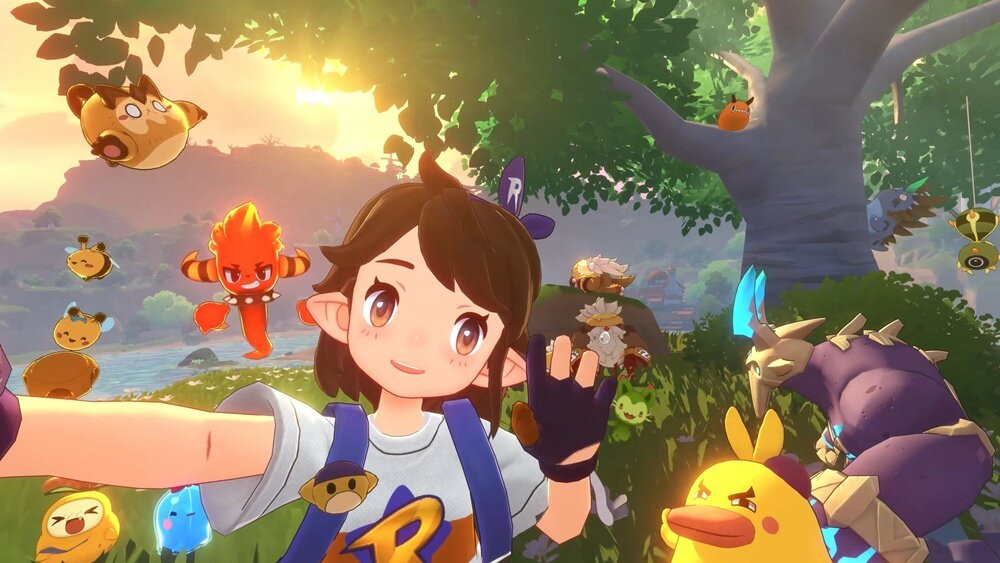
There is also a "Selfie Mode" where you can change your character's pose and expression to take photos with your Jinies. When you attempt to take a selfie, Jinies will playfully follow you around and strike poses, delivering very cute reactions.
Q. What is the scale of the open world, the volume of the main quest, and the roadmap for future updates?
At launch, around 400 species of Jinies will feature, and the quest playtime will be approximately 10 to 20 hours. As for updates, a new season will start every two months, with a new Battle Pass and story chapters unlocking weekly. We unlock the story on a weekly basis to evoke the nostalgia of watching animated shows as kids and talking about them with friends at school the next day. Every six months, we will roll out massive updates adding new continents and main story lines.
Q. After launching in China this past March, the game surpassed 15 million players within 13 hours. What do you attribute this success to, and are there plans to synchronize or merge the global version with Chinese servers in the future?
I believe the key factors were our beautiful art design—which delicately blends realism with a stylized cartoon aesthetic—and the fact that every Jini possesses its own unique personality and ecosystem. The core was creating a living world filled with creatures that carry quirky and cute charm, even if they don't conform to traditional standards of handsome or pretty.
While the global version won't share the exact same content progression as the Chinese version right away, our goal is to catch up on updates as quickly as possible. However, because Chinese players are far ahead in progress, we have no plans to merge the global and Chinese servers due to fairness concerns. The release platforms for the global version will support PC (Steam, Epic Games Store), console (Xbox, PlayStation), and mobile.
Q. With the global CBT scheduled for October 27, what are you focusing on testing most, and do you have a message for Korean players eagerly waiting for the game?
We are genuinely thrilled and grateful to finally share the game with players around the world. What I look forward to most is seeing whether global players will love the multiplayer features and Jini ecosystems that proved successful in China, or if there will be other feedback we haven't considered. We also plan to meticulously check controls or UX issues that might feel unfamiliar to global audiences.
To our Korean players, I definitely want to say, "Welcome to Roco Kingdom." We earnestly hope this becomes the ultimate creature-collector game you've long dreamed of in your heart—even if you didn't know it existed.