
Royal Crow (CEO Baek Seung-hun) showcased its new title, Waste The Fallen, at gamescom 2026. The hands-on demo took place at Level Infinite's closed booth, where the development team personally played through a specially prepared build—covering key sections from the tutorial to a boss battle—while walking viewers through the game's mechanics.
The core gameplay framework is clear. Players descend into "the Deep," the abyss of a fallen world, in squads of up to three to gather resources and extract alive. The number of parties that can enter simultaneously varies depending on the size of the map, and the development team explained that high-value containers are clustered in specific locations so that players naturally clash in those areas.
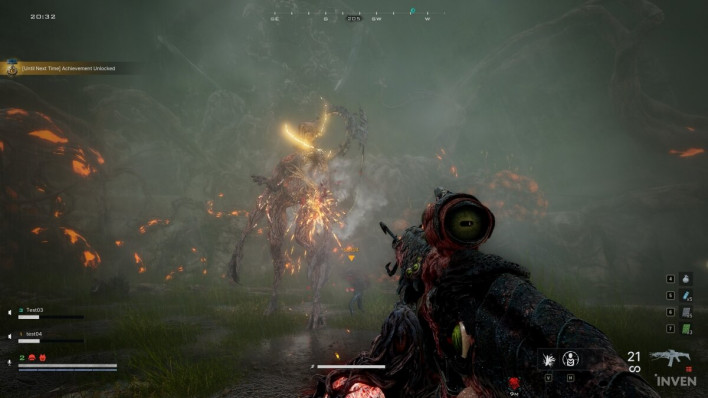
Threats come from two directions. The "Fallen," monstrous creatures born from the collapse, are categorized into common, empowered, elite (acting as mini-bosses), and a giant monster stationed on each map. The other threat comes from rival players who have descended with the same objective. Encountering another squad while engaged with monsters creates the specific texture of tension this game aims to deliver.
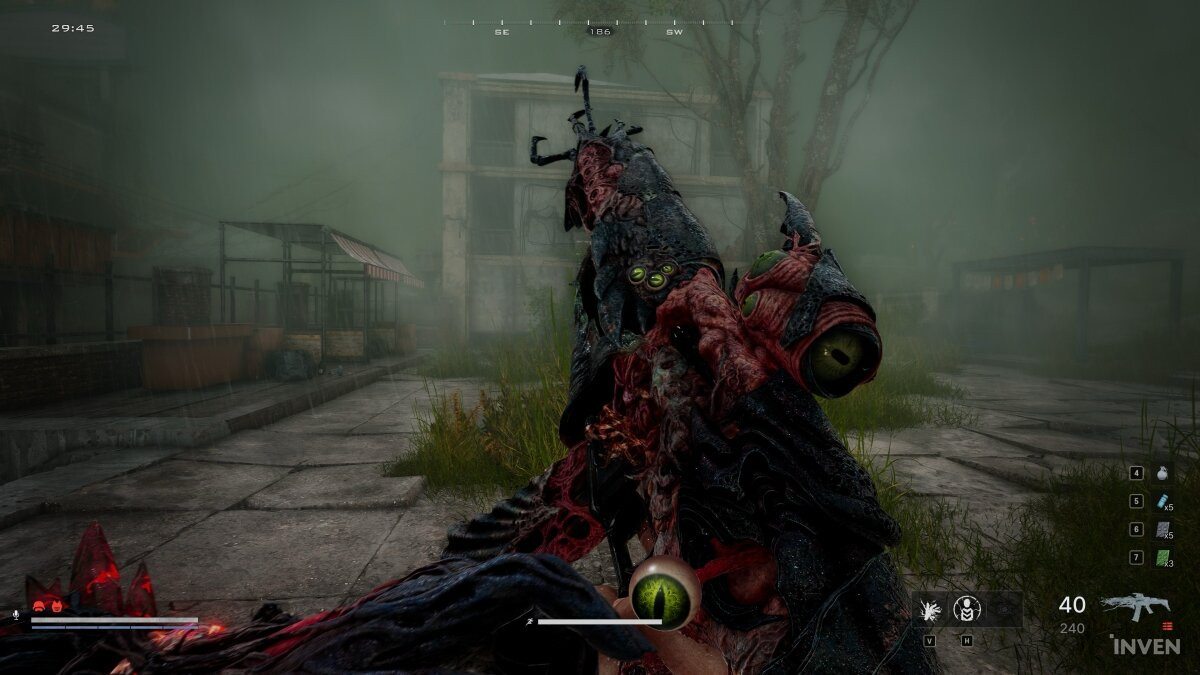
The giant monster battle was the most impressive section of the presentation. What immediately caught the eye was not the combat design, but their appearance. Unlike common monsters that remain variations of infected humans or beasts, the game's giant monsters feature scale and silhouettes hard to comprehend by human standards, blending structures with no recognizable origins among terrestrial creatures.
It leans closer to visually translating the powerlessness humans feel before the unknown and incomprehensible entities portrayed by Lovecraft. A developer representative explained that most boss monsters were designed to convey the feel of transcendental beings. While common monsters are infected humans and creatures, the tone changes significantly as you move toward boss-tier encounters.
The combat structure itself was not simple either. In the demonstrated boss fight, destroying a barrier structure behind the boss noticeably weakened its defenses. This means there are phases where players must read the mechanics rather than blindly pouring in firepower. Kill rewards are distributed differentially based on damage contribution, creating a dynamic where players within a squad compete for their share.
According to the development team, certain bosses even change form entirely during phase transitions. A boss in the "Factory Lab" zone, which was not shown this time, utilizes water and merges with other living organisms when entering Phase 2. This indicates that what was shown during the demo is only a fraction of the full boss designs.
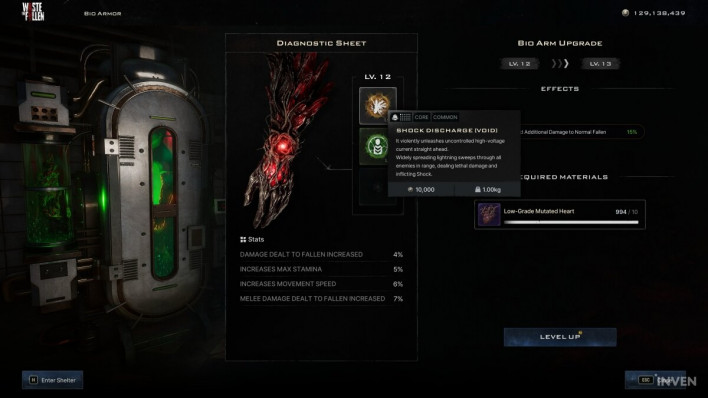
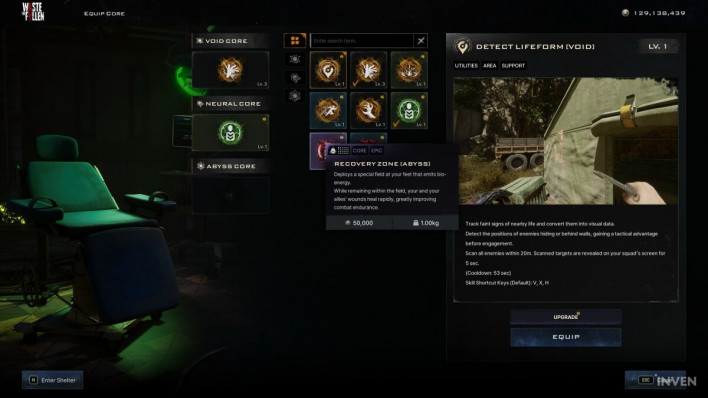
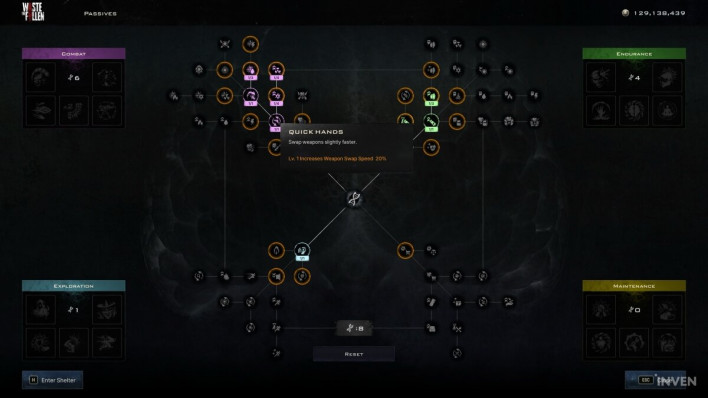
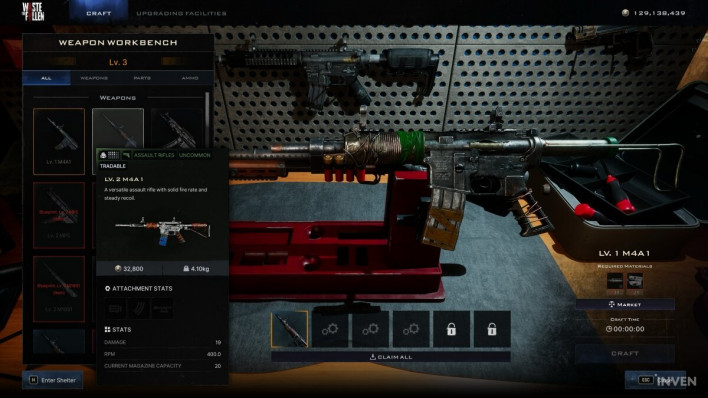
The core axis of progression is the "Bio-Arm," a prosthetic arm possessed by all Deviants (players). It features a system of combining skills and passives while gathering materials for upgrades, but what particularly caught attention was the weapon design. Reflecting the post-apocalyptic setting, weapons are not pristine real-world firearms, but cobbled together from debris.
Interactions with firearms were striking, portraying weapons almost as companion pets. Upgrading a weapon increases the number of attachable parts, and under certain conditions, it can be converted into a "Bio-Weapon." What is interesting here, as explained by the dev team, is that the number of available slots varies depending on the grade at which the weapon was converted. It is a mechanic that forces players to weigh when to make the transition, while giving a reason for replayability.
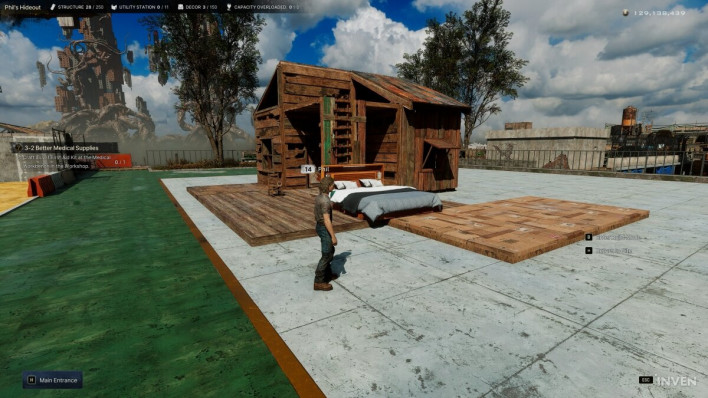
The hideout, a space between expeditions, was also introduced. It functions as a base for expanding crafting facilities while acting as a social hub that players can customize and visit. Players can also visit and look around other players' or friends' hideouts. The dev team noted that competitive elements like location claims were omitted, creating a distinct contrast between the tension in the Deep and relaxation on the surface.
The worldbuilding borrows heavily from Lovecraftian horror, and its interpretation is remarkably dense. Under the premise that the world collapsed due to unknown entities beneath the surface, details such as objects floating due to distorted gravity and infected bio-tissue covering walls are scattered throughout the maps. Dynamic weather changes further alter the impression of a zone depending on when players enter. According to a developer representative, other media outlets at the venue praised the art style and setting most highly.
The mechanic of greatest curiosity was not included in the scope of this presentation. The Sanity mechanic, referred to by the developers as the "Mental System," functions only within specific buildings. When players take special attacks or accumulate damage from monsters in those spaces, their Sanity meter decreases, causing them to suffer from a unique type of status effect distinct from standard debuffs. The team added that this includes distortion of vision. Given that the appearance of giant monsters alone conveys the sense of cosmic horror, how this mechanic operates when translated into gameplay systems remains well worth anticipating.
Waste The Fallen, as presented today, takes a step back from the conventional norms of the extraction shooter genre. Choices to reduce loss upon death and lower crafting hurdles ease the entry barrier for the genre, while still leaving ample depth in boss mechanics and weapon design for players to dive into.
On-site reactions were generally favorable. A developer representative noted that attendees paid attention to how survival elements like hideout construction, social hub features, and progression mechanics were layered on top of the extraction shooter framework. Its design, which does not remain confined to a single genre, was perceived as a key point of differentiation. However, pacing was cited as an area requiring fine-tuning; several attendees noted that despite claiming to be cosmic horror, the fast tempo of movement and gunplay leaves little room for horror to linger.
The developer representative noted that the bright, noisy exhibition floor environment might have influenced perceptions, but stated that they are taking this feedback seriously. They plan to intensively collect player feedback on gameplay speed during the North American Closed Alpha test starting September 4 to determine whether adjustments are needed. In effect, feedback raised at the showcase booth was immediately converted into a validation item for the upcoming playtest. As for live operations, the goal is a global launch rather than prioritizing specific regions.