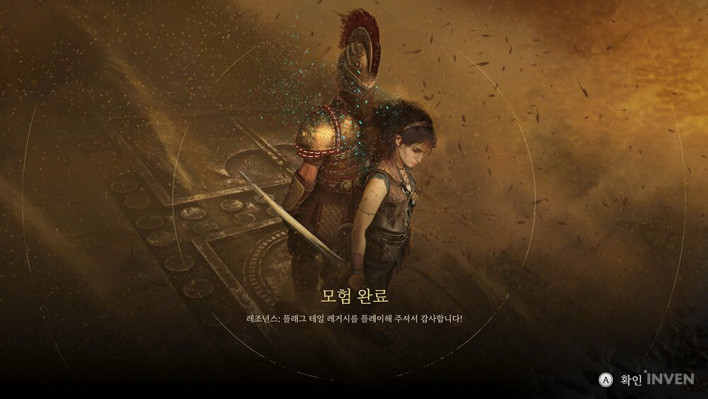
The monstrous Minotaur, the Labyrinth of Daedalus, and the hero Theseus alongside Ariadne, who helped him escape the maze.
Resonance: A Plague Tale Legacy (hereafter Resonance) chose a deeply familiar and iconic myth as its narrative foundation. To weave this myth into an original tale unique to Resonance, the game cast aside rat swarms—arguably the series' signature element. The protagonist, naturally, has changed as well. In place of a desperate brother and sister fighting for survival, Sophia takes center stage in an adventure that uniquely blends myth and exploration.
When first playing, a question slowly creeps in: 'Why is this an A Plague Tale game?' But after five hours, ten hours, and finally watching the credits roll, the answer becomes clear: 'It really is A Plague Tale after all.' Everything has certainly changed, yet the core foundation remains entirely intact.
There are no rat swarms, but that uniquely tense and terrifying staging remains firmly in place. And the story it delivers is no different.
*This review contains minor spoilers for Resonance: A Plague Tale Legacy.
This Game Is Indeed 'A Plague Tale'
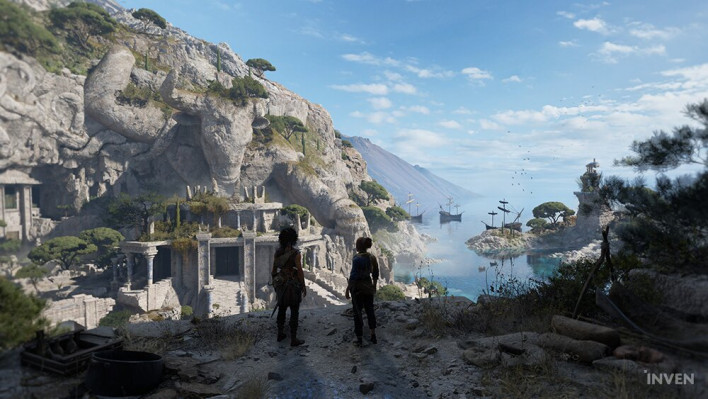
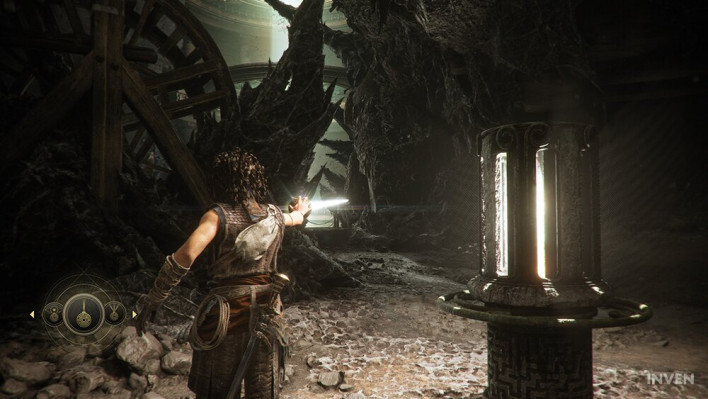
The core focus of Resonance shifts roughly four times: action, adventure, escape, and horror. Among these, the action and adventure feel almost like a trick designed to put us at ease temporarily. As you turn keys given to Sophia, connect beams of light, and solve various puzzles, the game itself feels surprisingly peaceful and accessible compared to previous entries in the franchise.
The sickening swarms of rats are gone, and you play as Sophia—a powerful warrior capable of engaging in full-fledged combat. Up to this point, the puzzles aren't overly difficult, and passing the trials of the ancient ruins is thoroughly enjoyable. Along the way, you experience satisfying action reminiscent of Tomb Raider or Indiana Jones.
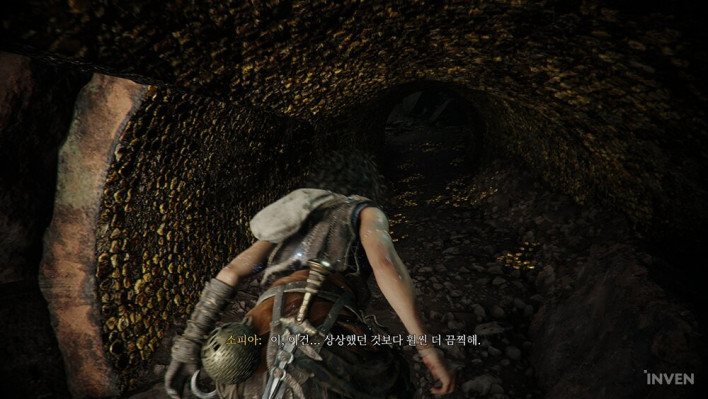
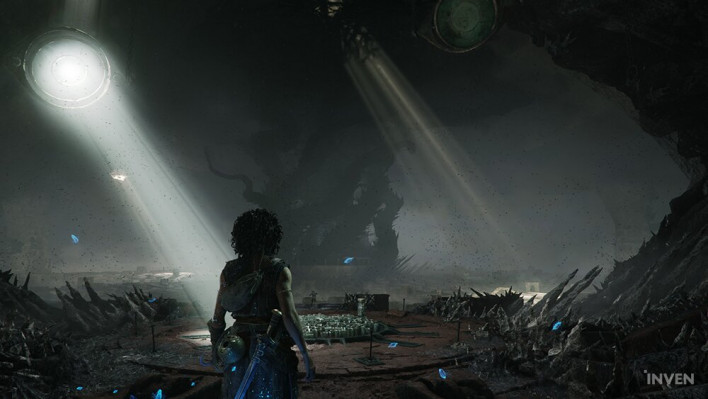
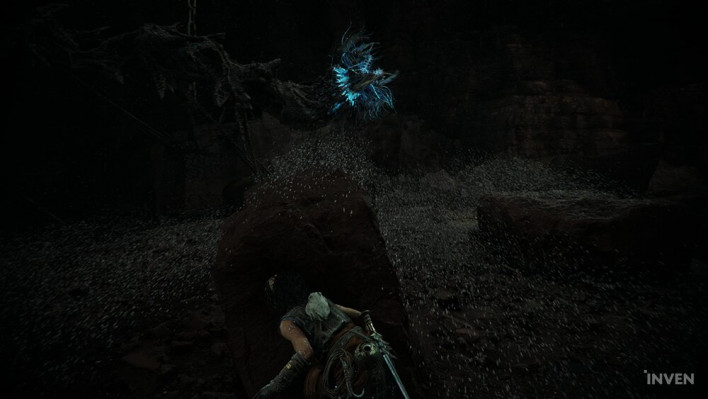
However, the 'real' Resonance begins when an ancient monster suddenly bursts out in the pitch-black underground labyrinth. With a grim realization of 'of course,' cold sweat fills your hands holding the controller. Bold strides give way to a crouched, breathless crawl, with every ounce of attention hyper-focused on the movement of the creature visible across the screen.
All previous sense of ease instantly vanishes. With mobility heavily restricted, your options shrink dramatically. You must hide, flee, and push forward toward the light. And the horror experienced in the process—the terror stemming from an unmatchable, monstrous presence—hits even harder than in previous titles.
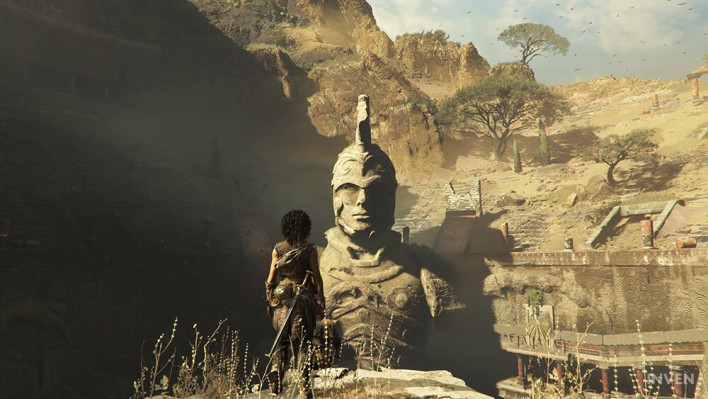
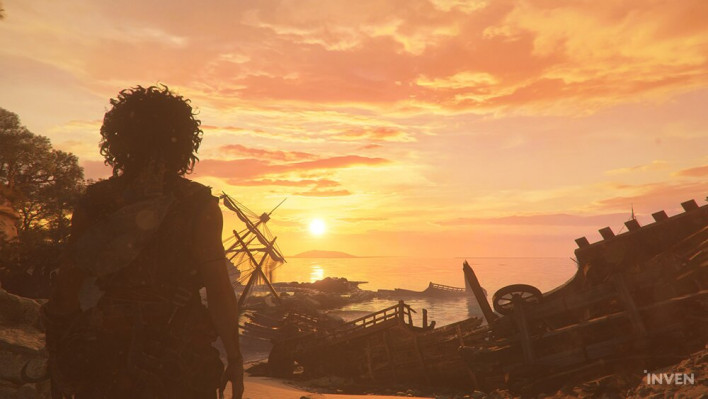
The game executes this transition exceptionally well. Throughout the early to mid-game, players encounter breathtaking, mysterious, and grand environments. From a beautiful island somewhere in the blue sea to crumbled yet mystical ancient ruins, and even the overwhelming mythical depiction of Crete seen through Theseus's eyes, Resonance captivates the player with impressive graphics.
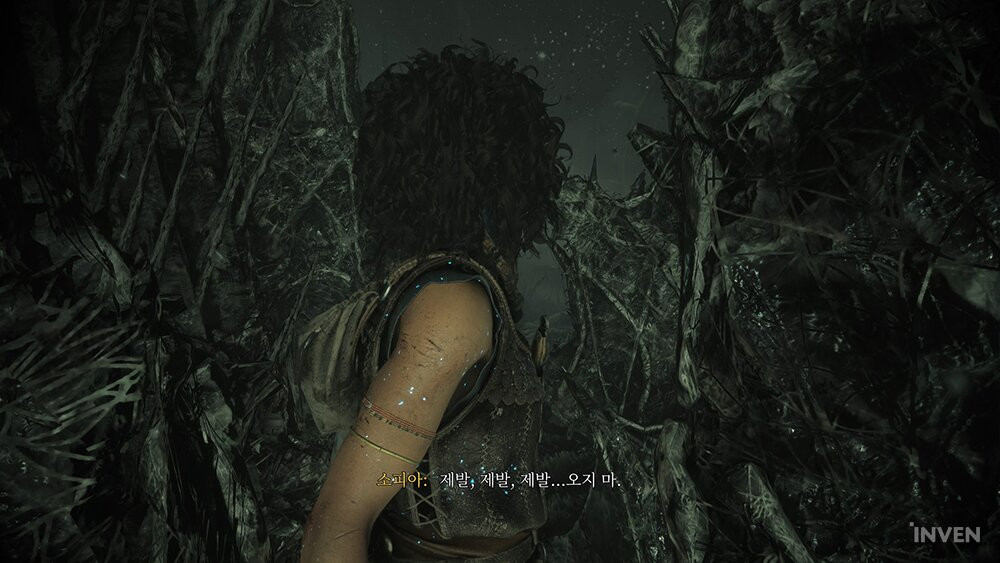
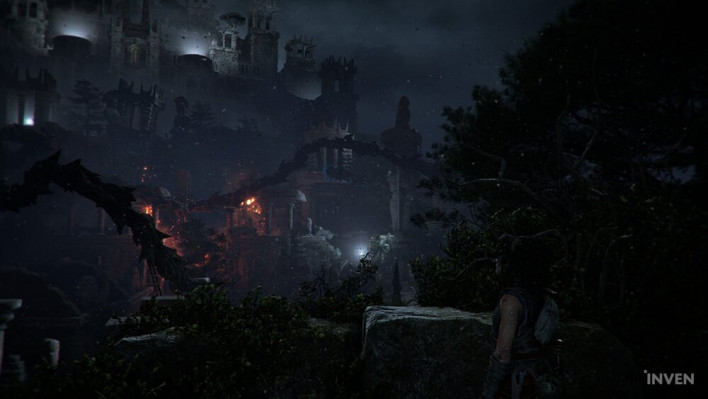
And the moment true horror sets in, these mysterious environments disappear in an instant. The once charming ancient ruins transform into a dark, viscous, and ruined space dominated by fear where everything has collapsed away. The change in environmental design itself is clear, but the staging also makes familiar elements feel completely different depending on the situation.
This plays a major role in dramatically shifting the game's overall atmosphere. Blue marks that once seemed beautiful become haunting trails that summon the monster, and ruined architecture that felt mysterious transforms into dark ruins where a creature could leap out at any moment.
Resonance seamlessly connects visuals, atmosphere, and gameplay pacing to convey just how horrific the secrets hidden within the ruins truly are.
As the game progresses, protagonist Sophia undergoes a transformation as well. The confident plunderer seeking hidden secrets disappears, replaced by a castaway consumed by overwhelming horror and driven by desperate survival instincts. This is expressed through various elements such as Sophia's heavy breathing, voice lines, and cutscenes, making it even easier for players to immerse themselves in the game's momentum.
This shift in flow clearly demonstrates why this game carries the 'A Plague Tale' title.
To be sure, the game's opening moves along at a breezy pace. You boldly take on multiple enemies at once, leap across ruins effortlessly, and solve puzzles quickly with focus. But the atmosphere abruptly shifts. Hiding and fleeing from an unstoppable enemy, suddenly facing heart-pounding terror—it hits you with overwhelming suddenness.
It feels almost as if it isn't an A Plague Tale game at all, right until that familiar terror and helplessness crash over you. Although the signature rat swarms are gone and protagonist Amicia is absent, the game surprisingly evokes the core of the franchise through its pacing alone.
Combat That Feels Somewhat Superfluous

The biggest departure between previous entries and Resonance is none other than combat. Unlike previous games where encountering enemies required careful deliberation on how to sneak past or overcome them in battle, this entry is completely different. You simply jump in and fight.
Sophia is a formidable warrior. Dual-wielding a one-handed sword and a dagger, she strikes enemies with rapid attacks. On top of that, she can easily evade incoming attacks through guarding, parrying, and dodging. Distant foes can be pulled in with a grapple hook, while a satisfying kick can break an enemy's guard or send them falling.
Additionally, as her resonance with Theseus grows stronger, she can unleash special attacks, or use hard-earned Resonance Points to unlock new skills and enhance existing abilities.
Aside from boss encounters, enemies almost always appear in groups, and the health system is tailored accordingly. Taking damage depletes health segments one by one, while defeating enemies restores them. However, health segments are sparse, so you generally need to dodge enemy attacks or parry them to build up their stun meter for a critical finish.
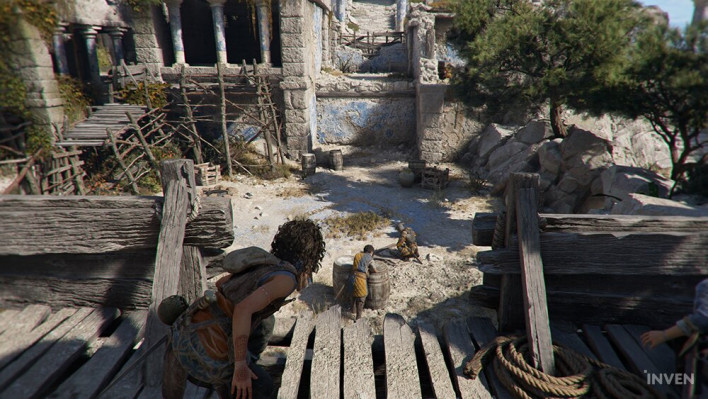
The core design of the combat system seems reasonably well thought out. In fact, while playing, you can get a feel for what kind of combat experience the developers aimed to deliver. So, is the combat well executed? That remains debatable.
In Resonance, combat itself is fairly simple. The combat patterns remain identical whether fighting regular enemies, mid-bosses, or main bosses. Even as the game progresses, little changes. Consequently, combat becomes progressively less engaging over time.
Standard enemies rush in and attack en masse. There is a decent variety—archers, daggermen, spearmen, shield-bearers, and swordsmen. Yet from beginning to end, the counterstrategies remain identical. Pull archers with the grapple to stun them before striking, kick shield-bearers before attacking, and break swordsmen's posture with a kick or parry their attacks to stun and strike. The approach is far too repetitive.
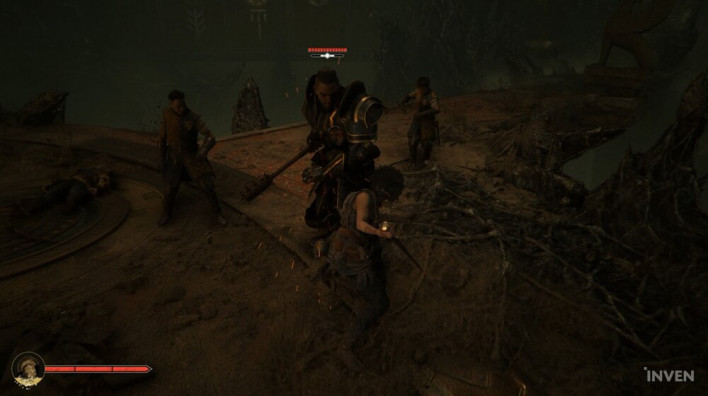
Nor is combat particularly challenging. Enemy attack telegraphs are easy to read, and the pace of attacks is relatively relaxed, making one-vs-many encounters far from daunting. These simple combat patterns persist from start to finish across regular mobs, sub-bosses, and main bosses alike.
When playing a game for over 10 hours, players naturally grow accustomed to every scenario. Combat is no exception. Yet Resonance introduces almost no new elements to challenge that familiarity. After shield-bearers are introduced, every encounter plays out in the exact same pattern. As a result, combat delivers little thrill or sense of accomplishment.
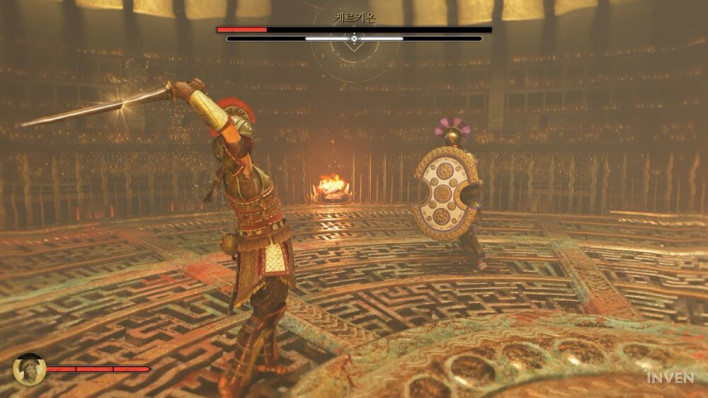
The timing of combat encounters is equally awkward. During the early to mid-game when adventure and exploration dominated, enemy appearances didn't feel out of place. But even as an ancient monster roams the entire island and lethal traps—nearly impossible to bypass without Sophia's key and notebook—multiply, enemies continue to spawn. You are even forced into combat encounters while actively hiding from the monster.
While you fight simply because the game demands it, the situation makes little narrative sense. How did these enemies even get in here? With a monster right in front of them that kills at the slightest misstep, how are there still so many of them alive? Within the context of the story, it feels hard to justify.
It feels as though combat was inserted like a checklist item or puzzle segment simply because it was developed. Combat isn't seamlessly integrated into the game; instead, it feels like 'now here's a puzzle, now here's combat, now here's an escape sequence.' The problem is that while puzzles and escapes fit the narrative flow, combat does not, leaving it feeling disconnected.
While combat eliminates feelings of powerlessness or frustration when enemies appear, that is all it achieves. Aside from a few key moments, the narrative flow would likely remain unaffected even if combat were largely absent.
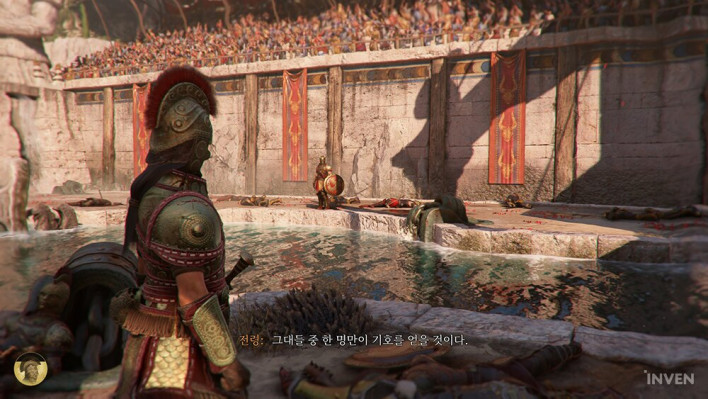
Twisting a Well-Known Myth into 'A Plague Tale'
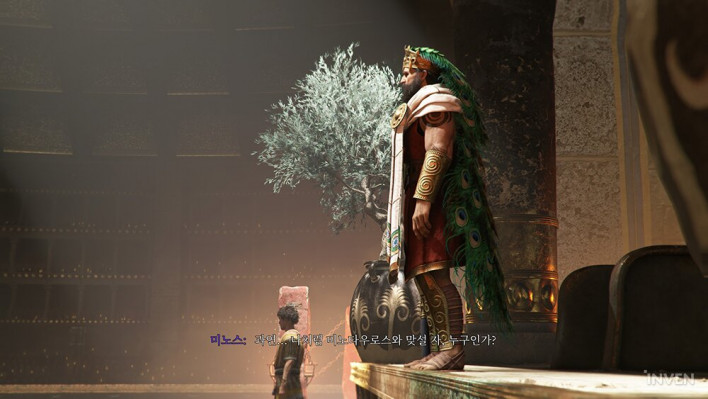
Resonance draws upon a myth well known to us all: the story of the Minotaur, Theseus, and Ariadne. Protagonist Sophia is drawn by this ancient myth to an uncharted island, leading players into an overwhelming mythical narrative.
The tale of Theseus and the Minotaur is iconic. The monstrous Minotaur trapped in Daedalus's Labyrinth, Theseus arriving on the island to slay it, and Ariadne, smitten with Theseus, handing him a ball of thread to guide his escape from the maze.
Players go in already knowing how the myth ends—that Sophia will eventually enter the Labyrinth and ultimately confront the monster.
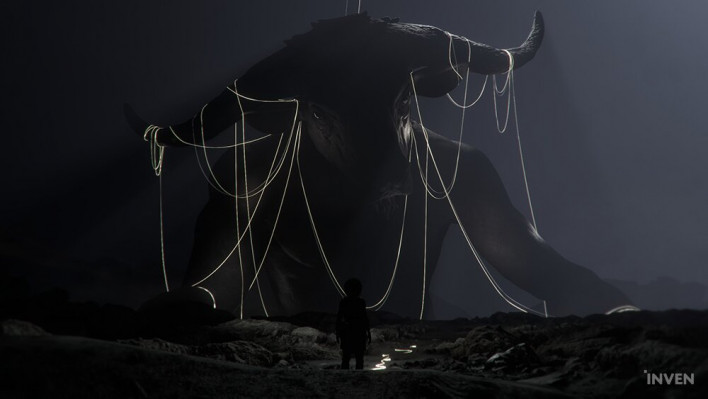
However, Resonance doesn't follow the myth verbatim; it twists the narrative. To spin this famous tale into a unique original story, it introduces key variations. By giving familiar figures like King Minos, Daedalus, Theseus, and Ariadne motives and actions distinct from the myth, the entire narrative shifts.
Woven into this structure are the stories of Sophia and those around her. While the game is primarily presented through Sophia's perspective, the core of the hidden narrative lies in ancient myth. The past and present become increasingly interconnected through environmental cues and objects. As a result, as you reach the later stages and the original story unfolds, curiosity about the hidden lore and conclusion deepens.
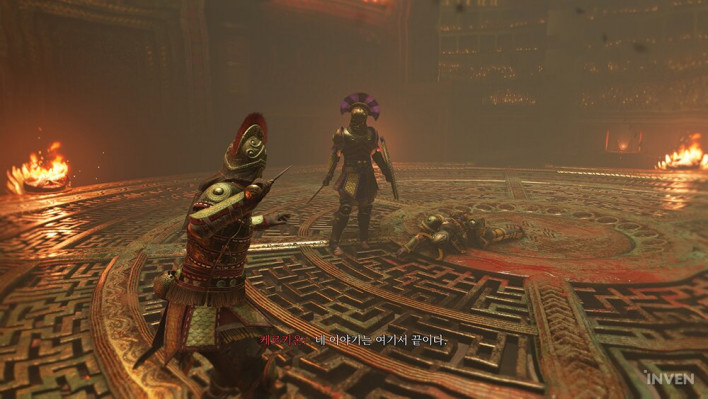
And upon reaching the finale, you finally realize the biggest reason why Resonance had to be an A Plague Tale game after all. At its heart, the game remains a story of siblings. All the adventure, trials, suffering, and terror ultimately converge on that single word: siblings.
At the same time, the game solidifies its role as a prequel. Beyond the welcome appearance of Amicia near the ending, it doesn't fail to mention the Prima Macula. While it doesn't delve deeply into the Macula, establishing room to expand on the franchise's most vital piece of lore is what matters most.
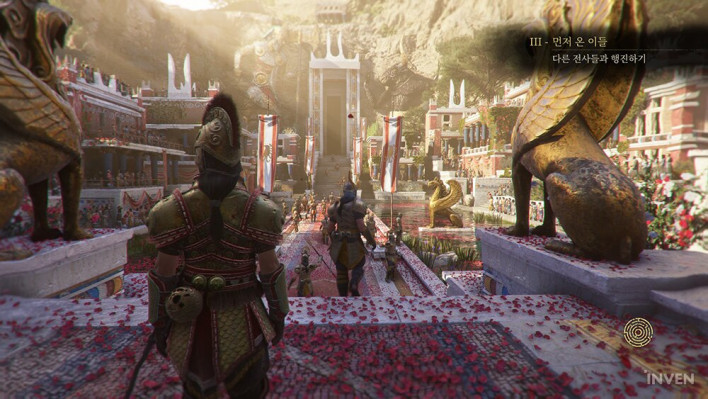
A major contributor to this narrative cohesion is the seamless cinematic presentation throughout the game. Each chapter flows continuously like a movie. Cutscenes and gameplay transition fluidly back and forth, with loading screens appearing only when transitioning between chapters.
The camera work in both cutscenes and gameplay is also masterful. Grand mythical architecture and the terror of a relentless monster stalking across the map are superbly conveyed through impressive visuals, camera angles, and perspectives. The late game in particular, as you press into the heart of the Labyrinth, combines this staging with ruined labyrinthian environments to deliver breathtaking tension and gameplay immersion.
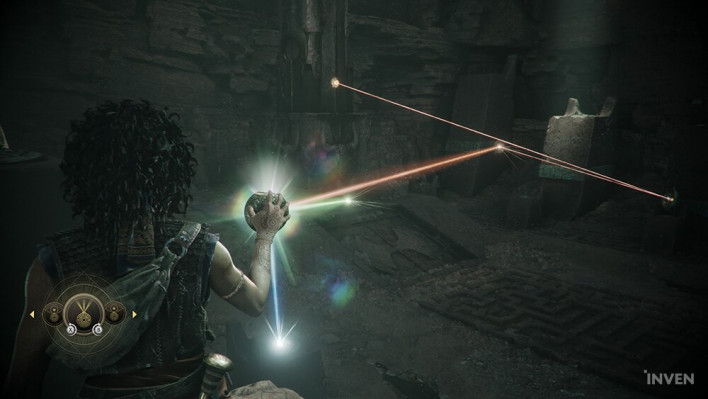
Puzzles, which remain a core component of this installment, center around the theme of 'light' throughout the game. They are neither overly difficult nor disrupted by unrelated mechanics. Every puzzle utilizes light through logical solving mechanics to the very end, allowing players to solve them without breaking immersion.
The notebook used for clues during exploration serves as a bridge connecting the adventure with Sophia's story. As you flip through its pages and examine drawings to navigate and decipher puzzle hints, you become fully absorbed in uncovering ancient mysteries. Through the notebook, players can also learn about Sophia's dreams and underlying backstories that cutscenes alone do not reveal.
However, a few drawbacks disrupt this immersion. The most notable issue lies in translation quality. Inconsistencies between formal and informal speech, along with awkward translations of simple exclamations, occur quite frequently. In one instance, a dialogue speaker's name was revealed before a plot twist was officially disclosed, deflating the moment. This may be resolved in the full release version, as this was tested on a review build.
Another downside is found in the story itself. Although the Prima Macula—a central pillar of the A Plague Tale series—serves as the catalyst for all events, explanations regarding it are severely lacking. Players entering the franchise for the first time through this title will likely reach the end wondering, 'So what was that anyway?' due to the minimal explanation provided.
Since narrative plays a vital role across the series, the core lore of the Prima Macula carries significant weight. Furthermore, the Macula presented in this game appears to hold potential for driving future stories. Yet throughout the game, virtually no context is given regarding the Macula or the overarching situation, leaving players to merely infer what is happening.
Given that this element plays a crucial role in the narrative progression and the ending, the lack of explanation feels all the more disappointing. Even a bit more context would have gone a long way.
Resonance demonstrates that the A Plague Tale series can successfully expand its story beyond the main entries. It firmly dispels concerns over whether a game can still feel like A Plague Tale without rat swarms. While much has changed, the franchise's identity remains vibrant, preserving the distinct atmosphere and feel.
The core identity of A Plague Tale lies neither in Amicia nor the rat swarms. Rather, it is defined by an unmatchable terror lurking in the dark, and the gameplay journey of evading that terror while reaching toward the conclusion. And of course, the poignant story of siblings and the Prima Macula are equally essential.
This entry weaves a distinctly A Plague Tale narrative through the iconic Greek myth of the Minotaur's Labyrinth. In doing so, it impressively brings to life the majesty of myth, the desolation of crumbled ruins, and the central Labyrinth itself through stunning visuals and staging, driving player immersion.
Thanks to these strengths, the 14-hour journey offers a thoroughly engaging new chapter in the A Plague Tale franchise. Not every plot point is fully explained, but as a standalone prequel, it successfully sparks anticipation for what comes next and how the universe will expand further.