Four days. That was all it took to release a prototype built with the mindset that if it received no response, the project would be scrapped. Not even the creators expected that a solo development project starting from a four-day gamble would, seven years later, be mentioned alongside 'The Sims', the undisputed giant of the life simulation genre.

This is the story of Paralives, which launched in Early Access three months ago. The game ties together three core pillars: Build Mode for constructing walls and decorating homes with furniture, a highly customizable character creator, and Simulation Mode where players get jobs, explore the town, and build relationships. It stands out as a particularly noteworthy development case, having grown alongside its Patreon-centered community long before release.
As such, this talk began with that compelling case study, tracing its history to examine how it impacted the life simulation genre. Taking the stage, Jérémie Tessier walked through the seven-year timeline in order: starting from a four-day prototype to Patreon funding that grew to $40,000 per month, early decisions on art style and modding support that shaped all subsequent development, a painful playtest that delayed release by six months, and Early Access launch results that exceeded expectations.
And it was a journey to find the answer to how a game built alongside its community could carve out its own place beside a giant competitor.
A Solo Developer's Four-Day Gamble Leads to Patreon
The Paralives project was able to start because founder Alex Massé decided to tackle the life simulation genre—a genre with an already established fan base yet virtually no competitors outside of its major rival (using The Sims as an example). Tessier reflected on this as a project that required multiple coincidences to align for it to ever get off the ground.
In 2019, Alex set out a plan to build a prototype within four days and show it to the world. It was a high-risk gamble—so much so that had there been no response, he would have scrapped the project and moved on to something else.
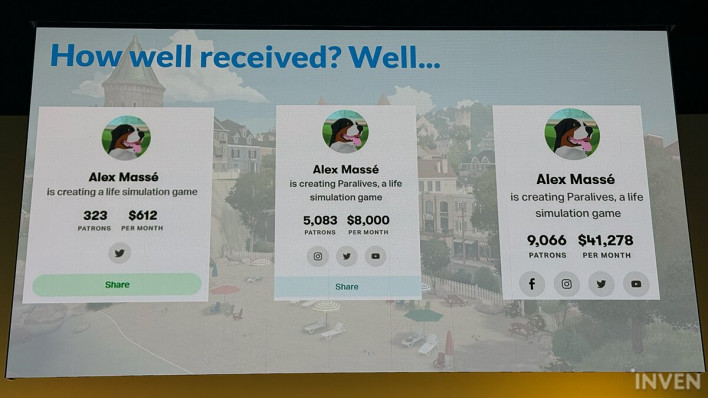
Alex's first public post was a short video demonstrating features for adjusting window and curtain sizes. At that point, Alex simply wanted to test if the idea had potential and if people were willing to back it. The response exceeded expectations. The Patreon page launched to secure development funds started at $600 per month, but quickly grew to $8,000, and reached around $40,000 per month in about a year. Releasing a video introducing new characters and expanding the pledge tiers helped fuel this growth.
With funding secured, the team's next challenge was keeping patrons consistently engaged. To achieve this, they posted on Patreon every week, sharing what team members had worked on that week. Some posts delved deep into technical details, while others featured artists introducing new outfits or hairstyles, or discussed the game design of specific systems.
Additionally, they hosted weekly chat sessions on Discord where patrons could ask anything. Questions and feedback poured in about features and gameplay that were years away, and Tessier noted it was especially encouraging that this steady stream of interest continued right up to the end of development.
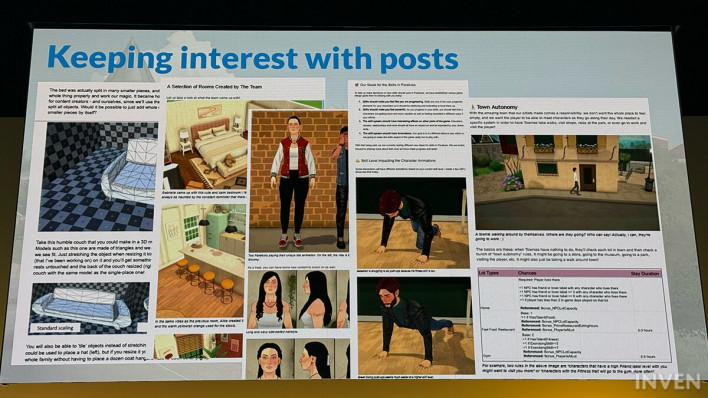
However, this communication came at a cost. Because they had to create new content to showcase every week, early development prioritized visually striking elements such as character creation and Build Mode. While some voiced concern over whether simulation features should be shown sooner, the team explained that they had to focus on content beneficial for marketing. Since patrons were not familiar with raw development progress, showing stick figures or temporary tubed shapes as placeholders was simply not an option.
As a result, there were times when prototypes or content that would later be entirely cut were rushed out for public view. On the other hand, spontaneous decisions sometimes led to unexpected wins—like the age slider, which received an enthusiastic response and became a core feature of the character creator. Managing procedural animation application for this feature placed a significant burden on the development team, but they ultimately pulled it off.
Weekly Patreon posts and Discord chats consumed far more time than expected. When live chat became difficult to manage, they shifted formats to answer questions over several days. To attract patrons, they also offered physical postcards every six months, as well as rewards allowing backers to appear as in-game characters or name items. However, these rewards proved far more time-consuming than anticipated, ultimately requiring them to hire dedicated staff just to handle creating characters for thousands of backers.
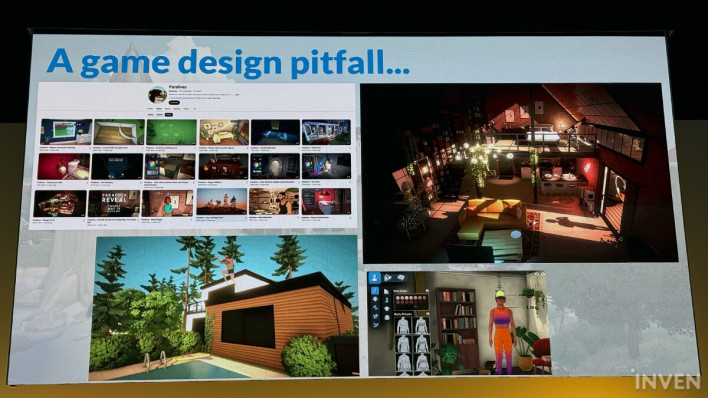
The key lesson Tessier emphasized was that crowdfunding rewards eat up significantly more time than expected. Nevertheless, patron numbers and monthly revenue remained stable throughout the nearly six-year development period, and he recalled that managing Patreon alongside game development felt like running two inseparable businesses at the same time.
Differentiation and Key Early Decisions
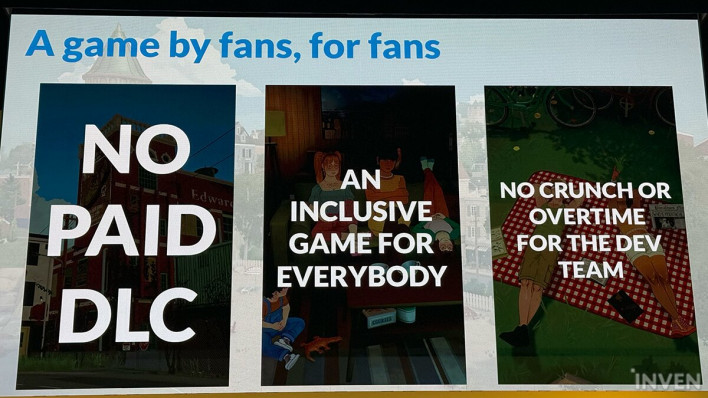
Demand for the life simulation genre was high, and fortunately for the team, no game-changing rival title emerged during development. Early in the project, investment offers came in from publishers and other studios. While flattering, the team wanted to build the game hand-in-hand with the community and minimize external pressure, choosing to retain full control over all decisions. This choice aligned with the studio's core value of taking full accountability for both their mistakes and successes.
Under these principles, major early decisions set the direction for future development. First, they needed to settle on an art style for characters and environments, steering clear of overly realistic or technically demanding approaches due to the small team size. After testing various concepts and bringing on artist Léa to establish a direction, they arrived at the current style: painterly characters with bold outlines contrasting against backgrounds textured like painted wood.
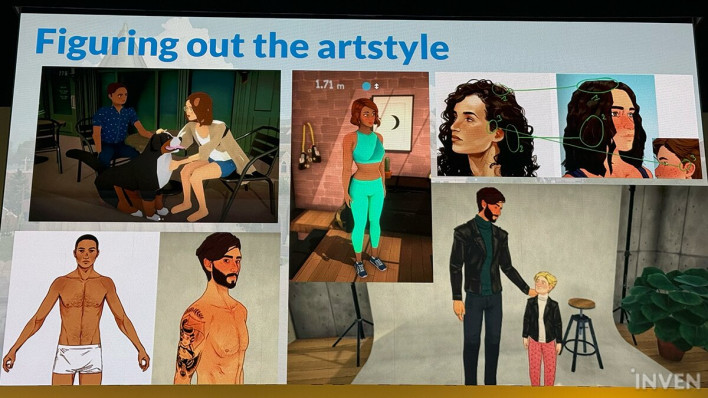
Because this entire process unfolded in public view, some patrons preferred not to see the rough, early development stages. However, Tessier noted this was a natural risk that came with keeping development open.
Another critical decision was the commitment to making every element of the game moddable—allowing players to edit as much content and as many systems as possible directly in-game, using the exact same tools as the development team. This decision meant they had to continuously build and maintain content creation tools alongside main game development, impacting the overall direction of development over the next six years.
Even so, Tessier firmly stated it was the right choice. Modding support and custom content are essential elements for life simulation games, and attempting to tack on these features late in development would have been a nightmare.
Conversely, there were cases where early decisions had to be reversed. Early in development, the team set a goal to support split-screen multiplayer, requiring most game systems to be designed around simultaneous play. This introduced far more design challenges than expected: how to handle time progression, whether to differentiate choices between the main player and other players, and how to fit controller support into the schedule.
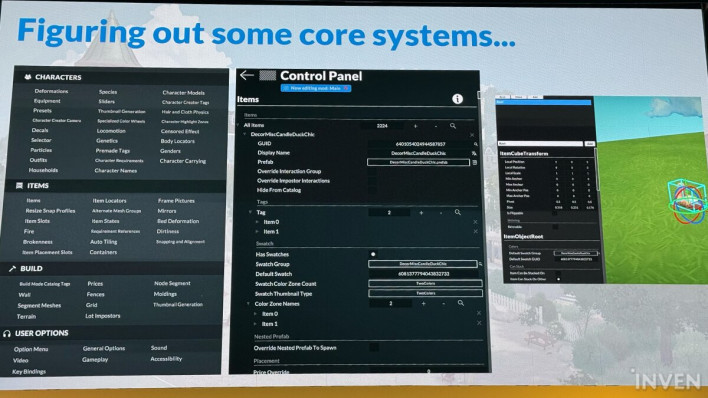
Because this feature was never revealed in any Patreon post or marketing material, cutting it caused no major public fallout, but traces of it remain scattered throughout the project, occasionally requiring workarounds to this day. In a similar vein, the team initially began building the game on Unity's ECS (Entity Component System), but it proved premature at the time. They ran into numerous roadblocks, such as passing data back and forth between two composite structures, and taking it out alone required roughly two months. Citing a 32-page memo written during this process, Tessier explained that while ECS itself vanished from the project, that early choice left deep marks on the game's current architecture.
Pre-Launch Crisis: Issues Uncovered by Playtesting
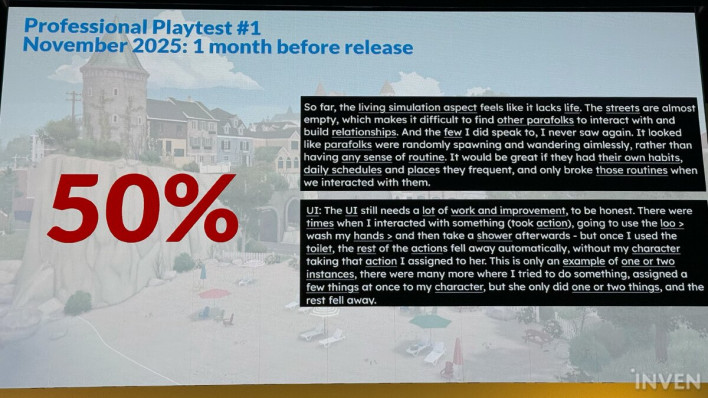
For about two years, the team conducted playtests with acquaintances, asking for honest feedback, and the results were encouraging. Thinking everything was smooth sailing, the team decided to seek third-party feedback through a professional playtesting firm just to be sure. The results were disastrous. Severe issues that hadn't surfaced during playtests with acquaintances were uncovered, forcing the team to make the painful decision to delay launch by six months to address them.
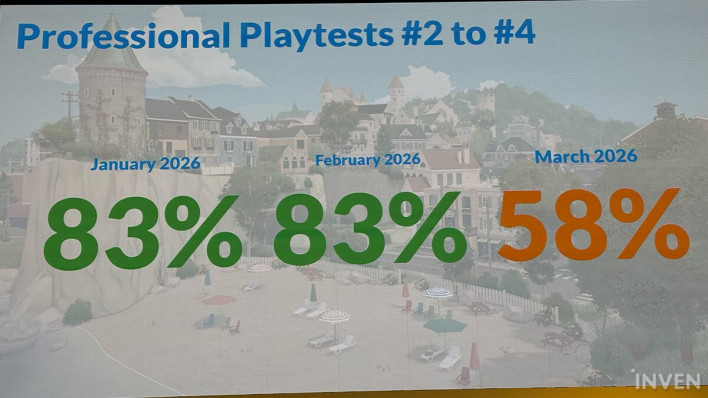
Regarding why issues didn't surface in playtests with acquaintances, Tessier speculated that participants may have hesitated to be overly critical since they knew the team. Arriving just one month before launch, the feedback placed immense stress on the entire team. Over the following six months, they focused on fixing the biggest issues found, and through three additional playtest rounds during that time, conditions improved significantly and remained at a solid level.
However, the final playtest carried an element of luck, as recruiting participants for the last session proved difficult due to the game belonging to a relatively niche subgenre.
While this period was undeniably stressful for the whole team, Tessier evaluated that delaying launch to fix major issues before players encountered them ultimately paid off. In fact, the game launched to higher ratings than expected, and he noted that launching with six months' worth of unaddressed bugs would have become a far greater headache in the long run.
Marketing Strategy and Early Access Launch
Ahead of launch, the team prepared extensively through an in-house partner program. This program selected influencers in the life simulation space to gain early hands-on access to the game. Given that Paralives occupied a specific niche within the genre, the participating influencers aligned well with that distinct character. Even though no monetary compensation was involved, content creators were glad to cover the game simply for early access.
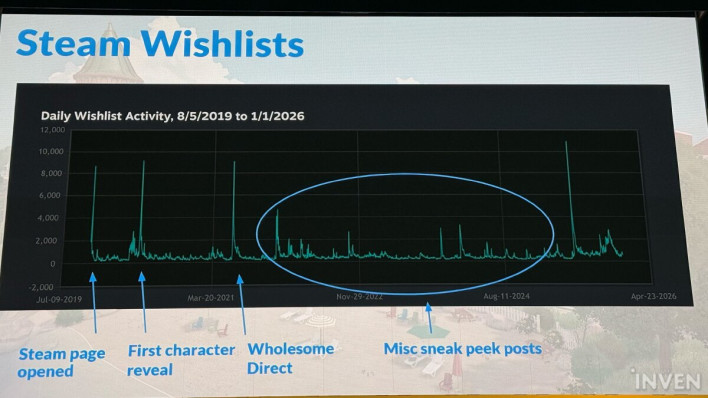
The partner program generated significant buzz, leaving the team highly satisfied with its outcome. On top of that, luck played a part as the timing coincided with renewed interest across the entire genre when a major publisher in the life sim space became embroiled in controversy surrounding an acquisition. Although flashy events or major reveals were rare throughout development, there was always a steady audience showing interest whenever the game was showcased.
However, Tessier explained that this earlier interest paled in comparison to the response generated once the partner program went into full swing and the final pre-launch trailer dropped. Ultimately, it proved that the team's marketing strategy delivered tangible results.
The game's launch performance far exceeded the team's expectations. Sales figures and average playtime numbers were both encouraging. As an Early Access title in a genre where many players use older PC specs, refunds were a concern; however, the refund rate remained reasonable compared to the industry average of around 10%. With a large number of players keeping the game on their wishlists without purchasing yet, there remains plenty of upside for additional sales as the game heads toward Version 1.0.
Despite being developed by a small team, a much larger fanbase has rallied around the game, sending in suggestions, feedback, and bug reports at a rapid pace. Within two days of launch, the team received 150,000 pieces of feedback, which grew to 300,000 after about a month. Even though the game is still in Early Access, players have been generally understanding of remaining issues, and community sentiment remains positive.
On the Steam Workshop page, players are uploading thousands of custom furniture items, clothing, hairstyles, and even completely new gameplay features. Tessier noted that this serves as proof that their early foresight to make everything moddable was the right call. He added that he is excited to see what players will create as more features are added to the game in the future.
Why Paralives Succeeded, and the Challenges Ahead
Following the game's release, the team moved away from running Patreon as a paid sponsorship platform, transitioning it into a free archive documenting the development process. Fortunately, game sales alone became sufficient to sustain the company, eliminating the need to juggle Patreon and game development simultaneously. Currently, they are devoting their time to resolving the most urgent design issues that have been uncovered.
The development schedule also no longer needs to align with weekly Patreon posts, allowing the team to continue developing content, features, and systems for upcoming patches without having to share their work in real time. However, from a marketing perspective, Tessier stated it remains important to show players that the game is continuously being improved and what they can look forward to in the future. He summarized why Paralives was able to succeed:
"I think it's because we found a gap that the industry hadn't filled, despite there already being a massive player base."

Keeping people's attention over years of development and actually finishing and delivering what was planned was the core of their success. However, he anticipated that it would be difficult for other games to replicate this outcome, noting that after trying to think of other games or genres where a similar case might work, the odds seemed extremely low.
He added that had Alex not gotten off to a successful start on Patreon in the first place, they might not have recognized the opportunity either, concluding his presentation with the lingering thought that similar opportunities might be waiting elsewhere.
Q&A
Q. How did you deal with the pressure of standing in competition with a giant game like The Sims, as well as the burden of appealing to a broad audience?
= The fact that we were competing with The Sims wasn't a massive source of pressure for the team. We were all huge fans of the life simulation genre with plenty of experience playing these games, so we knew well what we enjoyed and what felt lacking. We also had a clear picture of what we could improve and how we could approach things differently.
However, because The Sims is such a massive game with so many features already built in, we knew from the start that competing in terms of raw volume was impossible. At least at launch that was the case, and we plan to keep expanding features over time. Knowing our clear limitations as a small team kept this from becoming a major stress factor. We knew that given the sheer difference in studio scale, taking them head-on was a losing battle.
As for the pressure to reach as many players as possible, we found points where we believed we could make improvements, and we felt there would be overlap between the two player bases. If someone new to the life simulation genre tries Paralives first and ends up liking The Sims better, we think that's perfectly fine. The two games are heading in quite different directions and will continue to walk different paths. That's how we managed that pressure.
Q. Why is the life simulation genre particularly difficult, and why do you think Paralives succeeded while several competing titles in development around the same time were canceled, delayed, or vanished?
= That's a tough question. While making Paralives, we watched several competing titles appear and disappear, and honestly it felt disappointing because some of them looked quite interesting and promising. If I had to guess why, I think there just wasn't much will across the broader industry to make another game in this genre. Because of that, even if some projects made good progress, they may have collapsed the moment they ran into even minor funding issues.
For small indie studios like us, making a game of this scale without funding is extremely difficult. We started the project with four or five people, but as the project grew and support increased, we grew to about 13 or 14. That shows just how much funding is required to build a game of this size. That's why I think really small companies struggle to get attention and ultimately funding, often collapsing at that point.
Larger companies didn't seem to have strong confidence in this genre. They might have thought that since The Sims already exists, that was enough, and for executives, that likely translated into fear. On the other hand, smaller studios find it tough to launch a project of this scale to begin with. I think Paralives reaching this point was a combination of skill and luck working together.
Q. If cost and time were no object, what new feature would you most like to add?
= Given our current game structure, what I'd love to do most is allow players to travel seamlessly between multiple towns or worlds, rather than just one. Right now, we only have one town—and thanks to our art team, it's a very beautiful town. But being able to move naturally between multiple locations would create far more room for different systems and diverse gameplay options.
However, that's not something currently in our plans. Right now, we're focusing on smaller, highly requested features from players. Of course, my wishlist is much longer, but if I had to pick just one, that would be it.