
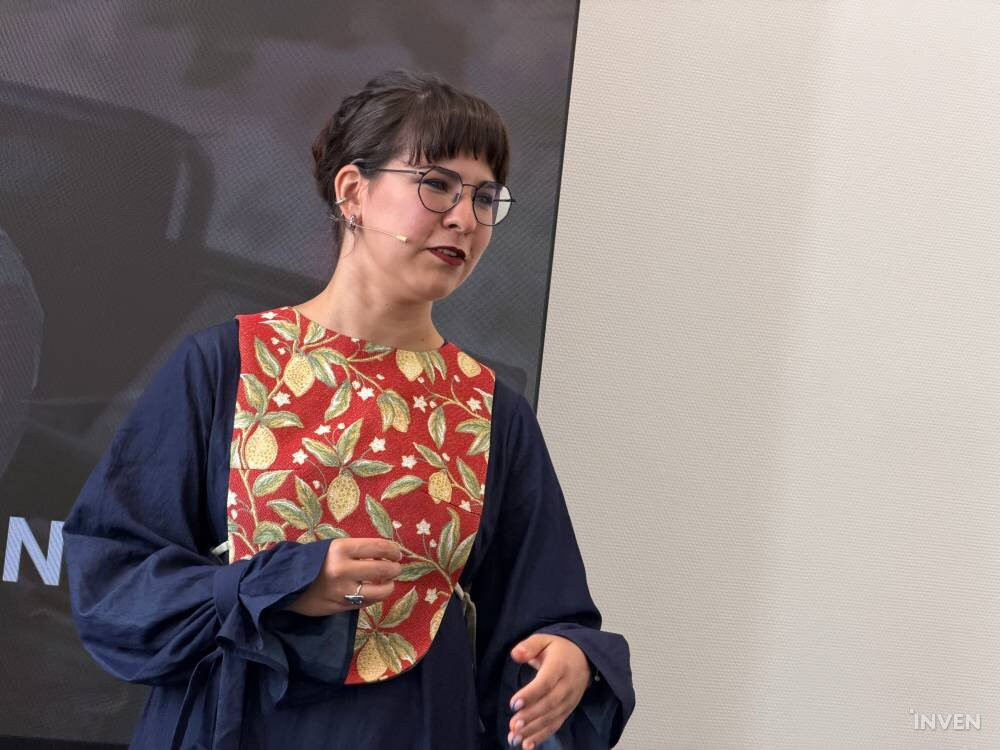
On August 25, Natalia Agafonova, Executive Producer at Bohemia Interactive, gave a presentation at the developer conference devcom in Cologne, Germany, on the topic of "Restarting a Franchise: Vision, Chaos, and the Team That Made It Through." As Executive Producer, Agafonova oversees the development of the Arma franchise, leading both Arma Reforger and the upcoming Arma 4.
Arma Reforger is the first reboot of the franchise, which began in 2001 and has spanned 25 years. With this title, Bohemia Interactive transitioned from commercial engine tech to a newly developed in-house engine. Agafonova noted, "The community had been waiting almost ten years for a new entry."
On launch day, concurrent players peaked at only around 360 due to server connection failures. "The community had waited years, but for weeks the game kept kicking them back to the main menu," Agafonova recalled. "We really disappointed them."
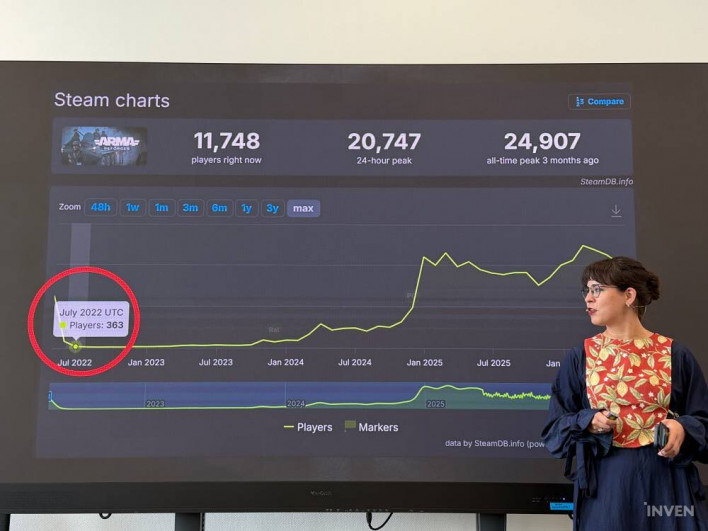
Immediately after release, the studio began analyzing the cause. After assessing missing features, they released a massive public roadmap promising to deliver them within a year. They spent the next three months overhauling the game overall and dedicated six months to optimizing netcode. Although connection issues improved, the game still didn't feel like the original.
At the time, three interconnected issues were tangled together, but the studio failed to view them separately: the "game" as the shipped build, the "team" as the unwritten rules of how they worked together, and the "DNA" as the franchise identity. "We were looking only at the shipped build," Agafonova said. "At the time, we didn't realize these three were connected."
"Emergent Fun Lives in the Build, Not in Documents"
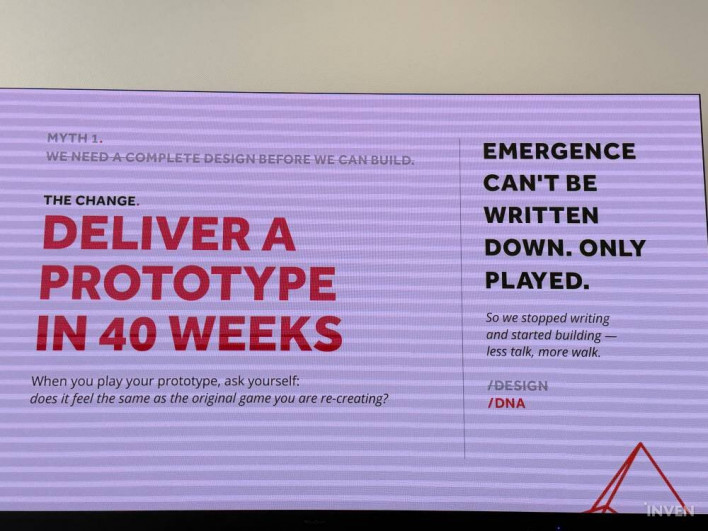
The first myth was that "a complete design must exist before building." At the start of the reboot, the studio defined USPs, design pillars, vision documents, and franchise DNA analysis. Agafonova evaluated, "The design itself was great, but it wasn't enough."
Arma features a system-driven, user-generated content-centric multiplayer environment. Her diagnosis was that the essence of the game lies in how ballistics, physics, and terrain deformation interact, making player behavior unpredictable. "Emergence cannot be written down in a document," Agafonova stated. "Emergence lives between systems, between the designs of individual features."
The team shelved design documents and shifted toward producing a playable prototype within 40 weeks. They played the original 20-year-old game and the prototype side-by-side to compare whether they delivered the same feel. Although the initial answer was "no," the comparison itself served as the starting point for pinpointing the root cause.
A standout breakthrough from playtesting was the supply system. During testing, high-tier vehicles like tanks appeared too early, leading factions to ignore the rest of their arsenal. The team restructured the design so players had to secure supplies, transport them to bases, and pay costs to spawn heavy vehicles. Subsequently, gameplay emerged where factions defended supply points or assigned escorts to run supply routes. "The game slowed down and became far more tactical," Agafonova said. "The original game didn't have a supply system, but the feel was identical."
Refueling, treating wounded soldiers, rearming, and the Arsenal system were introduced in the same manner. However, this required overhauling the entire development pipeline and re-teaching the team how to develop through prototyping.
Feature Teams and Product-Driven Processes
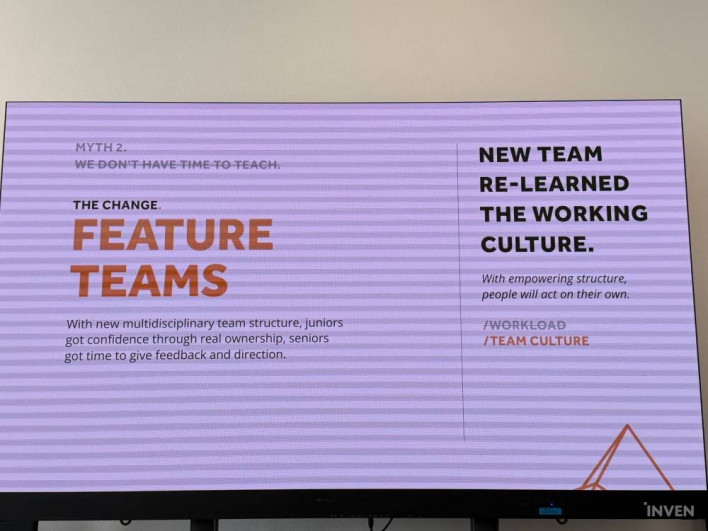
The second myth was "there is no time to teach." At the start of the reboot, few veterans at the company had experience with the franchise, and many of the new hires were juniors. This created a structure where a single veteran was responsible for roughly 18 people.
The result was burnout on both sides. Seniors were tied up working on builds and could not spend time teaching, while juniors missed out on needed guidance and hit a growth wall. "Seniors were on the verge of burnout, and juniors were thinking about quitting," Agafonova said.
The studio transitioned from department-based silos to "feature teams" restructured around game systems. Ownership of individual systems—such as vehicles, weapons, and physics—was handed to juniors, while seniors focused on feedback and directional guidance. With the two seniors who used to oversee the entire codebase no longer able to maintain that high-level overview alone, the team had to rely more heavily on Jira.
In return, turnover and burnout dropped, and several juniors from that time are now task force leads. Agafonova noted that these developers grew into seniors in under five years.
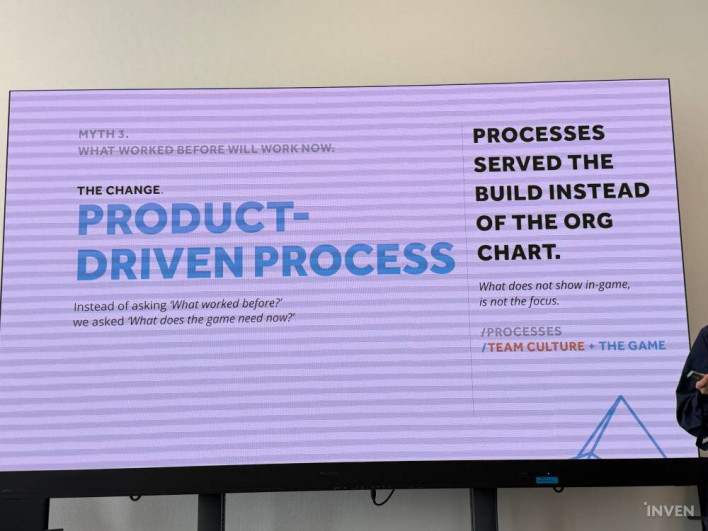
The third myth was that "what worked before will still work now." The processes refined while producing DLC for Arma 3 did not fit the new environment. The team size had doubled, team composition had changed, and both the engine and scripting language were brand new. "The people in charge of technology no longer knew what good output looked like," Agafonova said.
The team shifted to a product-driven process, replacing the question "What worked before?" with "What does the game need right now?" This was based on the recognition that priorities differ across pre-production, production, and live service phases. Their guiding principle was summarized as: "If it doesn't show up in the game, it's not the focus."
This came with costs. Heading into the 1.0 launch, numerous features were cut, and some have still not made it into Arma Reforger years later. It was also during this time that the studio adopted a policy to exclude any feature from stabilization builds other than stability improvements, performance optimization, and helicopters.
They also abandoned the backward compatibility principle upheld in previous titles, as the rule that new code must not break existing code or user-generated content was blocking weekly updates. "The community reacted harshly, and it was a heavy price to pay," Agafonova said. "However, we were able to boost stability and performance in just a few weeks."
"Community Trust Is a Loan with Harsh Interest"
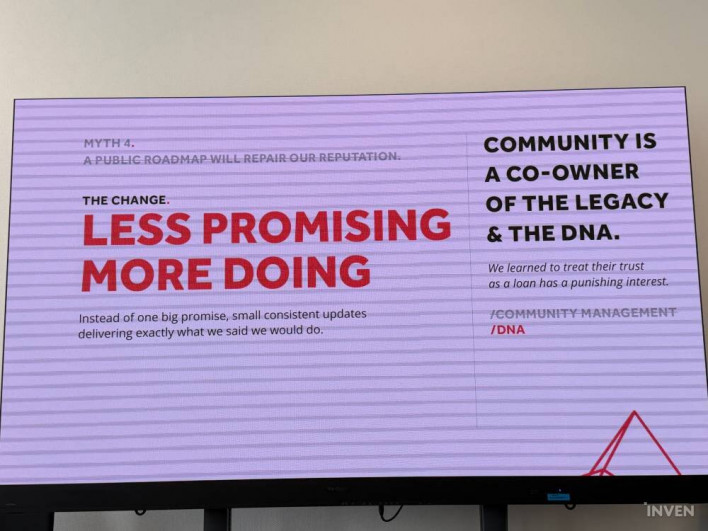
The fourth myth was that "a public roadmap will restore your reputation." While the community reaction was positive immediately following the roadmap's release, completing just the first item consumed the time allocated for the entire roadmap.
The community viewed the roadmap not as a wishlist, but as debt. "These players spend thousands of hours on our game, build mods, and run servers out of their own pockets," Agafonova said. "That debt was accumulating interest our team couldn't afford."
The studio shifted toward under-promising and over-delivering. Instead of a single major update, they released three scheduled updates per year. Project leads stepped forward as the face of the project to communicate directly with the community, hosting unscripted live Q&A sessions. They also introduced a format answering the most sensitive questions picked from Reddit. Additionally, they hosted a broadcast with researchers discussing how the game could help real-world veterans cope with PTSD.
Agafonova defined the community as co-owners of the legacy. "They've played this game for 25 years and know it better than some of our developers, who are younger than 25," she said. She added, "We learned to treat community trust like a loan with brutal interest rates."
"Culture Is the Operating System of Work"
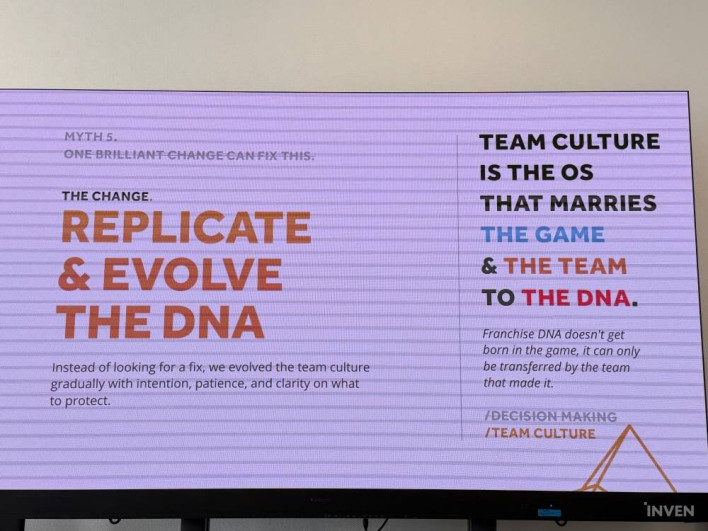
The fifth myth was that "one great change will solve the problem." Agafonova stated there was no single silver bullet. Instead, while clearly defining what to preserve, they intentionally reshaped team culture, one hire and one decision at a time.
In the process, the studio actively hired from the community. Today, about 20% of the team are former modders. The reasoning was that because the game structure supports deep modding, these modders already use the same scripting language as the developers. Since many candidates lacked a formal background in game development, the hiring process involved more steps than usual, supplemented by post-hire leadership and communication training. "Instead of bringing in industry veterans with 20 years of experience, we trusted people who understood the franchise DNA," Agafonova said.
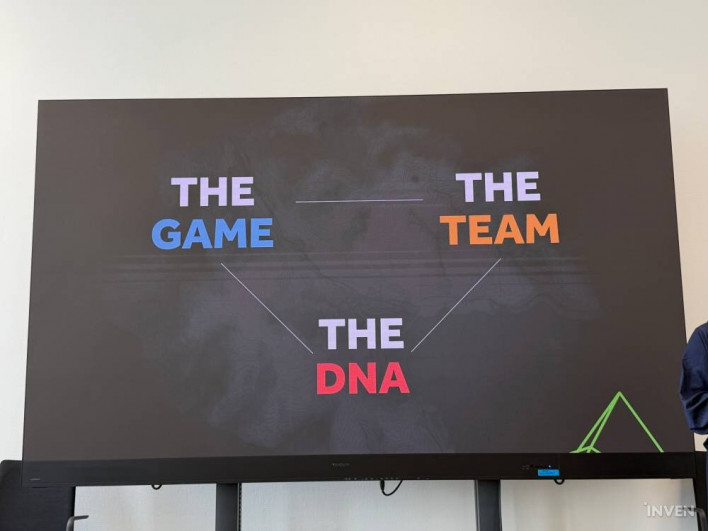
The conclusion presented at the end of the talk was a single diagnosis uniting all five solutions. "We had a culture problem wearing the clothes of a product problem," Agafonova said. "You cannot build the game without a team that deeply understands its DNA, and you cannot build that team without a community that recognizes and calls out that DNA." She added, "Culture is the operating system of work—it is not optional."
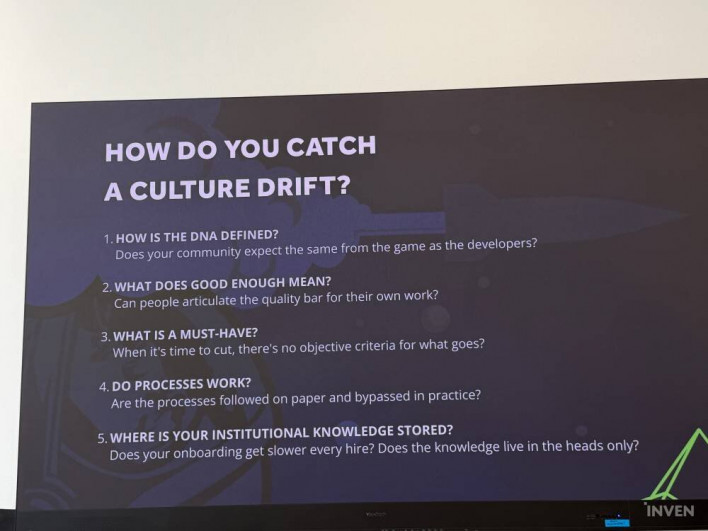
Five questions were also shared to check for culture drift: Is the DNA actually defined? Can new hires explain the quality standards for their own work? Is there an objective benchmark when something needs to be cut? Does the process exist only on paper while being bypassed in practice? Is institutional knowledge trapped inside the heads of a few seniors? Agafonova explained, "If onboarding slows down as more new hires join, it's a sign that institutional knowledge isn't documented."
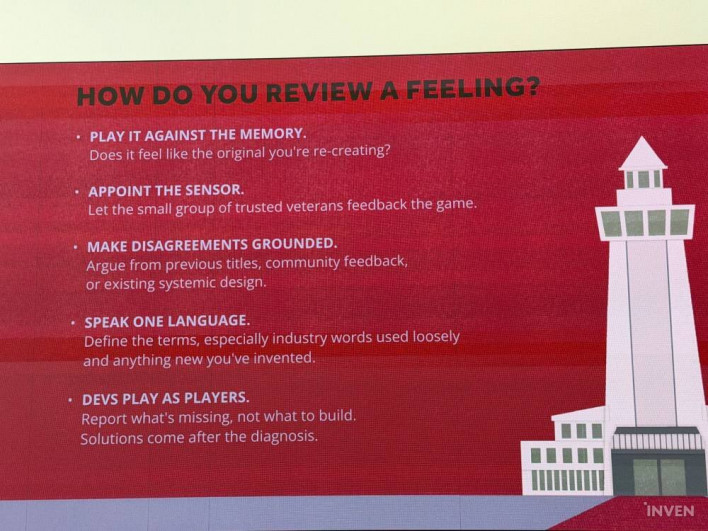
Five methods were presented to validate the game's feel: Play test against memories of the original; establish the few veterans who remember the original or the community as the benchmark; resolve conflicts based on the original games, community feedback, and existing system design rather than hierarchy; unify definitions between industry jargon and internal studio terminology; and have developers play as users, reporting not what to build, but what is missing.
Agafonova recalled that at launch, she viewed scope management, technical readiness, and community expectations as the core issues. "I was asking what was wrong with the product, but the question I should have been asking was what was wrong with how we were making it," she said. The talk concluded with the statement: "Be intentional about what to keep, and be ruthless about everything else."
During the Q&A session, a question was asked about why Arma Reforger lacks a single-player mode. Agafonova cited the engine transition as the reason. "Arma Reforger is a stepping stone to the next major title, Arma 4," she explained. "Arma consists of four pillars: multiplayer, single-player, the mission editor, and modding. We focused on modding and multiplayer, which required the most technical validation on the new engine." The studio's policy is to address the editor and single-player in Arma 4.
When asked about when planning for Arma 4 began, she replied, "From the very first planning meeting for Arma Reforger, we divided what to put into this game and what to leave for the next." The criteria were engine capability and the required R&D duration. "R&D takes three times longer than expected," Agafonova said. "We had to make that choice to push the engine forward, even knowing the community wouldn't like it."