Com2uS's global esports tournament, the 'Summoners War World Arena Championship (SWC),' is entering its 10th year. It is rare globally for a single mobile game title to sustain an international tournament for ten consecutive years. While mobile esports have been attempted many times, most have vanished after a season or two, unable to overcome limitations in control depth and spectator appeal. SWC is one of the few to have passed that rite of passage and reached the 10-year milestone.
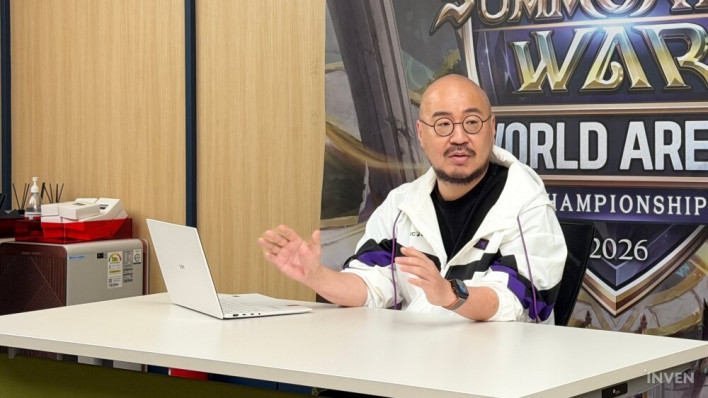
Ahead of the 10th anniversary, we met with Bin Seong-tae, Head of the Creative Contents Office at Com2uS. When asked about the achievements of the past decade, he didn't point to flashy records first, but rather to the fact that the tournament has 'never stopped.' It has neither been scaled down nor skipped, reaching its 10th iteration without interruption. He described this as, "Something a marketer wouldn't even dare to attempt without the company's firm commitment." He identified the COVID-19 pandemic—the tournament's greatest crisis—as the decisive turning point for its stabilization, explaining that the operational processes and guidebooks created for the shift to online play became the backbone of all subsequent tournaments.
Bin, who worked as an AE and AP at an advertising agency before joining Com2uS in 2018, established the dedicated SWC team and has led the tournament for the past eight years. While he defines SWC as part of the service cycle—much like regular updates—rather than a one-off marketing event, he is candid in his assessment of the challenges in securing mass popularity and building a player ecosystem.
"We have never taken a break"
Could you please introduce yourself.
"I worked as an AE and AP at an advertising agency, but because I loved games so much, I joined Com2uS in 2018. At the time, there was no dedicated SWC team; it was structured so that business and marketing staff handled the preparations. After joining, I set up a specialized team to build a proper structure and system, which we have maintained to this day.
The tournament has lasted long enough to span generations. How do you feel about reaching the 10th anniversary.
"Every year, as I plan, operate, and see the results of the SWC, I feel a sense of 'we've really come this far' with each passing year. I believe 10 years of mobile esports is a historic record in this industry. I feel both proud and deeply responsible that we have been able to create such a record together with the players, influencers, and Summoners around the world.
When we first started, there were concerns—both internally and especially externally—about how long mobile esports could last. Despite that, I am grateful for the company's will, the staff's hard work, and the fans whose passion has not only remained undimmed but has grown even stronger.
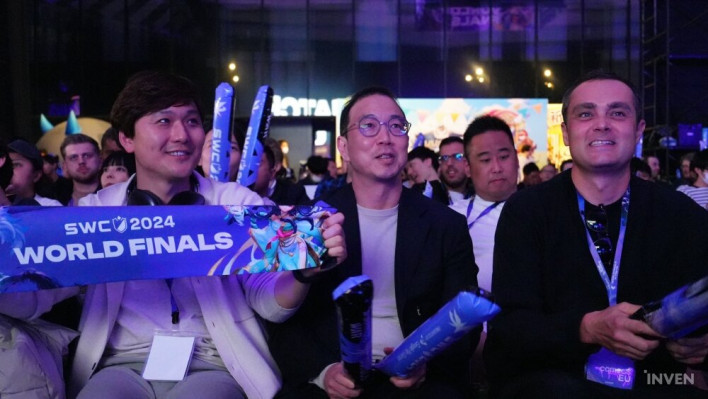
Operating an esports league is a massive expense for a company. How is the management's interest and support.
"The Chairman and the CEO have always said—not just now as Summoners War hits its 12nd anniversary, but also at the 9th, 10th, and 11st—that 'Summoners War would not be where it is today without the SWC.' It might be a formal sentiment to encourage a team working hard on the tournament, but we believe that statement is largely true.
In fact, if you asked me what I am most proud of regarding the 10th SWC, I would say it is the fact that we have never taken a break. We have reached this point without ever scaling back or skipping a year, instead choosing to strengthen what needed strengthening and investing where it was needed. This is something a marketer could never dream of doing without the company's full commitment. That shows how much they value the SWC and how actively they have invested in it.
A Tournament of Underdogs: 10 Years Built on Strategic Depth
SWC has enjoyed 10 years of success, which is exceptional for a mobile game. There have been many attempts at mobile esports, but few have taken root. What do you think is the secret.
"Ultimately, the key is whether you can provide users with a reason to keep watching the tournament and the matches. Mobile games do have inherent limitations. Because of the constraints in control, deep play is often impossible, and after a few years, gameplay can become monotonous and boring.
I believe Summoners War has come this far because of the game's strategic depth. As a collectible strategy RPG, it is not constrained by the limitations of mobile devices. It has more monsters and a wider variety of skill concepts than any other collectible strategy RPG in the world. The combinations of Runes and Artifacts are so diverse that the meta evolves every year rather than becoming stagnant. At some point, I think it will become like Go or chess—where even 10 years from now, strategic options will remain and perhaps even deepen.
Another factor is that SWC is not just a tournament. It isn't a one-off event held only in Korea; every year, we host various on-site events, community activities, and game-integrated programs in key cities around the world where our users are located. It has served as a user community at the closest point of contact, where users and long-time guildmates gather to catch up, talk with players and influencers, and play together. Because of this, users look forward to this time every year and keep requesting that we hold it in their region. I believe these two reasons are why we have reached 10 years and why we can continue to grow.
What are the unique strengths of SWC compared to other esports leagues.
"Our strength lies in the fact that we have consistently maintained the structure—from regional qualifiers and regional cups to the World Finals—in every global region without ever scaling it down. I believe this consistency is a major advantage.
The characteristics of the tournament are ultimately the characteristics of the game. The biggest factor is likely that new strategies and new metas constantly emerge every year, keeping it from becoming boring.
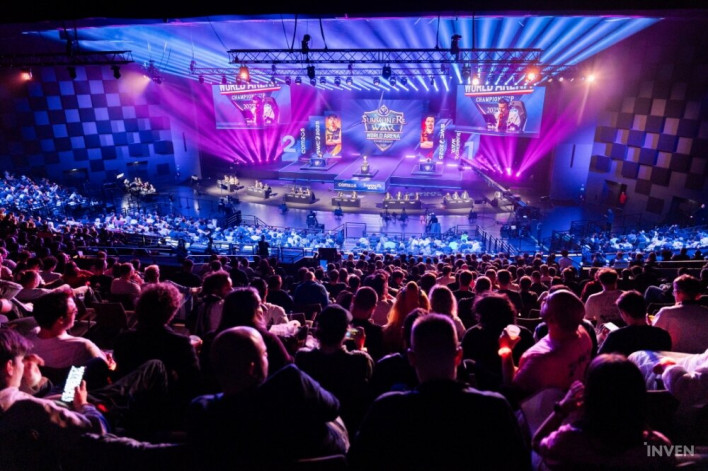
Does that mean underdogs appear frequently.
"There are always favorites to win in every region. However, those players rarely win. In fact, it is quite common for a player no one expected to take the title.
For example, we hold a winner prediction poll on-site. After the tournament, we draw from the box of the winning player to give out prizes. Once, when the player NEF won the Europe Cup, the box had zero votes. There wasn't a single ticket predicting that player, so we couldn't give out the prize. Even in 2019, when LEST won for the first time, that box was empty.
That is how diverse the strategies are; truly unbelievable combinations emerge. Every user might think a certain monster must have a speed-focused Rune, but then someone uses it with a Swift Rune just to use it for one turn and discard it, and that move ends up playing a decisive role in the victory. I think that strategic depth and variety are what make our tournament so colorful and lively.
Predictions are wrong every year—is that a good thing for tournament operations?
"It can only be a good thing. If a player considered weak beat a strong player due to luck, I would think there was a problem or something to fix, but it isn't luck. When underdogs perform well, it is often because they bring an absurd pick or an unbelievable strategy.
The reason there can be no absolute powerhouse in our game is that skilled players are always subject to analysis. Once it is analyzed which monsters a player has, what kind of strategy they use, and what playstyle they prefer, it becomes too easy to counter them. That is why we see a 'rock-paper-scissors' dynamic every year. Even so, there are always smart players with high win probabilities. I would say players like SKIT from Korea or LEST from China are 'safe picks' with high probabilities.
Summoners War continues to be popular worldwide even in its 12nd year. What contribution do you think SWC has made to this success.
"I think it plays almost the same role as other major esports. Since Summoners War is a collectible RPG, a significant part of the game's fun lies in which monsters you use, in what situation, and with what settings. Players have proactively created new possibilities in that regard.
In 'League of Legends,' when Faker picks a certain champion in the mid lane, don't all mid-lane users pick that champion when they log in that day? Our game is similar. When a player shows a victory using a monster that users swore would never be used, countless viewers start researching and using that monster, which in turn creates another meta. I think that has had a very positive effect on the game.
How has SWC's global growth changed since you first took over? Are there any regions that have shown remarkable development.
"The global enthusiasm was already very strong when I first took over. European users were really passionate about the game, and the same was true for the U.S. Asia, of course, and China were no different. Rather than saying it has expanded more than then, SWC has been a beloved tournament across the globe from the very beginning.
If there are markets that have grown larger since then, I think it would be South America and Southeast Asia. We held our first meetup in Brazil last year, and I was there. We couldn't find a larger venue, so that was the limit, but the place was packed inside and out. I think there were about 600 people that day, which is a very large number considering the scale of our game. Southeast Asia has also grown, with Thailand and Vietnam standing out, and recently, Indonesia has been rising as well.
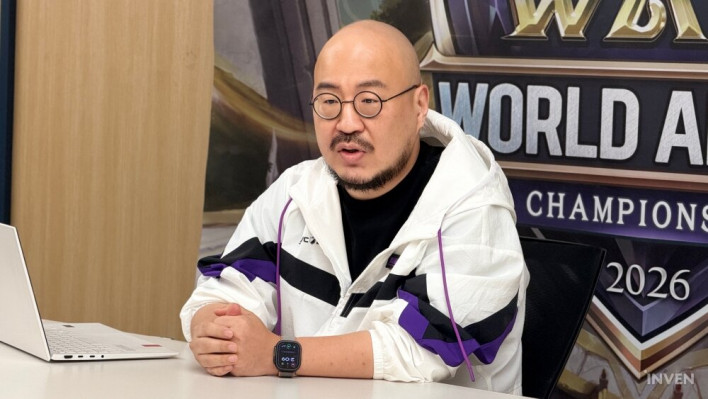
Beyond SWC, you are continuing attempts like the Korea-Japan Super Match. Do you have plans to add more annual tournaments.
"Currently, the structure is almost always the same: player registration in June, qualifiers in August, regional cups in September-October, and the World Finals in November. A few years ago, we set a plan that if SWC handles the second half of the year, we should create various localized tournaments in each global region during the first half. We are already holding regular local tournaments, with as many as three or as few as one or two per region.
Korea and Japan are close, and the competitive relationship between the two countries is a great point of interest, so we hold it under the 'Korea-Japan Super Match' concept. In the U.S., we have local tournaments where North and South American players form teams at random. Europe has a European-style league or simple showdown-style tournaments where teams are formed in a group stage format and play regularly every week, and Southeast Asia combines several countries. China has a 'Guild League' where top guilds gather to compete. Local tournaments are not limited to a specific format; we change and operate them as needed because we can hear the voices of local users up close.
The biggest crisis was the turning point
There must have been crises, such as COVID-19. Is there a memorable example of overcoming one.
"During COVID, it would have been the right stage to stop. It was a situation where response was almost impossible, and countless international events were being canceled. I believe one of the biggest reasons our tournament is well-managed globally is the capability of our overseas subsidiaries. Because we had those subsidiaries, it was possible to quickly transition that year's tournament online.
The most important part of conducting an online tournament was whether players could participate in a fair and proper environment and how to implement that. There were countries where domestic travel was possible, but there were also countries where people couldn't even leave their homes. In those cases, we sent cameras to the players, and not just cameras, but also branded walls to put behind them. Since they might not be able to install them if they didn't have a PC or equipment, we set up all devices, including laptops with everything configured for the tournament, and sent them to all participating players. If necessary, subsidiary staff were deployed to local bases to conduct the tournament.
That year, the tournament operation capabilities of our subsidiaries were greatly advanced, and detailed participation processes were strengthened. I think the experience of those two pandemic years became the foundation that made the tournament structure more robust and allowed it to be upgraded.
If you had to pick a decisive turning point that established it as a global tournament, what would it be.
"Back in 2017, so many mobile game esports tournaments were created and then disappeared that I didn't think it would last until the 10th iteration.
The real turning point for its stabilization was the tournament operation process and the way we worked with the headquarters, which were created during the COVID-19 pandemic—our biggest crisis. At that time, countless guidebooks were created. Since there could be no mistakes, guidebooks were made covering how to invite players, how to monitor them, how to broadcast, and how to respond to problems, and these were distributed to each region, influencers, and the broadcasting crew before the event. I think what was established then played a huge role in allowing us to operate the tournament stably ever since.
You come from a large advertising agency. What role do you think that experience played in the development of SWC.
"When I first joined, I didn't join to take charge of SWC. I joined as a marketer, and after I took on this project, I looked into what SWC was doing and what it needed to do. It was truly a treasure of a project for a marketer. It is a project that brings together every area of work a marketer can do in a lifetime. It includes ATL, BTL, online, and activities related to the product.
To explain further, we design and plan the tournament structure, create events at actual offline venues, design experiences with users, and conduct VIP marketing within that. We also deal with what kind of experience to give to players, casters, and influencers, and how to film their content to reflect it in the game and show it to users. In the process, we also make IP merchandise to provide to users. On the online side, there are match prediction events and music video production, and live broadcasts—the flower of content—are also conducted, but the tournament live is only a part of it.
Before the tournament, 300 to 400 pieces of content are created per year, including match prediction analysis content made with numerous influencers and local content where star players from each country appeal to local users. Inside the game, we also hold cheering events or match prediction reward events using SWC as the theme.
It is a project that requires comprehensively integrating almost every part to build a structure, create a concept, and plan. That's why I felt it was a shame that this project was treated only as a tournament, and I saw that it must play a role as a total branding integrated platform. The current SWC was built one by one by asking for help from almost every department in the company. I think my ambition as a marketer helped make SWC richer.
Why do you consistently produce PR content such as official music and player introduction videos? Is there any content you are particularly attached to.
"Excluding the structural and systematic parts of the tournament, the most important thing is the direction of how much you can make users' hearts race. In that regard, I think the music or music videos created with our own concepts must be well-made and are playing their role. For realistic reasons, there are also copyright issues. Music we make ourselves is much more convenient, can be used for a long time, and is easy to build up.
The content I am attached to is the early content, 'WAR IS MY FATE.' If you look at the music made every year, the genre changes drastically. Even so, I am on the side that thinks esports is rock. However, there are many requests from team members and department officials saying, 'Isn't that too old-fashioned? Shouldn't we try new genre attempts that fit the modern era?' and I agree with that, so I work with artists of various genres every year. Still, if I had to pick one, I think it's 'WAR IS MY FATE,' which shows the essence of rock.
What was the most difficult part as a marketer.
"If I had to name one most important concern, it is cost. You can see it as cost being everything, not from the perspective of tournament operation. It doesn't mean we need a lot of money; marketing is meaningless if you spend without limit. How much you can draw out within a limited budget is the most important part for a marketer.
It is also one of the parts I feel proud of in SWC, but I think it was originally impossible to create a tournament like ours with our budget. To do this, we are borrowing the hands of almost every department in the company. We are collaborating with almost all departments, including development and business, as well as all design, infrastructure, IP, and marketing departments in the company. This process is also very difficult.
Superstar marketing is important in esports leagues, but I can't think of an SWC superstar right off the bat.
"If you look within the game community, there are definitely branded superstars. Korea's SKIT was a player who worked as a caster for a long time and came back after a long time, and there is also ZZI-SOONG. In Japan, there is TAKUZO10, in the U.S. TRUEWHALE, in Europe OBABO, and in China LEST, DILIGENT-YC, and TARS. They appear consistently every year, and there are definitely branded star players for users.
However, the core of your question is likely the popularization of SWC, and it is correct to say that popularization has actually barely happened. People who don't know Summoners War don't know it at all. So, there is a regret that there is no part that can be recognized. If I think about the next 10 years, I am thinking a lot about marketing ways to get people interested in the fun of our tournament even if they don't know Summoners War well.
I think it's a very difficult task. Originally, I think esports is a festival for people who know the game, and for people who don't, it's a marketing tool in an area that is impossible to enter from the beginning. Still, since we can't not try at all in terms of content, I am thinking of planning opportunities through various attempts.
What parts would you like to supplement in terms of the player ecosystem.
"Since we have done a lot of things that can be done as a tournament or marketing tool, I think it's a matter of how much more quality we can raise there rather than pioneering a new area. The part I want to challenge is to structurally strengthen or supplement the Summoners War esports ecosystem.
As you know, there is no pro system like LoL, so players' grievances or management problems always exist. It would be out of touch with reality to say we will create a pro ecosystem, but I am thinking a lot about what methods there are for a structure where we can resolve players' discomfort and feel pride in our own way.
"INTO THE LEGACY"
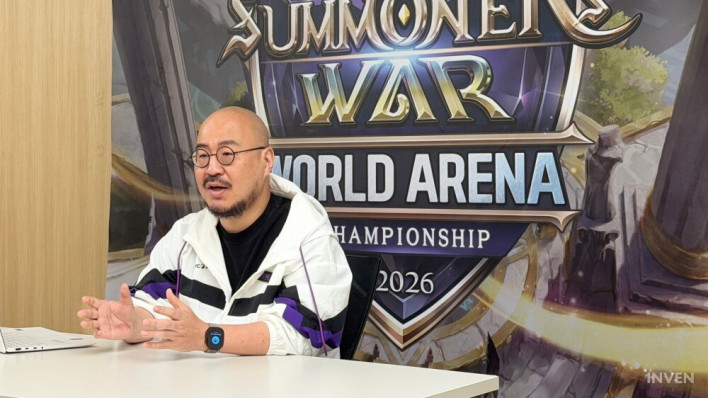
The 10th anniversary tournament will be held in Korea. You could have held it in a region you hadn't been to before, but why did you choose Korea.
"I didn't think about it much. I thought it was almost certain from the beginning that Korea would be the most symbolic World Finals host for the 10th anniversary. It is the birthplace of Summoners War, and Korean fans are the ones who give us the most passionate and intense feedback. Korea is also the mecca of esports, and I thought we could technically create a tournament of quality worthy of the 10th anniversary.
As interest in K-culture, such as food and culture, has grown over the past 1-2 years, even if you ask Summoners around the world, their favor and interest in Korea are high. For those various reasons, I thought the 10th World Finals should be held in Korea.
I have always kept in mind that the 10th anniversary should be in Korea. Specifically, it was around the beginning of last year when we had to start planning the 10th SWC. Usually, we plan that year's tournament around March or April and start thinking about the next year's host in advance, and at that time, there were other candidates until the end, but the possibility of Korea was the highest.
Where is the tournament venue.
"It will be held at KBS Arena. We reviewed several places throughout the first half of this year, and it was not a cost issue at all, but we decided on KBS Arena, which is the largest among the places we could go due to schedule issues.
What is this year's slogan and the content you are preparing.
"This year's slogan is 'INTO THE LEGACY.' I wanted to capture history, and I named it with the thought that the record of participating in this year's SWC or winning as a player becomes a part of the SWC's history that will not be erased. In previous years, when we set slogans, we included messages about future events, such as 'Seize victory,' 'Win,' or 'Overcome,' but this year, we focused on the past and what we have built so far.
I thought it would be good to have an opportunity to exhibit the history and records of SWC so far to show users, so I am planning and preparing spaces outside the tournament. Among those revealed, an archive tab has been newly created on the SWC website, unlike previous years. If you go in, you can see not only the tournament winners since 2017 but also who made it to the World Finals and in which region the tournament was held, and if you click, it is produced so that you can see the replay of the tournament at that time and on-site images as if it were a museum.
Is there any element that will make the site special.
"Methodologically, stage production that can give an impact worthy of the 10th anniversary is the basic. In addition to this, we plan to invite the largest number of players, influencers, and users in history from all over the world who have contributed to the existence of SWC and have already become part of history. We are specially preparing for them to conduct various events on-site, meet users offline, or participate in some of the tournament production or film content.
The narrative of the tournament, such as strategic depth or the rebellion of the underdogs, was difficult to see at a glance until now, but I think it should naturally be made into content. For the 10th anniversary, we are also preparing long-form content like a documentary.
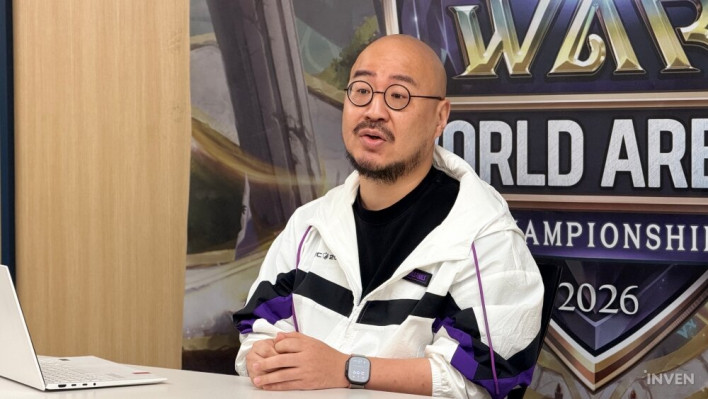
There are also changes to this year's tournament rules.
"Our game has a balance patch every two months regardless of SWC. When patching, we thoroughly review and reflect usage data of PVP or PvE. The part related to the tournament seems to be the tournament rules. Since the tournament must further prevent it from being fixed to a specific meta, we adjust it with picks and bans.
Until now, both players have banned one monster from the opponent and played, which is called a single pre-ban element. The rule newly applied from this year is 'Stack Ban.' A pre-ban accumulates one by one every game. There is no pre-ban in the first game, and from then on, one is accumulated, so it is a rule where up to 8 are pre-banned based on a best-of-five series. We wanted to create a picture where the overall match result is not decided by one or two monsters.
As soon as you hear it, you might think, 'They copied LoL's Fearless,' but to be precise, it's not copying. When we reviewed the rules internally, the cumulative ban rule was always on one side. The reason we couldn't apply it until now is that the stress players receive even if they set up one or two more monsters with Runes or Artifacts is enormous. It is true that it was daunting to even think about accumulating them when the stress is high even if there is not one but two or three ban cards.
We got a hint from seeing 'League of Legends' Fearless Draft. When Fearless was first applied, all players, clubs, and everyone involved reacted by saying, 'It's too much, it's a big deal' until the match started, but after it was actually applied, looking at the reactions of users and players, it was fun, and it was evaluated as healthier and doable. Seeing that, we went around the tournament and asked the players how much stress they were under.
Also, as Rune supply and farming were greatly improved with the 'TOMORROW' update conducted last year, the range of players' monster operation also widened significantly. For various reasons, we gained confidence that we could apply it, and after making the rules this year, we tested the tournament in all global regions including Korea in the first half. It is receiving almost overwhelmingly good reviews.
Is there any marketing you would like to try in the future.
"Content is a part that can be planned and created as needed, so you can always think about it. One of the things that is not simple is that I want to activate watch parties more structurally.
Even now, we are doing a lot of simultaneous language broadcasting. We are broadcasting in up to 15 languages, and 3 broadcasting crews come to the European tournament, and the World Finals are broadcast in about 6-7 languages. However, since it is an official broadcast, there is a limit to the mood of communicating with users. So, we have been inviting famous influencers to the site for two years to hold watch parties.
It was a choice we didn't make before. It was easy to show off by gathering traffic in one place, so I always wanted to gather it in one place, but I think it is much more fun for users and influencers to talk and enjoy the tournament together in a more comfortable and free environment, so I am increasing watch parties one by one. In the long term, I want to create a system where influencers can naturally come to the site and broadcast without us having to recruit and hire them.
If you define SWC in one word.
"I think SWC is Summoners War itself. I told you it is an attractive integrated marketing platform as a marketer, but I see SWC as one 'cycle' like regular balance patches or updates. It is not something you do when you need it according to one-off marketing needs and stop when you don't, but an inevitable axis that must take responsibility for user experience and fun in the second half as long as Summoners War is serviced.
Do you think you can reach the next 10 years, the 20th anniversary.
"Even if the official global league of StarCraft has disappeared, aren't there still countless regional leagues going on? I think StarCraft has also almost become Go, and I think Summoners War should also be seen as almost Go or chess. The game is huge.
This question is no different from the question of how long Summoners War can last. If there is a game among mobile games that can take root like Go and chess, looking at the games I have played so far and are currently coming out, I think it is only Summoners War.