As global expansion becomes a primary objective for the gaming industry, the importance of marketing strategies for overseas markets is growing. In particular, markets like Japan, with its robust subculture demand, or China, with its unique platform ecosystem, require more than just budget allocation; they demand detailed analysis to understand local user tendencies and effectively engage with communities.
Against this backdrop, Kadokawa Global Marketing (KGM), an agency under the KADOKAWA Group, is conducting a 'cross-border' marketing business that spans from planning to execution. KGM has a proven track record in international promotions for PC and console titles from numerous game companies, including SEGA, CAPCOM, and SQUARE ENIX, and provides marketing solutions that leverage the group's internal media infrastructure, such as Famitsu and Dengeki Online.
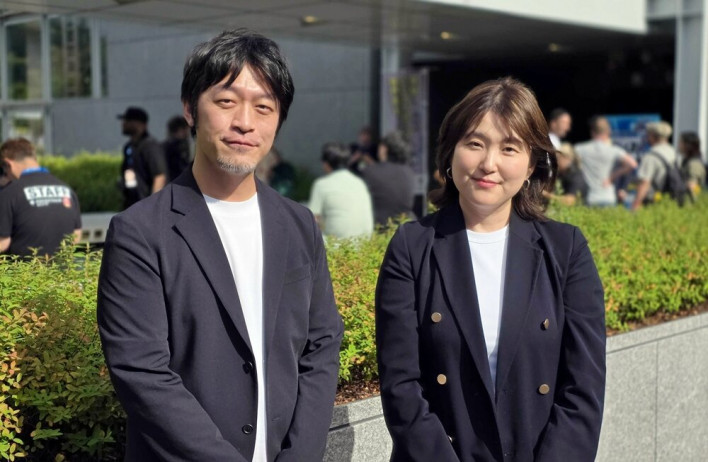
Recently, KGM has been expanding its collaboration with domestic partners, taking note of the agile development and decision-making speed characteristic of the Korean game market. At BitSummit in Kyoto, Japan, we met with KGM CEO Jang Jin and General Manager Kim Hee-yeon to hear about their ongoing promotional efforts across various global regions—including Japan, China, and Korea—and their approach to overseas expansion.
Q. First, could you please introduce KADOKAWA Global Marketing (KGM).
"KADOKAWA Global Marketing is a KADOKAWA Group company. As our name suggests, 'global marketing' is our core business area. Our biggest strength is that while we are based in Japan, we do not stop at marketing originating from Japan; we are experts in 'cross-border' marketing—moving from one overseas market to another—and we are very confident in this capability.
We provide a wide range of solutions and services within our business scope, with the majority of our clients being in the gaming industry. Whether it is a PC game or a mobile game, we provide one-stop, end-to-end support, from consulting tailored to the client's size and budget to practical execution, including influencer marketing, official account management, event planning, and media campaigns.
Q. The KADOKAWA Group includes game companies like FromSoftware and Spike Chunsoft. Do you also handle marketing for the group's own games?
"Currently, the KADOKAWA Group's overall policy, under the grand goals set by President Natsuno, is for each group company to develop its business independently and robustly. So, to be honest, compared to other companies, we tend to respect each company's unique and independent philosophy a bit more.
However, because we are the company specialized in global expansion and marketing within the KADOKAWA Group, our interaction with various game makers in the group is naturally very active. We are actively helping with the global rollout of titles from various group companies, including Spike Chunsoft, Acquire, and the headquarters' game business division.
Q. Looking at your official website, major game companies like Tencent, NetEase, Cygames, and BANDAI NAMCO are listed as clients. I am curious about which clients you primarily collaborate with in regions like Japan, China, and Korea, and what your representative success stories are.
"Currently, about 50% of our clients are in Japan, and the other half are overseas clients. The proportion of Chinese clients, including Tencent, is high, and since last year, the needs of Korean clients have increased significantly, while inquiries and consultations from U.S. and European clients are also continuing to come in.
In Japan, we work closely with over 30 partners, ranging from large corporations to indie game studios, including SEGA (Persona series, Shin Megami Tensei, Yakuza, Sonic, etc.), SQUARE ENIX (Dragon Quest, Final Fantasy series), CAPCOM (Street Fighter 6, Monster Hunter series), Cygames (Granblue Fantasy: Relink, Uma Musume), and Marvelous (Story of Seasons, Rune Factory).
Recently, we have been receiving steady inquiries regarding Japanese promotions, primarily from major Korean game companies. Based on the PC and console marketing know-how we have accumulated through collaborations with Japanese clients, we have been conducting online and offline marketing covering not only Japan but also the Greater China region and the English-speaking world under the leadership of General Manager Kim Hee-yeon since last year.
Representative achievements include a joint broadcast featuring top-tier influencers from China's Bilibili and global CBT promotions for Korean AAA titles. There is a continuously growing market need for integrated solutions that can handle global marketing across multiple regions through a single point of contact.
Q. You started as 'J-Guide Marketing' in 2018 and changed your name to 'KADOKAWA Global Marketing' in 2020. What was the reason for the name change, and how does it relate to your business direction?
"When we first founded the company, the 'J' in J-Guide Marketing actually stood for 'JAPAN.' At the time, inbound business in Japan was very active, so we started with a business focused on overseas visitors coming to Japan.
However, when the COVID-19 pandemic hit in 2019-2020, we were flooded with massive global marketing needs from game industry clients. As we listened to the concerns of Japanese game makers regarding their overseas expansion, it was also a time when we saw a clear business prospect that we could solve these problems with our capabilities.
With this as an opportunity, we coordinated with President Natsuno and relevant departments at headquarters to change our name to 'KADOKAWA Global Marketing' to move away from the inbound-focused 'Japan Guide' image and expand into a wider world.

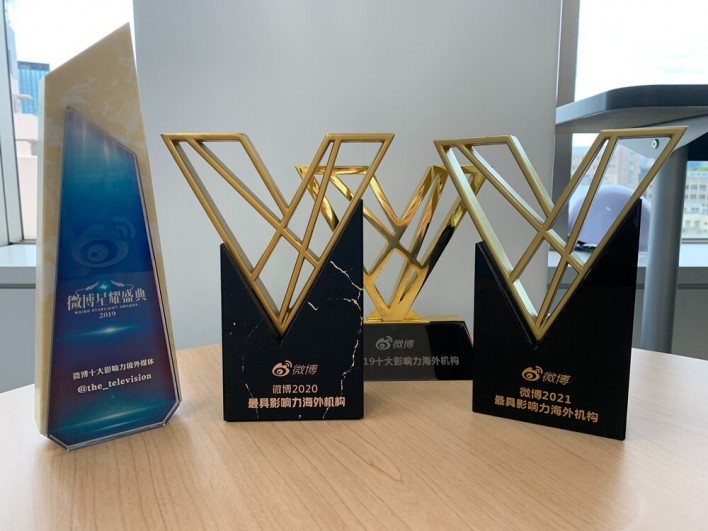
Q. A question about the Chinese market. KGM exerts the most powerful influence among overseas MCN agencies in areas like Weibo and MCN operations. What is the secret?
"China has built its own platform environment because it cannot use Facebook or YouTube. So, we dug deep into local platforms like Weibo and Bilibili, and were able to reach the stage of receiving official certification. From this point on, our connection with influencers, our KOL network, and our relationship with platforms deepened rapidly. We are confident that we can exert influence in the Chinese region that is not inferior to local marketing agencies.
Our greatest strength is that we are not a simple 'subcontracting' agency. Typical agencies just take the client's needs and outsource them, but we do the work ourselves as much as possible in a one-stop manner. I believe the secret to our success is our deep involvement, such as negotiating and communicating directly with the influencers themselves, and performing account operations and on-site management of offline events without external subcontracting.
Q. You joined as a founding member of KGM in 2018 and were appointed CEO in November 2025, seven years later. I am curious about the direction in which you want to lead KGM as the new CEO, and if there is anything you want to emphasize in particular.
"Our ultimate goal is to be a 'comprehensive agency with a global perspective.' Beyond being a simple agency, we aim to draw a line between us and other agencies and directly provide top-tier services that are never inferior to the local level. I have also built a pipeline over a long period, starting from field sales, and these efforts have borne fruit and started to appear as overseas expansion results for Japanese clients.
Based on this know-how, consultations and orders for cross-border projects—moving from overseas to overseas—have also increased significantly recently. Even when communicating with local agencies, I am confident that we have much stronger competitiveness in terms of understanding IP or forming 'communication between IP and local users.'
On this foundation, we intend to make global marketing agency work our mainstay while extending two new axes. The first is the strengthening of 'IP marketing and business' that actively utilizes IP, and the second is exploring the path of independent 'publishing' in line with recent trends in the game industry, along with the expansion of the MD (merchandising) area.
Q. KGM has recently specified Korea as one of its major target markets. I am curious about how you evaluate the Korean market and what plans you have regarding entry into Korea.
"The biggest characteristics of Korean game companies that I have felt are their overwhelming 'sense of speed' and the 'rational and powerful decision-making power' of their management. In particular, unlike Japanese game companies, I see it as a very attractive strength unique to Korean game companies that they design with a clear global vision in mind from the initial planning stage.
Regarding KGM's entry into the Korean market, we are currently in the stage of seeking the optimal form. Starting with the first pop-up store case for a Japanese IP in Korea conducted through our company last December, we have confirmed the potential of the local market, and we are currently discussing specific approaches from various angles with KADOKAWA headquarters.
In addition, our major clients, Japanese game companies, are also showing high interest in the Korean market. Recently, there has been a trend of hoping for an approach through various channels beyond simple digital advertising. In line with these clients' needs, we are also securing insights specialized for the Korean market and building a solid reference by conducting various marketing measures.
Q. Korean game companies are very interested in entering the Japanese market, but it is generally evaluated that the entry barrier is high. What is the most powerful solution KGM can provide for Korean games to succeed in the Japanese market?
"Considering the cultural background, it is true that the barriers to the Japanese game market are high. To break through this, the most important point is 'how to narrow the distance with users.' The commonality of overseas games (including Chinese and Korean titles) that have generated large sales and succeeded in Japan is that they were 'accepted at the level of Japanese game user communities.'
KGM's strength lies in consulting and support on how deeply we can penetrate these Japanese market communities. Even if you execute media advertising or affiliate content with the same budget, the results can vary wildly depending on the depth of communication.
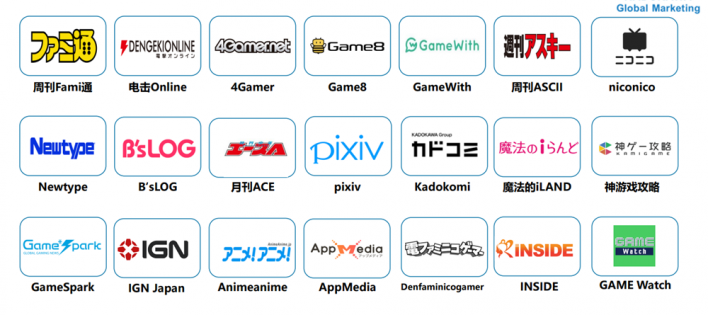
We are based in Japan and, as a member of the KADOKAWA Group, not only do we work closely with group media such as Famitsu and Dengeki Online, but we have also built deep relationship networks with various channels such as third-party media and Game8. Based on this connection with media, our powerful solution is that we can suggest a direction that is much more 'deeply rooted in the user's sentiment,' even if we do the same promotion.
Q. You currently cover China and Japan, as well as Southeast Asia, the English-speaking world, and Korea. How do you think the game/content marketing approach should differ by region?
"The Japanese market has a deeply rooted console-based game culture, so users' understanding and involvement in the worldview built by the developer (producer) are very high. Therefore, how concretely and persuasively this worldview is conveyed through the community becomes the key to success. In the past, Japanese users tended to be somewhat conservative toward Korean or Chinese games, but recently, titles with overwhelming scale and trendiness are being greatly loved. However, if you look at overseas games that have succeeded in long-term box office in Japan, they all have in common that they have proven consistent storytelling and a solid worldview.
On the other hand, as the console market in Korea has recently begun to bloom in earnest, cases of benchmarking Japanese games are inevitably increasing. Conversely, the part where Japanese game companies struggle the most when entering Korea is that they fail because they do not fully understand the unique sentiment of Korean users. While maintaining the original legacy of Japanese games, deep research on the unique community operation methods and promotions loved in Korea is essential.
Finally, China has a huge PC market scale centered on Steam, and the ripple effect of influencers active based on local platforms such as Bilibili is absolute. Existing media affiliate advertising is also active, but China is a market where influencer marketing itself has powerful dominance across society. Naturally, it can be seen as the place where the influence of Key Opinion Leaders (KOL) is most maximized among global regions in the game industry as well.
Therefore, to take deep root in each region, we have specialized teams by region such as China, Japan, and Korea, and are fiercely researching the optimal approach every day. If general global agencies have separate branches in each location and move separately, KGM is 'internalizing all of them within one company' called KADOKAWA Global Marketing, with professional teams of local agency quality. This is our greatest strength that enables perfectly different customized approaches by region.
Q. Lastly, if you have a message you would like to convey to Korean game company officials who are considering collaboration with KGM after reading this article, please do so.
"The core that we at KGM think is most important in marketing is 'in-depth communication.' For excellent overseas titles, especially Korean games, to achieve great success in Japan, it is absolutely important to go beyond simply pouring in marketing budgets and 'be fully accepted at the level of the Japanese local game user community.'
Furthermore, our biggest differentiation point is that 'we do not provide uniform and obvious solutions for any title.' Even in the same RPG genre, the community and development method suitable for its characteristics are different, and the top priority task changes completely depending on whether it is action or mystery, or where the title's current awareness level is.
Also, based on in-depth communication with professional dedicated teams, the fact that we can conduct 'cross-border' promotions that cover multiple regions from a single window is our greatest competitiveness. As we can provide wide-ranging marketing support across Japan as well as the entire globe, we look forward to forming positive partnerships with excellent Korean game companies preparing for overseas expansion.

Sort by:
Comments :0