When you think of Nintendo, various game genres might come to mind, but for most, the platformer is the first. After all, the Super Mario series—a flagship franchise that even saw a movie release last month—has stood as the textbook definition of the genre for over 40 years.
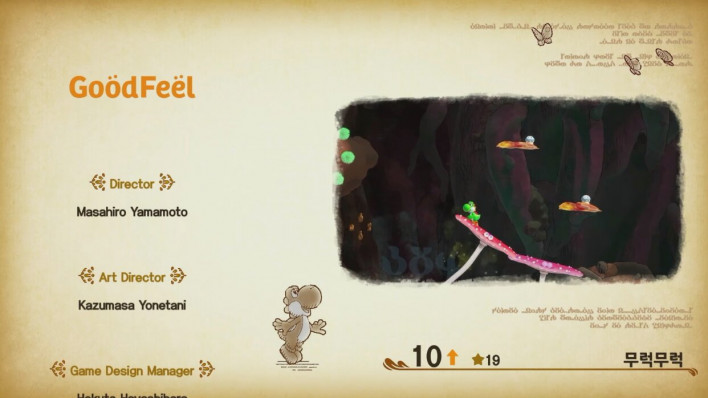
Never content to rest on its laurels, Nintendo has continued to experiment with the platformer genre through various spin-offs. Among them is the Yoshi series, which puts the titular dinosaur—once Mario’s trusty steed—at the forefront. It is a series with over 30 years of history, dating back to 'Yoshi's Island' on the Family Computer in 1995. While Good-Feel has primarily handled development since 2015, the studio has so faithfully adhered to Nintendo’s design philosophy that one might assume the games were made in-house without ever checking the credits.
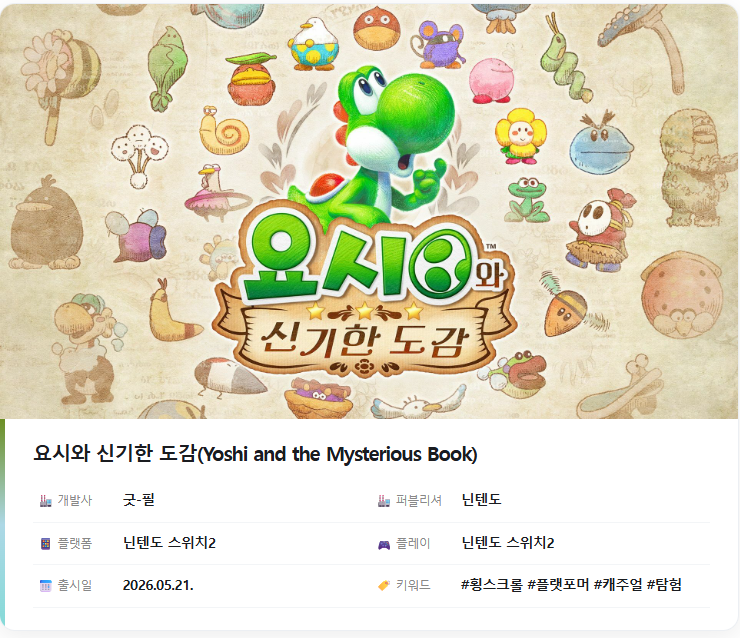
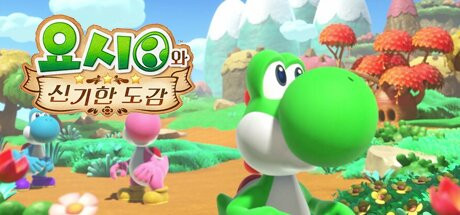
'Yoshi and the Mysterious Encyclopedia,' which marks the 30th anniversary of the series, is a significant title in that regard. Faced with such a milestone, Good-Feel returned to the fundamentals of platforming and the Nintendo philosophy. The result is a game that captures the pure joy of moving exactly as you intend and discovering something new along the way.
No Fear of Game Overs: Joy in Every Attempt
Recent platformers have evolved in various ways, often building upon established, intuitive control schemes by incorporating Roguelike elements or crafting delicate level designs that require high levels of player skill and reflexes to clear. While these advancements have kept the genre at the forefront of gaming, they have also created a misconception that platformers are 'difficult,' as the focus shifted toward overcoming challenges or speedrunning. In reality, elements intended to add tension have often become barriers to entry.

That is why there are no game overs in 'Yoshi and the Mysterious Encyclopedia.' While it is possible for Yoshi to fall, these events take place within the context of the 'Mysterious Encyclopedia,' so you simply respawn right where you left off and continue your challenge without restriction. There are no life bars or dramatic failure sequences; it’s just a minor stumble, and you move on.
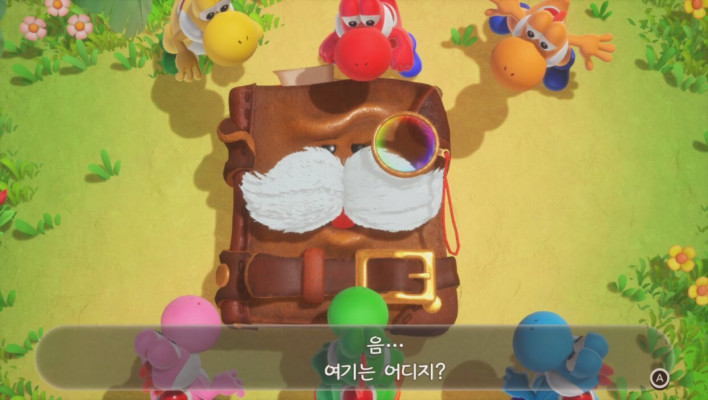
While such relaxed level design is soothing, one might wonder if it remains engaging. The game addresses this through a quest-based platforming structure. Literally, the game involves Yoshi entering a mysterious encyclopedia that fell onto Yoshi's Island to complete it. The book contains various strange creatures from the Mario and Yoshi series, but their names and characteristics have been erased. The premise is that Yoshi takes on requests from the encyclopedia to enter these creatures' habitats and conduct research to restore their entries.
The real charm of the game lies not in high-speed platforming toward a finish line, but in the joy of exploring how to interact with the creatures that inhabit each area. Building on basic platforming controls, you use Yoshi’s signature tongue to swallow, shoot eggs, or spit out enemies. There is a genuine satisfaction in experimenting—poking, eating, pressing, and spitting—to learn how everything works.
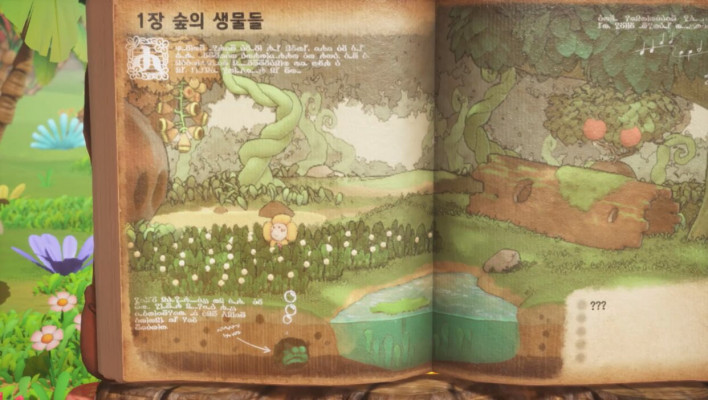
All of this is possible because you never face a game over. You can experiment boldly without hesitation, leading to various discoveries. For example, if you carry a Violet Seed on your back and approach a Fluff-Seed, the Fluff-Seed will take root in the Violet Seed, causing it to periodically scatter seeds. If you plant those seeds on rocks or statues, cracks appear; strike them with force, and they shatter to reveal hidden paths. This pure joy of trial and error kept me engaged throughout the game. I found myself constantly wondering, 'What ingenious solution will the next creature require.



Once you clear the first six regions and unlock the later areas, the true value of the encyclopedia shines. You begin to utilize the traits of the creatures you've met in multifaceted ways, capturing the classic fun of a platformer as you overcome various challenges. The boss battles, where you stop Bowser Jr. and Kamek from trying to capture the Bird of Paradise, are also fun to 'cook' by trying out different methods without the fear of a game over.

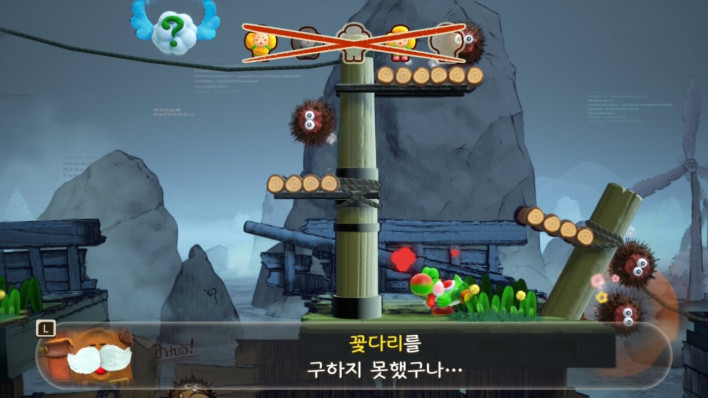
Delicate design that keeps you glued to the Joy-Cons, despite being short and simple
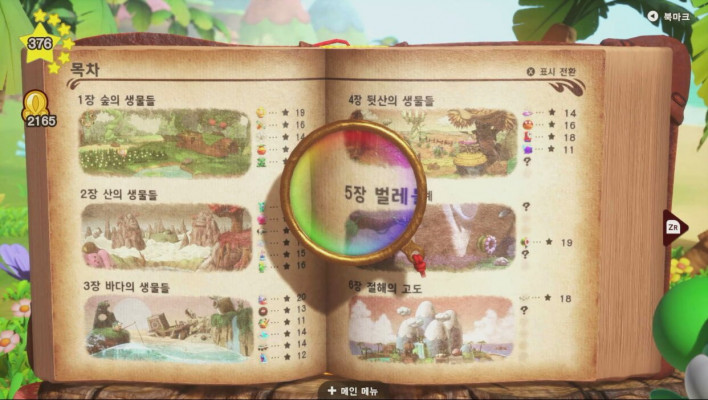
This fun doesn't last forever, however. This type of game, focused on finding information to complete an encyclopedia, has clear limitations. As you fill in the entries, the sense of novelty inevitably wanes. While the game slows this decline by ensuring creatures don't overlap too much, that point of diminishing returns eventually arrives.
Also, because there is no clear goal like in other platformers, there is room to get lost. Even if the puzzles or gimmicks aren't difficult, they are sometimes tucked away in unexpected places, leading to moments of aimless wandering when your perspective is limited. To minimize this wasted time, the developers kept the areas small, but it can still be frustrating to wander around looking for that one last piece when you've already found almost everything else.
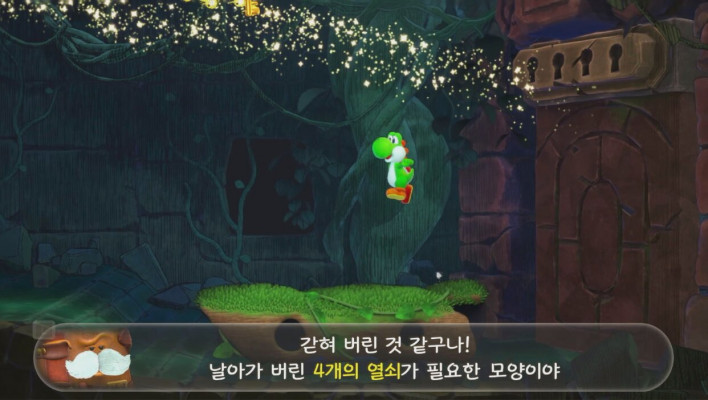
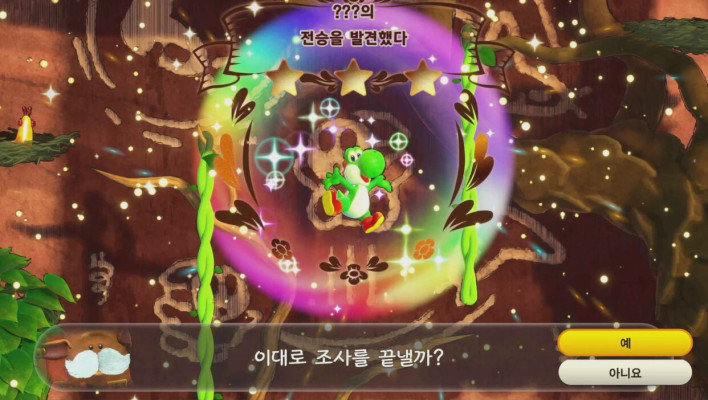
The Mysterious Encyclopedia helps a wandering Yoshi, but it provides only the bare minimum of hints. Since the level design isn't overly complex, these hints are usually enough, but there are exceptions. In those cases, you have no choice but to scour the area using everything you've learned from other creature parts. The secret to the game's success is how it perfectly paces the content so that you never spend more than 15 minutes in one section. Any longer, and you might grow tired or bored, but the game provides just enough structure to help you form a strategy.
The pacing is masterful, keeping clear times short while constantly providing reasons to explore and challenge yourself. Just when you think you've finished a creature's page, new hints appear to draw you back in. Some tasks are designed to be solved naturally through interactions in other creature parts, not just the current stage. It’s a design that rewards the player with a sense of accomplishment as things naturally fall into place.
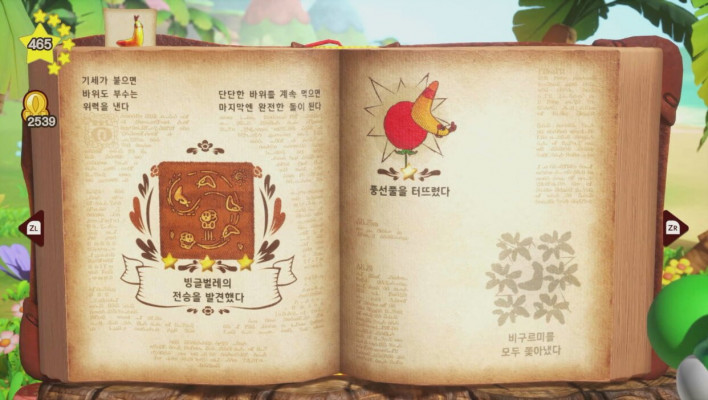

The level design is remarkable, minimizing stress while allowing for natural progression. Even as new elements become scarcer, the game provides rewards at unexpected moments to keep you exploring. It’s the kind of game that makes you want to take it to the bathroom just to clear one more stage or find that last flower. It may be short and simple, but the layers of delicate level design, built on years of experience and know-how, are incredibly meticulous.

The diverse interactions built on these fundamentals are another reason to keep holding the Joy-Cons. Beyond basic exploration—like riding bubbles to the top of the map, drilling through the ground, or swimming freely on a fish—the game encourages you to test your imagination. You can stomp on 'Poppers' to multiply them until they explode like a Mentos-in-soda reaction, or feed Yoshi peppers or apples to change his temperament and utilize him in new ways.

An Introduction to the Fundamental Fun of Platformers: Yoshi and the Mysterious Encyclopedia
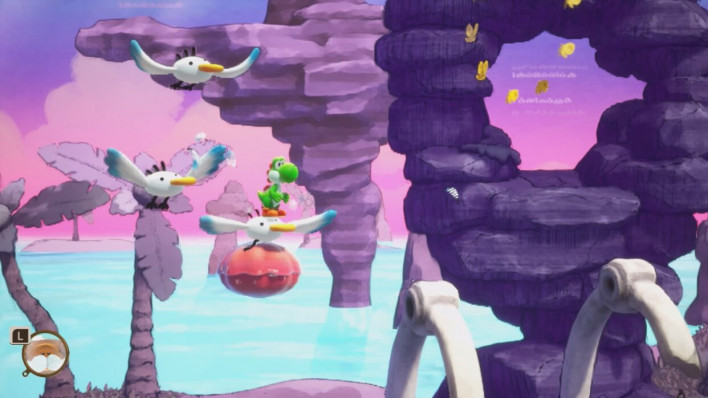
On a side note, my niece is about to enter elementary school. Observing her closely, I’ve come to think that running and jumping might be a human instinct. Before children reach school age, they are constantly running around and laughing. Even in parenting shows, you often hear advice about how kids will naturally run everywhere until they are taught otherwise.
Perhaps they run and jump because they find the ability to move quickly and leap so fascinating. The platformer is a genre that translates that joy into the framework of a game. Looking back at the birth of the genre, it was a time when the very fact that characters on screen could jump in response to stick movements and button presses felt magical. Even now, as games have evolved to allow for more sophisticated movement, this is likely why the platformer—which highlights that fundamental joy—continues to thrive.
Of course, because it focuses so heavily on accessibility, 'Yoshi and the Mysterious Encyclopedia' has its share of shortcomings. Due to the relaxed design that ignores game overs, the UI feels somewhat empty. While you can unlock hints by collecting Special Flowers and customize the layout, the focus on self-discovery makes the hint UI quite difficult to read.
Furthermore, without the tension of a game over, the boss battles lack excitement. While this aligns with the game's philosophy of encouraging experimentation rather than pattern mastery, it is undeniably a step down from the stages. Additionally, the short duration of the late-game section where you meet the Bird of Paradise and utilize everything you've learned is a missed opportunity.
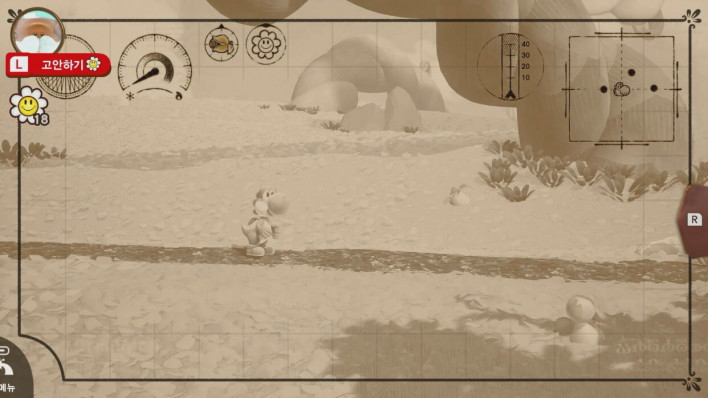
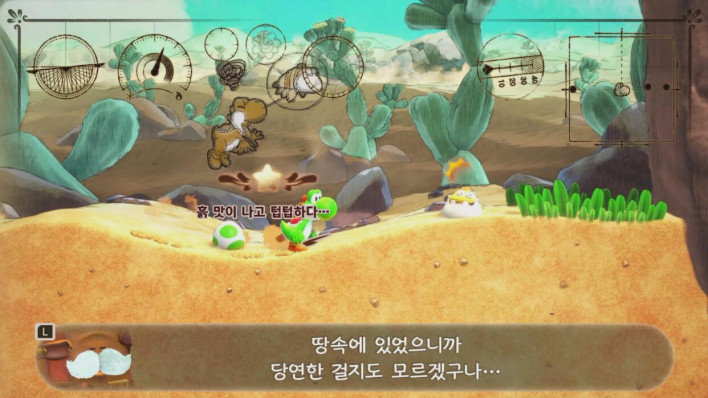

As games have become more sophisticated and high-dimensional, many platformers have evolved toward greater challenge. As someone who has watched this history and played the genre consistently, these shortcomings are noticeable. However, 'Yoshi and the Mysterious Encyclopedia' fulfills its role as an entry-level title for children starting their gaming journey on the Switch 2, or for those who find platformers intimidating. To exaggerate slightly, it feels like another entry-level title that embodies the Nintendo philosophy solidified during the late Satoru Iwata’s era: 'Games should not be difficult or complex; they should be accessible to everyone.'
- Design that encourages experimentation without the fear of game overs
- Gimmicks that add ingenious applications to simple foundations
- Clear, simple controls and satisfying tactile feedback
- Inevitably lackluster boss battles
- Vague hints and low-visibility research tool UI
- The significance of the encyclopedia completion only blooms in the very late game
Review Platform: Nintendo Switch 2 (Launch Build)