Five years after making a name for itself with the hardcore roguelike shooter Returnal, Housemarque has returned with its latest title, Saros.
Saros is a culmination of the know-how Housemarque built while developing and supporting Returnal. Consequently, the first impression, overall systems, and even the feel of gameplay are largely similar. From its hardcore, third-person, roguelike nature to its bullet-hell mechanics, it feels almost like the same game at a glance.
However, that is merely a superficial take. While it clearly inherits much, Saros and Returnal are distinct. If Returnal was a hardcore roguelike shooter with clear flaws that often caused player frustration, Saros feels significantly more refined in that regard. It manages to preserve the fun of a hardcore roguelike shooter while minimizing the stress-inducing elements.
While Saros shows generally satisfying improvements, it is not without its shortcomings. When the dopamine hits, it provides immense catharsis, but when it doesn't, the experience can feel incredibly cold and unrewarding. I want to discuss Saros—a game where extreme catharsis and profound confusion coexist—to explore what created this gap and what the final result looks like.
※ This review was conducted on the standard PS5 version; please note that it may contain spoilers for general gameplay and certain bosses
Tangible Growth: Hardcore, but Not Punishing
Roguelikes are generally perceived as unforgiving. Because of permadeath, dying means losing everything—from the levels you gained during the session to the gear you painstakingly collected—and starting over from scratch in a procedurally generated world where the structure, items, NPCs, and enemy placements are completely different from the previous run.
While most players accept this as a core feature of the genre, the real issue lies elsewhere: character progression. Having your level and hard-earned endgame items wiped out to start from zero is, beyond just a game mechanic, a significant source of stress.

In recent years, many roguelikes have attempted to address this stress while maintaining the core loop. This shift toward the 'roguelite' subgenre introduced permanent progression systems. By ensuring that not everything is reset upon death—allowing players to retain some resources to boost base levels or stats—a virtuous cycle is created where players return stronger after every death.
This holds true for Saros as well. As players repeat dozens of deaths and challenges, their skills improve, and their character grows—slowly, but steadily.

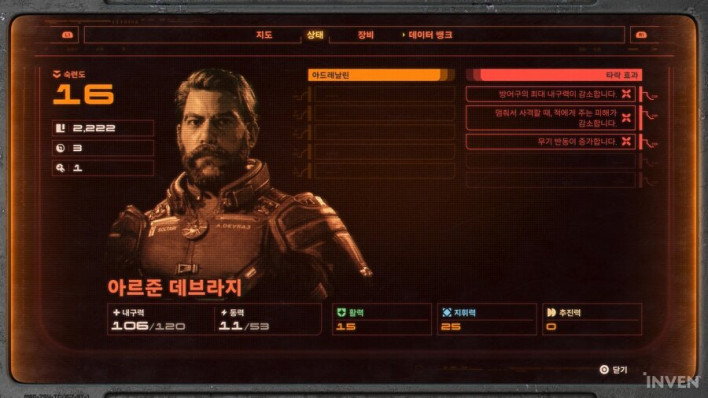
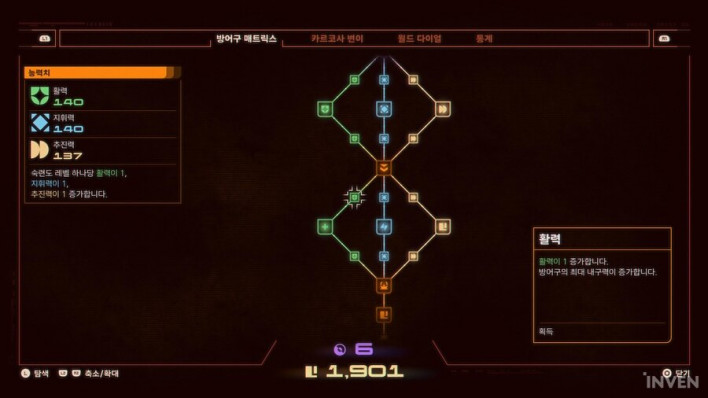
As a roguelike, the growth system in Saros can be divided into two main categories. The most fundamental is the stats. Saros features three stats: Vitality, Command, and Momentum. Increasing Vitality boosts health, while Command increases the maximum power gauge, which in turn expands the shield gauge and allows for more frequent use of power weapons (discussed later).
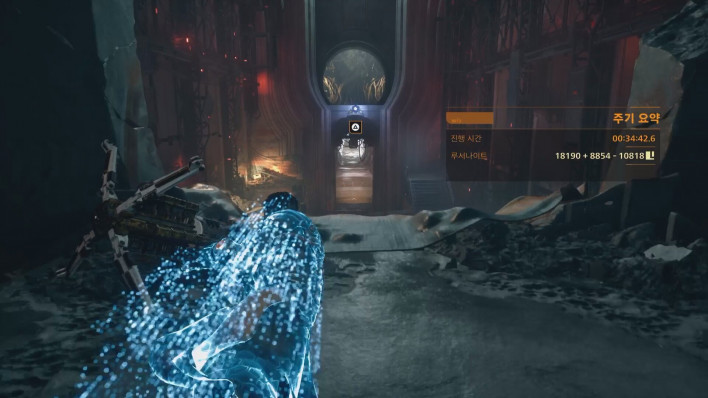
Momentum is tied to 'Lucernite,' the experience and currency gained from defeating enemies. When you die or return to the base (Passage) after defeating a boss, your Lucernite is tallied, and higher Momentum grants a bonus.
While Momentum might seem purely focused on out-of-combat growth, it is also tied to the second progression element: Proficiency. Proficiency is essentially your level. Every time you gain Lucernite, your Proficiency experience increases; reaching the cap raises your Proficiency level, which grants +1 to Vitality, Command, and Momentum.
However, 'leveling up' here doesn't always mean permanent growth. While you can spend Lusernite at the base to permanently increase proficiency and raise your baseline, dying sends you back to the base, and that hard-earned proficiency is reset. Simply put, the growth system in Saros consists of both permanent and volatile elements, which ensures that players can clearly feel their progression.
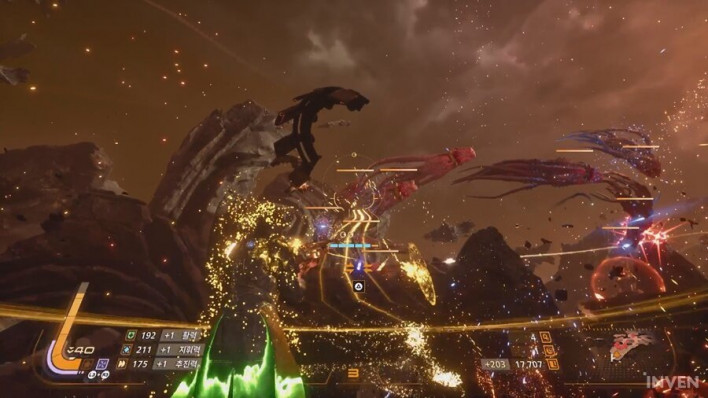
The growth curve is subtle at first, but the stats and Proficiency you accumulate eventually pay off in the late game. What started as minor stats eventually hit the 100s, and Proficiency climbs past 30 toward 40, making the character feel significantly more robust.
Beyond basic health and Power gauges, stats directly enhance weapon performance, from fire rate to blast radius. This is especially noticeable with Power weapons; while you might only fire them once or twice early on, higher Command allows for more powerful and even rapid-fire usage. It is a slow, steady, and natural blossoming of power.
Extreme Shooter Catharsis Through Diverse Combinations
If stats and proficiency provide a sense of growth through leveling, the various weapons are what deliver genuine catharsis in combat based on those accumulated stats. True to its roguelike roots, the core of Saros lies in collecting and combining various equipment. These are divided into three main categories.
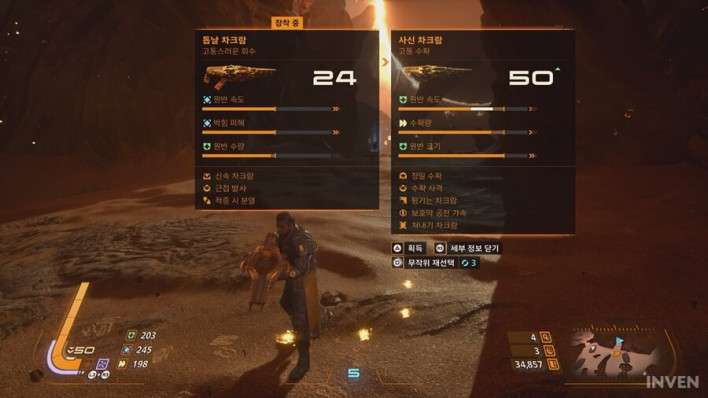
The first is the primary weapon. Think of these as firearms. There is a wide variety, including pistols (Magnums), rifles, shotguns, crossbows, and chakrams (saw-blade launchers), each further divided into two or three types. Just as a revolver and an automatic pistol function differently, each weapon in Saros has its own distinct characteristics.
These traits are highlighted by the secondary fire, activated by half-pulling the trigger. For instance, a pistol might allow for 'fanning' to fire rapidly or charging up to unleash all rounds at once. This design forces players to use weapons strategically depending on the situation—using standard fire for mobs and unleashing full-auto bursts for tougher foes.

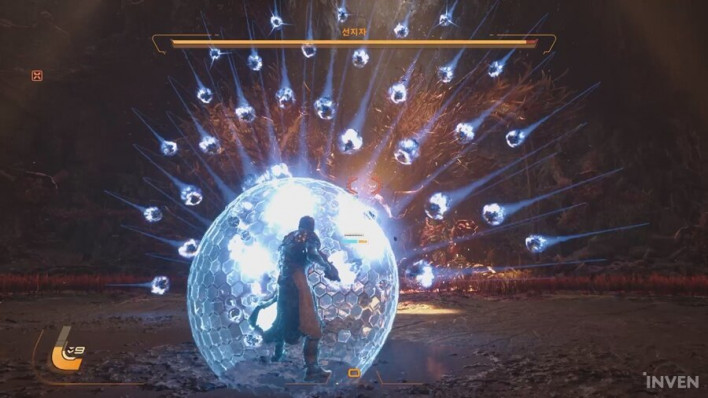
If primary weapons are your 'basic attacks,' Power weapons are your skills. They consume the Power gauge (shared with your shield) and boast powerful effects. Power is primarily replenished by absorbing blue enemy projectiles with your shield, which adds depth to combat by forcing players to choose between dodging and absorbing to fuel their abilities.
Note that you can only absorb 'blue' projectiles. Getting hit by or absorbing yellow 'corruption' projectiles builds up a corruption gauge, which reduces your maximum health. In this state, health recovery items will not restore you beyond a certain threshold.
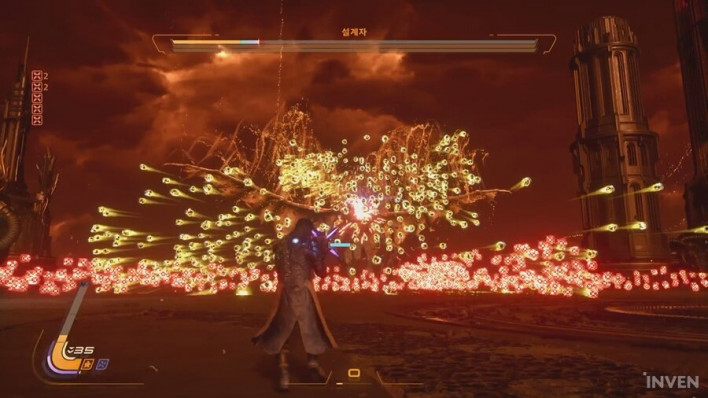
Since corruption projectiles only affect max health, if your health is already low, absorbing them carries little risk. Furthermore, the corruption gauge can be slowly cleared by using Power weapons, allowing you to treat them like blue projectiles in certain situations.

The real problem is red projectiles. Absorbing them with your shield drains your entire Power gauge and shatters the shield. Enemies combine these three types of projectiles, constantly challenging the assumption that you can just block and absorb everything.

This design forces players to balance dodging and shielding while offering multiple choices. Should you shield, dodge, absorb at the cost of corruption, or parry? It forces constant decision-making amidst a hail of bullets.
Unlike weapons, artifacts are essentially armor and accessories. These are volatile items that disappear upon death. While base stats can be raised at the base, artifacts provide the significant, direct stat boosts you feel during a session.
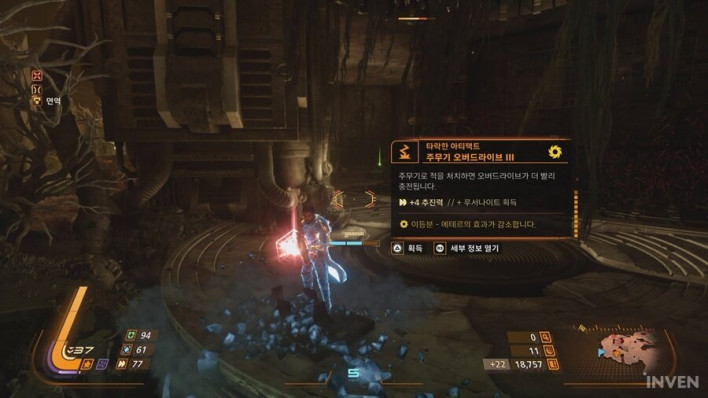
Some artifacts grant +5 to stats, while others provide special options that are far more valuable than raw numbers. Like the stats themselves, they are weak individually but create powerful synergies when stacked.
The combination of primary weapons, Power weapons, and artifacts is where special options shine. Beyond basic performance boosts like blast radius or charge speed, weapons can have up to five special options based on your Proficiency level, which are often more important than the weapon's base stats.
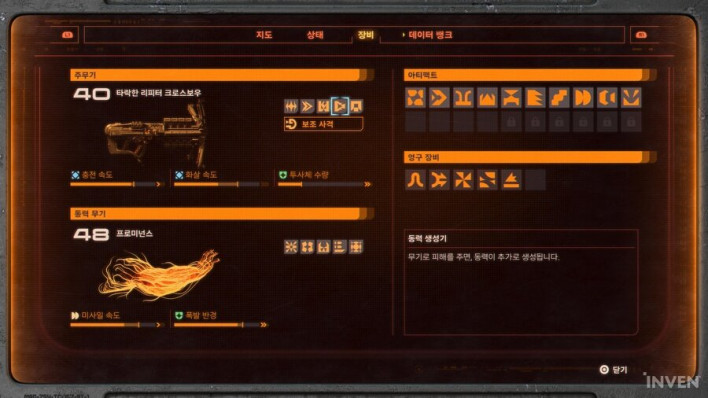

As mentioned, using Power weapons requires absorbing projectiles. If you have no Power, you're stuck waiting for enemies to fire blue projectiles. However, if your primary weapon has the 'Power Generator' option, you can generate Power simply by dealing damage, effectively allowing for unlimited use.
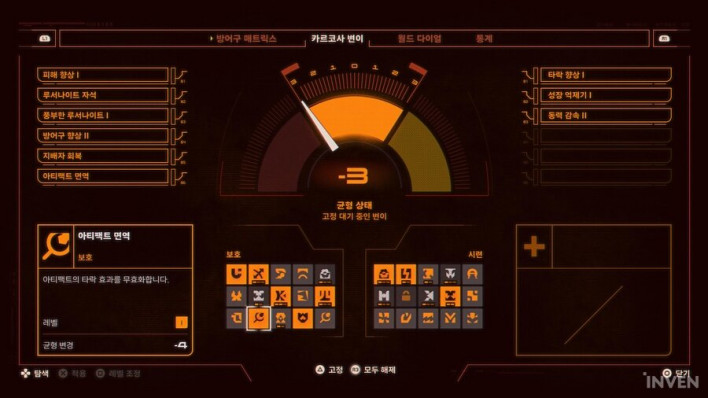
Carcosa Mutations are the final piece of this puzzle. They allow players to adjust difficulty by choosing between 'Protection' and 'Trials' (buffs and debuffs). For example, you might encounter items with corruption that increase weapon recoil or dash cooldowns; applying a 'Corruption Prevention' mutation can negate these fatal debuffs.
The combat in Saros, born from these diverse combinations, offers extreme shooter catharsis. While it starts off feeling like a standard fast-paced shooter, once you reach the later stages and assemble an optimal build from a multitude of artifacts and special options, you can effortlessly weave through swarms of enemies and barrages of bullets.
Clear Strengths, Clear Weaknesses
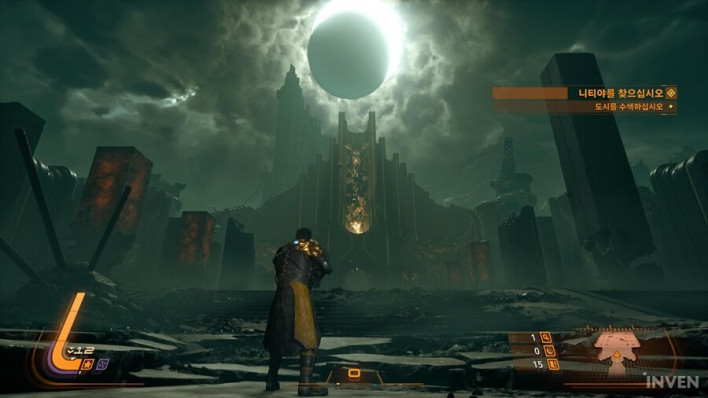
While Saros resolves many of the frustrations of its predecessor, Returnal, it is not without its own issues. Where there is light, there is shadow, and the brighter the light, the deeper the shadow. Saros has clear advancements, but its flaws are just as apparent.
The weapon balance is disappointing. Despite having over 10 types of guns, you often end up using the same few. While this is partly due to player preference, it's also a design issue.
The shotgun is a prime example. Like shotguns in many other games, the effective range in Saros is quite short. To perform effectively, you have to get right up in the enemy's face, which is easier said than done.

The biggest problem is that Saros is designed for combat at a distance. In an environment filled with lethal bullet patterns, a shotgun that only performs well at point-blank range is essentially a 'dud.' It's barely more powerful than other weapons even when used optimally, making it largely unnecessary.
The limited build variety is also a letdown. Despite the variety of special options, the actual viable combinations are few. If there were options that significantly boosted damage at close range, you could create a 'one-shot' melee build, but such builds aren't really possible in Saros. Consequently, players tend to stick to the same few options.

This leads to neglecting certain weapons, like the chakram. It's powerful and unique, but I rarely used it because its special options are too niche, and it rarely rolled the 'Power Generator' option. Since Power Generator is almost mandatory for boss fights, other weapons just don't get a look-in.
My personal favorites were the Power Generator for primary weapons and the Vacuum Bomb for Prominence. Even when I found stronger weapons with more options, I rarely swapped these out because their performance was just that good.

Generating Power just by attacking removed the burden of using Power weapons, and the Vacuum Bomb created a black hole that absorbed over 50% of incoming projectiles. The difference in difficulty between having these two options and not having them is like the difference between Easy and Hard mode.

In short, while there is a wide variety of weapons and special options, only a fraction of them create meaningful synergies. Some options are excessively powerful, while most others are mediocre, making it difficult to form diverse builds. Considering that Saros is a roguelike that should offer the fun of new equipment combinations in every playthrough, this feels like a missed opportunity.
The disappointment with weapons doesn't end there. The issue of weapons with disabled auto-aim is also hard to overlook. While Saros provides auto-aim by default, you occasionally find weapons where this feature is randomly disabled. The problem is that if a weapon has such a clear drawback, its attack power should be at least double that of an auto-aim weapon, but it feels like only a 1.2x increase.
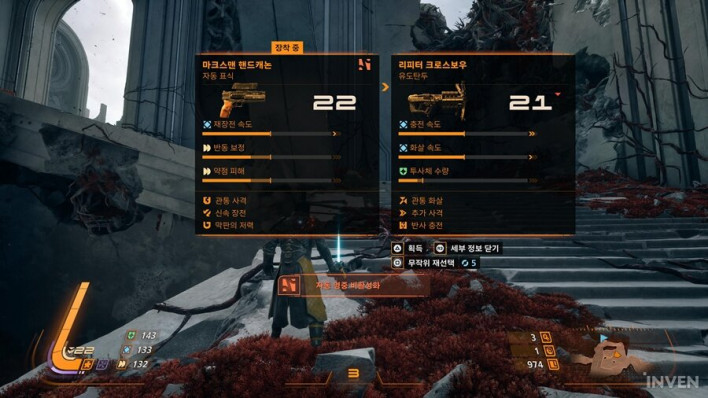
While you could theoretically deal nearly double damage if you have a special option that marks enemy weak points and you hit them accurately, that is a fatal flaw given the chaotic combat of Saros, where enemies swarm you from all sides and bullets fill the screen. Like the shotgun mentioned earlier, I felt no need to use these weapons and eventually stopped touching them entirely, regardless of their special options.
If the item combinations were merely 'disappointing,' the narrative is a clear weakness. It's not that the story is bad; it's that it's baffling. The synopsis is simple enough.
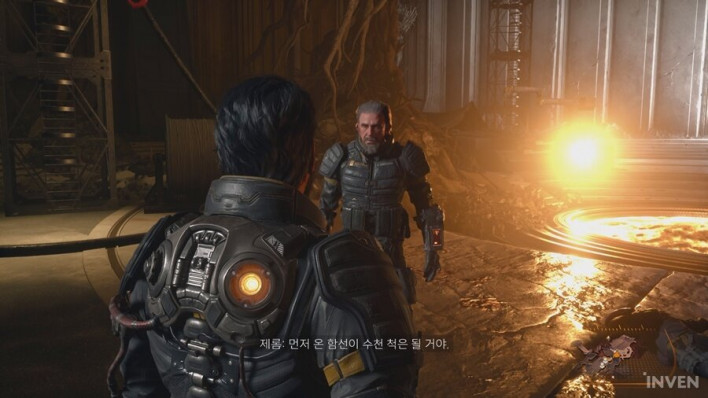
When a valuable mineral called Lucernite is discovered on the planet Carcosa, the mega-corporation Soltari sends an expedition team named Echelon. When communication with Echelons 1 through 3 is lost, Echelon 4—which includes the protagonist, Arjun—is sent as a rescue and investigation team. Arjun is also searching for his lover, who was part of the previous team.
The synopsis is simple, but the storytelling is chaotic. Conversations with colleagues at the base are largely meaningless and become increasingly incoherent as the game progresses.
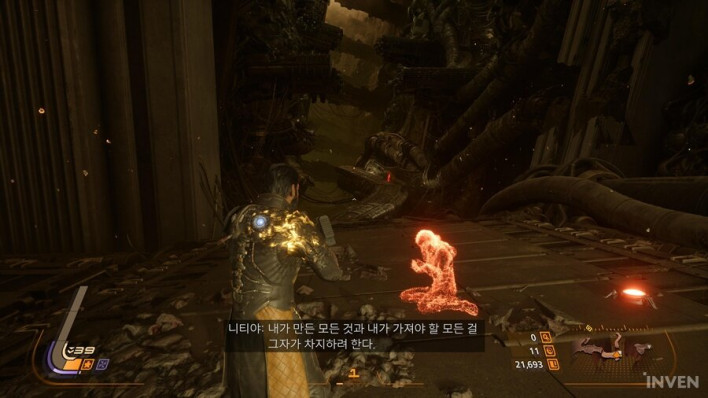
Usually, you would fill in the gaps in information through various logs found during a session, but that is not easy in Saros. While there is information hidden within them, it tends to be rambling and incoherent, leaving the player feeling only confused.
Without spoiling too much, even after seeing the true ending, I was left with nothing but questions. Why did Carcosa become this way? What are the secrets? What is the mysterious eclipse that warps physics? Why did everyone end up like this? None of it is explained satisfactorily.
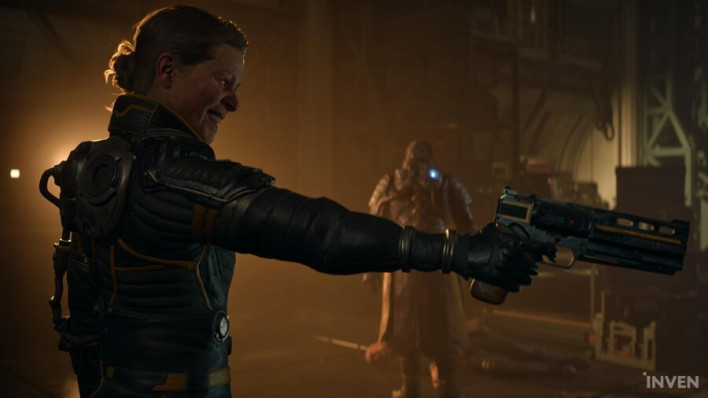
The same goes for Arjun. There are flashbacks to his past, but they are so cryptic that you only get a vague sense that he had a 'hard time.' That's it.
As was the case with Returnal, it is incredibly difficult to immerse yourself in the game or the character of Arjun. To be honest, it is almost impossible. Usually, when the end credits roll, you feel a sense of satisfaction, relief, or empathy for the characters and story, but Saros is the exact opposite. You are left with the question, 'What on earth was that?' and the catharsis of the intense combat is replaced by nothing but frustration.
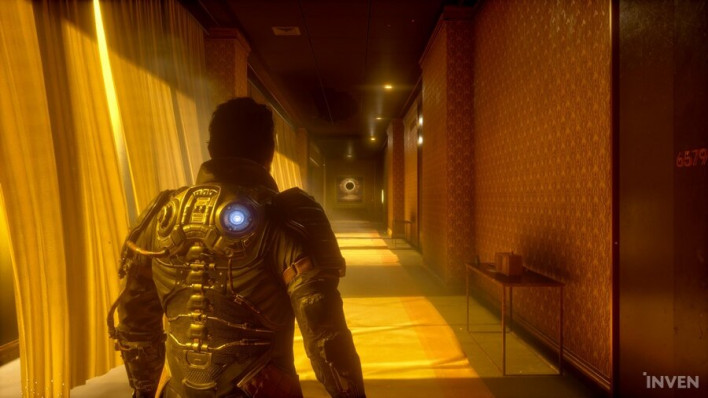
What Doesn't Kill Me Makes Me Stronger
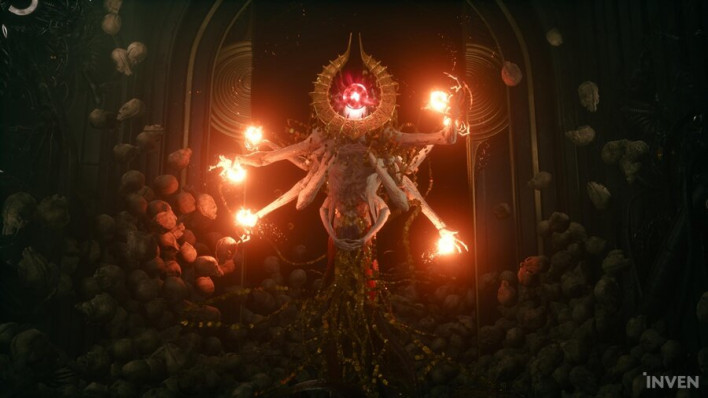
In summary, Saros is a game that has upgraded both the strengths and the flaws of Returnal. While death itself felt like a source of stress in Returnal, Saros creates a virtuous cycle where you can grow even after dying, effectively breaking that most critical cycle of frustration.
Combat has more depth, too. With shields, Power weapons, and special options, you no longer feel like you're constantly on the run. If you're well-set up, you can dominate the battlefield.
While Saros inherits and improves upon many aspects of Returnal as a spiritual successor, it unfortunately inherits its flaws as well. Some might argue that story is a secondary element, but it is undeniable that it remains a crucial factor in a game's overall quality. In that regard, the story of Saros is bound to be polarizing. It is not only unfriendly to the player but also incredibly convoluted, even when you piece together all the logs.
If you are looking for a high-quality story, Saros may leave you disappointed. Even setting aside the quality of the narrative, it is simply too obscure and complex. However, if you are looking for the pure fun of combat, the story is a different matter. The 'feel' of shooting is not only better than Returnal, but it also provides more catharsis than most other roguelike shooters. While it may not be a perfect all-rounder, perhaps that is part of Housemarque's unique charm. If you enjoyed Returnal, you have nothing to worry about; Saros will certainly provide even more enjoyment.
- Extreme shooter catharsis
- Rock-solid 60 FPS on PS5
- Tangible growth elements
- Somewhat low number of boss monsters
- Baffling, overly complex narrative
- Polarizing weapon balance
Review Platform: PS5 (Pre-release build)