Riot Games is bringing 'Teamfight Tactics (TFT)' Set 18, 'Into the Arcane,' to the Unreal Engine. This transition from the proprietary Magic engine to Unreal is a complete overhaul of the game's foundation. The team is migrating seven years of cosmetic assets to the new environment while maintaining live service operations. This is why the developers repeatedly emphasized that this is "just the beginning."
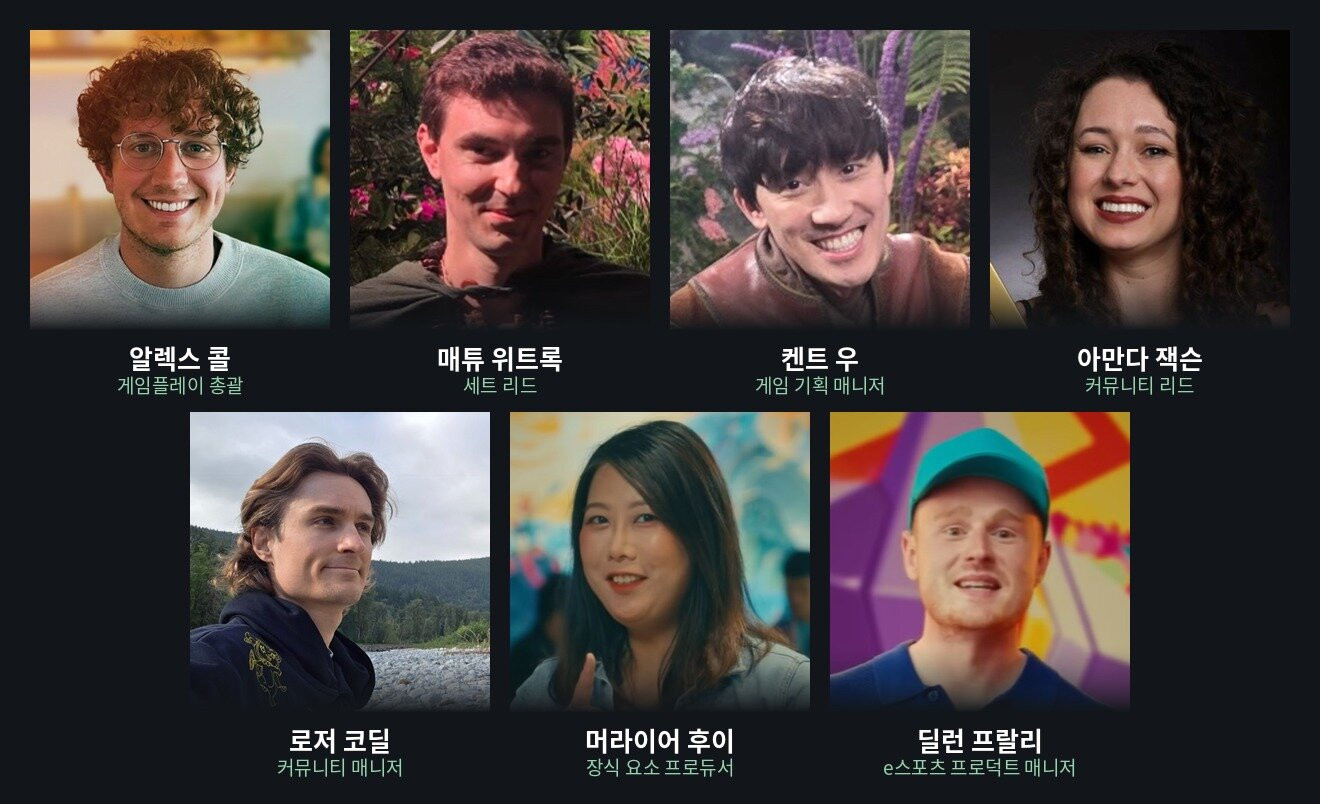
The online briefing held on July 8 featured key developers, including Gameplay Director Alex Cole, Set Lead Matthew Wittrock, and Game Design Manager Kent Wu, alongside Senior Director Gina, who led the Unreal transition. The Q&A covered a wide range of topics, from the design intent behind the new 'Charms' system to graphics and mobile performance post-transition, 5-cost unit design philosophy, and the upcoming augment overhaul in Set 20. Here are the highlights.
Q. I didn't expect jungle monsters from Summoner's Rift to appear as a full-fledged trait. I see the old jungle spirits as well; is there a reason Voidgrubs, a key objective this season, were left out.
" The reason is simple. We chose monsters that felt more like classic jungle creatures. Voidgrubs have a strong alien vibe, so we prioritized jungle monsters that felt cute, large, or beast-like.
Q. The 5-cost Draven targets a random enemy to apply Bleed rather than the closest one in range. Was this inspired by his pre-rework passive, or the random axe drops.
" It was inspired by both, but more so by the pre-rework passive. Many team members remembered Draven as a champion who stacks Bleed. We thought the flow of stacking Bleed and finishing with a spinning axe was a fun pattern, so we drew direct inspiration from that for his design.
Q. Is the new online tournament 'Tactician's Trial' similar in nature to open online tournaments? Does it hold the same prestige as the Tactician's Crown or open events.
" Tactician's Trial is a tournament that operates independently of the Tier 1 and Tier 2 ecosystems. While you can earn a ticket to the top-level open events, it functions as a standalone competition otherwise.
Q. In Set 12's Magic n' Mayhem, there was 'The Life-Changing Masterpiece,' where you could pay 66 player health or 99 gold to get a 3-star 5-cost unit. Are there any such dopamine-filled, romantic choices in Set 18.
" We hope to keep that sense of romance alive. We are currently reviewing ways to take what we did in Set 12 and elevate it into a new version that fits this set.
Q. How do you plan to balance graphics quality and performance stability after the Unreal Engine switch? Will there be separate graphics options or auto-optimization? Will mobile players notice changes in the responsiveness of champion placement or shop rerolls.
" Our primary goal is to maintain or exceed current graphics quality. We have done a significant amount of custom development to achieve this. We didn't just port Unreal as-is; we customized it piece by piece, putting a lot of effort into mobile specifically to ensure we maintain current quality and performance levels.
Responsiveness and mobile controls are also targeted to match current levels at launch. This is an area I am personally invested in and care about—I play TFT exclusively on mobile myself. There is much more to improve, but we are at the starting line, and we will see more refinements as future sets are released.
Q. You mentioned that Charms are a system that modifies spells. Why did you focus on the Charm system this set, and what was the most important factor when transitioning to Charms.
" We have long wanted to bring back a system like Charms. Since this is our second attempt, we felt it had to be an improved version. We focused on a few key areas: better content and the decision-making surrounding it. We ensured more interesting Charms appear in Stage 2, and we made sure that strategic judgment and long-term betting remain valid options, rather than the late game being solely focused on combat effects.
Additionally, we categorized Charms and elevated both their visual representation and overall art quality.
Q. Previously, 5-cost champions were often used as mercenaries in various decks due to their strong individual performance. This time, many 5-costs seem to have only unique traits rather than being tied to specific synergies. Is there a reason you intended for them to be used more generally.
" If a 5-cost has a specific synergy, the path to completing a deck becomes very clear. Conversely, having only unique traits allows for more flexible operation. In reality, all 5-costs are versatile and used flexibly, so we balance trait synergies and unique synergies carefully during design. This allows players to utilize them according to various situations and playstyles.
The 5-costs in this set were designed to have their own ideal combinations while also possessing enough utility and flexibility to fit into any deck.
Q. The 'Quick-Footed' trait is essentially about Yordles or small champions riding on a Gromp. What happens if a large unit gains the Quick-Footed trait through an augment or emblem and rides a Gromp.
" Simply put, a large unit will ride the Gromp. It's a fun trait, and it allows for various experiments both visually and in terms of gameplay. Personally, I like riding the Elder Dragon the most.
Q. Set 17 had a concept of gods, which felt somewhat distant, while this set chose friendly beings like animals and Charms. Was this contrast intentional.
" It wasn't originally intended. As we continued planning with the 'forest' theme, we began to imagine a more personal and friendly forest, and the contrasting theme emerged as a result. That's actually why I'm even more excited about it.
Q. You mentioned that there will be major changes to augments in Set 20 based on the Unreal Engine. Can you give a hint about the direction of these changes.
" Rather than drastically changing augments in terms of content, it's closer to a major refresh that introduces many new augments. As Unreal enables new possibilities, this will lead to changes across all content, not just augments.
Q. You mentioned that you can utilize various features of the Unreal Engine. Could you give examples of which parts of the game are being particularly strengthened.
" Two things come to mind first. One is the updated 3D lobby. The second is the Shared Draft carousel, which we are very satisfied with; we implemented it in beautiful 3D. This was impossible with the previous engine. There are many such cases, and I want to emphasize that this is just the beginning.
In terms of game design, moving to Unreal has widened our design space. It has become much simpler to attach UI elements when creating new traits or champions. It's easier to add buttons or choices for players to interact with, which opens up greater possibilities for the future.


Sort by:
Comments :0