Civilization VII was an ambitious game. The developers announced a goal of balancing the series' strengths, improving its shortcomings, and introducing entirely new elements in a 1:1:1 ratio, aiming to capture both newcomers and long-time fans. However, solid plans and grand goals do not always lead to success. That was the case with the launch of Civilization VII, where several features failed to align with fan expectations, leading to disappointment.
More than a year after launch, the development team is now looking to pivot back to the series' roots. They aim to strip away the core differences of the existing system, where civilizations changed across eras. The free 'Test of Time' update for Civilization VII now allows players to enjoy a single civilization from the Antiquity through the Exploration and Modern eras.
Yet, it would be inaccurate to call this a simple regression. The developers have maintained the identity of playing as the same civilization throughout all eras while simultaneously opening up new possibilities for each age. Through extensive overhauls based on post-launch feedback, they have found a way to preserve the unique systems that define Civilization VII.
From civilization selection and victory conditions to gameplay motivation, I explored the changes coming to Civilization VII in the 'Test of Time' update through a pre-release preview build.
One Civilization to the End
A New Balance Created by 'Golden Ages' and 'Syncretism
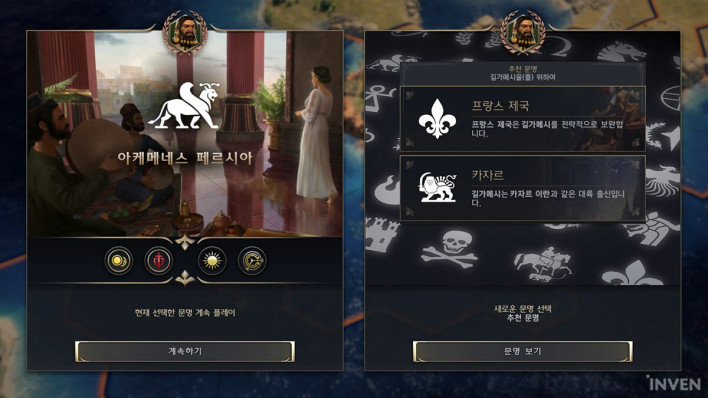
The core change in the 'Test of Time' update is the aforementioned continuity of civilizations. Unlike the previous system where players had to choose a new civilization during era transitions, you can now continue your game with your current one. While leaders and civilizations remain distinct, this might look like a return to the selection system of previous entries at first glance.
However, the era transition remains a key framework that alters the game's core structure. While there was a patch that allowed military units to carry over to the next era, concepts like transcontinental travel and archaeological excavations still only begin upon reaching specific eras, and players must still plan new strategies around building reconstruction. This means that the advantages and traits of a civilization in one era may not be as effective in the next.
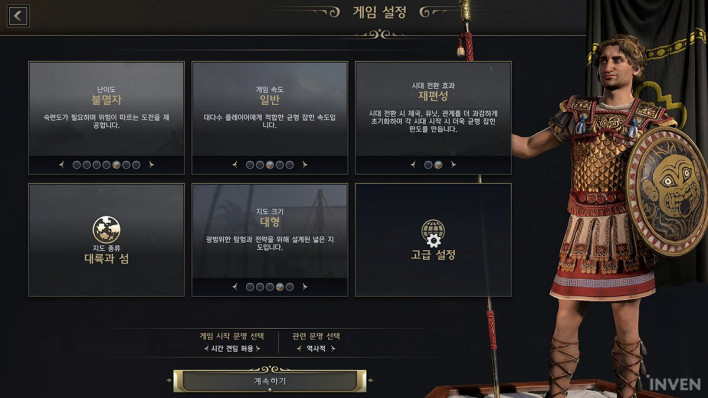
In fact, that was the original reason for the civilization-switching mechanic. In the returning single-civilization system, this is addressed through the concept of a 'Golden Age' (a peak period). Every civilization now has one of the three eras—Antiquity, Exploration, or Modern—designated as its Golden Age. During this period, you can utilize that civilization's unique units, buildings, and facilities. It can be interpreted as the period where the civilization's abilities are fully realized, much like the civilizations before the patch.
For example, Rome's unique unit, the Legion, gains attack power during the Antiquity era, making it a formidable force. However, this strength is historically appropriate for the Antiquity era. Naturally, it becomes unusable once the Golden Age has passed. Even though previous series entries lacked a distinct era structure, it was often difficult to find a proper use for units from earlier eras. The 'Golden Age' concept effectively solves this problem.
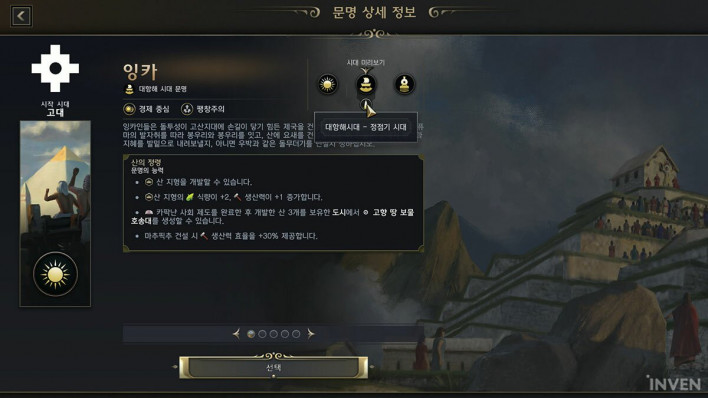
Test of Time' also provides opportunities for civilizations outside of their Golden Age. Civilizations in non-Golden Age eras can research a new social policy called Syncretism. This has become the key element that maintains the identity of Civilization VII while upholding the tradition of civilization continuity.
By default, civilizations possess general civilization abilities in addition to their unique features. For instance, the Inca, whose Golden Age is the Exploration era, can develop mountains from the Antiquity era to gain food and production. These values increase slightly in the Exploration and Modern eras. Civilizations that are not in their Golden Age can now adopt and set these basic abilities as 'Traditions.
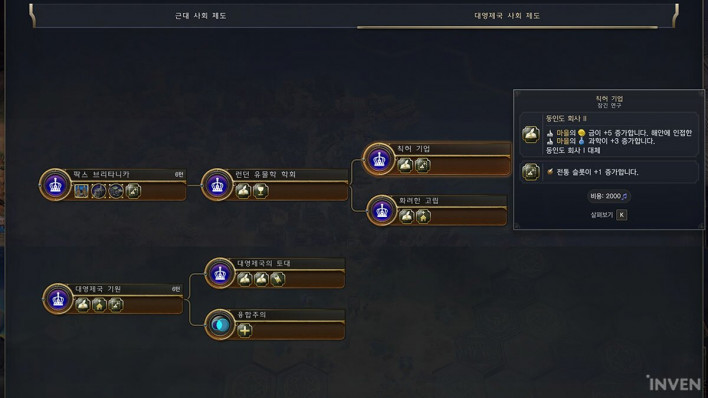
Syncretism goes a step further by allowing players to integrate the traits of other civilizations. Once Syncretism is researched, you can select related content from a separate menu. By default, you are offered a set of unique units or facilities from another civilization that can be linked to your current one. Since these are units/facilities from another civilization's Golden Age, they can provide era-specific strengths to your current civilization, whether you have passed your Golden Age or have yet to reach it.
Another option is 'Accommodation,' which further reinforces your civilization's strengths. Rather than providing something powerful tailored to a specific era, this is a concept of strengthening traditions that can be used across all eras, adding the benefit of an extra slot. If you need more powerful units in your current situation, you can choose a unique unit; if you want to bolster existing strengths or gain new resource advantages, you can choose the path of development that suits your needs.
Whether through Accommodation or integrating other civilization traits, you only get one choice, so it doesn't erase or fundamentally alter your civilization's unique character. It appears to be a strategic choice by the developers to maintain the series' identity while distinguishing it from the previous civilization-switching system.
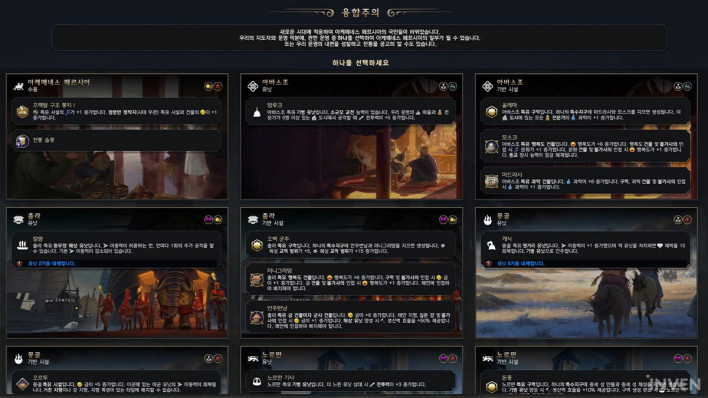
By clearly distinguishing between policies and traditions, the developers have naturally separated them in the policy menu as well. Policy slots are now divided into 'General Slots' that can use both policies and traditions, and 'Policy-only Slots.' Even though traditions are more symbolic of a civilization's character, this avoids the situation of comparing them against universal policies and adds strategic choices that can be utilized according to the era or the civilization's situation.
This choice also extends to civilization selection during era transitions. In 'Test of Time,' you can keep your current civilization, but you can also choose to switch. This allows players to fully utilize the traits and strengths of a new civilization for that era, leaving the decision to the user rather than forcing a change. Of course, if you only care about efficiency, switching civilizations remains valuable. However, being able to keep your own civilization while still maintaining competitiveness through Syncretism significantly increases emotional satisfaction.
From Forced Paths to Freedom Through Points
A Complete Redesign of the Victory Formula
Just as 'choice' is emphasized throughout gameplay, the developers have completely overhauled the game's victory formula. The change focuses on autonomy regarding the civilization's style and the player's gameplay approach, rather than just following a predetermined path.
The existing 'Legacy Paths' acted as a guide, giving players specific goals based on culture, military, science, or economy. Beginners could simply follow these to know how to play early on. However, the problem was that this led directly to the victory formula. While there were different advisor instructions for each sector, the game route was ultimately locked into these four conditions. The victory direction existed, but the freedom to choose how to get there had vanished.
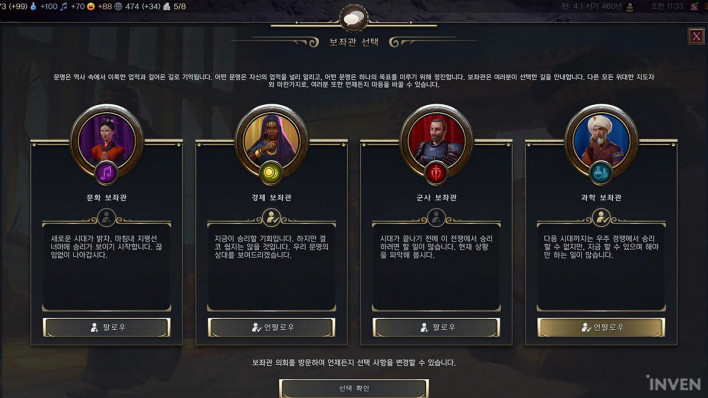
Consequently, changing the victory method led to the abolition of Legacy Paths. Advisors now only offer advice relevant to their fields, and only when you follow them. The game has adopted a point-based victory system, where the game ends when the leading player achieves a specific score.
Winning by accumulating points across various actions, rather than being forced to meet specific goals for a single path, brings diversity and autonomy to the gameplay itself. Taking a Cultural Victory as an example, points are awarded for various culture-related events, such as constructing Wonders, developing natural landscape tiles, holding festivals, building unique facilities, and constructing resorts. Depending on the era, the display of relics and artifacts also influences the score.
Whether it's an Economic Victory based on GDP or a Science Victory that converts various innovation factors into numbers, the points earned differ by sector. The method and direction of scoring change depending on the gameplay situation, the civilization, and even the era within the same civilization. The gameplay structure itself has changed from the previous system, where victory could only be achieved through specific methods. This change in victory conditions has altered the gameplay as significantly as the ability to play without switching civilizations.
By creating a victory structure through points, it has become intuitively possible to check how close you are to victory compared to other civilizations. Since the goal of victory has shifted to reaching a score, it is now naturally possible to aim for victory without necessarily reaching the final era. While there is a difference in the amount of points earned as you progress from Antiquity to Exploration to Modern, victory is possible even before the Modern era if you meet the score requirement.
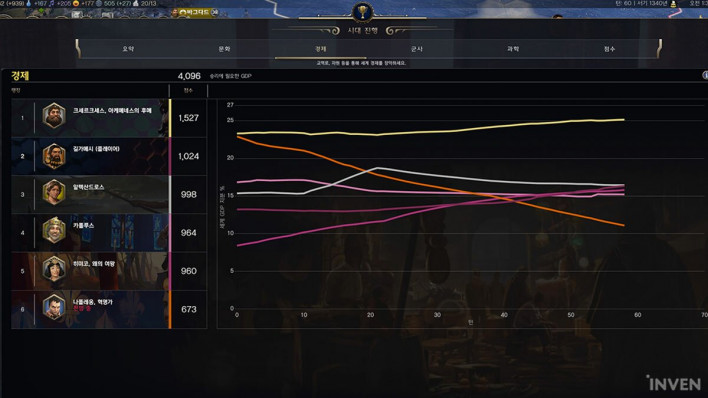
If no leader achieves the victory score, the final winner is determined by total points, with the calculation performed separately. This calculation itself aggregates various situations and records, making it difficult to immediately understand why a score was assigned that way. However, like other victory conditions, the score itself is displayed, and since it can be compared intuitively, it is clear who is in the lead.
With the ability to move the victory point earlier, the 'Golden Age'—which previously served as a motivational device—is no longer necessary. Naturally, only crisis narratives and policies remain before era transitions.
Rewards for Points, Not Paths
A Reimagined Gameplay Flow Through 'Great Successes'
While Legacy Paths locked gameplay into a limited form, they did have clear advantages: they provided continuous goals throughout the game. These were elements that rewarded play, along with minor narratives and the Golden Age that signaled a successful era transition. Since a single run of a civilization is as long as clearing a short game, goals and rewards are essential to fill the sense of stagnation that can occur mid-game.
'Great Successes' have filled the void left by Golden Ages and Legacy Paths. Like the name 'Path,' Legacy Paths connected culture, military, science, and economy into a single track to obtain sequential rewards. Great Successes, conversely, provide various goals that can be achieved during the game, allowing them to be completed separately without any required connection.
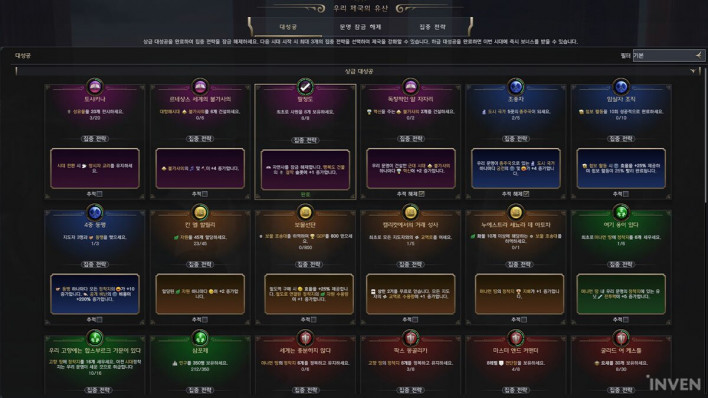
Major Great Successes' are closer to civilization-level strategic projects that require a sense of purpose. Some, like building multiple Wonders, establishing 10 or more settlements in your homeland, or building trade routes with all leaders, can be achieved naturally in the late game, while others cannot be completed unless you aim for them early on.
Achieving these goals grants 'Focus Strategies.' Focus Strategies inherit the existing Legacy concept and play a role similar to the rewards previously obtained through Legacy Paths during era transitions. However, considering the old system where you received rewards based on fixed paths, Major Great Successes are closer to direct rewards where you meet requirements tailored to the strategies you need, which is directly linked to freedom.
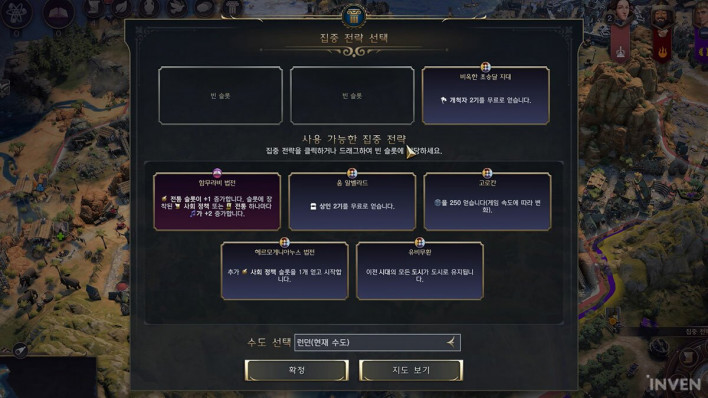
If there are Major Great Successes, there are naturally 'Minor Great Successes' as well. These involve much simpler missions and rewards. Focus Strategies are key reinforcement options where you can only choose three during an era transition. They are packed with rewards that bring significant changes to civilization management, such as +2 Gold per assigned resource or increased espionage efficiency. Minor Great Success rewards, on the other hand, provide weaker benefits.
However, Minor Great Success rewards are provided immediately upon completion. For example, you might immediately gain meaningful benefits like +1 Happiness for cultural buildings or +1 Food for specific tiles. Since the target values are low, you can basically aim for these immediate rewards and then separately target parts that connect to Major Great Successes or contribute to long-term civilization management.
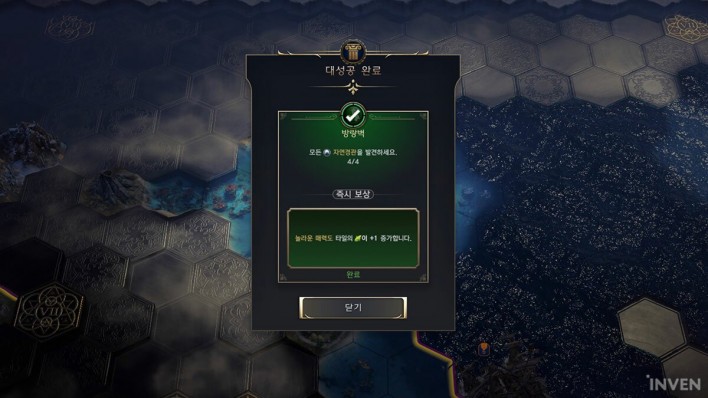
In this process, you don't need to pay separate attention to culture, military, science, or economy; conversely, you can obsessively develop one sector to reach victory conditions faster. There were also cases where goals were unlocked naturally according to the civilization's direction while playing the game. Since there is no next era in the Modern era, you can use only Minor Great Successes to speed up the achievement of victory conditions.
In short, the game's goals and reward systems are set by the player, and they are not systemically forced.
A Re-establishment Built on Autonomy
The Potential of the Series Reclaimed by Civilization VII
Test of Time' is an update that clearly captures the direction in which the developers intend to resolve the dissatisfaction with Civilization VII. The improvement goals are clear, and they have pondered how to utilize the era-transition mechanic itself. At the same time, they have provided the option to maintain the identity of a civilization and allowed players to decide the journey toward victory for themselves.
The point is that the answer the developers found after a year of improvements and feedback lies in the revival of lacking autonomy. And that has been revealed in the game through this patch. They have firmly established the era-transition mechanic as an identity and overhauled content in various directions based on that.
There have been many improvements in the UI/UX, giving the game a more refined feel than before. Due to this massive overhaul, existing mods are not compatible. Nevertheless, the developers remain open to modding and plan to continue support, including disclosing relevant information before patches.
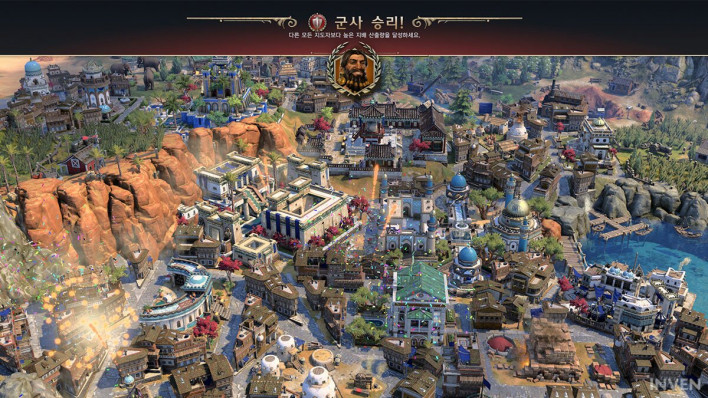
Civilization VII was an ambitious game. And through the difficult times that followed, it has changed, maintained, and refined those ambitious plans to announce a new beginning. 'Test of Time' clearly contains larger-scale and more core changes than any previous patch. For fans of the series, it is a game that holds plenty of potential to be worth playing, with the question, 'What about this time.'

Sort by:
Comments :0