'Yomawari' was a horror game where strange and terrifying things awakened at night. Now, its development team has headed to a sun-drenched rural village. 'Silent Countryside Garden Story' is a peaceful life simulation game where you farm, raise livestock, and mingle with villagers. However, hidden beneath that tranquility are the village's inexplicable rules and something that can only be encountered in the dead of night.
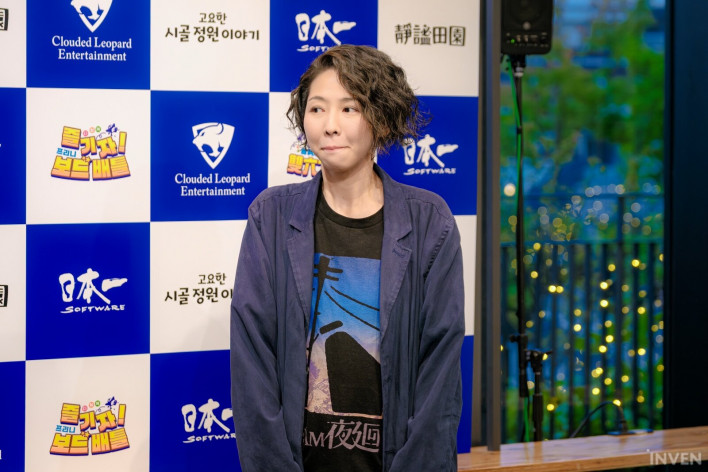
'Silent Countryside Garden Story,' which embraces the dual, conflicting faces of healing and horror, will be released on July 30. On the 7th, I met with Yu Mizokami of Nippon Ichi Software in Tokyo. In a calm voice, he shared the behind-the-scenes story of how a team known for horror games managed to depict an idyllic rural life.
From the motivation behind the genre shift to the 8-to-2 ratio of life simulation to horror, the division of roles with co-developer Mio Katsumata, and the 'Peaceful Life Mode' that removes the scares—we covered a wide range of topics to give a glimpse into the game before its launch.

Q. This game belongs to a different lineage than 'Yomawari.' What was the motivation for switching to a rural life simulation genre? Also, what do you consider to be the unique color of your development staff.
"The initial motivation for creating this life simulation was the desire to use the know-how gained from 'Yomawari' to create a new work in a different genre. Among the options, we chose a life simulation game.
Of course, we were aware that this idyllic atmosphere and the horror genre are quite far apart. However, we also judged that we could make it work, thinking there might be a surprisingly familiar feel to it. At the very least, the rural setting was a good fit for both healing and horror, so we took on the challenge.
In terms of know-how, since 'Yomawari' was a quarter-view game, we thought this aspect would also pair well with a life simulation, which is why we attempted it.
Q. In a past interview, you mentioned a 8-to-2 ratio between life simulation and horror. Was this ratio decided from the early stages of development? Or did you adjust the direction as development progressed, judging that fans of 'Yomawari' would expect horror?
"The 8-to-2 ratio was decided from the very beginning of development. I set it clearly at the start because I felt that if we broke this balance, we would waver during the process.
And while we have been talking about it in various ways during this promotion, that is because the period from the title announcement to the release has been quite long, nearly a year and a half. We decided to change the message we convey in our promotions depending on the timing, so we tried various things.
The reason we have recently been saying 'we worked hard on the life simulation part' is that if we only spoke jokingly like we did at the beginning of the promotion, we would end up releasing a mysterious game with an unknown identity. That wouldn't be good, so to let fans know what kind of game this is, we are saying, 'We worked properly and hard on the life simulation part,' and 'This is what the horror part is like.'
Q. A question about the story. The word 'village' brings to mind an isolated, exclusionary rural area. Where did you get the inspiration for the story.
"Since we had to include horror elements in this work, it was decided in advance that we would set the story in an exclusionary rural village.
Also, in Japan, there is what is called occult-style rural horror, and this has been a trend. We thought it would be easy to convey to players what kind of scenario and content this game has, so we decided to go with this village-themed approach.
However, we calculated that if we just did a standard occult rural story, it would end up being cliché, so we wondered what would happen if we mixed in life simulation or mundane elements. The parts where we thought, 'Wouldn't this be interesting?' were added, resulting in the current form.
Q. What was the most difficult part of incorporating two genres into one work.
"Since we knew from the start that users who like life simulations are often not good with horror, we were careful not to let the vividness or repulsiveness of the horror expressions stand out too much. Unlike 'scary,' we aimed to ensure it wouldn't be perceived as 'unpleasant.'
Also, things like zombies attacking or blood splattering didn't fit the atmosphere of this work, so we basically excluded them.
Since I've been making things like 'Yomawari,' I like to surprise or play pranks, so I keep wanting to do that. But Mio Katsumata, who worked with me, stopped me, saying that if we do too much of that, users will get tired of it, so we found a proper middle ground together.
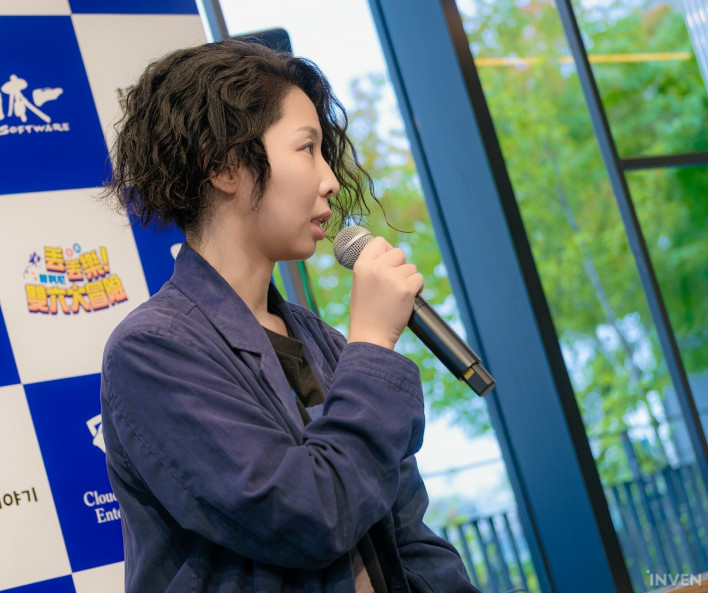
Q. Your previous works, such as 'Yomawari' and 'Mad Rat Dead,' are famous for their intense and unique themes. I am curious about the motivation behind planning a peaceful rural genre.
"As a result of looking for a new game that uses the know-how of 'Yomawari,' I thought a life simulation might match, so I chose this.
In addition, horror has conflicting elements of healing parts and tense parts, and I thought it matched quite well with the tension and relaxation often called 'sugar' in horror.
I wondered what it would be like if we could sneak in something bad while the player's mind is relaxed from the life simulation, making them remember, 'Oh, right, this is that kind of game.' I thought it was a chance to provide an expression or experience not found in other games, so I took on the challenge.
Also, in terms of promotion, there is the aspect that I challenged myself because I thought it would be interesting as a scenario if I, who used to make horror games like 'Yomawari,' suddenly started making an idyllic life simulation.
Q. In farm management or slow-life genres, it is common to build various relationships by interacting with residents and raising favorability, but the atmosphere is a bit different this time. I am curious about how much interaction with residents is prepared. Also, if possible, please let me know if there are romance elements.
"In this work, it is possible to deepen your relationship with the residents. However, there is a special point. Since it is 'Silent Countryside Garden Story,' everyone has secrets, and they are revealed as you get closer. Unlike typical life simulations, the scenario is designed to uncover the person's true self in the process of getting closer.
Regarding the protagonist's romance elements, since the protagonist is a child, such serious romance elements are not prepared. But conversely, we have prepared events such as being invited to a meal after getting close, or sleeping together for a night using being a child as a good excuse. I think this is a quite rare situation in similar genres.
It is a story that could only be drawn because the protagonist is a child. I hope players enjoy the life simulation experience of being treated like a child by the residents
.
Q. If there are any experiences or episodes where you adjusted ideas with each other to not break the balance of the two genres, please tell me.
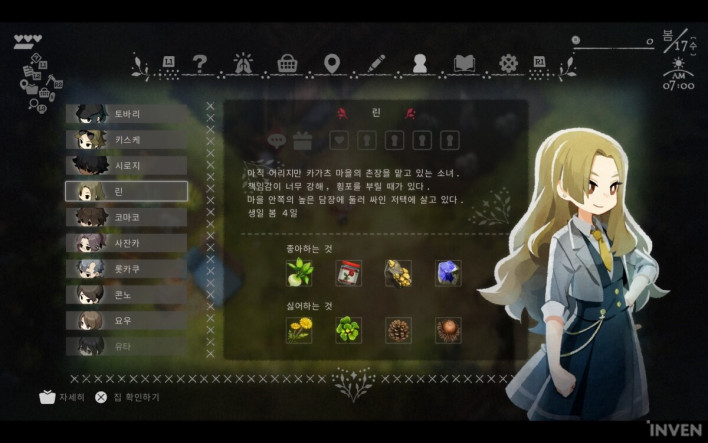
"Speaking of the division of roles between me and Katsumata, I was in charge of the horror side. Katsumata is someone who really loves life simulations, so she mainly looked after the parts as a life simulation. That is how the two of us directed it.
My ideas are very extreme, so I would often put in situations like killing something for the sake of the content. When I tried to do that, Katsumata would stop me. She explained that in terms of life simulation, it is fundamentally wrong to take away what the player has built up.
I have often drawn scenes where the more precious something is—like a resident the player has become close to, or vegetables or livestock they have raised—the more I take it away. So, when I asked, 'Is it okay to kill this?', Katsumata would quite often say, 'Absolutely not' (laughs).
There were parts where I went too far, and there were parts that had to be done for this game to be itself. If we were to do such things, we agreed to properly compensate the player afterward. Otherwise, the game experience as a life simulation would be damaged. In that way, Katsumata established the two pillars of horror and life simulation and balanced them.
Q. A question about art and music. What influences did you receive in expressing the game's unique nature.
"During 'Yomawari,' the policy and the part I was stubborn about was making sound effects and footsteps as realistic and tangible as possible in terms of how to express reality. Since the same sound director is involved in this work, we were able to properly create things like footsteps by inheriting the stubbornness we used in 'Yomawari.
However, what is significantly different from 'Yomawari' is that there is BGM in addition to sound effects. A life simulation is a game that you work on for a long time or play continuously. So, we prepared a number of songs so that players wouldn't get tired of them. I asked them to produce music that is truly 'background music'—something that doesn't bother the ears but occasionally makes you stop and listen. The songs change depending on the time of day and season, so I hope you find them while playing.
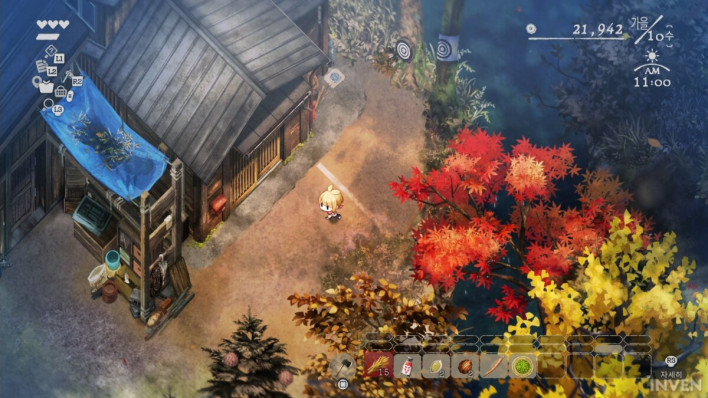
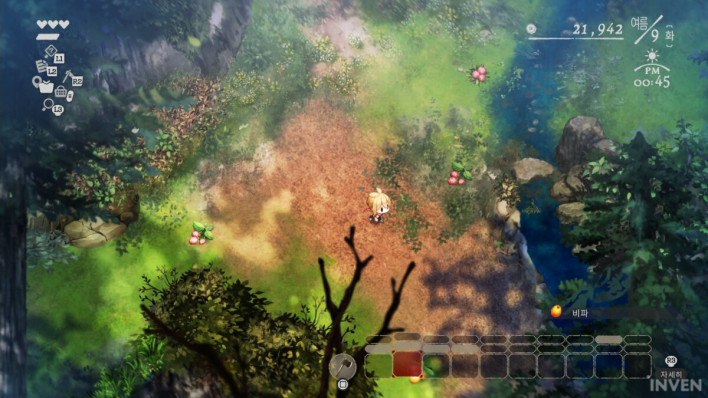
In terms of technology, what is significantly different from 'Yomawari' is that there is a daytime part. In 'Yomawari,' we couldn't express things like the light during the daytime. It was just that we didn't do it because it wasn't necessary, but I was itching to do it because I couldn't. So, in this work, I focused quite a bit on that part. Since we were able to properly draw the sunlight falling on the map or the sunlight filtering through the leaves, I hope you pay attention to the beauty and clarity of the screen.
Q. What was the atmosphere of the development team when making this work? Even though it contains horror elements, a peaceful atmosphere different from before is depicted, so I think the development team felt differently during development.
"There is a question I often hear: 'Isn't the development environment dark or grim when making horror games?' But I think it's the opposite.
When making horror games or horror parts, the development team's mindset is closer to playing a prank on the player. We do it while thinking about how happy we will be if they get surprised and go 'Agh!', so we actually make it in a friendly atmosphere.
We tried the life simulation side as a new challenge this time, but the work is almost the same as when making horror. We make it, play it, test play it, and adjust the parts where we think, 'It would be scarier if we did it more like this' by watching the reactions. Since the life simulation side also has many elements, we tried making it first, played it, and paid quite a bit of attention to whether the mechanics worked properly and if there were any issues with the feel or inconveniences. In reality, we made both the horror part and the life simulation with the same mindset.
The development process was enjoyable and friendly for both. I have only made dark games, so I was very happy to be able to make a bright screen.
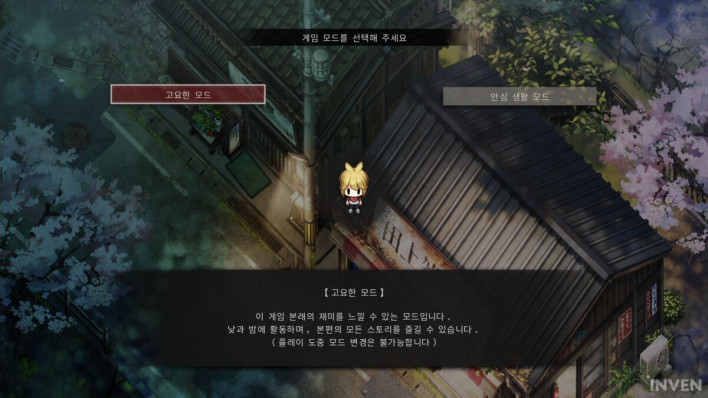
Q. There is a 'Peaceful Life Mode' where you can enjoy only the life simulation without horror elements. Why did you decide to provide this mode together in a work where horror is the main focus? Also, what kind of experience do you want for players who enjoy all elements and those who only enjoy the Peaceful Life Mode? And there is also a reaction asking, 'Is it a game scary enough to need such a mode?' I would like to hear your thoughts on this.
"The Peaceful Life Mode was not originally planned to be implemented. However, while developing it, it became a title that could be enjoyed sufficiently with just the life simulation part.
I think there are many life simulation users who are not good with horror. I thought it was quite a waste for such players to not be able to play freely because of the horror. So, I included the Peaceful Life Mode to allow more players to play.
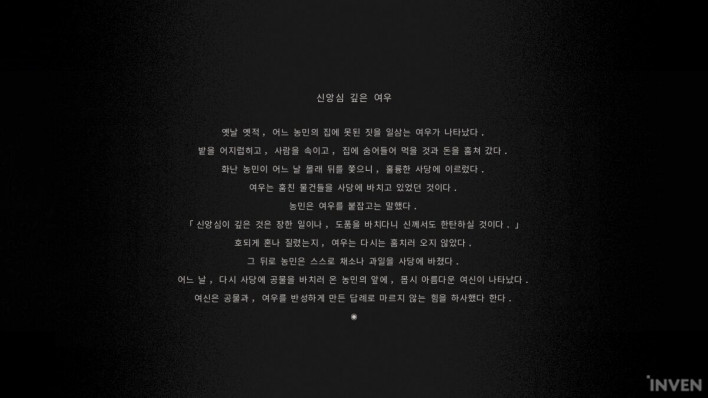
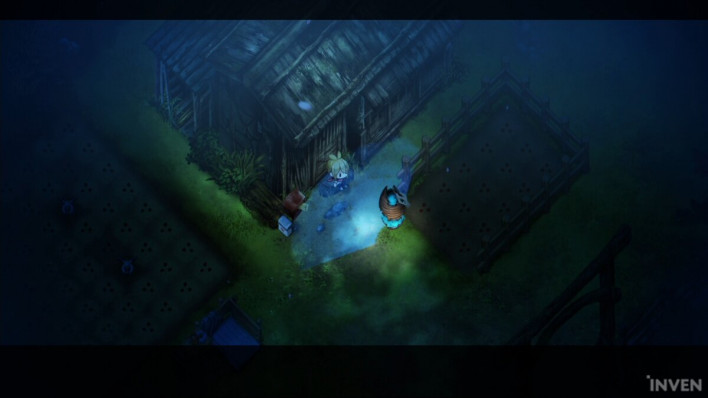
However, even in this Peaceful Life Mode, there are times when you have the opportunity to encounter the village's mysterious atmosphere or the secrets the village holds. So, we prepared it in a way that if you play the Peaceful Life Mode, you might become curious about the main mode and want to try it.
Players who play in the main mode can fully enjoy the concept we envisioned from the beginning: living in an occult village. I hope players of the Peaceful Life Mode will also definitely enjoy this side.
To add one thing, as I said earlier, since we originally intended to have only the main mode, we made it so it wouldn't be too grotesque or too surprising. So, I hope players who think they can only do the Peaceful Life Mode, or who are afraid if they don't do this mode, won't be too scared and will enjoy it.
Q. I am curious about how you conceived and adopted the two systems of life simulation and horror. Also, I would like to know if it is possible to play by utilizing both farming and exploring the village's secrets.
"There was an idea to increase the degree of freedom. There might be players who are curious about the scenario and don't want to do any life simulation at all. Conversely, there might be players who are curious about the life simulation and find it difficult to progress through the scenario quickly. I thought such opinions would come out, so I deliberately made it so that the life simulation and the main scenario are not strictly intertwined.
In other words, I eliminated as much as possible things like, 'If you don't prepare this by this day, the main scenario won't progress,' or 'Since there is a main scenario, you can't do anything in the life simulation from here to here.'
So, I left it in a state where if you want to progress the main scenario today, you can, and if you want to aim only for farming, you can play that way. For example, the tutorial occurs, so you have to see it in terms of content. But after that is over, it is at least possible to play only the main scenario without doing any farming at all.
Q. There are things like village rules in the work, and it seems to be a work with a high degree of freedom as it can be broken depending on the player. If so, it looks like a multi-ending method where the ending changes according to subtle structures and conditions, rather than a linear scenario like the 'Yomawari' series. Is this correct?
"It's a little different. It is a flow where bad things happen if you break the rules by the player's will. But basically, it is a linear scenario. It is not a game with many ending patterns depending on actions.
However, if you ask if it is a multi-ending, there is a branch. I would appreciate it if you could check where it branches while playing. I would be grateful if you could convey that it is a game with that kind of feel.
Q. How long is the playtime? And since it is a farming simulation, I am also curious if there are any replayability elements.
"For now, I think it will take about 50 to 60 hours to reach the final ending of the main scenario.
However, I think a life simulation is something where the player decides the timing of clearing the game, or rather, you play until you are satisfied. Considering that, I think you can easily play for about 100 hours if you include the replayability elements.
Q. What kind of mechanisms have you prepared systematically so that busy modern people can feel rest, recovery, and vitality without feeling fatigue within the game.
"Ultimately, we are making it as a title that emphasizes the degree of freedom. I kept in mind to make it so that anything can be progressed by the player's will, such as days when you want to progress the main story, or days when you only want to do farming or room decoration.
In terms of a sense of achievement, there are a large number of hidden quests. For example, it's the common thing of doing something a certain number of times. When these are achieved, a notification pops up and you receive a reward. We made it so you can play continuously without gaps by achieving them one after another.
Q. It seems that the sense of the seasons and the bonds of the community are created in peace, such as seasonal changes, village events, and meal invitations. What part did you put the most effort into to create an atmosphere where the space of Kagatsu Village itself seems alive.
"First of all, I mainly included things that can get empathy, like 'This definitely exists.' Conversely, I was careful not to do things like 'This situation absolutely doesn't exist.' There were such parts mainly in the life aspect.
The house is like that, and the graphic expression is like that. I made designs or events from things I've seen somewhere or things that actually exist. That is the point I was careful about. I have a desire for people to perceive that Kagatsu Village actually exists, so I was obsessed with reality.
I paid special attention to the rural feel of the daily life part and the Japanese rural feel because I am from the countryside myself. I was very conscious of making people who grew up in the countryside feel, 'Oh, this exists, this exists.' I don't know exactly how Korean players will feel, but I think the scenery is quite similar if it's in the Asian region, or the scenery that makes you feel nostalgic somewhere is the same. I hope you feel it in that respect as well. And I would be very happy if you feel that nostalgia.
Q. It seems there are many Japanese yokai that appear. If there is a Japanese yokai you want to introduce to Korean gamers, please introduce it.
"I don't know what kind of yokai you Korean people know, so I don't know how it was translated, but there is something I thought was interesting while researching. In Korea, do you say 'The Mugunghwa flower has bloomed'? In Japan, we say 'The Daruma doll has fallen.'
There is a goblin-like thing that uses that as a motif, so I thought a lot about whether this part would be properly conveyed. Still, I personally found the cultural difference around that area interesting.
I know that there is a yokai called Dokkaebi in Korea. Like that Dokkaebi, I prepared a lot of yokai that are not just scary, but somehow affectionate, and the more you know them, the scarier but better they become. So, while living in Kagatsu Village, I would be happy if you could also like the suspicious Kagatsu Village and the dangerous yokai that appear in Kagatsu Village.
Q. Life simulation games played so far, such as 'Animal Crossing,' start by receiving a house and paying off debt when you first arrive in the village. Paying off debt can be a sense of achievement in a sense, but there are people who feel burdened by that. What does a player who arrives in this village do first.
"I also sometimes felt a bit burdened by the part where the story progresses by having to deliver something in life simulations. So, I eliminated that as much as possible in this work.
Of course, there are parts where you have to attach materials appropriately for progress. But I eliminated such things as much as possible.
At first, you have to go through some tutorials for the story to progress. But I made the tutorial itself unfold as naturally as possible within the story. So, it is designed so that you can naturally learn the controls or things to do just by reading the story.
I didn't want the purpose to be too tight. I don't know if it will be conveyed, but it is an introduction where you receive the vague purpose of 'becoming a member of the village,' and if you work toward that, you see something. Since I made it that way, I am making it so that it is not too much of a burden.
Q. It is finally being released this month, so please say a word to the Korean fans who are waiting for the release.
"'Silent Countryside Garden Story' was made as a game with a high degree of freedom and a wide range of possibilities. The focus will likely be on the life simulation part or the horror part, but this game is intertwined with many multifaceted elements. I think it will be interesting in each aspect as well.
There is the appearance of the yokai, or the folkloric consideration of the village's history. There is working efficiently in the life simulation mentioned earlier, and there is decorating the garden beautifully. There is also the part of approaching the human relationships and the village's secrets in the main scenario. Since there are many characters, it is depicted quite like an ensemble drama, so I am sure every player will have their own favorite character.
I think the parts that each player finds most interesting will also be different. It doesn't matter where the entrance is at first. Whether you are a player who wants to enjoy it as a horror game or a player who wants to enjoy it as a character game, the entrance is fine anywhere. I hope you pick it up, find other good points or places you like in this game, and find your own way of playing.
We are also happy to finally be able to deliver the game to the players. We look forward to meeting you again in the game. We look forward to various impressions.



Sort by:
Comments :0