Topic: Making the Games I Wanted to Play: A Live Service Operation Log from Korean Auteur PDs
Speakers: Kim Yong-ha, Kim Ji-hoon, Jung Woo-chul - Nexon Games / Project Moon / ThisIsGame
Category: Game Design / IP
Recommended for: Developers defining the vision and direction of their games
Tags: #NDC25 #Subculture #Auteurism #LiveService
[🚨 Lecture Topic] Through the contrasting styles of 'Blue Archive' and 'Limbus Company,' we examine how a creator's taste and persistence are maintained and evolved in a live service environment. We discuss the direction of Korean auteur PDs amidst user feedback, global fandoms, and the creative landscape of the AI era.
Two creators who enjoy unparalleled popularity in Korea have met. Nexon Games Director Kim Yong-ha, who started with 'Magical Library Qurare,' led the massive success of 'Blue Archive,' and is currently preparing 'Project RX.' And Project Moon CEO Kim Ji-hoon, who has been unfolding his own unique stories based on distinct worldviews from 'Lobotomy Corporation' to 'Limbus Company.'
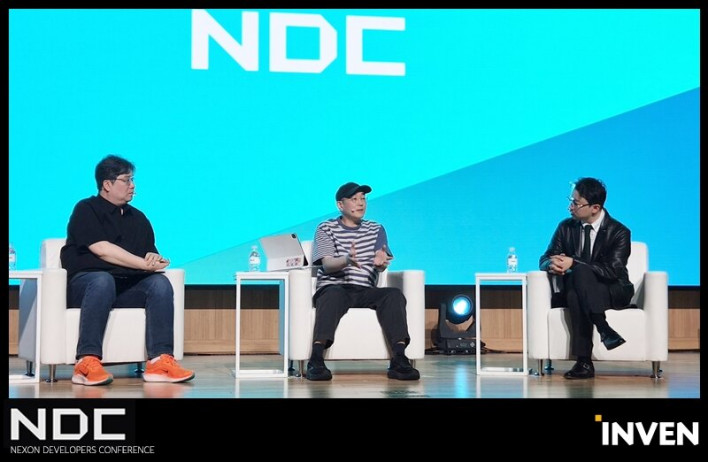
The two, whose popularity is so immense that long lines for autographs formed even before the lecture began, took the stage together. A common trait they share, beyond their massive popularity, is that they each created the 'games they wanted.' Director Kim Yong-ha revealed his deep and wide 'geekiness' to the world through his games, while CEO Kim Ji-hoon built a massive global fandom based on a worldview composed of literary concepts and three-dimensional characters.
The moderator was Jung Woo-chul, Editor-in-Chief of the gaming media outlet ThisIsGame. While the topic of the day's talk was 'Auteur PDs' Live Service Operation Log,' the actual conversation flowed somewhat differently. Having rejected the label of 'auteur' from the start, the two developers began a more fundamental discussion—simply telling their own stories.
※ This article has been minimally edited to improve readability while maintaining the flow of the conversation.
I ended up here because I made the games I wanted to make
Jung Woo-chul = First, let's talk about today's topic, 'auteurism.' Making the games you want to make yourself. What do you both think about auteurism?
Kim Yong-ha = I feel burdened by the term 'auteurism.' In fact, I've never developed a game with auteurism in mind. When I first started, I thought I could make any game. I liked many genres and played a lot. But when I actually tried, I realized I wasn't good at creating a formula that everyone would like. If I kept trying to predict why someone would like it, I would gradually lose my way. Asking others if something was 'good' during development didn't lead to good results either.
After experiencing some failure, I realized that if I kept developing this way, I would end up making a game that satisfied no one. So, I thought, why not try making what I really wanted, even if I failed? The game I made that way was 'Qurare.' Since then, I've learned that there are people who appreciate it when I show them what I like, and thankfully, I've been able to continue until now.
Kim Ji-hoon: I'm similar. I didn't make games with some grand idea of auteurism. It just became what it is now because I made the games I wanted to make and thought would be fun. People started to like them, and I saw the direction they wanted as well. I've changed little by little through that process. So, rather than being conscious of the auteurist movement, I just did it, and what I wanted to make was created. It might look like that in retrospect, but it wasn't intentional.
Kim Yong-ha = I'm suddenly curious. Did you have an ideal vision of the game you wanted to make from the start?
Kim Ji-hoon: I definitely did when making 'Lobotomy Corporation.' But strangely, the gameplay itself rarely turns out the way I want. When making 'Library of Ruina,' I actually thought of a form where you watch auto-battles unfold, but it ended up being a deck-building game.
Kim Yong-ha = You had played 'Slay the Spire' before that, right?
Kim Ji-hoon: That's right. That was just when 'Slay the Spire'-likes were emerging. It was so much fun. I tried various things, and that's how it turned out. Still, the stories, themes, and specific scenes I wanted to convey were clear. I focused more on containing those than on the gameplay itself. I thought the gameplay was enough if it provided an experience that could convey the story I wanted to show. Fortunately, in 'Limbus Company,' it got closer to the combat I wanted, and I was able to compensate for many of the regrets I felt during 'Ruina.'
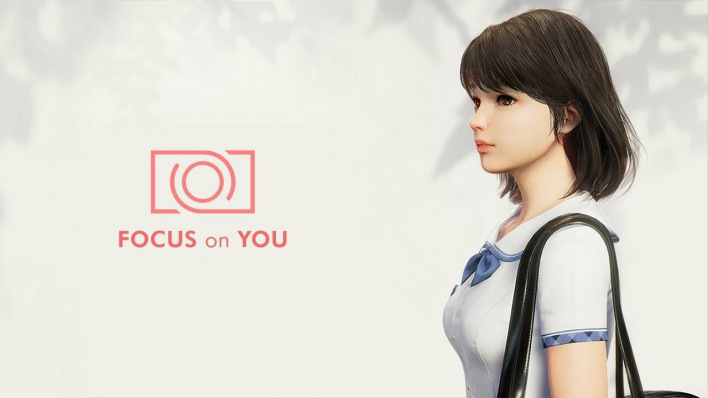
Kim Yong-ha = I'm similar. I didn't think from the start that I had to make a game centered on 'experience.' During 'Qurare,' I had a stronger desire to expand the grammar of existing pretty girl collection games to create a different kind of fun. Then I made the VR game 'Focus on You,' and while making that, I thought more deeply about the 'experience' aspect. In VR, it was important to make the player feel like they really existed in that world. I pondered how to convey the presence of the character or the reality of the world.
Kim Ji-hoon: So, was 'Focus on You' the catalyst that solidified the focus on the player experience?
Kim Yong-ha = Exactly. 'Focus on You' was a first-person VR game, whereas 'Qurare' had a structure where the protagonists were separate from the player. After experiencing the sensation of the player existing within the world through VR, I began to view 'Blue Archive' as an extension of that. One of our division's catchphrases is 'creating a world you want to enter.' I started thinking about how to make the world the player really wants to enter feel realistic. I began to value how the player, as a person, forms relationships with the characters in the world.
Kim Ji-hoon: There was a part of 'Blue Archive' that was impressive. The concept that the smartphone UI itself is the screen the 'Sensei' uses, or elements like the 'Adult's Card.'
Kim Yong-ha = Right. We made it look like a real card.
Kim Ji-hoon: Those elements add a sense of reality, creating a unique flavor. But even though you made it very well, I think it will be incredibly difficult to maintain that flavor going forward. That's why I'm looking forward to it even more.
Kim Yong-ha = It's not easy. Games have their own unique formats. If you make it too inconvenient to provide realism, it can actually break immersion. There are always limits. That's why I often compare games to cooking; ultimately, I think it's important to decide how much I can compromise while still maintaining the parts I find delicious. The next project, 'Project RX,' is the same.
Kim Ji-hoon: I'll be able to taste that flavor in 'Project RX' too, then.
Kim Yong-ha = 'Project RX' is really difficult because it has to produce a different kind of flavor. I'm working hard on it.
Is user feedback the enemy of creation
Jung Woo-chul = Let's talk about feedback. You both said you aren't auteurs, but you have a clear direction and philosophy for game development. What do you think about changing games based on user feedback?
Kim Ji-hoon: There are cases where I actually made changes. Project Moon fans would know, but during 'Library of Ruina,' the parts related to 'Total Opening' were like that. Still, as a creator, I have a clear skeleton of the world and appearance I want to make, and my pride—'I really want to show this,' 'I think this will be fun.' However, in the process of adding flesh to that skeleton, there are times when I have to follow trends, or I make mistakes in settings because I thought wrong. Those parts are painful and embarrassing, but I fix them.
Kim Yong-ha = You've had the experience of tearing things down and starting over, right?
Kim Ji-hoon: I have. During the ending of 'Library of Ruina,' I was greedy and made a big setting error. I can laugh about it now, but it was a really big problem at the time. I tried to put in more than I originally intended, which caused setting conflicts, and I realized later that 'this isn't it.' Eventually, I spent a week remaking the boss fight and scripts. Because of that experience, I try not to change things as much as possible now. That doesn't mean I'll never change them, though.
Kim Yong-ha = Plans are always plausible, but in reality, they often don't go as planned. You mentioned user feedback; since you do your own publishing and service, I think you might be relatively less swayed.
Kim Ji-hoon: Not necessarily. I actually like seeing reactions. It's one of the reasons I make games. When I update, I look for reactions, see what posts are made, and look for videos of streamers playing. I especially like watching their reactions during highlight scenes. If I see something lacking, I fix it.
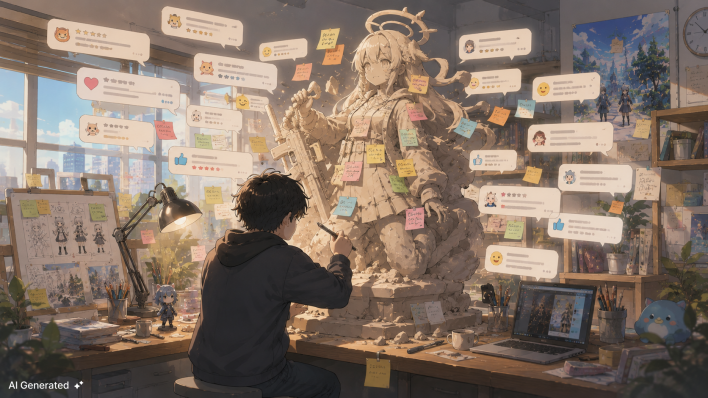
Kim Yong-ha = I think the publisher's feedback was actually harder for me. In the past, I had to constantly align opinions with the publisher. There were characters we thought were fine, but the publisher would say they could be problematic in other countries. When that kind of feedback is repeated, sometimes the publisher feels more difficult than the users.
Kim Ji-hoon: It's really great to be free from that, at least. Of course, I'm not talking about the present.
Kim Yong-ha = Right. Not talking about the present.
Kim Ji-hoon: The important thing is that a game can only exist if there are player reactions. I think I'm making a product, not an art piece. Ultimately, it has to be sold and consumed. So, I definitely refer to what players like and dislike. However, I don't reflect it immediately. It hurts my pride, for one. Also, if you react too quickly, it might look like you're only following the opinions of the loudest people.
Kim Yong-ha = Accepting feedback too quickly can also be dangerous.
Kim Ji-hoon: Exactly. I think there are far more people who play quietly than those who write comments directly. I'm someone who doesn't usually write comments, so I'm more conscious of that perspective.
Director Kim Yong-ha can still 'dogeza' (prostrate himself). If it's for a 'VTuber'...
Kim Yong-ha = There is a case where I changed direction the fastest after receiving feedback. It was my... VTuber. I can still 'dogeza' for this right now.
To explain, I didn't originally like going on broadcasts myself. I'm very introverted. I thought the Senseis would prefer a different form rather than the developer appearing directly. I happened to like VTuber content, and I prepared it for quite a long time with the idea of trying something new related to Blue Archive.
Kim Ji-hoon: I know you prepared very hard for it.
Kim Yong-ha = But in the end, our judgment was wrong. I watched the situation in real-time, and the day I posted the apology, I was originally on vacation. But I couldn't help it. I decided that this had to be shut down immediately.

Kim Ji-hoon: I have a question. Why didn't you use Blue Archive characters at that time?
Kim Yong-ha = There were a few reasons. First, it was a project conducted only in Korea. If I connected it too closely with Blue Archive, it could have affected other service regions. Also, I thought a separate character was needed to implement interactions that were difficult to do within Blue Archive. I wanted to separate the role Blue Archive had from the role Irua had to play.
Kim Ji-hoon: Personally, I think the reaction would have been very different if you had used Blue Archive characters.
Kim Yong-ha = That could be. But on the other hand, there was a risk that existing characters would be consumed in a direction different from the original intent. It was a decision made after much deliberation, but ultimately, the important thing was whether the Senseis accepted it. If it wasn't accepted, our judgment was wrong, so we shut it down quickly.
Mental management is ultimately impossible
Kim Yong-ha = Actually, mental management isn't easy. It's even harder the longer you do live service. Accidents always happen at unexpected moments. And most of them come from completely unexpected directions.
Jung Woo-chul = Is that why you created the 'Cheonggyecheon' (a meme about throwing developers into the Cheonggyecheon stream).
Kim Yong-ha = That's not it. (Laughs) I remember when there were stability issues after starting the Blue Archive service. I couldn't just keep looking at the forums during that time, and I couldn't keep talking to the developers solving the problems. I needed something else to focus on. So I started building keyboards then.
Kim Ji-hoon: Didn't you do 'ego-searching'?
Kim Yong-ha = I did plenty. But the more you do it, the harder it gets. You have to look at it, but you have to look at it from a distance. I spent time like meditating while disassembling and assembling keyboard switches one by one. Then I calm down a little. After that, I started brewing coffee.
Kim Ji-hoon: I actually wanted to ask you that. How do you manage your mental health? When I was making 'Lobotomy Corporation' 10 years ago, or 'Library of Ruina' five years ago, I thought my mental state would get stronger after a few years. But it's the same now. I'm still shaken, stressed, and looking for reactions.
Kim Yong-ha = It's not easy.
Kim Ji-hoon: When you get counseling, they tell you to keep your distance. But I'm not good at that. Rather, if I'm not looking at the reactions, I feel like I'm not working, or like my affection for the game is decreasing. So I keep looking.
Kim Yong-ha = 'Limbus Company' itself is a story about facing hell, and it seems like you are constantly looking at hell, CEO.
Kim Ji-hoon: That's right. I'm constantly looking at hell. (Laughs) So after the company grew to a certain size, whenever I meet other CEOs, I always ask. How do you manage your mental health? But everyone was the same. They say it's hard even if they have many years of experience.
Kim Yong-ha = I don't think I've gotten used to it either. I just have more hobbies to escape to.
Kim Ji-hoon: But can't you forget for a moment while you're immersed in your hobby.
Kim Yong-ha = That's right. For a moment.
Kim Ji-hoon: Although you eventually come back.
Kim Yong-ha = Eventually, you come back.
I broadcast to see reactions
Jung Woo-chul = It sounds like mental management is ultimately impossible. Yet, you both are doing live broadcasts. Receiving reactions in real-time is also more stressful. I'm curious why you do broadcasts despite that.
Kim Ji-hoon: I didn't start it because I thought it would help with game development. I originally liked VTuber content. I just wanted to do it because I liked it. But after doing it, it actually relieved my stress. I liked being able to talk in real-time. It's frustrating when you can't say anything after an update, but on a broadcast, I can communicate immediately.
Kim Yong-ha = You also had talent.
Kim Ji-hoon: Thank you. (Laughs) When I meet fans in person, some say, 'The voice is the same as Shuna-jjang, but why is the face like this?' They get hurt by the 'red pill' (the reality) unintentionally... Yes, that's it. Anyway, for me, broadcasting actually helps with mental management. Thanks to that, I think I get the strength to continue game development.
Kim Yong-ha = I didn't originally want to do broadcasts.
Kim Ji-hoon: But you like VTubers.
Jung Woo-chul = Didn't you appear on KBS once before?
Kim Yong-ha = I like VTubers, but I don't like appearing myself. That KBS thing happened by chance, and I should call it a big stain on my life. (Laughs) Once it's on the internet, you can't erase it.
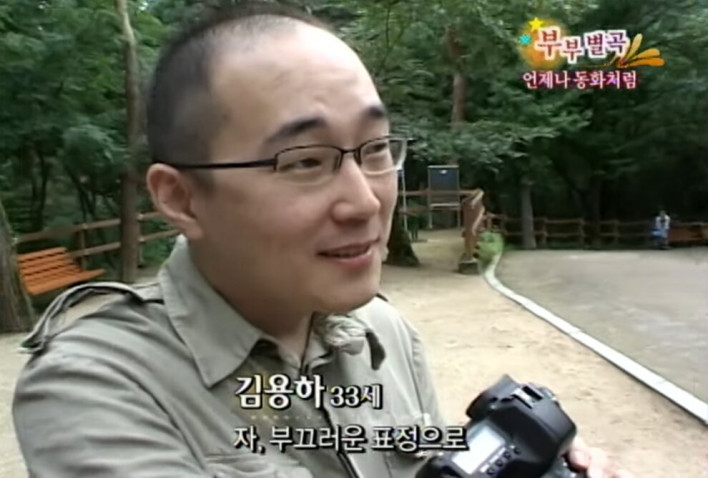
Kim Ji-hoon: It's treated almost like lost media...
Kim Yong-ha = At first, I really asked them to erase it. But it didn't work. So even now, I'm careful not to create new dark history. Actually, I rarely go to these places because I want to go first. I'm the type to just do it without refusing when a request comes, but I always regret it. And when I actually come out and talk, I get strength again.
Kim Ji-hoon: Because the reaction is good.
Kim Yong-ha = That's right. When I see people who like Blue Archive talking directly and playing with affection, I get strength. Not just me, but the entire development team is like that. That's why we do many offline events, not just broadcasts.
Kim Ji-hoon: It's different when you meet in person.
Kim Yong-ha = That's right. When I go to offline events, most of them come with smiling faces. So far, no one has come with a knife.
Kim Ji-hoon: So far.
Kim Yong-ha = That's why I think I have to work harder.
What did overseas fans react to
Jung Woo-chul = You both have global fandoms. It's closer to a case where you made the game you wanted to make, rather than a game aimed at the global market from the start, but it was a huge success overseas. What parts do you think overseas users found attractive?
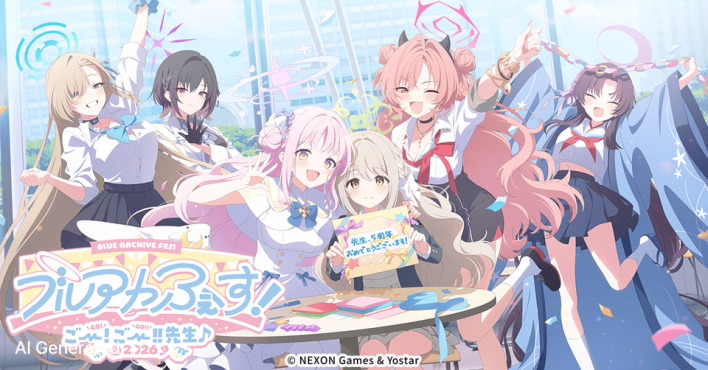
Kim Yong-ha = I think luck played a big part. Actually, 'Qurare' also had overseas service, but it didn't go well. Looking back now, there were many parts we should have paid more attention to, and many points where we were lacking. Reflecting on that experience, 'Blue Archive' was designed with the Japanese market in mind from the start.
Kim Ji-hoon: Was there a reason you chose Japan first?
Kim Yong-ha = You said that for this genre, it has to succeed in Japan to have a possibility in other regions. So when designing the worldview and system, I tried to find the intersection between market trends and what we wanted to make. In that process, we chose the school theme.
Kim Ji-hoon: The school theme itself is a familiar genre in Japan.
Kim Yong-ha = That's right. Instead, we tried to create our own flavor within it. Of course, I don't think it succeeded solely on our own strength. The Japanese publisher also worked really hard, and various conditions matched well.
Jung Woo-chul = Project Moon has a high proportion of narrative and text. It seems there would be many difficulties in the overseas service process.
Kim Ji-hoon: Before that, there is one thing I want to say. I think one of the reasons Blue Archive succeeded in Japan is its unique refreshing feeling. There are many school-themed works, but the atmosphere Blue Archive gives is truly unique. I think that sense is hard to see in other works.
Kim Yong-ha = Thank you. We wanted to create a world like an ideal. But if it's just too ideal, it can feel fake. So we wanted to mix in realistic parts appropriately to make the player feel like they actually exist.
Kim Ji-hoon: I think luck was the biggest factor for Project Moon as well. However, there are parts we consciously tried. Although the company size is not large, we operate an internal translation team. In the past, outsourced translation was common, but we needed internal response because we had to release globally at the same time.
Kim Yong-ha = But isn't translation possible only when the scenario comes out?
Kim Ji-hoon: That's right. So the translation team has a very hard time. (Laughs) Still, everyone has affection for the worldview. They are working while thinking about how to convey it better.
Kim Yong-ha = When did you start operating the internal translation team?
Kim Ji-hoon: From the previous work, we handled Japanese and English internally. For other language regions, we often relied on fan translation. The reason I focus on Japanese and English is because I can read and judge those two languages myself. I thought languages where I couldn't tell if the translation was strange or not were areas I couldn't manage.
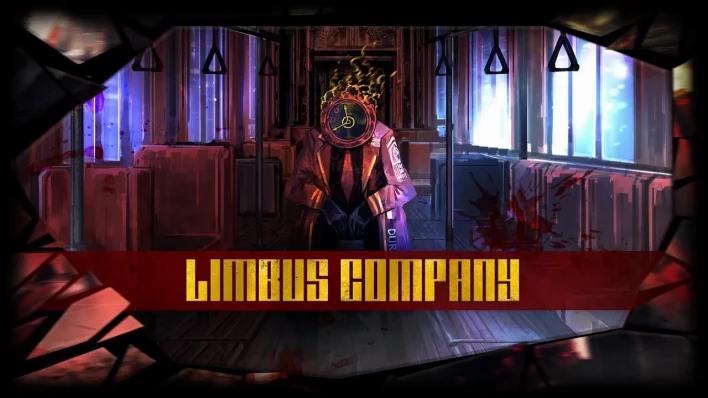
Kim Yong-ha = Don't Project Moon works have many proper nouns.
Kim Ji-hoon: That's right. So the most important thing in the translation process is to maintain the texture of the worldview. For example, some words can be paraphrased in English, but I want to keep the feeling of the original text as much as possible. Ultimately, I think the things I experienced while living in Korea can look fresh to people in other countries. They often say the most Korean thing is the most global. I think similarly. I think it's important to make what I can make rather than following others.
Kim Yong-ha = Since Project Moon works have a worldview that continues from the previous work, I think the translators also feel like they are growing with the development team.
Kim Ji-hoon: That's right. Fans are the same. They keep following, understanding the context, and building the worldview together. So I'm always grateful.
Letters from overseas fans, and the meaning the game has
Jung Woo-chul = You both made games that succeeded overseas. But I don't want to talk about sales. I'm curious if there was a moment when you felt, "Ah, our game really succeeded," when you met overseas fans in person or encountered reactions.
Kim Ji-hoon: In Korea and Japan, when we set up a booth at an offline event, the line is really long. At one event, the waiting line for the closing time was all filled up within 20-30 minutes of starting, so we closed the line. When you see such physical scenery, you realize the popularity.
Kim Ji-hoon: But what remains more significantly for me is fan letters. They send a lot of letters from overseas too. Of course, I can't answer all of them, but I try to read them one by one. Among them, there were people suffering from incurable diseases, and people experiencing domestic violence. There are times when those people say, "I became curious about this story, so I wanted to live," or "This game became the strength to endure."
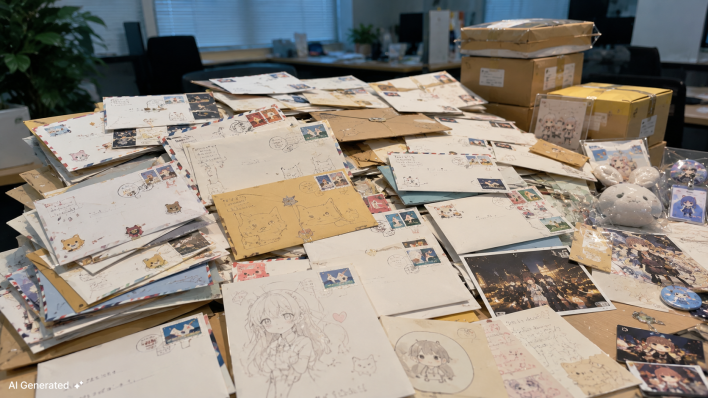
Kim Ji-hoon: At those times, I think this game could be a new meaning to someone. One of the reasons I originally wanted to make games was because of that experience. I played 'Persona 4' in my school days, and it was a time when I lacked social skills. But while watching the process of building relationships with people in the game, completing the community, and interacting with characters, I came to feel that it is important to form relationships with people in reality.
Kim Yong-ha = It's like you're returning the influence you received from the game to other people.
Kim Ji-hoon: That's right. So it's more meaningful.
Kim Yong-ha = I'm similar. I feel that emotion when I go to overseas events or receive fan letters. I receive letters from Japan and the US, and in them, there are stories that this game became a comfort in life, that they decided on their career path with Blue Archive as an opportunity, or that they actually became a teacher.
Kim Yong-ha = When I hear such stories, I feel more responsible. I also think I should continue to make games that can have a good influence. Personally, I'm also very happy when a lot of secondary creations come out. I also liked doujin culture since I was young, and I'm very grateful when illustrators or writers I respected draw Blue Archive fan art or mention it.
Kim Ji-hoon: It's huge at Comiket too.
Kim Yong-ha = That's right. This time, many new goods came out again, so I'm going to go myself. I want to say thank you.
Goals were set, but results also need luck
Jung Woo-chul = Blue Archive has now grown to the point where it has its own genre code at Comiket. Did you expect this scale from the beginning?
Kim Yong-ha = I naturally thought of it as a goal. However, goals and results are different problems. I thought a lot about what kind of worldview to create, what kind of characters to make, and what kind of stories to tell to reach a scale where a genre code comes out at Comiket.
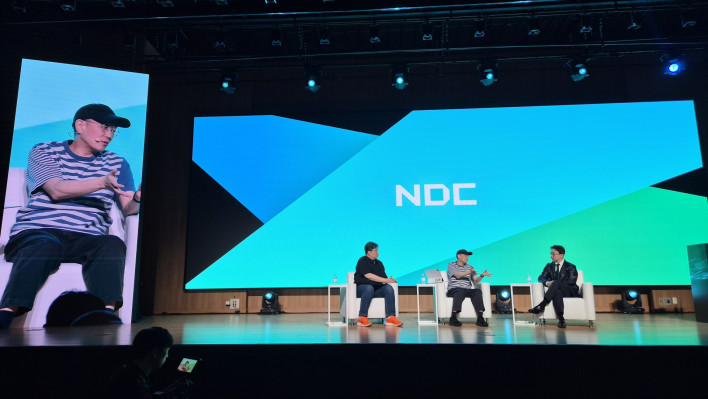
Kim Yong-ha = But just because you thought about it doesn't mean the results follow. Our genre itself is like that. Ultimately, I think it was possible because many people helped and various conditions matched well.
Jung Woo-chul = Still, you had a goal.
Kim Yong-ha = That's right. It was a kind of bucket list. But when you achieve one, the next goal arises. Live service cannot stop. You have to maintain the familiar flavor while showing something new, and it shouldn't be the same as before. So I keep thinking about it.
Kim Ji-hoon: Because it has to be a familiar flavor but a different flavor.
Kim Yong-ha = Yes, that's the hardest part.
AI is just a tool, it cannot replace the creator
Jung Woo-chul = Now it's an era where we can't help but talk about AI. In the game industry, opinions that AI should be actively used and opinions that it should be wary of in the creative area coexist. How do you both view AI?
Kim Yong-ha = I think games are a medium with two sides. It's technology and it's art. In the technical area, I think AI can be actively used. AI is very good at things like processing repetitive tasks quickly, assisting with coding, or organizing data.
Kim Yong-ha = But games are ultimately creative works. There is clearly an area where a person's individuality, the team's color, and the creator's taste must enter. But if even those parts are diluted by AI, I think the value can fall.
Kim Yong-ha = So I think we should separate the technical area and the artistic area. I think AI can be actively used to solve problems with correct answers, but I think we should be much more careful in areas where we have to create our own flavor.
Kim Ji-hoon: I think one of the reasons people consume games or movies is to feel the creator's traces. To express it a bit extremely, they are consuming the result of the creator's concentrated pain. People who play my games are no different from tasting Kim Ji-hoon's tears.
Kim Yong-ha = They like it the more painful it is.
Kim Ji-hoon: That's right. (Laughs) Of course, they don't like the pain itself, but they seem to like the contemplation or sincerity contained within it. But the process is not well seen in the results made by AI. Because it comes out too quickly.
Kim Ji-hoon: I think someday, marks like organic marks might be attached to games. Like, "This game did not use AI." I think an era will come where they emphasize that it was made slowly like slow food, but that the creator's time was put into it as much.
Kim Yong-ha = I think AI is very useful for testing various ideas quickly. However, I think the person ultimately has to choose and implement the good results.
Kim Ji-hoon: If a person who could do 100 things in 10 hours can do 1k things thanks to AI, it's a good thing. But I don't think people want to work for only 1 hour because of that. Ultimately, isn't the important thing how much time the creator spent thinking.
Kim Yong-ha = AI often gives very exemplary answers. It's the same when writing email replies or organizing documents. It writes very excellent sentences, but when I read them, it doesn't seem like I wrote them. Ultimately, I end up rewriting them.
Kim Ji-hoon: It doesn't have a person's own texture.
Kim Yong-ha = That's right. I think human flaws, biases, and tastes are ultimately a person's flavor. I think creative works also feel alive only when those things are appropriately included.
An era where anyone can make, what's more important is one's own thing
Jung Woo-chul = It seems difficult to completely exclude AI in the future. Then, by what criteria will you both use AI?
Kim Ji-hoon: I don't have the thought of becoming a person who leads technology. The reason I want to make games is not because of technology, but because I chose games as a means to convey stories. So if AI is naturally accepted in the industry and good usage cases are accumulated, I think we can follow it according to our method then.
Jung Woo-chul = Because large companies are already making the path in front.
Kim Yong-ha = I am still using AI in the technical area. It is very useful for doing research, organizing materials, or making documents. It can also be used to assist coding or find bugs.
Kim Yong-ha = If I can save time in those parts, I can focus on more important content production. However, I think we should be much more cautious in core areas of creation like illustration, character design, and story.
Jung Woo-chul = Ultimately, you mean it should be used as a tool to implement the creator's intent.
Kim Yong-ha = Yes. I think that line should be kept.
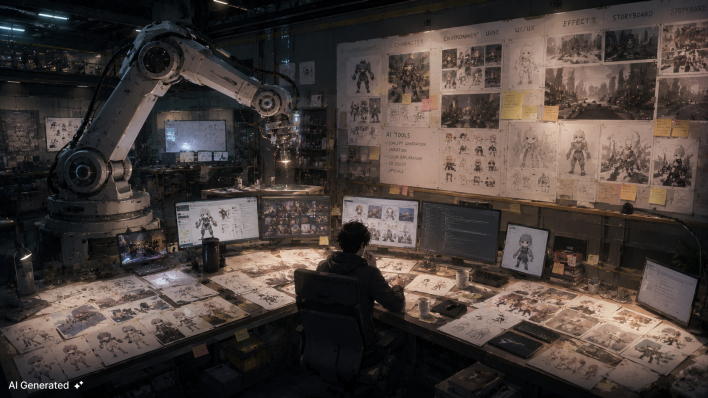
Jung Woo-chul = Then, how do you see the option of starting a business in the AI era? An era will come where you can make games with much fewer people than now.
Kim Ji-hoon: I think it will definitely be a help. As Steam appeared, the entry barrier for game distribution was greatly lowered, and thanks to Unity or Unreal Engine, development itself became much easier. I think AI can lower that barrier one more time.
Kim Ji-hoon: In the past, there must have been people who gave up because they didn't have the technology even if they wanted to make it, but now more people will be able to challenge. However, just because it becomes an era where anyone can make, it doesn't mean anyone can succeed.
Kim Yong-ha = I think similarly. These days, AI makes action game prototypes quite quickly. If it becomes an era where anyone can make similar things, I think one's own color will become more important.
Kim Yong-ha = Ultimately, competitiveness will be one's own thing, not technology. Starting a business is one way, and accumulating experience within a company is also one way. I think there is clearly an advantage that you can experience trial and error and grow within the system called a company.
You have to polish the flavor you like to the end
Jung Woo-chul = It seems it's time to finish. Among those here today, there must be many who want to make their own games in the same position as you someday. Lastly, I would like to ask for one piece of advice each. If you talk according to the topic of auteurism, what is the one thing you must not forget to make the game you want to make?
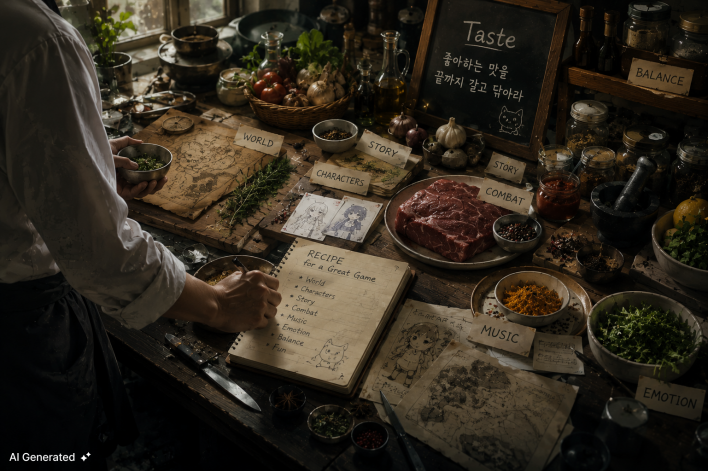
Kim Yong-ha = We talked about flavor all day today, and I think I have to finish with that story. It's also a thought I've been having more recently. In English, it's called 'Taste.' I often hear that taste is ultimately important not only in the game industry but also in other fields.
Kim Yong-ha = Taste can be a preference, or it can be an eye for quality. I think everyone here is thinking about game development because they like games. Then, I hope you keep asking yourself. What kind of game do I like? What genre do I like? What system do I like? What worldview and story do I like.
Kim Yong-ha = I think the process of repeating such questions and sharpening the flavor you like is important. Ultimately, I think the process of finding the flavor only you can produce and advancing it will become more important in the future.
Kim Ji-hoon: I agree. However, I want to talk from the perspective of starting a business. You talked about luck several times today, and looking back, I also think luck was ultimately the most important.
Kim Ji-hoon: The company is entering its 10th year this year, and there were people who worked much harder than me and many people who were more capable than me. Still, I saw many cases where they closed the company or the team was disbanded. Ultimately, the element of luck clearly exists in whether you succeed or not.
Kim Ji-hoon: But luck is not an area I can control. Then, ultimately, the important thing is how long you can endure until luck comes. Mental stamina, physical stamina, and the strength to keep moving forward are important.
Kim Ji-hoon: I often compare it to floating on water. To keep floating on water, you have to keep paddling. The moment you stop struggling, you sink. Ultimately, I think the important thing is how long you can paddle. But that is really difficult than I thought. Even now, I am also in the middle of finding the answer.
Kim Yong-ha = Ultimately, I think life is also a gacha.
Kim Ji-hoon: That's right. (Laughs)
Kim Yong-ha = However, if you pull a lot of gacha, you can get the result you want someday. Ultimately, the important thing is to keep trying. While raising the probability little by little.

Sort by:
Comments :0