Those who remember a masterpiece often talk about 'buying a brain that hasn't seen it yet' just to recapture the feeling of that first playthrough. Personally, I find that quite enviable. After all, I tend to completely forget even the games I enjoyed once a little time has passed.
It’s a bit of a detour, but that is why, while playing 'Trails in the Sky the 1st' (Sky 1st), which was released in September 2025, I couldn't possibly remember the details from 20 years ago. Aside from a few iconic scenes etched into my memory, I didn't feel much of the nostalgia or the emotional impact of reliving the past. Conversely, this meant that Sky 1st felt like an entirely new game—a high-quality title that could be evaluated as a modern release and enjoyed with full satisfaction from start to finish.
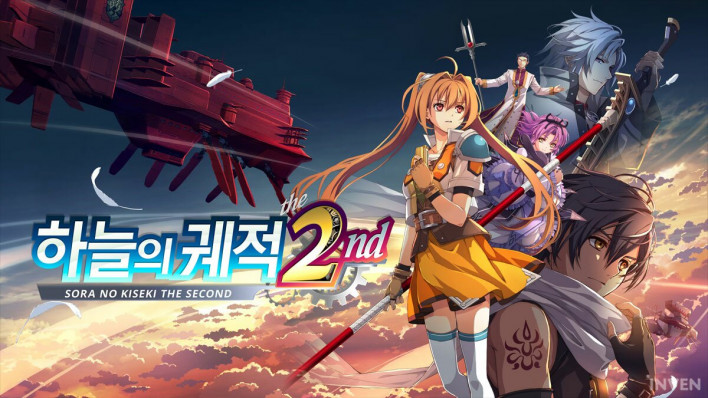
Naturally, that story continues into 'Trails in the Sky the 2nd' (Sky 2nd). The demo for Sky 2nd, which I was able to play early at the Tokyo CLE media event, was enough to confirm just how much the fun factor has been elevated from the previous entry.
As Sky 2nd directly continues the story of its predecessor, it begins with a summary that briefly recaps the plot of the first game. The story then picks up from Estelle's perspective as she wakes up in the castle, reflecting on the time since Joshua left. While it provides a quick recap, the core emotional beats and the relationship between Estelle and Joshua are stories that will resonate much more deeply with those who have played Sky 1st.
This connectivity extends beyond the narrative to the game's systems. The High-Speed Mode allows for rapid movement, combat, and story progression, applying broadly from the field to cutscenes. Furthermore, the character expressions and movement animations, which have become even more diverse since the previous game, convey character emotions with greater depth.
Compared to later entries in the series, Trails in the Sky generally maintains a brighter atmosphere. This is especially true when contrasted with the heavy war themes of Trails of Cold Steel or the political thriller tone of Trails from Zero. However, the road-movie nature of Estelle and Joshua’s journey as they grow into Bracers eventually hits a breaking point. That was Trails in the Sky SC, and the starting point of that fracture was Joshua's disappearance. Sky 2nd is the remake of that very work. Even within its relatively bright atmosphere, it navigates quite melancholic and serious events and emotions.
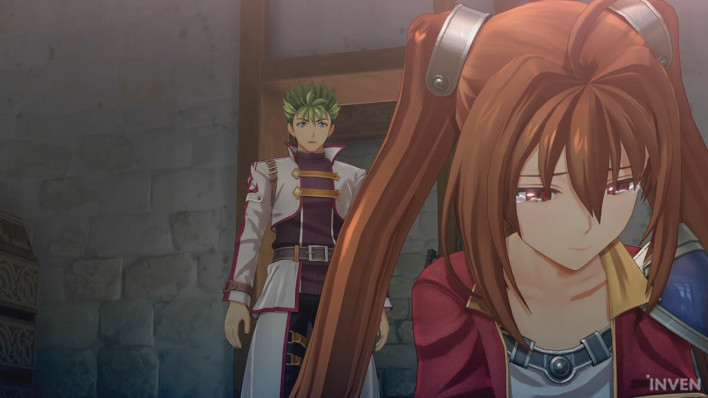
Because of this, the depiction of character emotions is a crucial part of this work. Since major events are structured as cinematic cutscenes, the actors' performances and the visual direction needed to capture them on screen must be well-supported, and this aspect is executed effectively.
The opening sequence is packed with Estelle’s turbulent emotions—from her initial state to the moment she clings to the hope that Joshua might still be at home, only to be met with disappointment when she realizes the reality. The opening sequence concludes with her steeling her resolve to find him.

Once the opening title concludes, the game begins in earnest, utilizing the early section as a tutorial, much like its predecessor. Through waterway exploration that doubles as training, players learn the basics of combat, including the fundamentals of Quick Battle, evasion, breaking, and transitioning into Battle Command. Aside from a few changes, this tutorial structure is familiar to those who played Sky 1st.
It might seem as though Estelle’s partner has simply changed from Joshua to Anelace. However, unlike the previous game, which was relatively linear, this tutorial is designed to maximize the feel of a quest, requiring players to explore, pull levers, and backtrack through areas. Additionally, players must learn how to utilize the Brave Rush in Quick Battle, a feature not present in the previous game.
Field Battles, introduced in Trails through Daybreak to fully realize its identity as an action RPG, have established themselves in Trails through Daybreak II as a system that combines various mechanics to highlight both action and command-based RPG elements. Nihon Falcom has brought this Field Battle system, which was absent in the original Trails in the Sky, into the remake, Sky 1st.
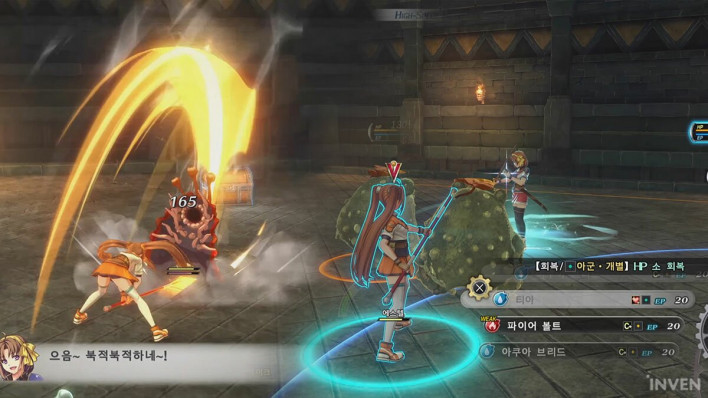
Since this battle system, layered with various mechanics, was not in the original Trails in the Sky, Sky 1st did not simply follow the systems accumulated in the series. As the name 'Quick Battle' suggests—rather than 'Field Battle'—the system was refined to respect the original design as much as possible, resulting in relatively simplified real-time action combat. While this was well-received, Quick Battle was limited to attack and evasion-focused action, with the exception of utilizing the leader's Break. It functioned more as a starting point to create an advantageous state before transitioning into Battle Command.
However, this time, a link technique called 'Brave Rush' has been added. By consuming two Brave Gauges and pressing the R2 button (on PS5), companion characters join in for a wide-range special attack. This expands the utility of the gauge in Quick Battle, allowing players to skillfully handle monsters other than bosses without needing to enter Battle Command. In other words, 'trash mobs' can be cleared quickly without the need to switch to Battle Command.
Thanks to this combat tempo, field battles feel much lighter and more brisk. Perhaps because of this, even though the early sections of Sky 2nd feature stronger enemies, the experience of clearing field monsters felt easier than in the early parts of Sky 1st. Note, however, that this demo was played on the default Normal difficulty. As the goal is to increase the perceived difficulty of higher settings compared to the previous game, this experience may differ in the final release.

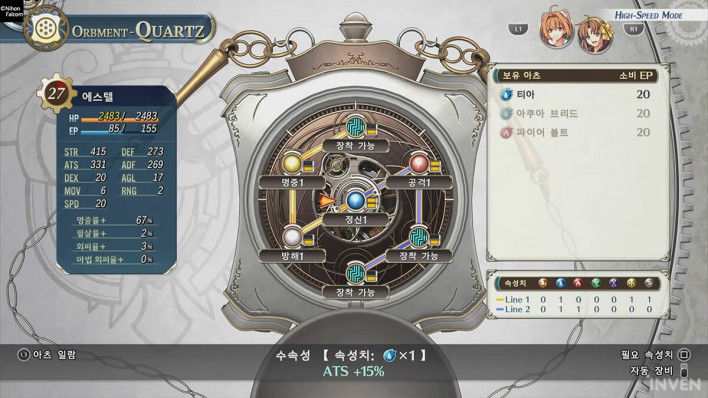
As the early game serves as both a tutorial and a more robust gameplay experience, the Tactical Orbment system has also been changed to require a new setup, despite offering more powerful effects. Since Estelle already possesses high-grade Orbments from the previous game's story, the game includes a narrative device that prevents players from simply carrying over the same equipment, forcing them to reconfigure their setup with newly acquired items. While the number of slots for Quartz has increased, allowing for more diverse Orbment configurations, the basic framework remains similar.
Beyond Orbments, various content has been added. Cooking now has a chance to produce special dishes with buff effects, and Ouroboros Enforcers implement higher difficulty levels with 'Legion Boost,' which is more powerful than Rage Boost. However, as the demo version proceeded step-by-step from the tutorial, I was only able to face about two types of bosses, so I could not verify these new systems.
In fact, even after playing for nearly two hours, there was still plenty of content left to explore.
Instead, I was able to experience a portion of the new 'Viewer Mode.' Unlike Photo Mode, which captures the current scene from various angles during gameplay, Viewer Mode is a separate space where you can freely check character animations, costumes, and compositions. It must be accessed from the main menu and is designed to allow for a wide variety of settings, including character actions, camera angles, and expressions. You can adjust everything from the direction of the character's gaze by moving their eyes to their posture and the placement of main characters.
It is a system that unlocks as you play, meaning the gameplay itself leads to the expansion of other content. It is a feature that can be approached and enjoyed differently from previous Trails series titles in that it provides a new kind of fun.
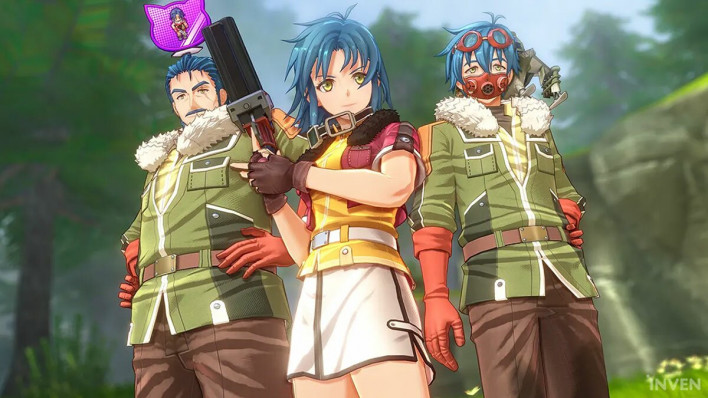
Usually, it is not easy to fully explain the differences of a story-driven RPG that inherits systems from its predecessor based on a demo alone. However, Sky 2nd is a title that, through new systems and adjusted gameplay tempo, makes you feel a distinctly different play sensation within a similar framework and explains that difference quite well. Naturally, it leaves me wanting to continue the story that began in the previous game and has yet to conclude.
'Trails in the Sky the 2nd' is scheduled for release on September 17 for Steam, PS5, and Nintendo Switch.

Sort by:
Comments :0