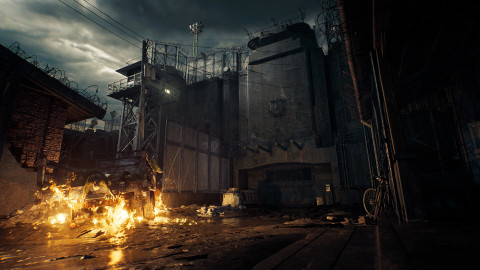
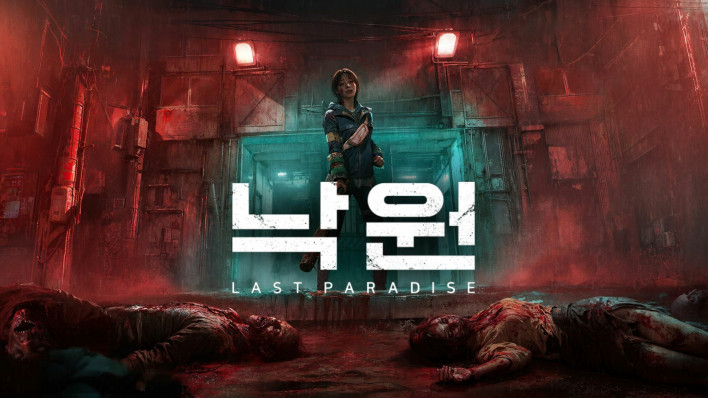
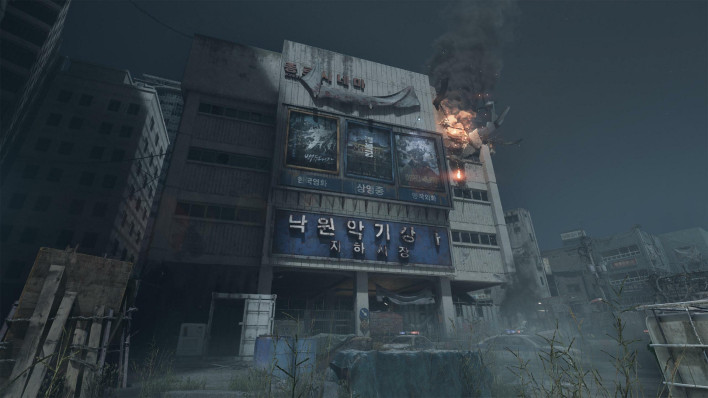
'NAKWON: LAST PARADISE' (hereinafter 'NAKWON'), an extraction survival game set in a Seoul devastated by a zombie apocalypse, drew significant attention during its closed alpha test last March, attracting over 270k players. The game's core appeal lies in its world-building, which transforms familiar Seoul landmarks—such as the Nakwon Arcade, city buses, and storefronts with Hangul signage—into a stage for survival, a concept that has resonated deeply with domestic gamers.
These spaces are the work of level designers. While game planners establish the rules and artists complete the visuals, level designers coordinate the flow, movement, and tension of the space to ensure those rules and visuals come alive in actual gameplay. Yoon Ji-sang, the Level Lead for NAKWON, shared that he personally visited the Nakwon Arcade to photograph everything from sign heights and corridor widths to the direction of light, capturing the essence of the real-world space within the game.
Nexon recently shared the story of Level Lead Yoon Ji-sang and his design process via the Nexon Tag Post. The piece explores how real-world spaces are translated into the game, how the unique tension of the extraction genre is engineered into the environment, and the direction of the new shopping mall map currently under development, all through the eyes of a level designer.
The closed alpha test for Nakwon: LAST PARADISE (hereinafter 'Nakwon') held last March drew over 270k players. The game garnered significant attention for its tense, unique world, where players must scavenge for items and escape the zombie-infested ruins of Seoul to survive.
Before countless players opened the doors to that world for the first time, someone had already walked those paths thousands of times, silently refining the shape of the world. These are the people who design the flow, tension, and moments of survival that players encounter: the level designers of NAKWON.
🧟 The Birth of a Zombie Apocalypse Game Set in Korea
Level design may be a somewhat unfamiliar profession to the general public. If planners create the rules and artists draw the visuals, level designers design and coordinate the space to ensure those rules and visuals function vividly during gameplay. In short, they are experience architects who build in-game spaces and map out movement paths.
It is the level designer's job to weave environmental elements—such as terrain, paths, and cover—into the game system to create decisive moments that players experience with their entire being. While players walk and run through the space freely, countless deliberations and judgments are hidden behind that sense of naturalism.
Just as one might place swings, monkey bars, and seesaws in an empty lot to create a playground, Level Lead Yoon Ji-sang designs a stage where players can act freely. From the starting point where players take their first steps to the zones where they scavenge for supplies and the intricate paths inside complex buildings, almost every experience within the space is completed through the hands of the level design team.
When he first joined the NAKWON planning team, he was met with a draft map based on Jongno.
"It was a familiar space that I personally frequented. I was incredibly excited by the mere fact that I could run around a real-world location inside a game." The world-building, which turns ordinary, everyday spaces into a stage for survival, was the decisive reason he was drawn to the NAKWON project.
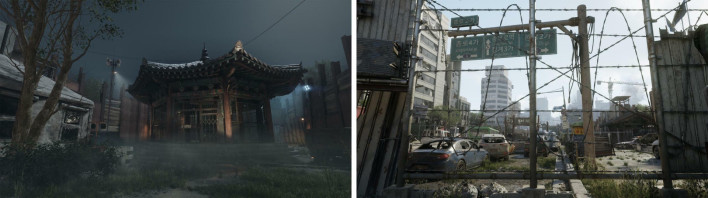
The game is filled with the Seoul landscape we pass by every day: the Nakwon Arcade, green city buses, police cars, and orange taxis. Everything that catches the eye—storefronts with Hangul signs, graffiti left in alleys, and even soda cans neatly arranged in a convenience store refrigerator—is familiar. However, this is a Seoul collapsed by a zombie apocalypse.
The community established by the survivors grades its citizens and categorizes people by class. Meanwhile, those arriving from the outside are driven into controlled zones teeming with the infected. In a world where even a sandwich, a bottle of water, or a small piece of cloth—things easily obtained in reality—require risking one's life, the paradox of the name 'Paradise' becomes all the more poignant.
NAKWON is an extraction-genre game. Players enter a map, collect limited resources, and must escape alive. If they fail to escape, they lose everything they worked so hard to gather. It is a simple rule, but one that imbues every choice with tension.
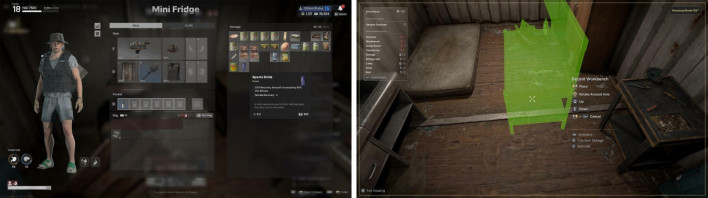
NAKWON adds its own unique color to this with a 'housing system.' After returning alive from a desperate struggle, players head to their own living quarters. They set down the loot they barely managed to secure in a corner of the room, catch their breath, and prepare for the next expedition. A space where loot becomes a memory of survival—that is the new sensation NAKWON layers onto the extraction genre.
🏙 The Process of Implementing a Real City into a Game Space
One cold winter day, Yoon headed to the Nakwon Arcade with a camera. He was there to inspect the site firsthand to implement the interior structure for the game. The height of the signs, the width of the corridors, the direction of the light—the first thing he does when implementing a real-world space is to capture the feel of the actual location as accurately as possible.
He applies photos taken on-site to the game and walks through the space himself to internalize the movement paths. To design the sensations a player will feel, the creator must first experience the space themselves.
However, the goal is not to replicate reality exactly. "Real-world architecture is often much more intricate and dense than in games. In games, we sometimes boldly omit elements or add objects for the sake of the player experience. But if you change too much, the sense of reality disappears."
This is the very point that level designers repeatedly grapple with when facing real-world spaces: creating a space that feels like reality while simultaneously functioning naturally as a game.
Densely packed buildings, narrow alleys, and abandoned cars everywhere. The core task is to maintain the density of the real Jongno while coordinating the space so that players can move and explore without feeling stifled.
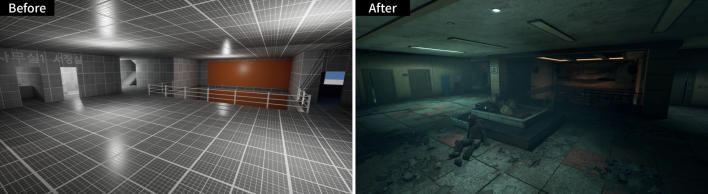
Level design is never a solo endeavor. Early-stage levels often begin as simple block-like structures. Later, the art team adds sculptures, shops, and thematic elements to the space, fleshing out the world.
He remarked, "I find it most memorable when a simple structure is completed into a space far more magnificent than I had intended." The world that players will actually experience is finally completed as the art team's details are added to the skeleton designed by the level designer.
⚠ How to Design Tension in the Extraction Genre
"If escaping is too easy, the fear of losing items disappears. The moment that fear vanishes, the tension unique to the extraction genre weakens." Tense atmosphere is the core of the extraction genre, and designing that tension into the space is a crucial role for the level designer.
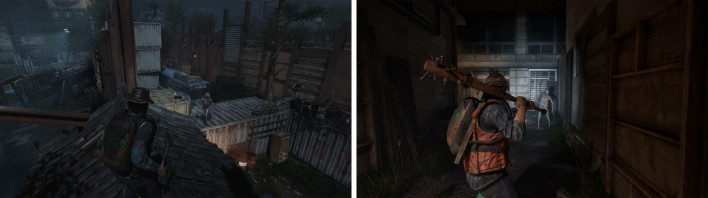
In NAKWON, tension is not created solely through combat. Rather, the space itself pressures the player. In this game, where melee weapons are central in line with the setting of a gun-control country, players must choose to find stealthy paths and engage in combat only when absolutely necessary, rather than fighting every enemy in sight.
The placement of cover, the distance to the escape gate, the arrangement of narrow alleys and open spaces—level designers combine all these elements to modulate player tension.
The characteristics of the infected are also closely linked to space design. Whether it's a 'Runner' that charges quickly, a 'Screamer' that lets out a shriek to draw nearby infected, or a 'Gatherer' that causes confusion by wearing explorer gear, the threat a player feels changes entirely depending on where and on what path they encounter the same enemy.
Environmental factors like time of day and weather are also added. Low visibility at dusk or dawn, or situations where footsteps are muffled on a rainy day, change the way the game is played. Unexpected variables are also placed throughout, such as an infected jumping out from inside the moment a player breathes a sigh of relief and opens an escape door.
However, balancing that tension is much harder than it seems. Level designers play the game hundreds or thousands of times. Because of this, it is easy to mistakenly assume that players will naturally understand the paths and solutions that have become familiar to the designer. This is why a space with appropriate difficulty for a developer can feel overly complex or unfriendly to a first-time user.
Conversely, sections thought to be sufficiently easy can become unexpected hurdles. There is always a gap between the designer's intent and the player's actual experience. The process of repeatedly testing and revising to narrow that gap is also a vital role for the level designer.
The first floor of the police station in the southern map is a representative space that embodies such concerns. To open a locked door, one must first operate an external generator. The yellow cable leading to the generator is the key clue, but if the player fails to discover it, the door will never open.
This is because even if a hint is clear to the designer, it can be an element easily overlooked by a player moving through darkness and tension.
"I was truly relieved when I saw players actually following the yellow cable during testing." Behind Yoon's smile was the tension of a developer who can never be entirely sure until the end whether the mechanisms they designed will function as intended.
The space he is personally most attached to is the safe room in the tax office on the northern map. There are two ways to enter this location: one is to find a key and enter quietly through the fourth floor, and the other is to break through from the third floor while fighting the infected without a key.
What is interesting is that players who choose different paths can encounter each other in the safe room at a specific moment. Will they be wary of each other, or will they cooperate? The level designer designs the space so that the player's choices and tension arise naturally. And in that very moment, the player's own story begins.
🏬 A New World Extending Vertically, Toward the Next 'Paradise'
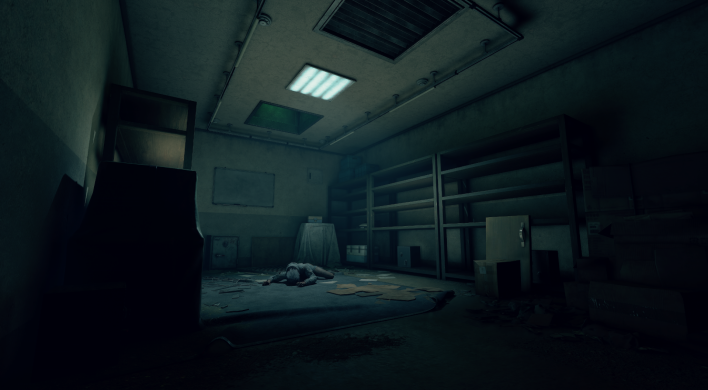
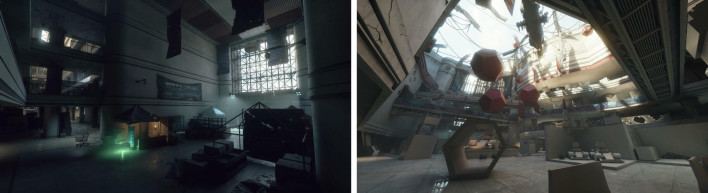
Even after the test ended, another survival stage was unfolding on the level designer's monitor. While the existing southern and northern maps of Jongno were structured for horizontal exploration centered on downtown alleys, the key to the new shopping mall map currently under development is a vertical sense of space.
"The shopping mall map focuses on the experience of avoiding and breaking through the infected by utilizing spaces connected vertically."
From the central space that opens up from the first to the fifth floor, to the structure of a large mart connecting the basement levels 1 and 2—in a space where floors are organically connected, players must watch for threats not only from the front and back but also from above and below. Movement using stopped escalators and empty elevator shafts, and sightline battles occurring in open-floor structures, are all being designed into this space to provide a different kind of tension than the Jongno alleys.
The changes are not limited to spatial expansion. In addition to the shopping mall map, new maps with entirely different characteristics are being developed, and the ways players survive are becoming more diverse.
Even in the same space, the version of NAKWON a player experiences changes completely depending on the choices they make. Yoon says that the last closed alpha test was a process of building the game's skeleton, and now they are in the stage of filling it with NAKWON's unique atmosphere and experience.
In the heart of a zombie-filled Seoul. From the moment you hold your breath and slip out of a Nakwon Arcade alley, to the final scene where you barely open the escape door and let out a sigh of relief—behind the tension experienced by the player lies the meticulous deliberation of the level designer who crafts the space.
In fact, during the last test, NAKWON's unique sense of space and detail left a strong impression, with users responding that it was "difficult to find substitutes with a similar atmosphere."
The world where 270k players first set foot is now expanding into something wider and deeper. What choices and tensions will players face on the newly opened stages of Paradise?

Sort by:
Comments :0