The Korean War is being reborn as a flight simulator. 1C Game Studios, a Russian developer, is launching a new title, 'Korea: IL-2 Series,' which covers aerial combat over the Korean Peninsula in 1950. Early access begins on June 25, the anniversary of the outbreak of the war.
1C Game Studios is a developer specializing in flight simulators, known for the 'IL-2 Great Battles' series. This new title highlights the Korean War as a turning point in aviation, marking the transition from propeller planes to jets. Players can pilot aircraft from participating nations, including South Korea, the U.S., North Korea, the Soviet Union, and China. The map of the Korean Peninsula, spanning over 200k square kilometers, and the eight types of aircraft were recreated based on 1950s historical records and aerial photography.
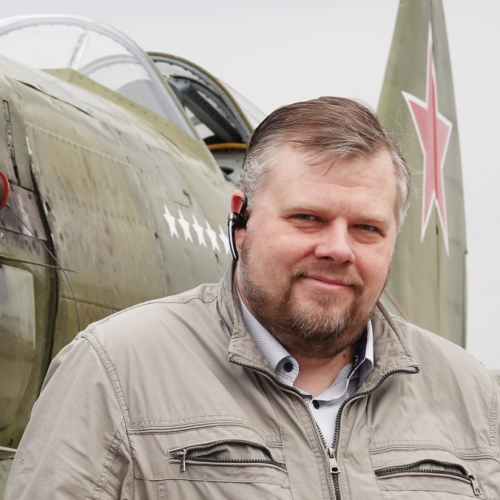
What is the background behind a Russian developer focusing on the Korean War and adapting it into a game? In this interview, Daniil Tuseev, producer of the 'IL-2 Series' at 1C Game Studios, answers that question.
Please introduce the studio and the core development team for this project.
"1C Game Studios was founded in 2012. Our first project was the flight simulator 'IL-2 Great Battles: Battle of Stalingrad.' The core team consisted of developers who created the WWI air combat simulator 'Rise of Flight.' Since then, the team has grown significantly. In addition to 'Battle of Stalingrad,' we have released seven major DLCs, as well as two games in other genres: the shooter 'Caliber' and the deck-building game 'Deathless.'
We are currently developing our new flight simulator, 'Korea: IL-2 Series,' using the third-generation version of our proprietary Digital Nature engine. About 80 people are involved in the project, including programmers, aerodynamics engineers, artists, animators, map makers, sound and visual effects experts, mission and GUI designers, testers, and marketing staff. Each development group has a lead expert. These leads, who possess the experience and knowledge necessary to guide such a complex and vast project, are our core personnel.
I am curious about the background behind a Russian developer choosing the Korean War as a subject.
"The answer is clear. The Soviet Union, which modern Russia succeeds in many respects, was a direct participant in the Korean War, even if it was never officially acknowledged. Soviet aviation regiments were deployed to airfields near the Chinese border, equipped with both aircraft and ground personnel. Although there were specific constraints because the Soviet participation had to be hidden, their involvement significantly influenced the course and outcome of the war.
Since the Korean War, there has been no instance in Soviet history where air power of this scale was committed to combat. The air battles were unprecedented. In subsequent wars, air-to-air engagements were all sporadic. In the history of Soviet aviation, the Korean War was a decisive event that defined the direction of development for a long time to come.
You chose the anniversary of the outbreak of the Korean War for early access. Was this date chosen with that significance in mind.
"Of course, it is a date chosen with full awareness of its significance. The Korean War was the largest conflict on Earth in the latter half of the 20th century. It signaled the beginning of a total confrontation between East and West, between the socialist and capitalist camps, a confrontation that lasted for the next 40 years. In terms of aviation, the Korean War is the boundary line separating the era of propeller-driven combat from the era of jet combat. The skies of the Korean War were the stage for the last large-scale air battles in history, involving dozens of elite fighter jets.
In our genre, this is a key historical event, and it is naturally symbolic to connect it to the most important date. The Korean War began on June 25, 1950, and our project covers the air war of that very conflict. If we were to remake a simulator based on the war between the Soviet Union and Germany, June 22 (Operation Barbarossa, when Nazi Germany broke the non-aggression pact and invaded the Soviet Union) would have been the appropriate date.
The Soviet Air Force participated in the Korean War unofficially, and this fact was denied for a long time. How did you reflect this in the game.
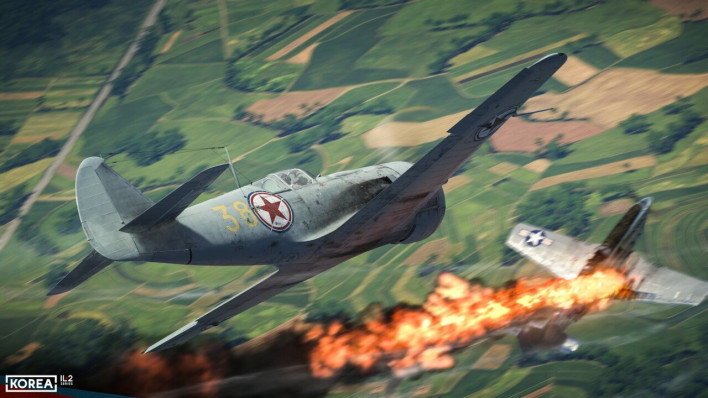
"That is correct. The Soviet and Chinese militaries did not officially participate in the Korean War. Moreover, this fact was concealed even within the Soviet Union for a long time after the war ended. In reality, Soviet pilots were required to use Korean for radio communications, but this rule was not followed at all in the field.
Fighter jets of Soviet and Chinese air units conducting combat missions over North Korea were painted with North Korean Air Force markings. There were also restrictions prohibiting flights deep into enemy territory or toward the sea to eliminate the possibility of Soviet pilots being captured. In fact, this measure was effective, and not a single Soviet pilot was taken prisoner during the Korean War.
Players can pilot aircraft from the U.S., South Korea, North Korea, the Soviet Union, and China. Do you portray the war from the perspective of a specific side, or do you aim for a neutral simulation.
"We do not make any judgments about the events. Our job is to recreate these events from a military history perspective. We approach the sequence of events, the development and objectives of battles, and the composition of combat units as objectively and unbiased as possible.
We tried to capture the atmosphere of the early Cold War confrontation for each side. This is implemented through stylized newspaper articles. These articles contain actual historical facts but are colored by the perspective of the 'West' or the 'Socialist' camp, depending on which side the player chooses when starting their Commander Career. This is one of the most important devices we use to create the immersion and realism we want to convey to the player.
While highlighting the Korean War as a turning point in aviation history, how did you intend to capture the tragedy and weight of the war itself.
"It is clear that the core gameplay of a flight simulator lies in recreating aircraft movement, the characteristics of air combat, and everything related to it. As many have pointed out, the weight of the tragedy felt by soldiers on the ground in any war, including the Korean War, may not be easily felt in the air. This is a point that excellent films about combat pilots often highlight.
Nevertheless, the major historical context, including tragic events, is conveyed throughout the Commander Career via the aforementioned stylized newspaper articles. The perspective on these events depends on which side the player has chosen. If players play through the careers of both sides, they will be able to fully feel the complexity and ambiguity of the military historical process. This will lead players to explore and analyze history more deeply on their own.
You mentioned that you recreated the terrain using 1950s maps and literature.
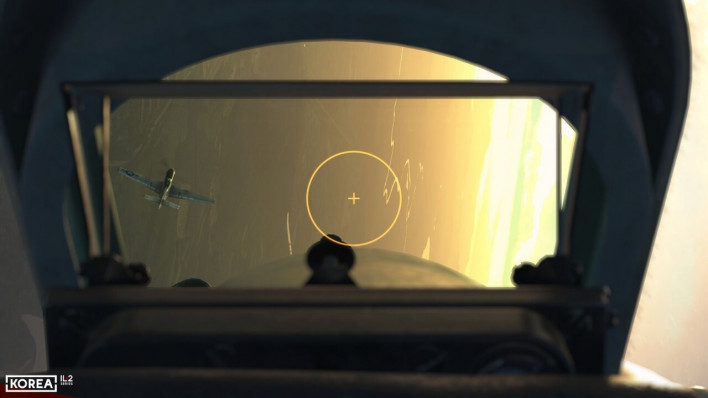
"We attempted to contact experts in Korea, but it was more difficult than expected under the current circumstances. Nevertheless, we were able to collect a vast amount of historical data, including map materials from that era, which allowed us to recreate the landscape of the Korean Peninsula as it was in 1951. However, it is worth noting that in many places, human activity has changed the terrain to the point of being unrecognizable. The most prominent examples are the capital region, especially the coastal and port areas. Their current appearance is completely different from 70 years ago. We also made extensive use of declassified materials, primarily from the Western side.
How did you bring to life the aircraft used by the South Korean and Allied forces, such as the F-51D Mustang operated by the South Korean Air Force at the time.
"One could write a whole book on this topic alone. Simply put, the core principle is that 'blueprints always lie.' Engineering blueprints convey the main dimensions, relative positions, and basic structural lines of aircraft and parts. However, the detailed contours must always be verified against carefully collected aerial photographs.
We cross-check with preliminary 3D models made from blueprints and refine the models like a sculptor, carefully choosing angles. This applies above all to the cockpit. In the process of recreating the cockpit, photographic records are critically important. The Mustang, like other aircraft, is a WWII-era model, but it showed its own unique characteristics during the Korean War. These characteristics were also verified through photographic materials from that time.
To what extent did you verify the actual locations of strategic hubs on the map, such as airfields, ports, and villages.
"Airfields are key ground facilities and the central space of a flight simulator. In this game, we aimed to implement all airfields at a completely new level compared to before. We spent a lot of time researching historical records regarding airfield layouts and the locations of various facilities within them. All the information we found was recreated in the game. We tried to implement the overall layout of runways, taxiways, and aprons, as well as protective walls, storage facilities, military units, fuel depots, maintenance shops, and command posts exactly as they were during the Korean War.
How are civilian areas and civilians handled in the game.
"It is difficult to say that we applied any 'standard,' because no such official standard exists. However, we did our best to make the villages look as close as possible to the actual appearance of Korea in the 1950s. Civilians are also represented. There are rural residents in villages, city dwellers in cities, and workers in factories. Their appearance and clothing are consistent with the era. Overall, we tried our best to maintain realism in this area.
This is the first in the IL-2 series to fully support controllers. Why did you introduce controllers to a hardcore simulation that was centered on HOTAS and joysticks.
"The flight simulator genre is a fairly small market. However, there are many people around the world interested in aviation or virtual aviation. In traditional flight simulators, to experience the game world and judge if it suits you, you have to buy complex control devices and go through a long and difficult setup process. This is a major barrier to entry for many who are curious but not ready to invest immediately.
On the other hand, almost all PC gamers own a gamepad. If we provide a comfortable entry barrier and a sufficiently capable control experience through a gamepad, the player base that not only wants to try this project and genre but can actually do so will expand significantly.
This is a very difficult task. We could not sacrifice the realism of the simulator for the sake of control convenience. Rather, to maintain the level of simulation that players expect today, we had to continue to expand the 'realism elements.' Nevertheless, we were happy to take on that challenge. In some ways, we consider it our mission. Bringing more players to our game means bringing more players to the entire hardcore flight simulator genre.
Players can choose the role of a regular pilot or an aviation regiment commander, and in Career Mode, they manage personnel and supplies. What was the intention behind adding these strategic layers, and how did you balance accessibility between existing fans and new players.
"We solved this problem through various devices. For new players, we provide several game modes in addition to the Commander Career. We designed it so that players can get used to the aircraft, gain experience in flight and air combat, identify their preferences, and then challenge themselves to the Career mode, which is the most extensive mode, in a more prepared state.
The game has a Quick Mission Editor where you can create any combat situation you can imagine. You can recreate all missions from the Commander Career as well as other situations, and you can freely choose the departure airfield and target, as well as set additional variables such as weather, composition of friendly and enemy forces, and routes. There is also an Exam system for each aircraft, allowing for a deeper understanding of the unique handling characteristics of each machine.
Apart from the career, we are also developing the first scripted campaign in the traditional sense. We hope to be able to present it at or shortly after launch. We plan to increase the number of campaigns in the future and complete a training mode for beginners that covers both flight and combat.
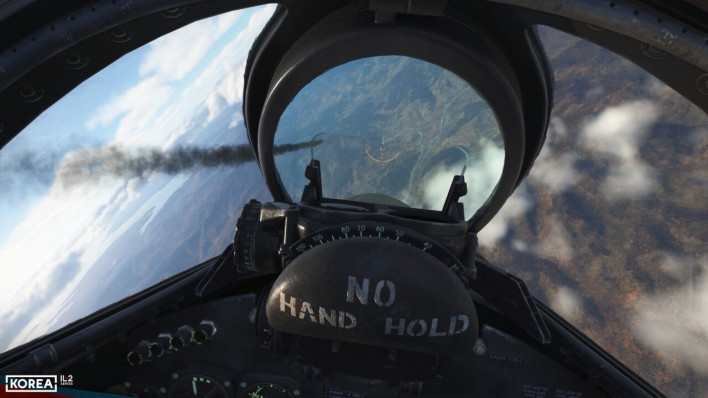
The 'Museum' mode seems to be the reason you introduced this game as a 'Korean War Museum.' What is the core experience you want to convey with this mode.
"The Museum mode is an attempt to return to the roots of this genre. Many veteran players will remember the old days when they explored the game world through an object encyclopedia built into the game. We expanded on this idea to explain the history and characteristics of every object in the game comprehensively and in detail, allowing players to examine them from every angle on a 3D screen.
For aircraft, we have prepared detailed interactive explanations of the cockpit and equipment, and added items covering aircraft handling, flight characteristics, and key settings. This makes the Museum a space where you can learn about the equipment recreated in our game as thoroughly as anywhere on the internet. It is a true museum, and at the same time, as a tool for learning and immersion, it complements all the elements explained in the previous answers.
You have high technical ambitions, such as a precise damage model reflecting mass, speed, and impact points, VR support, and five seasons. What part did you put the most effort into while moving to the new engine.
"It is difficult to pick just one thing. Building the third-generation version of the Digital Nature engine that powers 'Korea: IL-2 Series' required tremendous effort, knowledge, and the total mobilization of all the experience we have accumulated. That work alone took over three years, and the results are truly impressive. We also put a lot of effort into developing a new flight model in line with the transition to high-speed jet aviation. The same goes for the implementation of the aircraft systems of the time, which is indispensable for creating a truly realistic and authentic simulator covering the Korean War.
Recreating the Korean map also involved a massive amount of work, for which we developed many new approaches and technologies. Recreating 3D models of objects in the game, including aircraft, to modern standards that reach the highest level in the history of the genre was also a very tricky task that required years of effort from outstanding talent. The Commander Career, with its completely newly developed meta-gameplay, was also a true challenge in itself. There are many other parts worth mentioning. It is really hard to choose just one.
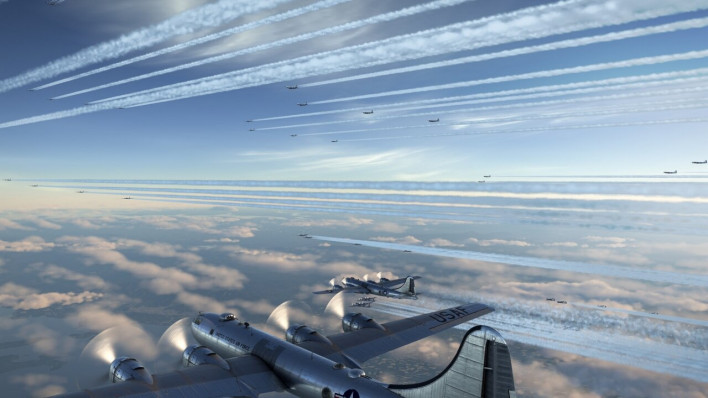
Looking at the Steam supported languages table, Korean is only supported for audio, while the interface and subtitles are missing. Are there any plans to support a Korean interface and subtitles.
"Here, audio refers to in-game radio communications. In the game, radio communications are output in the actual language of the country, regardless of the selected localization language. Which language is heard is determined by the country of origin of the aircraft in the game scenario.
This is one of the key elements needed to recreate the historical context and immersion. If you fly a Soviet fighter, friendly radio communications are heard in Russian, allied forces in Chinese and Korean, and enemy forces in English. The same applies to the opposite case. Radio communications are naturally accompanied by localizable subtitles. We have been continuously reviewing Korean localization for the game, but we have not yet reached a final agreement.
As a game about the Korean War, Korea is a symbolically important market. How do you anticipate the reaction of Korean players, and do you have any marketing or communication strategies targeting the Korean market.
"We plan to distribute the game worldwide through the Steam platform, and it can be purchased anywhere. Individual localization by country is reviewed when there is sufficient interest in the genre and our product in that region. We will see what the sales data shows in the future. If Korean players make up a significant portion of the user base, we will definitely proceed with Korean localization to expand the market. For now, it is uncharted territory for us.
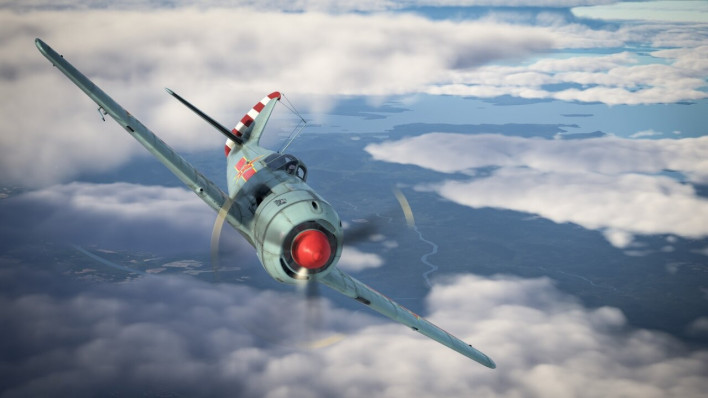
What is the scope of content (aircraft, missions, maps, modes) available at the time of early access, and what is the core content to be added before the official release.
"At the time of early access, players will have access to all aircraft and the entire completed map. A Quick Mission Editor with limited mission types, four aircraft exam modes, multiplayer, and the entire Museum mode will be provided. At the official release, the Commander Career mode will be added, and the full missions of the Quick Mission Editor, all aircraft exam modes, and, if possible, the first scripted campaign will be added.
You announced an official release within 2026. Is there a specific time, and are there any distribution platforms you are considering other than Steam.
"We plan to officially release on August 4 on Steam and our website (il2-series.com). The project is virtually complete, but we decided to spend a little more time on final debugging and polishing. Because the quality at the time of release is more important to us than anything else, we are doing our best to present the highest possible level of completion.

Sort by:
Comments :0