I cried for a long time. The sight of a human and an android was just so beautiful that I couldn't stop the tears. Watching them look out at the sea, promising each other a future—why did such simple moments feel so heartbreaking.
Pragmata doesn't deal with 'things' so complex that you need to ponder them for hours. The game's overall story is quite ordinary, and with a little thought, the next beat is predictable. However, Pragmata takes that ordinary story and, by focusing on the relationship and characterization of its two protagonists, Hugh and Diana, renders it with beautiful, lyrical direction.
Against that backdrop, the game delivers about 10 hours of combat that feels so innovative and perfectly balanced that it’s hard to believe. Some might say 10 hours is too short. But for a single 'game' like Pragmata to feel complete, 10 hours is the perfect duration. It is neither too short nor excessive.
It is just enough time to fully experience every part of this new game and to become completely immersed in the two protagonists.
# This review may contain some spoilers regarding the overall gameplay and content of Pragmata.

A Full - Fledged Two - Person Play with Diana and Hugh
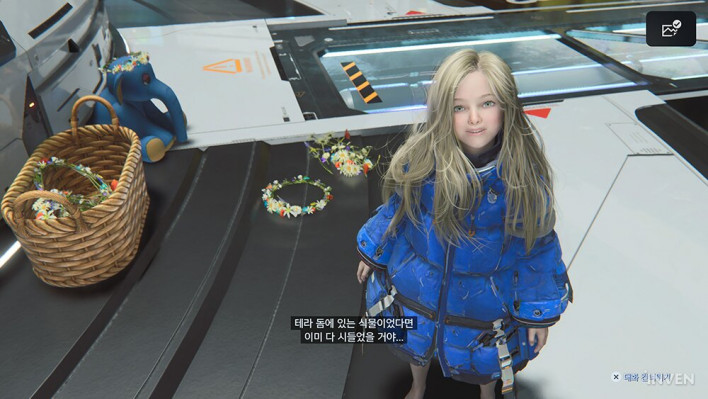
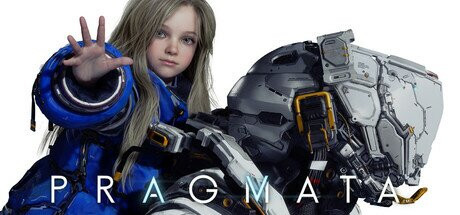
Before release, the biggest talking point of this game was undoubtedly 'Diana.' The image of a small, cute, blonde girl in a blue dress left a powerful impression on the minds of countless gamers.
And from the moment the game launched, even well after, Diana is still talked about as the game's greatest mascot, its defining feature, and its everything.
It is clear that the character of Diana is an outstanding, essential element of this game. You could say that because of her, the story, the core of the combat, the flow, and even the ending could be completed so brilliantly.
However, Pragmata is by no means a game that is just about Diana.
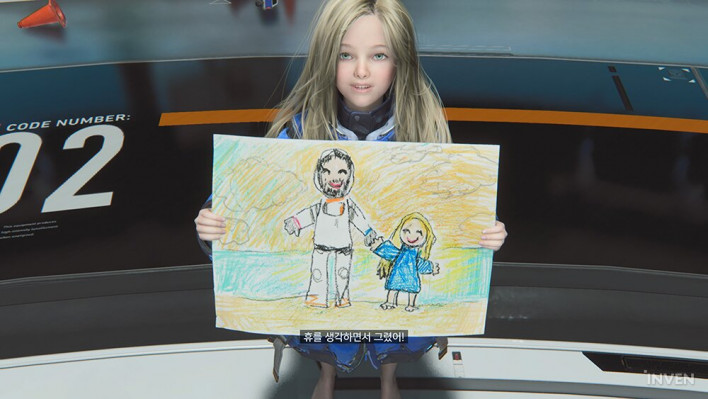
If not for 'Hugh'—a character so incredibly ordinary that I didn't feel much significance in him until I started playing—that plain astronaut, Pragmata could never have been completed.
Pragmata is a game where Hugh and Diana clearly serve as 'co-leads' in every aspect. In the story, in combat, in controls, and in everything they convey, Hugh and Diana are together. Pragmata exists because of both characters.
While Diana is a highly distinctive character, Hugh is very ordinary. Yet, Hugh is never overshadowed or absorbed by the android Diana, neither in combat nor in the story. Without Hugh, Diana's characterization cannot be complete.
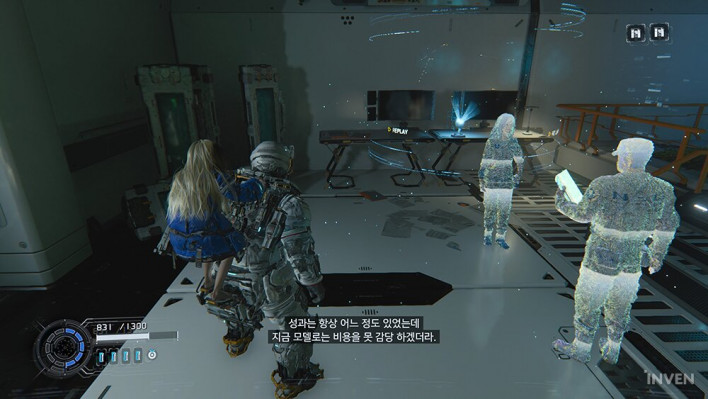
I talk so much about the relationship between the two leads because their bond is the fundamental element that explains every part of this game.
From start to finish, Pragmata is a game centered on these two protagonists. They drive the story, and they drive the combat.
While characters like Eito, Hugh's early colleagues, and various doctors or researchers appear, their presence is used only in very fragmented ways. The game proceeds like a two-person play. The others drift by like narration or parts of the background.
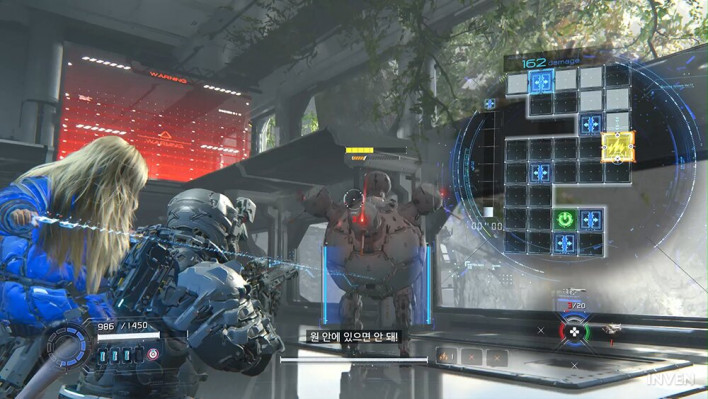
Even in combat, the two cannot exist apart. Without Diana's abilities, Hugh cannot deal full damage to enemies, and without Hugh, Diana cannot finish them off. Their abilities are linked; while the weight might shift slightly to one side, you can never play the entire game with just one of them.
Throughout the 10-hour playtime, their story unfolds on screen, their dialogue is heard, and their combat plays out. Because of this, we as players can become perfectly immersed in Diana and Hugh, their situation, and their relationship. Or rather, we have no choice but to be.
Ultimately, this complete immersion leaves a lingering sense of ache, satisfaction, sadness, and indescribable emotion in a corner of your heart when the two-person play of Pragmata ends and the credits roll.
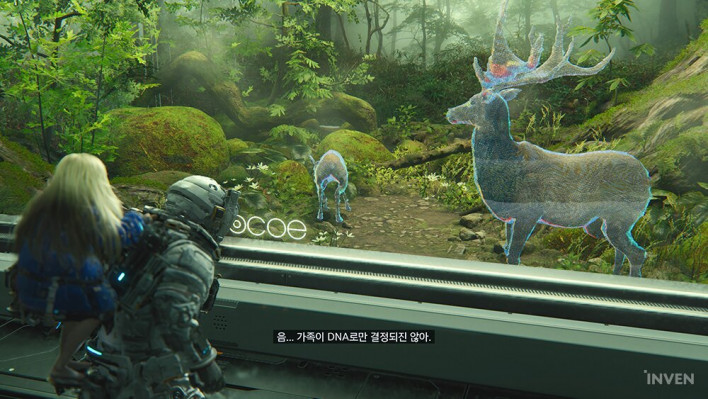
Perfect Balance of Shooting and Hacking, and Excellent Combat Design

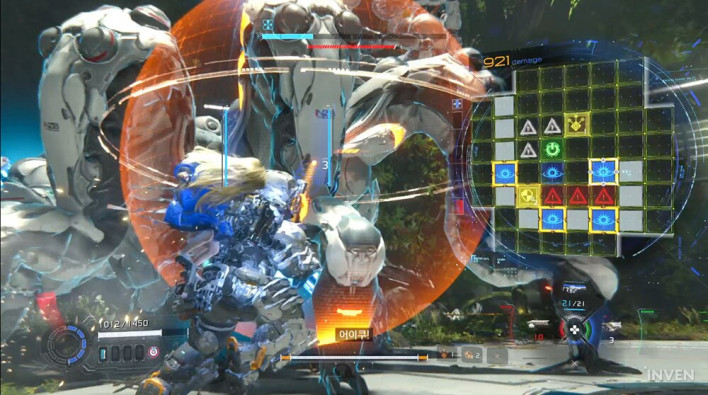
The combat system played a huge role in allowing Pragmata to be completed as a perfect two-person play. It found a balance between the two seemingly incompatible elements of puzzles and shooting—a balance that is incredibly fresh yet perfectly appropriate, never leaning too far in either direction.
The two elements are designed with such balance that if either were missing or lacking, you could never fully navigate the game. Dynamic shooting and static puzzles sound unbalanced, but Pragmata turns that imbalance into a feature and a strength of the game.
This is by no means easy. Enemies attack constantly; you must dodge their attacks while hacking and dealing fatal damage through shooting. Especially as the game progresses, enemies become stronger, their attack patterns more complex, and the hacking—the puzzle element—required to expose their weaknesses also becomes more intricate.
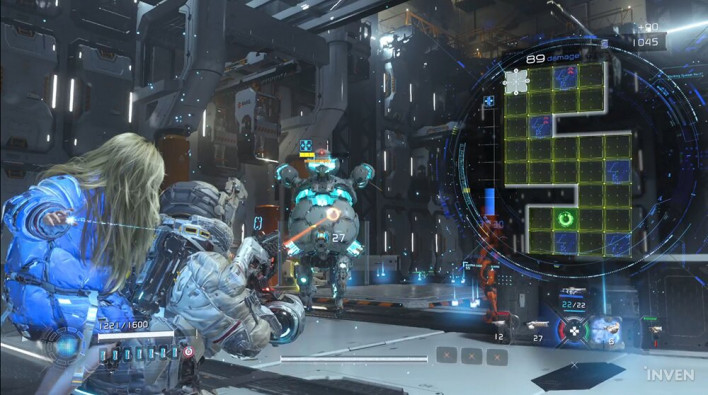
On paper, it sounds dizzying and overwhelming, making you wonder if it's even playable. But surprisingly, when you play it yourself, while you might feel fatigue from having so much to pay attention to, it never feels 'complicated.' Every process of attack and defense is designed very systematically.
You use various weapons to create openings in the enemy's defense, then hack during those windows. If an enemy attack comes your way, you simply dodge and continue hacking. You pass through the most meaningful hacking nodes, and once the hacking is complete and the enemy's weakness is exposed, you use your weapons again to deal heavy damage.
Not confident in your shooting? It's simple. Use homing missiles or use shooting to increase hacking damage for a stronger attack. Conversely, not confident in hacking puzzles? Choose a combination that uses hacking nodes to boost your shooting damage.
This sequence unfolds over 10 hours like climbing a staircase. As chapters progress, you gain new combat experiences, and through those, you can tailor the combat combinations and controls to your own style.

Boss battles are also part of that experience—the final step of each floor, if you will. The characteristic elements introduced in each chapter are expressed to their extreme in the boss fight. While there are clear gimmicks to defeating the boss, they are grounded in the new elements of that chapter.
We experienced those new elements throughout the chapter. In the process, we found the playstyle and combinations that worked best for us to solve them. In other words, hints on how to most efficiently clear the boss battle were provided throughout the chapter.
Thanks to this, the boss battles are certainly difficult and tricky, but never excessive. You can quickly figure out how to lead and approach the fight.
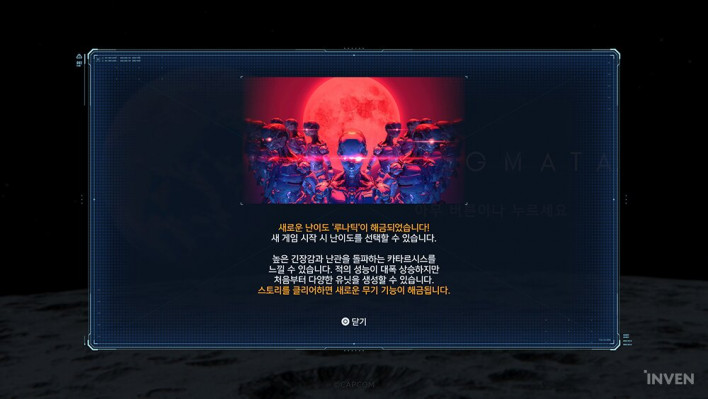
Post-ending content is also well-prepared. First, the difficult 'Lunatic' difficulty is unlocked, and a mode is created where you can return to just before the final battle to clear hidden missions, which adds new elements to the ending along with new costumes. Naturally, New Game+ is also available.
It feels like the developers intended for the first playthrough to be about learning the game and getting used to the process, before experiencing the full, advanced course.
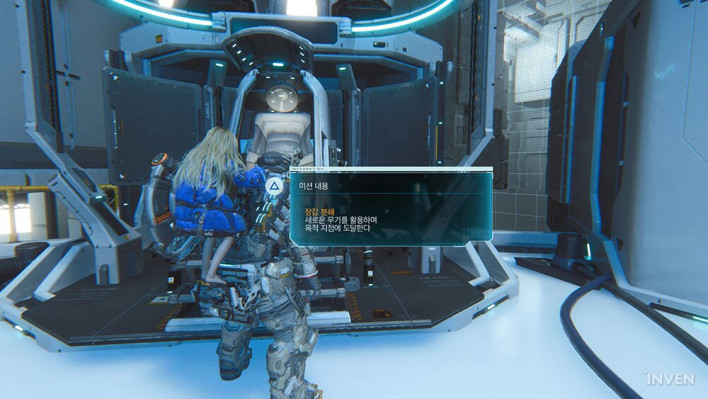
Since the overall playtime isn't long, enjoying a new game on a new difficulty isn't too burdensome, and for those who want a quick challenge with new weapons, there is the option to return to just before the final battle. It's also interesting that you can clear new challenges and missions in the process.
Playstyle? 'Truly' make it your own
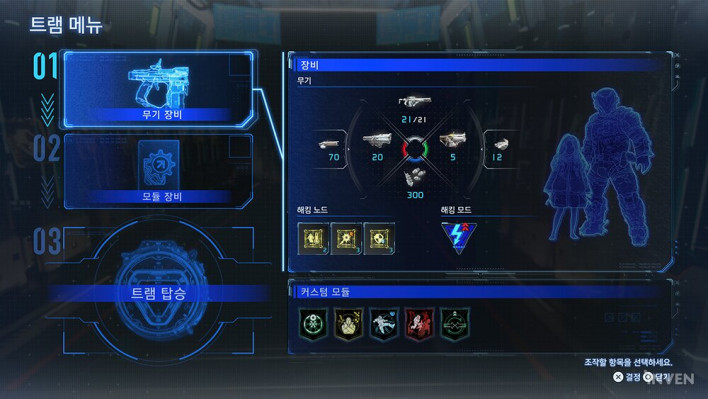
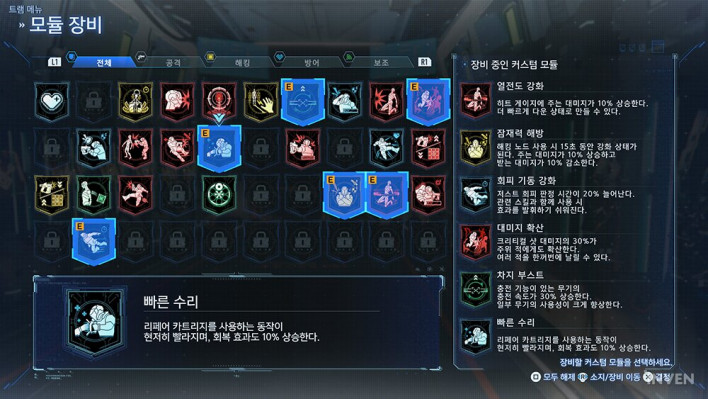
Pragmata is a remarkably accessible game. Everything—from shooting and hacking to weapon types and modules—blends harmoniously under the singular goal of 'combat.' Thanks to this, even those who aren't typically comfortable with shooters or puzzles can fully enjoy the combat experience the game intends to deliver, aided by all these integrated elements.
Even if your aim is off, even if a swarm of enemies approaches, even if you have few rounds left in your weapon, or even if you've used up most of your hacking nodes, there is no need to panic.
Pragmata has been very considerate so that players can immerse themselves in combat situations and fully feel the fun that combat itself provides. Places where fierce battles occur are already stocked with various weapons and hacking nodes, which themselves serve as hints for the combat situation.

That's not all. The weapons, modules, and hacking nodes prepared in the game are so diverse that you can maximize the characteristics of your own combat style depending on your equipment combinations.
You can achieve a harmony of shooting and hacking, or use shooting only as a support element to generate hacking nodes and strengthen hacking. Naturally, it is also possible to use hacking as an enhancement buff to increase shooting damage. As you progress through combat and the game, you can strengthen the aspects that don't feel burdensome to you through combinations.
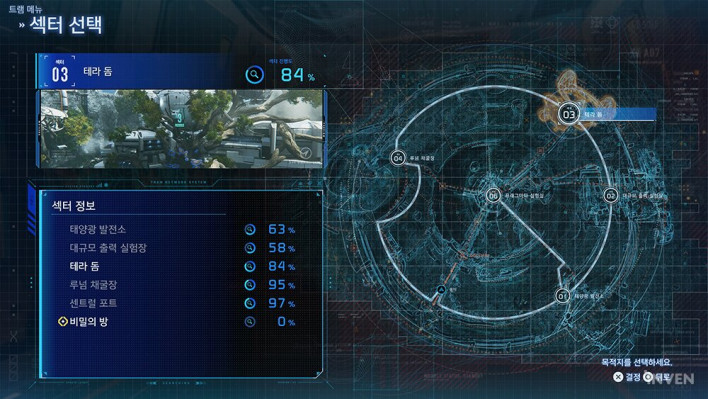
Furthermore, the game's difficulty does not spike excessively or become too easy. Through meticulous design, it provides the player with just the right amount of time to adapt to the incompatible elements of shooting and puzzles.
Just as you get used to the basic combat system, enemies with advanced combat methods appear, and once you get used to that, new weapons appear. Once you find a combination that suits you, upgraded movement methods and puzzles appear. Once you get used to all of that, a new element called 'Purification' appears out of nowhere, along with unexpected obstacles.
In a way, the overall experience of the game can be seen as a process of getting used to three elements: 'shooting,' 'puzzles,' and 'movement.' Pragmata made 10 hours of gameplay feel fresh and never repetitive using only these three elements. And even then, it never feels excessive on either side.
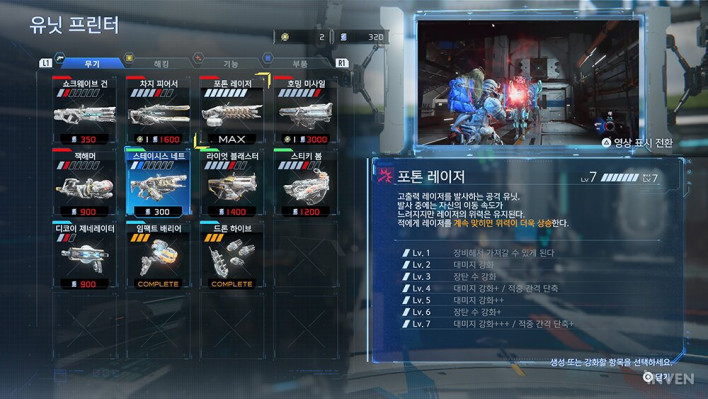
However, this staged novelty can sometimes be a source of fatigue. When you've gotten used to one combat style, new upgrade elements or obstacles appear, requiring more adaptation time. In the meantime, upgrades don't reset, and resources are tight for completing all upgrades.
Ultimately, for new upgrades, you have to clear separate maps for in-game challenges or return to existing maps during play to acquire missed farming elements. But the game is not easy enough to wait for the final elements to appear without doing any upgrades.
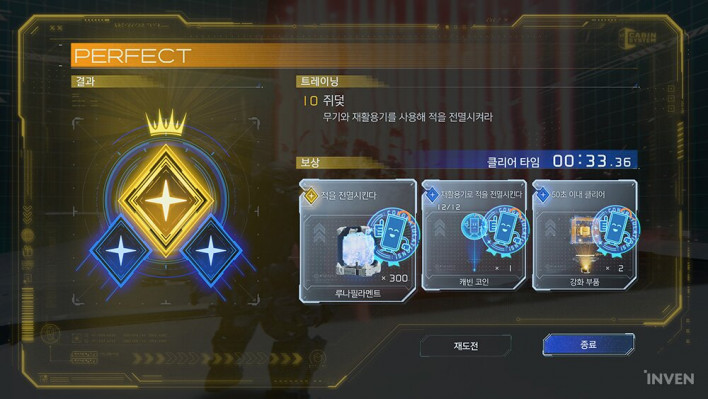
There is another disappointing point in a similar vein: the fact that collection affects the combination of combat elements. Certain weapons, nodes, and modules can only be unlocked by collecting coins, which are a collectible item. If you just follow the main story, it's impossible to unlock and experience all of these elements.
Since the overall immersion, from the story to the gameplay experience, is so high, it's quite a shame to have to break that flow for collection. Because the combat experience changes so much depending on the combination of these elements, I wish these could have been acquired naturally through the main flow.
Of course, there is no major problem with seeing the ending even if you just follow the main story without collecting. Collection is an optional element, and having more diverse combinations is also optional. You can experience plenty of diverse combinations and combat methods just by playing the main flow.
Lyrical Beauty Completed by Graphics and Sound, and Characters
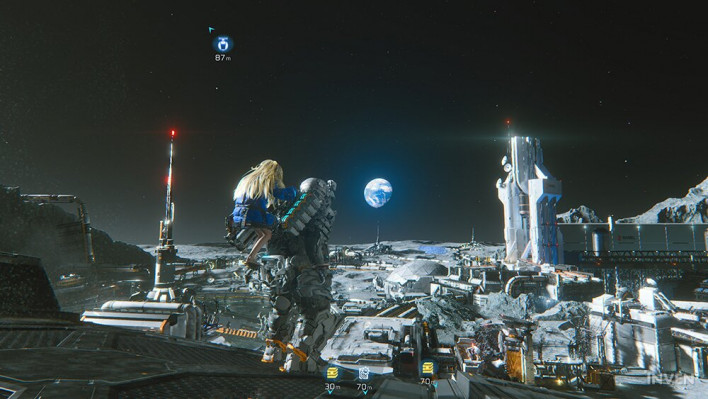
The biggest role in maximizing the lyrical beauty that Pragmata delivers is, naturally, the graphics and sound.
Not only did they make the mysterious space of the Moon feel vast, overwhelming, desolate, and somewhat alien and chilling in line with the story, but they also implemented different details for the base—a background that could have felt repetitive—to match the content of each chapter.

Among them, the most impressive part is the external space where you can truly feel the 'space' aspect in terms of gameplay.
Hugh's movements, noticeably slowed by the Moon's gravity; jumps that allow for much higher and further movement; the muffled sounds; Diana's hair fluttering more slowly than usual—they utilized elements you can see, hear, and feel with your hands in a truly outstanding way.
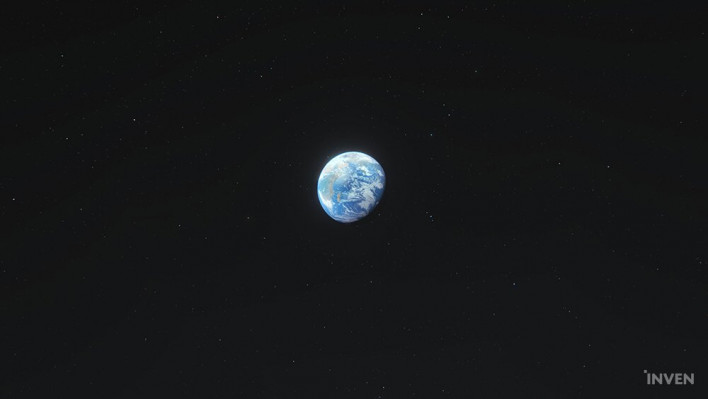
This space, and the appearance of the Moon, pushed immersion to the limit, ensuring that the chill, the longing, and all the elements remained in memory until the end of the game. For a while, just looking at the Moon and Earth makes me think of Pragmata and brings a tear to my eye.

The sea encountered inside the lunar base is the same. The golden, sunset-drenched sea, combined with the conversation between Hugh and Diana, their appearance, and the incredibly beautiful BGM, touches something in the viewer's emotions.
Even though Pragmata's overall story could be called predictable, I think it's thanks to this outstanding graphics, sound, and direction that it leaves a lingering impression that makes you hold the DualSense tightly while staring at the credits for a long time after the game ends.

The perfect realization of the character Diana is also due to delicate, outstanding graphics and the passionate performances of the voice actors.
Her hair fluttering strand by strand with her movements, her cute expressions and voice as she laughs and jumps around when something fun happens, her look of confusion yet happiness at Hugh's words to go to Earth—every part of the innocent and sometimes sorrowful Diana is expressed through surprisingly outstanding graphics and voice acting.
In the early part of the game, the moment Diana and Hugh meet, the moment Hugh names Diana—her appearance is so cute and innocent that I watched the recorded video several times. You can fully feel the joy and overwhelming emotion of an android that has just gained a name, an android with the identity of a young girl.

And the game didn't just portray Diana as 'Diana.' It delicately showed various sides of Diana playing like a real child, running around the shelter, riding swings, throwing balls, watching TV, and even playing hide-and-seek with Hugh through the implemented REM data.
That's not all. Diana's characterization doesn't just end at 'cute.' Although she looks like a girl indistinguishable from a human, the moment her characteristics as an android are revealed, her appearance, such as her eyes, and even the subtle movements of her expressions all change. Even in conversation, Diana sometimes utters chilling sentences in an innocent voice.
For Hugh, what shone the most was the voice actor's performance. Since there are only a handful of scenes where his face is shown throughout the game, we mostly perceive Hugh's emotions through his voice. And in the Korean dubbed version I played, the voice acting was so outstanding that I could be fully immersed until the very end of the game.
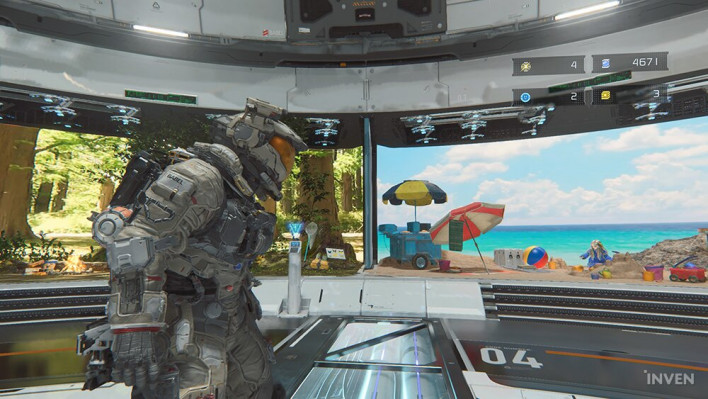
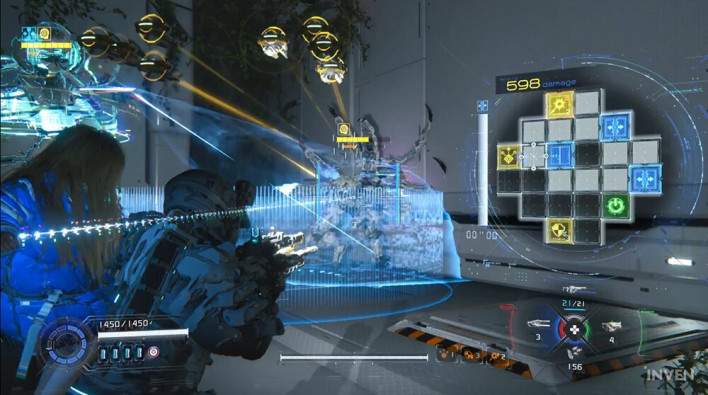
Shooting and puzzles, two familiar elements, were combined to create a new combat method that never gets boring. And the story of Hugh and Diana, human and android, was drawn with a deep, lingering impression through outstanding graphics, sound, and acting.
Personally, I think it's really not easy for a single game to deliver complete immersion in both story and gameplay.
But Pragmata did it. It may not be 100% perfect, but it completed both aspects satisfactorily and outstandingly. Through a very appropriate playtime of around 10 hours, it cut off the story and gameplay experience at just the right points.
From the beginning of the game to the end, we experience how the relationship between Diana and Hugh began and how it continues. Combat is also part of that experience. The two characteristic elements of shooting and hacking blend deeper and deeper, just like their relationship. Meanwhile, the fun, novelty, and immersion of the combat are also outstanding.
Pragmata did not overextend its story, combat, or exploration. Thanks to this, there is no dragging in any aspect throughout the play. It focused entirely on the two leads and resolved everything appropriately.
The center of the story and the center of the combat are only Diana and Hugh. Pragmata is a single, very well-completed story of those two protagonists.
- Story and combat utilizing the relationship between the two protagonists
- Balanced combat design of shooting and hacking
- Outstanding level design with added advanced elements
- Graphics and music that complete the game's lyricism
- Various additional content even after the ending
- Ordinary story and flow compared to characterization
- Combat that can be tiring due to many things to pay attention to
- Difficulty unlocking that forces a new game
Review Platform: PS5 (Release Version)

Sort by:
Comments :0