Esports is a global phenomenon, and the LCK, standing at its center, has evolved beyond a mere gaming tournament into a massive industry and cultural force.
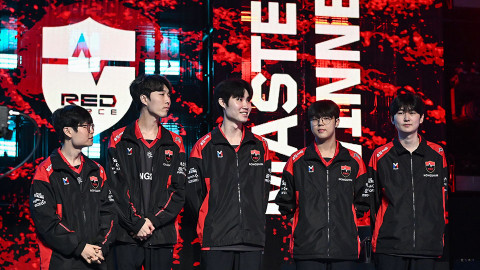
Players under the bright lights have become public figures whose daily lives influence millions through broadcasts and social media; with this status comes an inevitable increase in the weight of their social responsibilities. However, the LCK’s recent decision to issue 'no disciplinary action' regarding the tax controversy surrounding Park 'Ruler' Jae-hyuk has laid bare the unvarnished reality of the 'professionalism' we have so fervently championed.
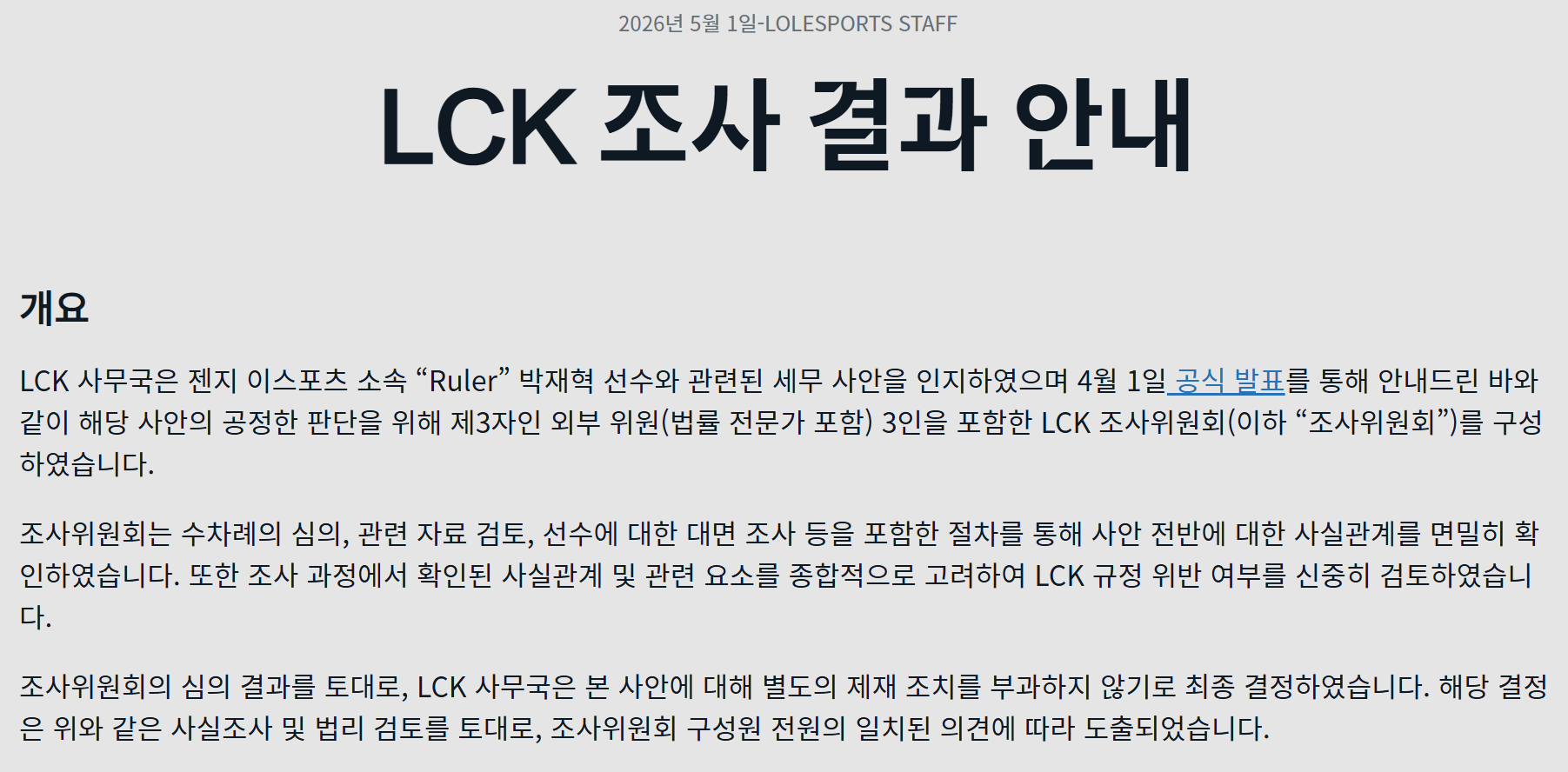
In its investigation announcement, the LCK secretariat defined the matter as a 'routine tax administrative procedure.' Their logic is that since no criminal liability for tax evasion was confirmed and the statute of limitations for disciplinary action had expired, there was no basis for sanctions. This may be a legally flawless conclusion, but the core of this incident is not merely about whether a law was broken. The National Tax Service decided to impose taxes based on a nominee account, and the Tax Tribunal dismissed the player's appeal. Once additional taxation is finalized, it is difficult to dismiss this as a simple administrative mishap. In an esports league that upholds 'fairness' and 'trust' as its core values, can the logic that "there is no problem because there is no legal punishment" truly be accepted by the fans.
The fact that an act does not violate the Punishment of Tax Evaders Act does not mean its impropriety simply evaporates. When the tax authorities decided to impose taxes based on a nominee account and the Tax Tribunal upheld that decision, the cold reaction from fans was not merely an emotional backlash. It was an expression of a social norm that "expedients should not be tolerated." The expiration of the statute of limitations may not have been an intentional choice by the LCK. However, by waiting for the outcome without conducting a swift investigation or taking institutional action after the controversy arose, the league has effectively forfeited its moral authority to regulate similar cases in the future.
The LCK secretariat’s closing remark that it "strictly recognizes the importance of the social responsibility required of professional players" rings hollow. If sanctions were impossible due to regulatory limitations, they should have at least honestly acknowledged those shortcomings and promised concrete institutional improvements to prevent recurrence. Establishing new clauses on tax-related conduct, re-examining the starting point for disciplinary statutes of limitations, and codifying procedures for when investigations must begin are all viable paths forward. It is the league's responsibility to respond with policy, not just empty expressions of regret.
Discipline is not merely a means of punishment; it is the most powerful message that proves the values a league stands for. I fear this decision will set a bad precedent, fostering the perception that "it's fine as long as you pay the extra taxes" or that "you get a free pass once the statute of limitations expires." A levee does not collapse all at once. It crumbles slowly when small cracks are ignored and when there is no will to mend them.
Ironically, one of the most frequently used words in the LCK secretariat’s 'no disciplinary action' statement was 'sanction.' The fact that the word 'sanction' appears over seven times in a document stating that no sanctions would be imposed proves that this decision was never a comfortable one for the LCK itself. What the LCK has neglected this time is not just one player's tax issue, but the cracks in the levee of fairness that supports the entire league. The responsibility to mend those cracks lies not in the rulebook, but with the people who run the league.

Sort by:
Comments :0