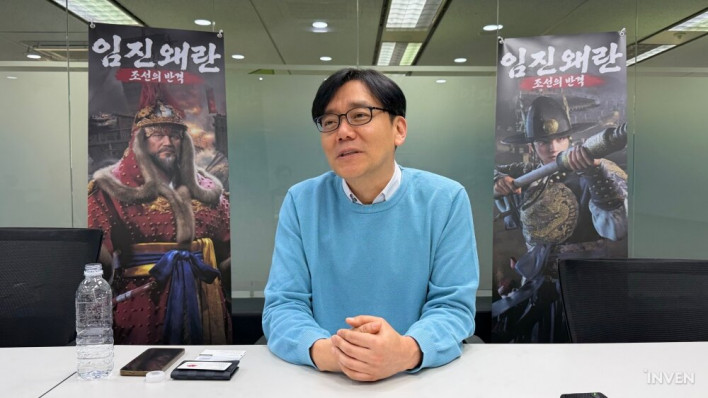
In 1995, a young man who took his first steps into game development by capturing Korean history in 'Chungmugong-jeon' has since become a veteran developer with 30 years of experience. PD Kim Tae-gon, who led the Korean strategy simulation genre with the 'Imjin-rok' series and 'Gersang', is, without exaggeration, a living witness to the history of Korean historical games.
In his gaming life, the 'Imjin War' was not just a background; it was the root and the entirety of the world he wanted to create. While he explored global themes with 'Atlantica' and expanded his horizons with 'Romance of the Three Kingdoms: The Legend of Cao Cao', a part of his heart always longed to return to the Imjin War, his creative home.
In 2024, PD Kim Tae-gon left the comfort of a large corporation and even dipped into his own savings to establish the independent studio 'Red Ginkgo'. The name 'Red Ginkgo' embodies his will to interpret history with a unique sensibility, much like the persistent vitality of a ginkgo tree that lives for a thousand years. He calls this place not a factory that churns out games, but a 'historical game workshop' where one can feel the touch of a craftsman.
"I've been in development for over 30 years, and I realized that if I don't do this now, I never will." This sense of mission, which he took upon himself without being asked, is not about resting on past laurels. He wants to create a space that feels like a long-standing neighborhood eatery, imbued with the owner's dedication, rather than a franchise cafe. That philosophy is fully infused into his new title, 'Imjin War - Counterattack of Joseon', which focuses solely on the historical essence of the Imjin War—in the most 'Kim Tae-gon' way possible.
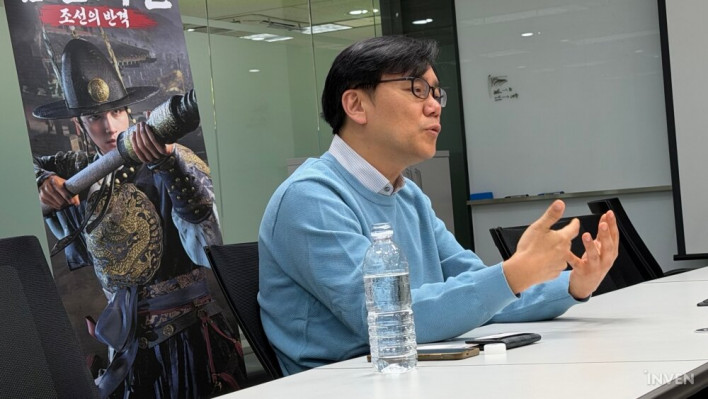
▲ Red Ginkgo Games Director Kim Tae-gon
Out of countless historical events, I am curious what led you to choose the 'Imjin War' as your subject.
"Starting with 'Chungmugong-jeon', which I developed in 1995 and released as my first title in 1996, through the 'Imjin-rok' series and the early 'Imjin-rok Online: Gersang', the Imjin War was my entire world in the early 2000s. Although I made games like 'Atlantica' and 'Romance of the Three Kingdoms: The Legend of Cao Cao', the main currents of my development life have always been history and geography.
I tried to develop games based on the Imjin War afterward, but securing development funds was difficult due to the challenges of global expansion or the limited user base. Despite trying four times over a decade, those attempts were repeatedly thwarted by the logic of capital and the market.
Then, in 2024, I felt a sense of urgency, realizing that if I kept making excuses, I would never get it done. I ended up using my own money to establish 'Red Zinko' and began developing a game about the Imjin War as our first project.
Is there a special reason you became so deeply immersed in the world of the Imjin War? What do you see as its differentiators compared to other historical games?
"When I was an amateur, I was deeply impressed by 'Warcraft' and decided I wanted to create a strategy game. However, as a college student with pride, I didn't want to just copy typical Western fantasy featuring orcs, elves, and humans. I thought intensely about having our own distinct identity, and the choice I made was the Imjin War.
As a game developer, I love this era so much that I think it's hard to find a more perfect world than the Imjin War. If you look at Koei's 'Romance of the Three Kingdoms' or games about Japan's 'Sengoku period', they are essentially civil wars within a single nation. The costumes of Wei, Shu, and Wu aren't significantly different, weapons are mostly swords and spears, and naval battles are almost non-existent, except for the Battle of Red Cliffs.
On the other hand, the Imjin War is a massive international war between three countries: Joseon, Japan, and the Ming Dynasty. The three nations have completely distinct visuals and physical systems, and gunpowder weapons like matchlocks and cannons appear in earnest, moving beyond cold steel. It is a very weighty subject that features not only land battles but also large-scale naval battles, with many historical figures we know participating. It is hard to find a better subject from both a business and game development perspective.
Based on this attractive world, I designed a system where you train numerous generals and deploy them into battle in unit formations. Furthermore, I sought fundamental differentiation by deeply integrating economic and management elements, such as resource production and value creation. I am also convinced that the fact that there are still few mainstream titles with this Joseon background in the market is another great opportunity for us.
What is the meaning behind the company name 'Red Ginkgo'?
"I wanted to emulate the strength of a ginkgo tree that endures for a thousand years. Instead of the yellow ginkgo leaves that come to mind, I chose red ginkgo leaves to signify that while we deal with history, we do so with our own sensible interpretation. The company logo is also a red ginkgo tree.
There was some misunderstanding that 'Ginkgo' was a Japanese-style name and that we might be a pro-Japanese company. However, it is simply an international standard English word that became fixed after Westerners misheard the Japanese pronunciation of the Chinese character for ginkgo. 'Red Ginkgo' aims to be a 'historical game development workshop' that feels like a neighborhood eatery run by craftsmen, rather than a large corporation or an indie game studio.
The official release date is April 28, the birthday of Admiral Yi Sun-sin.
"No one forced me, but I have always carried a firm sense of mission on my own. The young users who enjoyed the games I made have now grown up and become leaders in society. Sometimes, they share precious memories through letters, emails, or comments about what they experienced and learned through those games when they were young. As those stories accumulated and my development career grew, I felt a strong sense of responsibility: "Although no one assigned this to me, proving this Imjin War world beautifully in a game is a role I must fulfill in my remaining development life."
Currently, the Korean game industry is polarized between massive corporations and small indie games, but I think we need a company with a clear identity, like Koei's 'Romance of the Three Kingdoms' or Sid Meier's 'Civilization', which have consistently continued their series for decades. Even if it's not the world's greatest blockbuster, I want to build a company that develops the single theme of 'history' in depth and walks a long path of 10, 20, or 30 years with users who resonate with our thoughts.
Showcasing the game on such a meaningful day as Admiral Yi Sun-sin's birthday is also a process of showing our long-standing commitment and sense of mission as a 'historical game development workshop'.
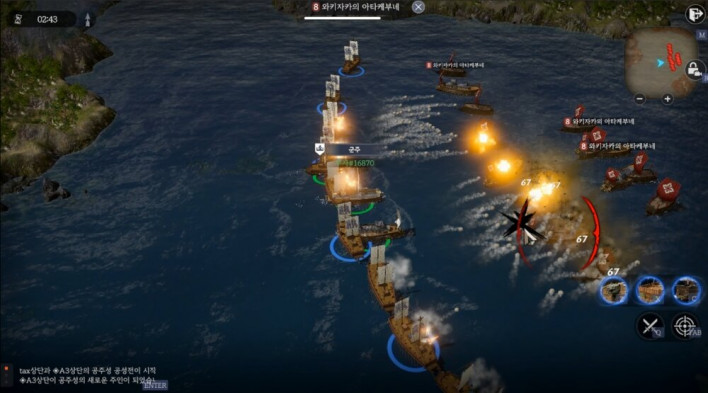
▲ The Battle of Hansan as implemented in 'Imjin War'
Do you have plans to expand the Imjin War world, such as with 'Dawn of the Frozen Land', which was unfortunately canceled in the past?
"I am well aware of the disappointment of users who waited for that game but couldn't play it, and I also have lingering regrets about the stories I couldn't finish back then, so I think titles like 'Dawn of the Frozen Land' should rightfully be made someday.
What I ultimately want to create is not something stuck in a single genre like MMORPG. Within the vast and attractive world of the Imjin War, I believe it is natural to unfold stories in various forms and genres, such as action RPGs, adventures, or strategy simulations.
The 'Imjin War - Counterattack of Joseon' we are presenting this time is the solid foundation that serves as the basis for conceiving and expanding that grand universe
You inherited the existing style of 'management-centered strategy simulation'. Is there a special reason?
"There is no set answer in games. In fact, consistently developing a single color and gameplay style is a very difficult task. I love historical worlds, and I like management-centered games where you command 100 to 200 units and produce and manage resources.
Just as a painter doesn't suddenly change their entire style as they age, I think it is right to refine what I do best to fit the environment of mobile devices or the trend of users preferring short-form content. Rather than blindly chasing trends, I believe it is much more valuable to steadily accumulate know-how, just as the 'Resident Evil' series has successfully maintained its legacy.
What is the ultimate goal you want to achieve after the official service?
"I want to create a game that grows steadily while breathing with users for 20 or 30 years, not a short-lived game that makes a quick profit right after launch and then loses its users.
The users I am thinking of first are those who love history and enjoyed my past simulation management games. Furthermore, like 'The Admiral: Roaring Currents' or 'The King and the Clown', the top two highest-grossing Korean films of all time, I hope for a virtuous cycle where history enthusiasts gather first, but the general public naturally joins in as the fun and emotion spread through word of mouth. I want to become a virtuous cycle model that is loved for its reasonable price and good quality without spending massive marketing costs, like 'Daiso'.
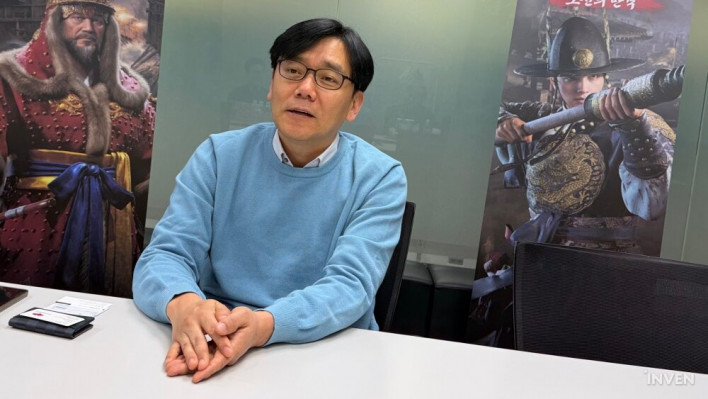
▲ "I want to create a game that grows steadily while breathing with users for 20 or 30 years"
Could you introduce the three core pillars that support the game: 'Hunting, Siege Warfare, and Economic System'.
"Hunting is a core fun element that adds depth to combat by utilizing the unique personalities and skills of generals, such as the fire-launching 'Dae-wangu', the 'Bigyeokjincheonroe' (flying thunder bomb), and the 'Samyeong-daesa' who calls in dark clouds to extinguish fires. To ensure we don't lose the essence of the game, I am emphasizing to the development team that they should focus on this part above all else.
Advanced strategy and the abilities of generals lead to even more powerful fun in siege warfare, where you break down gates and climb walls. I implemented an oriental-style siege by utilizing the characteristics of Korean mountain fortresses, which are relatively low compared to the grandeur of Western castles. It is designed to be completed quickly in about 15 minutes within a humorous atmosphere.
Finally, there is the economic system. Instead of a single user collecting all the various goods needed for growth, the economy circulates as users exchange surplus and scarce items at the marketplace.
Unlike other games, you have simplified the scale of siege warfare quite a bit. I am curious about the background of this.
"It is true that users are less inclined to act in large groups than in the past. When people think of MMORPG siege warfare, they usually imagine a massive scale where dozens or hundreds of people clash in defense and offense, and they naturally think it should be implemented that way.
Siege warfare is excellent content that provides the instinctive fun of protecting your territory and taking the enemy's castle. However, because it is held like a solemn and massive annual event, the vast majority of general users have no opportunity to experience it directly. This creates a contradiction where users cannot experience the most fun content in the game.
To resolve this contradiction, I redesigned siege warfare to be very compact. Instead of grand-scale enormity, I made it so that even a small number of people can perform both defense and offense. Instead of fighting other users under stress, I introduced a PvE method where you compete against AI strategies and dismantle the enemy's characteristics. As a result, anyone can enjoy it as daily core content that they can 'easily run five or six times a day' without burden.
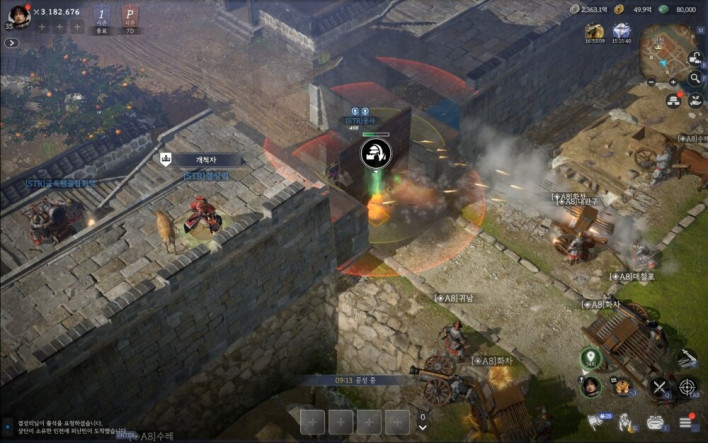
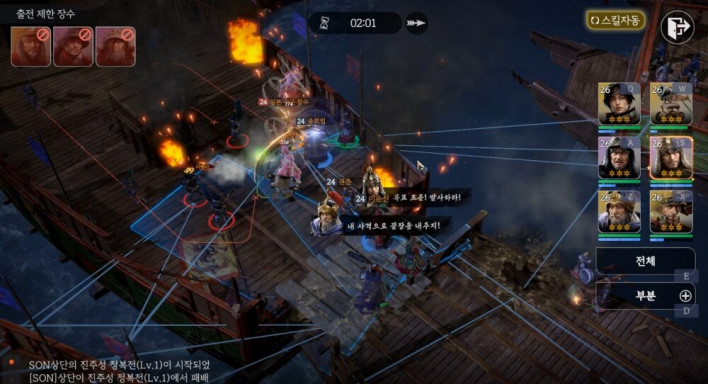
▲ 'Imjin War' Siege Warfare
How are you planning the monetization model (BM) after the official service?
"Basically, we have adopted a freemium model. In the past, during the 'Gersang' era, we advocated for 'free for life', but in this day and age, forcing excessive microtransactions is likely to alienate users. Unlike massive blockbusters that cost hundreds of billions of won, we have significantly reduced development and marketing costs through appropriate-level development. Thanks to this, it has become possible to ask users for only a reasonable and understandable level of payment. I even appear on YouTube live broadcasts myself to save on marketing costs.
In particular, as a declarative gesture, we have introduced an 'integrated marketplace' where even all the paid goods we sell can be traded between users.
If you operate an integrated marketplace, the problem of inflation will inevitably occur.
"The essence of the economy is that surplus resources naturally flow to where they are scarce. The culprit of inflation usually stems from the developer selling high-tier items like 'cooked rice' directly, which destroys the demand for low-tier ingredients like 'raw rice'. We strictly refrain from such external injections and prioritize designing a growth system where produced quantities are continuously consumed.
It is difficult for inflation to occur through the normal manual work of general users. The real problem is 'gold farming' using macros. To control this, we have prepared multi-layered safety devices such as an action power system. Since AI macros can now bypass the old method of asking addition and subtraction problems, a complete block is impossible. Instead, we chose a method that makes the cost-effectiveness extremely low, so that a person who used to run 10 macros would have to run 100 to make any profit.
▲ "To prevent inflation, we strictly avoid the developer side flooding the market with finished products"
During the last test, there was a lot of feedback that the 'motivation (action power) limit' was too frustrating.
"Because we set it conservatively during the test period, users must have felt very frustrated. In the official version, we have significantly shortened the action power recovery time by nearly half and improved it so that much more motivation is supplied through manufacturing or in-game rewards. During the period when early play is concentrated, we plan to use operational finesse to provide sufficient motivation.
This system is not just a device to prevent macros from running 24 hours a day. Just as a baseball manager gives the ace pitcher a rest depending on the importance of the game, it provides users with the thrill of strategic resource management. Furthermore, I think it is an essential device that helps adult users, who are the main demographic of mobile RPGs, enjoy the game in appropriate intervals while balancing it with their daily lives. Interestingly, among users these days, they use it as a fun meme, saying, "I can't fight because I have no motivation."
'Historical accuracy' is always a hot potato when developing historical games.
"In historical games, the evaluation of historical accuracy is an important yardstick that users feel and check first. For example, when expressing the navy, we strictly excluded shallow historical accuracy, such as putting a single 'Water (水)' character on a regular guard uniform and putting them on a ship. Even if it's not at the level of an academic paper, we prepared it thoroughly, exceeding the users' standards and expectations.
However, I was careful not to get buried in costume or weapon accuracy and harm the game's inherent imagination and fun. In the latter half, we also added bold virtual historical scenarios. The story proceeds on the premise that two years after the war ended, Toyotomi Hideyoshi and Admiral Yi Sun-sin are still alive. A 'Counterattack of Joseon' story unfolds where the Joseon Gwanghaegun's expeditionary force and the Japanese Edo army launch a pincer attack at the suggestion of Tokugawa Ieyasu, who had opposed the war from the beginning.
In the future, I would like to deal with a virtual history where the Japanese army invades the southern coast of the Ming Dynasty as originally intended. Of course, these alternative history scenarios are planned to eventually tie back naturally into the main thread of actual history.
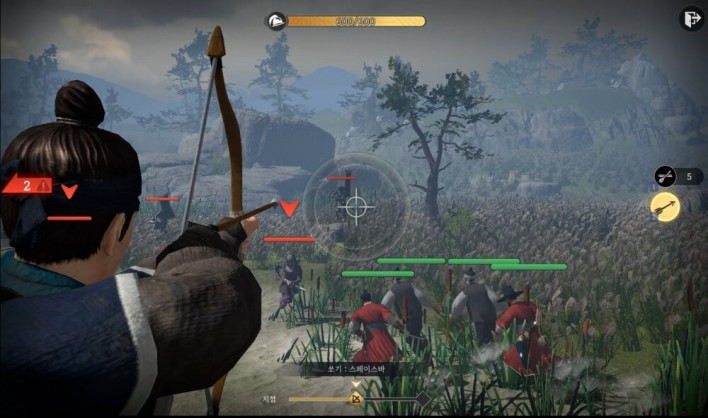
▲ Sniper battles are also implemented in the game
A large number of real historical figures appear in the game; have you ever received any concerned contact from their descendants?
"I haven't received any contact yet. However, because there are actual descendants due to the historical background, I am very careful not to cause any harm. Seeing the lawsuit (which was determined to be groundless) that arose due to the depiction of General Bae Seol in the movie 'The Admiral: Roaring Currents' or the historical evaluation cases regarding General Won Gyun, I am aware that special care is needed when dealing with historical figures. I can promise for sure that there has been absolutely no intentional plotting or reckless disparagement of any specific person without clear grounds.
You applied regional dialects to NPCs, but you didn't have the main generals use dialects. Is there a special intention?
"The movie 'Hwangsanbul' handles the humor of dialects excellently with the weighty acting of great actors. However, since a game cannot be covered by an actor's performance, I was afraid of being misunderstood as trivializing historical figures, so I only applied dialects to commoner NPCs. I hope a company will come along that breaks this mold someday.
On the other hand, the awkward Korean pronunciation of General Kim Chung-seon (Sayaka) is based on the clear fact that he was Japanese. This is not intended to ridicule him, but was used as a very positive device to three-dimensionally bring out the identity and realism of a person who defected to Joseon in pursuit of a greater cause.
To what extent did you use AI in the development process, and what were the special points you were careful about?
"In the field of coding or programming, the proportion of AI is very large. However, in design, it is extremely difficult to use due to the nature of historical games. If you ask AI to draw Admiral Yi Sun-sin, it draws him like a Japanese samurai or a Chinese warrior because there is no reference to refer to. Even if you search, images of the 'Imjin-rok' I made in the past come up. If you ask for a Korean feel, an uncomfortable awkwardness occurs, such as drawing a Taegeuk pattern in the yard of a tile-roofed house.
I use it for ideas or pose references, but for historical accuracy, all characters and images must eventually be reworked by human hands. Users sometimes mistake the results of elaborate manual work for AI, but I think this is our own unique know-how that we don't need to feel unfair about, and it actually becomes a solid barrier to entry.
▲ Noryang Naval Battle encounter
How does the company evaluate the results of the final test conducted recently?
"Even though we conducted it mainly for existing fans without large-scale advertising to avoid confusion with the official service, about 3,000 people participated, which was a great help in securing server operation data. In the first test, we received top marks (A+) without wavering in story development, direction, and dialects, and from the second test, constructive opinions on system balance began to emerge along with bug fixes.
In the third final test, in-depth discussions on the strategic use of generals took place. I was convinced that the game was stable enough for users to discuss strategy, and thanks to that, I was able to bravely set the official release schedule.
You are actively communicating with users through live broadcasts; how is this move affecting development?
"I was greatly moved and encouraged by the recent sight of directors from major game companies standing in front of the camera to defend and communicate directly even in the face of fierce criticism from users. Direct communication with users is much scarier than the instructions of a company CEO, and it provides a healthy sense of tension.
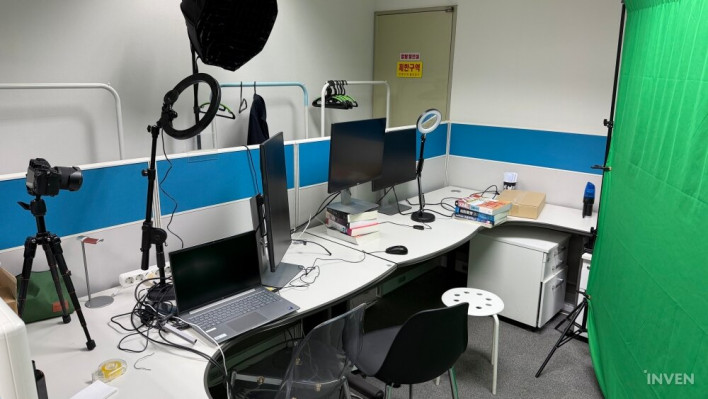
▲ The place where PD Kim Tae-gon does live broadcastsWhen I hear the memories of users who say they learned the locations of Daejeon in Korea or Lisbon in Portugal and realized economic principles while enjoying my games in the past, I feel the highest honor as a game developer. I want to let the young fellow developers at our company feel this precious sense of reward. Meanwhile, as a small fan service, I secretly hid cheat codes from old games I made in the past, such as 'Cheonnyeon' and 'Run with the Money', in this work. Even though we didn't announce it, users responded as great fun, such as diligently typing them into the live broadcast chat window, even making typos. I didn't just stick to 'Imjin-rok' cheat codes because it's an Imjin War background; I put in everything I could remember.
How is the collaboration or historical consultation with credible institutions such as the Korea Heritage Service or local museums proceeding?
"Although it is not at a full-scale partnership stage, we are actively referring to and using traditional assets provided by government agencies such as the Korea Heritage Service as basic materials. If the opportunity arises, I would like to re-produce videos from museums related to the Imjin War in the southern region (Jinju Museum, Gongju Museum, etc.) as the latest resources for our game for free, so I have contacted them, but it has not been realized yet.
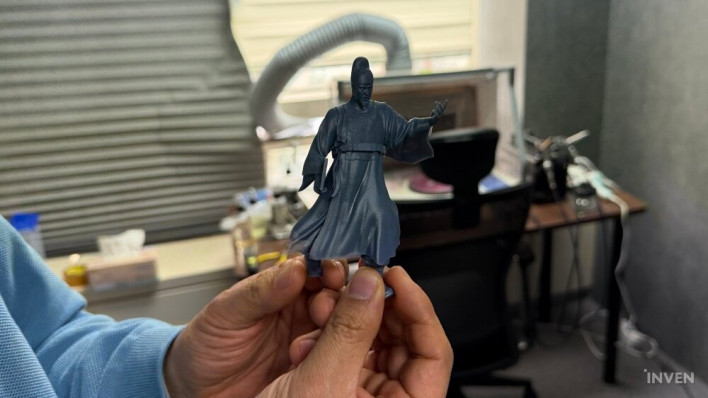
If the game achieves excellent results in the future and we collaborate on an equal footing, I have a dream as a history buff to supply 3D-printed figures of General Kim Si-min or Nongae, or dioramas, to the Jinju Museum souvenir shop instead of ordinary ballpoint pens. We plan to actively produce comparison videos of cases where we used assets from state agencies through YouTube Shorts, etc., to widely publicize them as good examples.
I am curious if you are also planning offline meetings for users or the production of physical merchandise.
"Fun ideas that combine user meetings, such as matchlock shooting experiences, cosplay in cool traditional costumes, and reenactments of historical battles, are being discussed internally. Like the World War I and II or medieval reenactment events of Western enthusiasts, I want to create a romantic Imjin War culture where we gather and play together at historical sites like the actual Jinju Fortress during the Jinju Battle event.
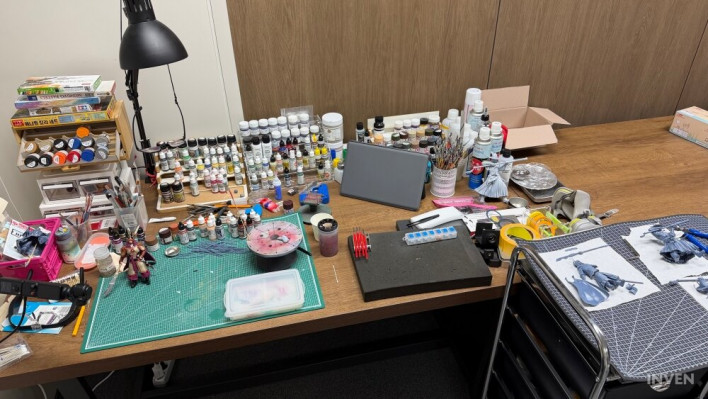
Also, since the response to the Shorts video of the in-game 'Hwacha' modeling, which the CEO, who enjoys 'the alignment of hobby and work', produced and painted himself using a 3D printer based on blueprints, was explosive, we are thinking about and introducing various merchandise content that users will genuinely find fun.
▲ Various characters of 'Imjin War' are born from CEO Park Soo-yong's hobby
It has a strong Korean color; how are you preparing for global service expansion?
"We are proceeding with a global launch in mind, including two English versions at the initial opening. When we demonstrated it to a Steam representative, we received a positive reaction of surprise, saying, "I've never seen anything this unique." However, our top priority is to be thoroughly verified, harshly scolded, and recognized by Korean users, who are the most demanding and high-level in the world, first.
Lastly, could you give us a hint about the current development progress of your next project, 'Project Jindallae'?
"'Project Jindallae' is an RTS genre, and veteran developers are currently in the middle of the basic R&D stage regarding terrain implementation, unit production, movement, and attacks. Since it is impossible to apply freemium models (e.g., selling Starcraft stimpacks for cash) and it requires a vast user pool, it is a genre that has gone extinct in Korea, so the burden on the development team is very high. Still, even with just a short Shorts release, explosive interest from users has poured in, so we will be able to show it with specific designs around next year.
Instead of a stiff and cliché English working title (e.g., Project K), the project name was given the affectionate name 'Jindallae' (Azalea), which is the name of the flower I like next to the ginkgo tree, like a fetal name. The internal atmosphere is also good, so I plan to actively use things like Royal Azaleas in the future.
This article was originally written in Korean and translated with the help of NC AI. It was then edited by a native English-speaking editor. All AI-assisted translations are reviewed and refined by our newsroom.
[Read Original]